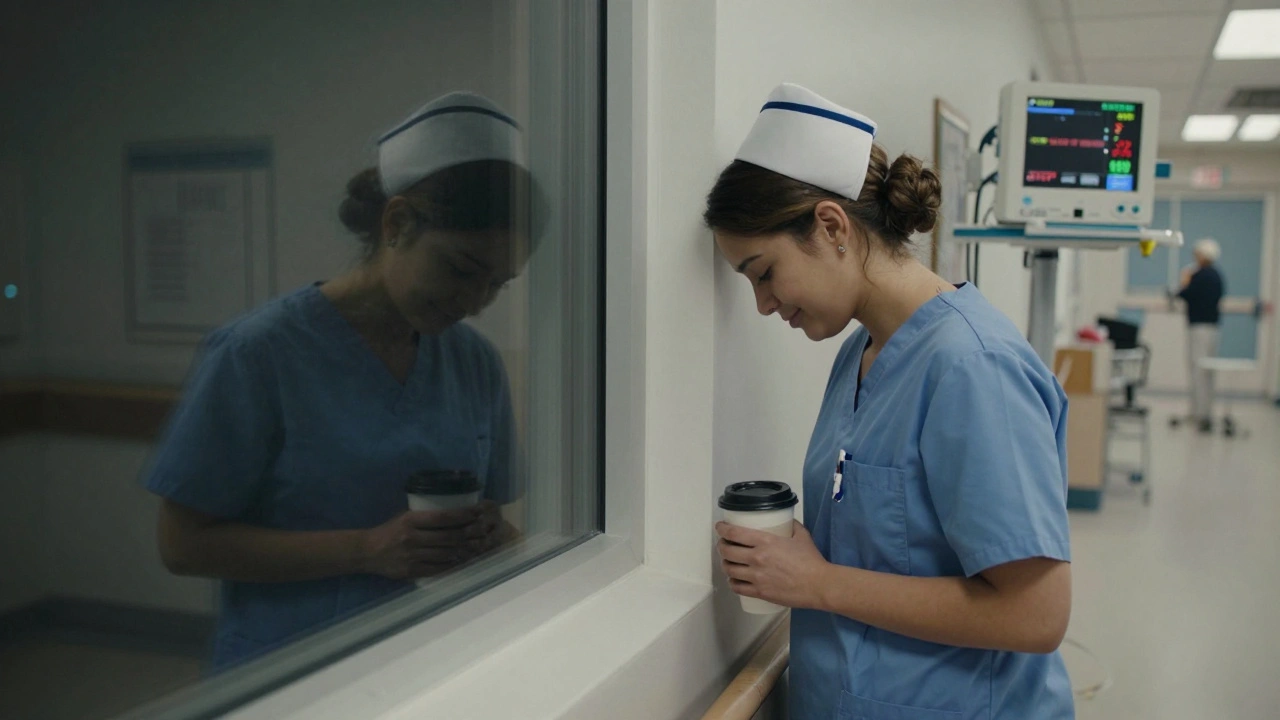
Think about the last time you watched a movie about work. Not the glamorous startup pitch or the high-stakes boardroom showdown, but the quiet moments: a factory worker staring at a time clock, a nurse exhausted after a 12-hour shift, a janitor listening to a manager dismiss their concerns. These are the scenes that stick with you. Workplace dramas in film don’t just show jobs-they expose the hidden tensions between people and systems, between dignity and control, between who we are and what we’re told to be.
What Makes a Workplace Drama Different?
Not every movie set in an office is a workplace drama. A corporate thriller like Wall Street is about greed. A comedy like The Office is about absurdity. A workplace drama digs into the human cost of labor. It asks: What does it do to a person to show up every day for a job that doesn’t respect them? How does power shape identity when your worth is tied to a paycheck?
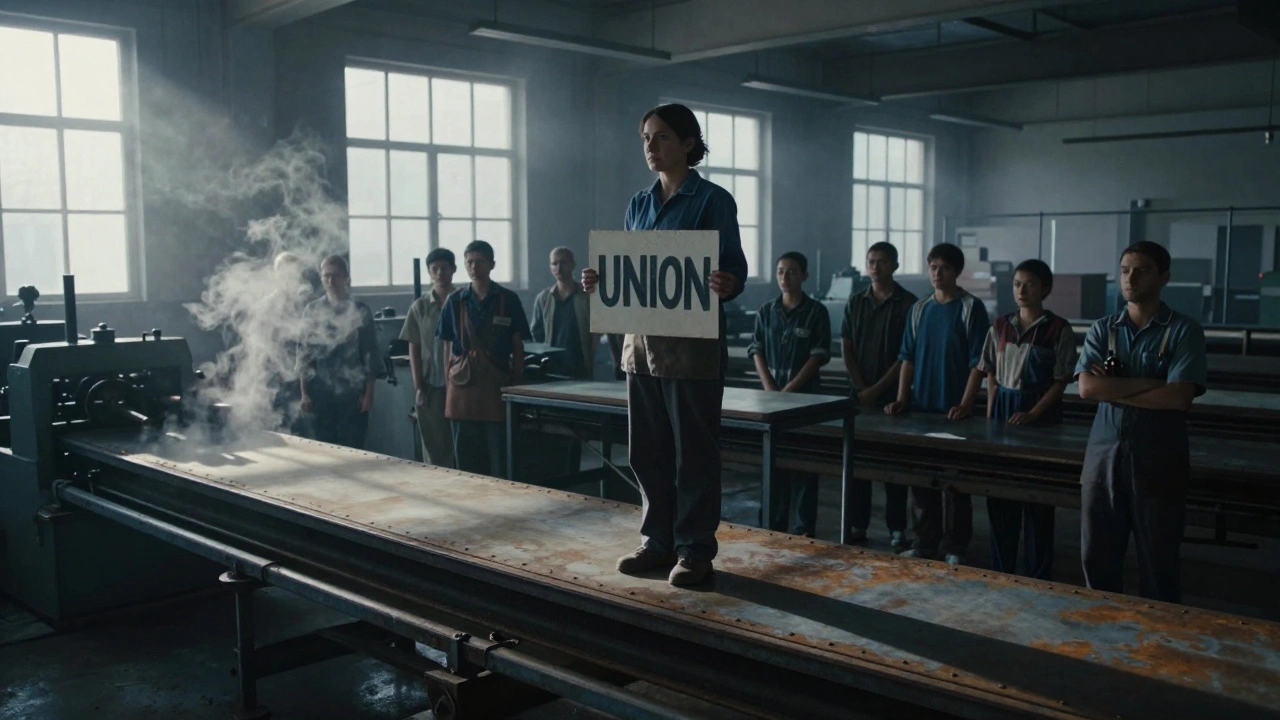
Take Norma Rae (1979). Sally Field plays a textile worker in the American South who finds her voice through union organizing. The film doesn’t show her winning a big fight. It shows her standing on a table, holding a sign that says "UNION," while her coworkers slowly join her. That moment isn’t about politics. It’s about a woman reclaiming her voice after years of being treated like a machine. The factory isn’t just a setting-it’s a character. It grinds people down, and the drama comes from who refuses to let it.
Labor as a Battle for Dignity
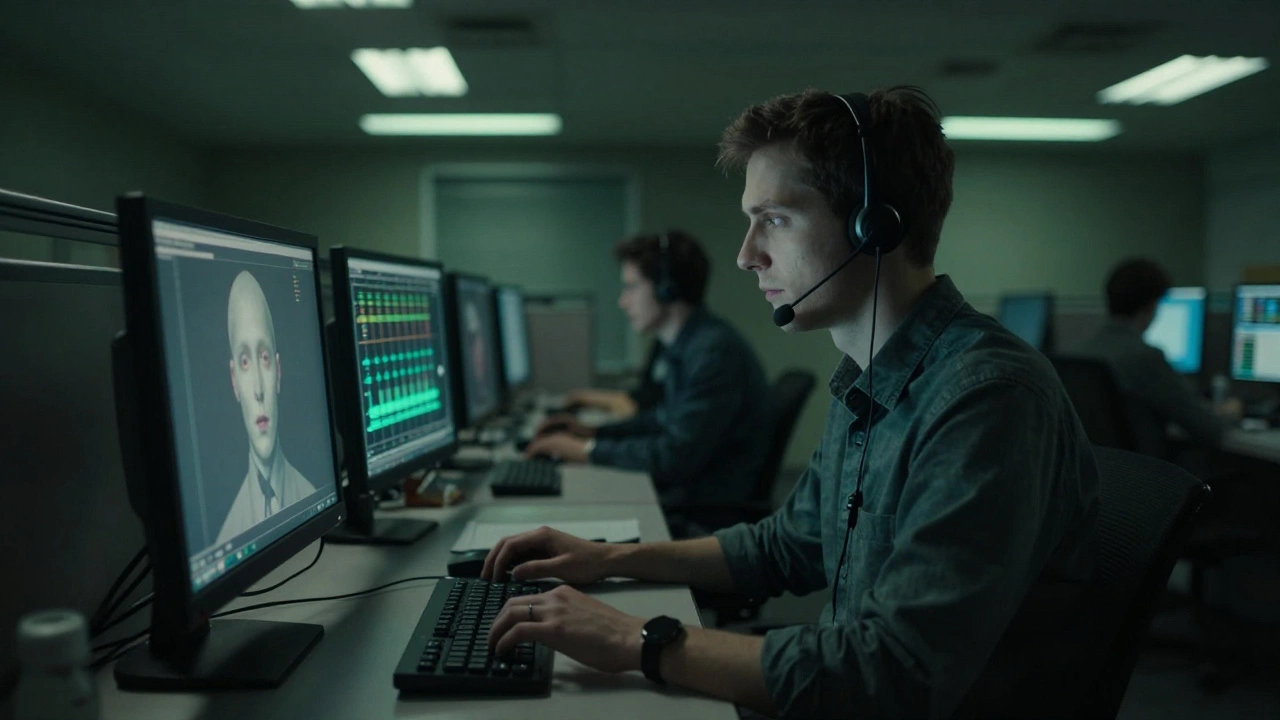
Workplace dramas often frame labor not as a transaction, but as a fight for dignity. In Sorry to Bother You (2018), Lakeith Stanfield plays a telemarketer who climbs the corporate ladder by using a "white voice." The film’s satire is sharp, but its core is brutal: to succeed, you must erase parts of yourself. His transformation isn’t a rise-it’s a loss. The movie doesn’t celebrate success. It shows how systems demand conformity, and how much of yourself you sacrifice to survive inside them.
Compare that to Blue Collar (1978), where three auto workers in Detroit turn against each other after discovering their union is just as corrupt as management. There’s no hero here. No clean victory. Just three men, broken by the same system that promised them security. The film doesn’t blame individuals. It blames a structure that pits workers against each other to keep them divided.
These stories aren’t fiction. They mirror real patterns. A 2023 study by the Economic Policy Institute found that 62% of U.S. workers feel they have no real say in how their job is run. That’s not coincidence. Workplace dramas capture that feeling-not as a complaint, but as a truth.
Identity Under Pressure
When your job defines you, losing it doesn’t just mean losing income. It means losing who you are. In The Wrestler (2008), Mickey Rourke plays a faded pro wrestler trying to reconnect with his daughter. His body is wrecked. His career is over. But he keeps showing up at small arenas because that’s the only place he still feels like someone. The film doesn’t romanticize wrestling. It shows how identity gets tied to performance-and what happens when the performance ends.
Same with Working Girl (1988). Sigourney Weaver’s character isn’t just climbing the corporate ladder. She’s reinventing herself. She changes her accent, her clothes, her name. She becomes someone else to survive. The movie’s happy ending feels bittersweet because she didn’t just get promoted-she had to bury part of who she was to get there.
These aren’t just character arcs. They’re psychological maps. A 2021 Harvard Business Review analysis found that employees who feel their identity is erased at work report 40% higher burnout rates. Workplace dramas show this in real time: a woman pretending to be confident, a man hiding his pain, a teenager faking enthusiasm to keep the job.
Power, Hidden and Overt
Power in workplace dramas isn’t always about titles. Sometimes, it’s the manager who never says "no," but makes you feel like you’re asking too much. Sometimes, it’s the HR policy that sounds fair but only works for people with time, resources, or connections.
Michael Clayton (2007) shows corporate power as a silent force. George Clooney plays a fixer for a law firm that covers up dangerous drugs. He’s not a villain. He’s a cog. The real villain? The system that rewards silence. The film’s most chilling scene isn’t a confrontation-it’s a quiet phone call where a lawyer says, "We’re not the bad guys. We just work here."
Then there’s Erin Brockovich (2000). Julia Roberts plays a legal assistant who takes on a giant corporation poisoning a town’s water. She doesn’t have a law degree. She doesn’t have money. She has persistence. The film’s power comes from the contrast: a woman with no authority using raw humanity to expose a system built to ignore her.
These stories reveal a pattern: power doesn’t always wear a suit. Sometimes, it’s the unspoken rule that says, "Don’t question." Sometimes, it’s the algorithm that cuts shifts without warning. Workplace dramas make these invisible forces visible.
Why These Stories Still Matter Today
Technology has changed work-but not the core tensions. Gig workers get rated like products. Remote employees are tracked by keystrokes. Retail staff are told to smile even when they’re being yelled at. The tools have changed. The imbalance hasn’t.
Recent films like The Holdovers (2023) and Anatomy of a Fall (2023) don’t take place in offices, but they still ask the same questions: Who gets to speak? Who gets to be heard? Who gets to be human?
Workplace dramas don’t offer solutions. They don’t tell you how to unionize or quit your job. But they do something more important: they show you that your frustration, your exhaustion, your quiet anger-it’s not just you. It’s been there in every factory, every call center, every corner office, since the first time someone was told to sit down and shut up.
That’s why we keep watching. Not because we want to see someone win. But because we want to see someone seen.
Why are workplace dramas so emotionally powerful?
They tap into universal experiences-being unheard, being used, being told to be grateful for a paycheck. These films don’t show perfect heroes or villains. They show real people caught in systems designed to silence them. That’s why viewers feel seen. It’s not about drama-it’s about recognition.
Do workplace dramas only focus on blue-collar jobs?
No. While early examples like Norma Rae or Blue Collar focused on factory workers, modern workplace dramas cover nurses, teachers, tech workers, and even corporate lawyers. The common thread isn’t the job-it’s the imbalance of power. Whether you’re cleaning offices or managing them, if your voice doesn’t matter, you’re in a workplace drama.
Are these films just anti-corporate?
Not exactly. They’re anti-exploitation. Many workplace dramas show managers who are trapped too-forced to lay people off, cut benefits, or enforce rules they hate. The enemy isn’t corporations. It’s systems that reduce people to outputs. The best films show both sides: the worker who needs to survive, and the manager who’s just trying not to break.
What’s the difference between a workplace drama and a corporate thriller?
Corporate thrillers are about secrets, conspiracies, or power grabs-think The Firm or Margin Call. Workplace dramas are about people. They focus on emotional toll, identity erosion, and daily survival. One is about what happens behind closed doors. The other is about what happens inside a person’s chest.
Why do so many workplace dramas end without clear victories?
Because real change rarely comes in a single moment. Films like Sorry to Bother You or Michael Clayton end ambiguously because the system doesn’t collapse. The worker might speak up, but the boss stays in charge. The point isn’t to show a win-it’s to show that speaking up matters, even if nothing changes. Sometimes, the act of resistance is the victory.
These films aren’t entertainment. They’re mirrors. And if you’ve ever felt small at work, you’ve already seen yourself in them.





Comments(9)