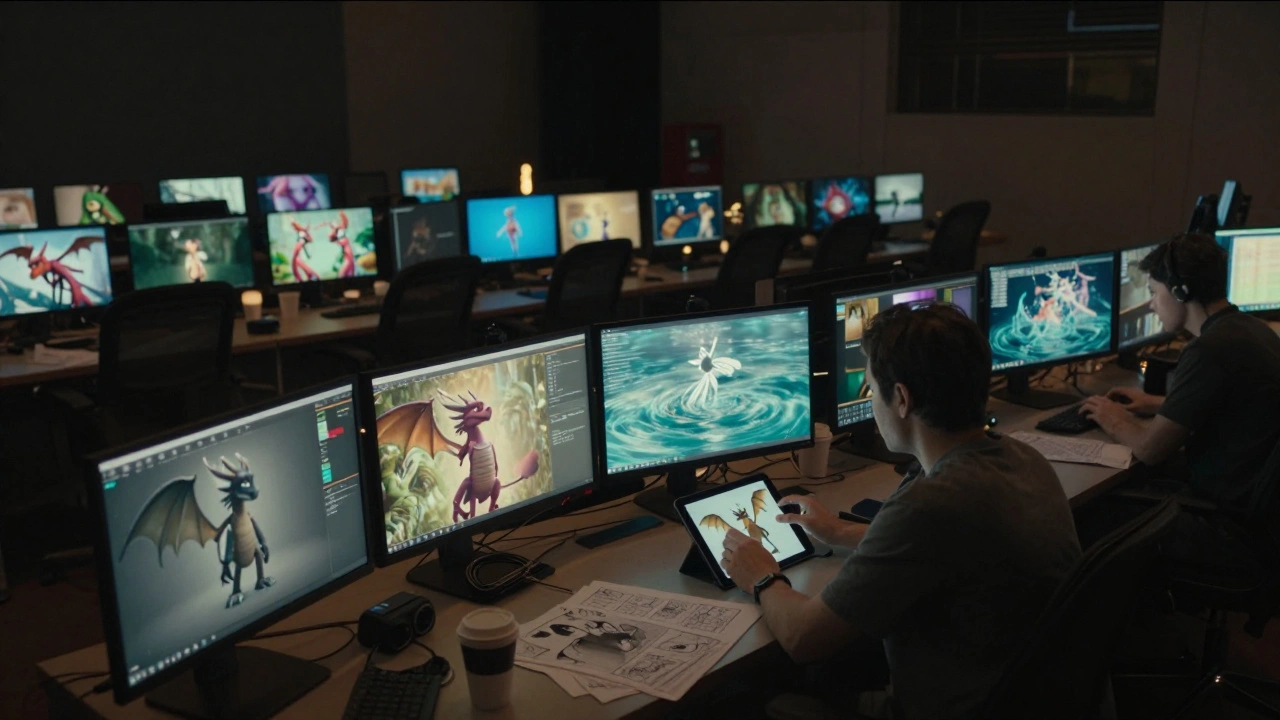
Ever wonder how a cartoon character moves like it’s alive? Or how a dragon breathes fire that looks real enough to burn your screen? Behind every animated film you’ve loved - from 3D animation blockbusters like Toy Story or Spider-Man: Into the Spider-Verse - lies a complex, multi-stage process that can take years and thousands of people. It’s not magic. It’s method. And here’s how it actually works.
Pre-Production: The Blueprint
Before any pixels are rendered, the story is built from the ground up. This phase is where the soul of the film is shaped. Teams of writers, directors, and storyboard artists turn a rough idea into a visual script. They sketch every scene, every camera angle, every emotional beat. These drawings aren’t just rough ideas - they’re blueprints. Each panel is timed to the second, with dialogue and sound cues marked in.Character designs come next. Artists create dozens of versions of each character - smiling, frowning, running, crying - all in different poses and angles. Why? So animators later can move them naturally in any direction. The design must work from every camera angle. A character’s eye shape, the curve of their jaw, even the way their hair falls - all are locked in before animation begins.
Then comes the environment. A forest isn’t just green trees. It’s soil texture, wind patterns, light filtering through leaves at different times of day. Environment artists build entire worlds in 3D space, often using real-world references. For Avatar: The Way of Water, teams scanned actual rainforests and ocean floors to replicate their textures. Accuracy isn’t optional - it’s what sells the illusion.
Modeling: Building the Digital World
Once designs are approved, 3D modelers take over. Using software like Maya, Blender, or ZBrush, they sculpt every object in the film. Not just characters - but doorknobs, coffee cups, spaceship engines. Each model starts as a basic shape, then gets refined with thousands of polygons. A human face might have over 10,000 polygons just to capture realistic muscle movement.Textures are applied next. These are digital paintings that give surfaces their look: skin pores, fabric weave, metal scratches. A single character’s skin might use three different texture maps: one for color, one for roughness, one for how light reflects. A dragon’s scale might have 12 layers - base color, dirt, wear, glow, wetness, reflection, subsurface scattering for heat, and so on.
Even simple objects are complex. A teacup isn’t just a cylinder. It’s a handle with a slight warp from being held, a chip on the rim, a fingerprint smudge. These tiny details are what make a world feel real. Studios often spend more time on background props than on main characters because viewers notice when something feels "off."
Rigging: Giving Life to Clay
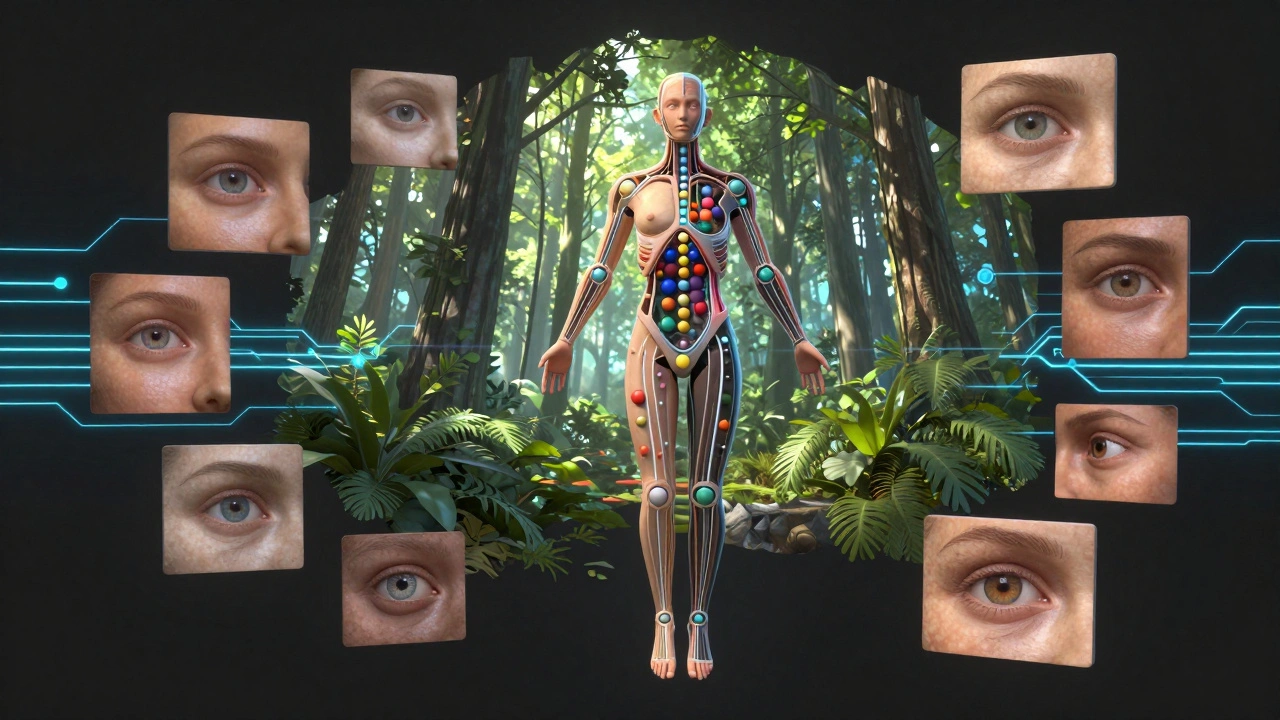
A model is just a statue until it’s rigged. Rigging is the process of building a digital skeleton inside the model - one that animators can control. Think of it like putting a puppet’s strings inside its body.For a human character, riggers create hundreds of controls: one for each finger joint, one for eyebrow lift, one for cheek puff, even one for how the tongue moves when speaking. Facial rigs are especially tricky. They need to handle thousands of possible expressions without breaking. A good facial rig lets animators create a subtle smirk with one slider - no need to manually move 20 different points.
Animals and creatures are even harder. A dragon might have 500+ controls just for its wings - each scale needs to shift as it flaps. Some studios use motion capture data from real animals to guide these rigs. For The Lion King (2019), animators studied lion movement at zoos and used that data to make the digital lions move like real ones.
Animation: The Heart of the Film
This is where the magic happens. Animators take the rigged models and bring them to life. They don’t just move limbs - they animate emotion. A character’s walk tells you if they’re tired, angry, or in love. A glance says more than a line of dialogue.There are two main styles: keyframe and motion capture. Keyframe animation is hand-crafted. Animators set key poses - the start, the peak, the end - and the software fills in the in-between frames. It’s slow, but it gives total control. Disney’s Encanto used this method to give characters exaggerated, expressive movements that felt hand-drawn even in 3D.
Motion capture, on the other hand, records real actors. An actor wears a suit with sensors, performs the scene, and the data is mapped onto the digital character. This works great for realistic movement - like in Avatar - but it often needs heavy cleanup. Real human motion is messy. A real person stumbles. A digital character can’t. Animators fix the glitches, smooth the transitions, and enhance the emotion.
One thing most people don’t realize: animators don’t work on entire scenes. One person might animate just the left hand of a character for three weeks. Another handles eyelid blinks. The scene is stitched together later. It’s like a symphony - every instrument plays its part, and only when they all come together does the music emerge.
Simulation: Making the Impossible Real
Not everything can be animated by hand. Smoke, fire, water, cloth, hair - these are handled by simulation systems. These are physics engines that calculate how things behave in the real world.For water in Moana, animators didn’t draw waves. They simulated them. The software calculated how water interacts with wind, rocks, and characters. Each drop was calculated, not drawn. The result? Water that moves with real weight and reflection.
Hair simulation is another nightmare. A character with long hair has thousands of strands. Each strand interacts with gravity, wind, and other strands. Pixar’s Brave spent years perfecting Merida’s hair. They ended up with a system that treated each strand like a spring with friction, tension, and bounce. The final result? 90,000 individually simulated hairs.
Even clothing moves on its own. A cape doesn’t just follow the body - it flaps, twists, and catches wind. These simulations run for hours, sometimes days, per scene. A single shot might use 500GB of data just for cloth physics.
Lighting and Rendering: The Final Brushstroke
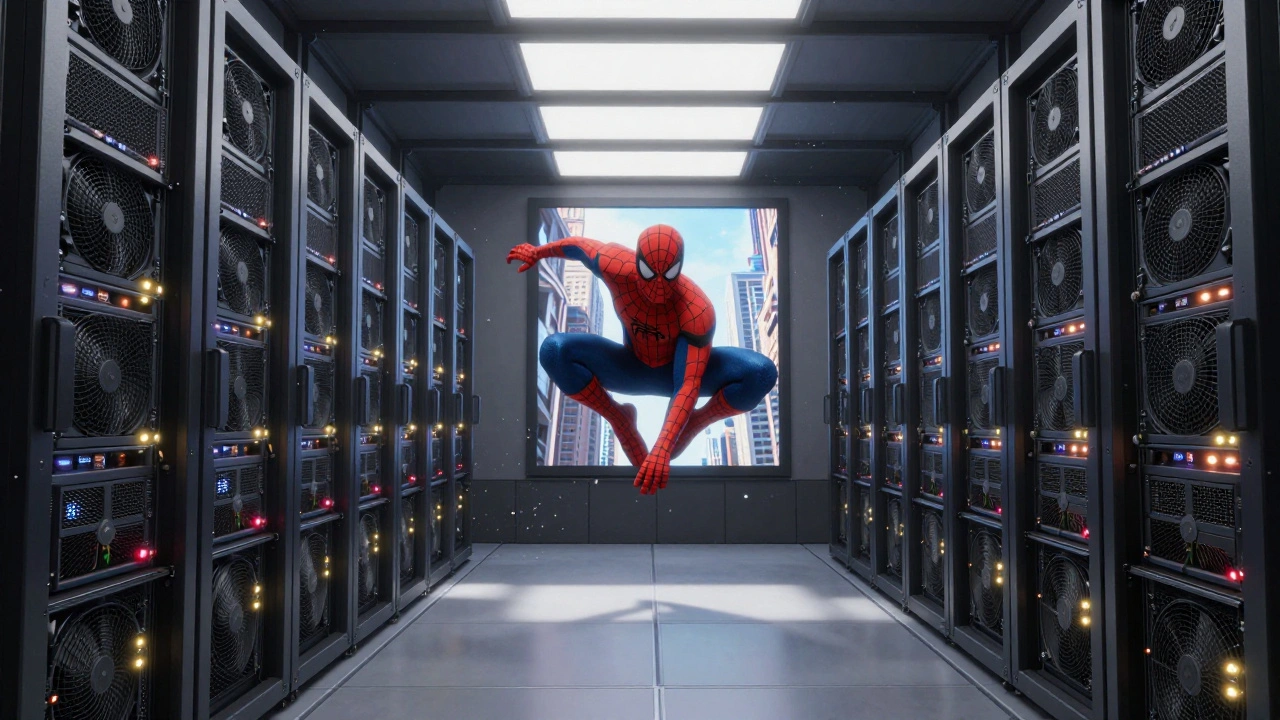
After animation, the scene is lit. Lighting artists don’t just turn on lamps - they sculpt mood. A dark hallway isn’t just black. It’s deep shadows with a single flickering bulb casting moving patterns on the wall. Every light source is placed to guide the eye, create depth, and match the emotion of the scene.Rendering is the final step. This is when the computer calculates every pixel. Each frame can take hours to render. A single shot in Spider-Man: Across the Spider-Verse took 120 hours to render because of the layered textures, reflections, and stylized lighting. The whole film had over 100,000 frames.
Rendering farms - rooms full of hundreds of computers - run nonstop for months. A studio might use 10,000 processors working in parallel. One mistake - a misplaced reflection, a glitched shadow - can mean re-rendering an entire scene. That’s why final checks are brutal. Every frame is reviewed. No detail is too small.
Post-Production: Polishing the Gem
Once rendered, the film goes to editors, sound designers, and colorists. Editors cut scenes, tighten pacing, and sync dialogue. Sound designers add layers: footsteps on gravel, distant thunder, the hum of a spaceship engine. All of it is mixed to match the emotion of each moment.Color grading is where the film’s tone is finalized. A scene that was bright and blue in rendering might be shifted to warm amber to feel nostalgic. In The Mitchells vs. The Machines, each character’s world had a different color palette - the family’s home was soft pastels, the robots’ world was cold neon.
Final checks happen frame by frame. A single pixel out of place? Fixed. A sound echo that lingers too long? Cut. This phase can take months. It’s not glamorous, but it’s where the film goes from good to unforgettable.
From idea to screen, a 3D animated film can take 3 to 6 years. Over 500 people might work on it. Every frame is touched by dozens of specialists. And yet, when you watch it, you don’t see the work - you see the story. That’s the goal. To disappear. To make you forget it’s all made of code, polygons, and pixels. That’s the real art.
How long does it take to make a 3D animated film?
Most major 3D animated films take between 3 and 6 years to complete. This includes pre-production, modeling, animation, simulation, rendering, and post-production. Smaller indie films might finish in 2 years, while big studio films like Avatar: The Way of Water or Toy Story 4 often take 5+ years due to complex effects and high detail.
Do animators draw every frame by hand?
No. In 3D animation, animators set key poses using digital controls, and software fills in the in-between frames. This is called keyframe animation. Some studios use motion capture to record real actors, then clean up the data. Hand-drawn frames are used only in 2D animation. In 3D, it’s about manipulating digital models, not drawing each frame.
What software do animation studios use?
Most studios use Autodesk Maya for modeling and animation, Blender for indie projects, and Houdini for complex simulations like fire, smoke, and water. Rendering is often done with Pixar’s RenderMan, Arnold, or V-Ray. Texture and painting work is done in Substance Painter or Photoshop. Each studio has its own pipeline, but these are the industry standards.
Why does rendering take so long?
Rendering calculates every light bounce, reflection, shadow, and texture for each pixel in every frame. A single frame of a complex scene can take 10 to 120 hours to render. With 100,000+ frames in a full film, studios use massive render farms - thousands of computers working in parallel. Even then, it can take months to finish.
Can one person make a 3D animated film alone?
Technically, yes - but it’s nearly impossible at studio quality. Some indie animators have made short films alone over several years, handling modeling, rigging, animation, and rendering themselves. However, feature-length films require teams because of the sheer volume of work. A single person might complete a 5-minute short, but a 90-minute film needs hundreds of specialists.


Comments(10)