When you think of world-class cinema, you probably think of French dramas, German thrillers, or Danish noir. But behind every award-winning film from Europe is something less glamorous but just as vital: public funding. Unlike Hollywood, where studios bankroll projects based on box office potential, European cinema survives because governments, regional agencies, and cross-border programs pour millions into films that might never make a profit-but still change how we see the world.
How Europe Funds Films Differently
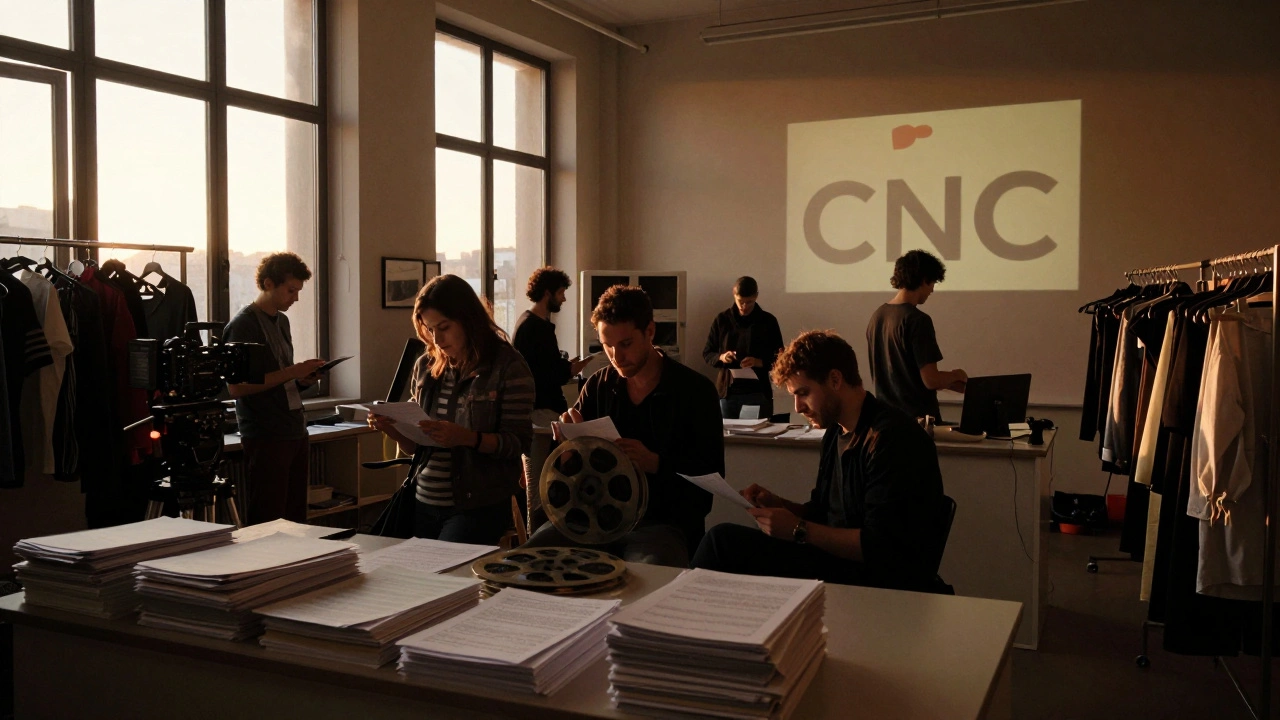
In the U.S., a film needs to attract investors who expect a return. In Europe, it’s different. Films are seen as cultural goods, not just products. That’s why countries like France, Germany, and Sweden spend hundreds of millions annually on film funding-not to chase hits, but to protect storytelling diversity. The French CNC (Centre national du cinéma et de l’image animée) alone gave €1.2 billion to film production in 2025. That’s not a donation. It’s a tax-based system where a percentage of ticket sales and streaming revenue gets funneled back into new projects. It’s self-sustaining.
Germany’s Filmförderungsanstalt (FFA) works similarly, but with a twist: they don’t just fund the big studios. They prioritize first-time directors, regional productions, and co-productions with Eastern Europe. In 2024, 68% of funded German films were debut features. That’s unheard of in Hollywood.
The Key Players Behind the Scenes
There’s no single European film fund. Instead, there’s a network of powerful institutions that work together-sometimes competing, often collaborating.
- France’s CNC: The largest in Europe. It supports everything from arthouse documentaries to big-budget historical epics. Its funding rules require at least 50% of the crew to be European.
- Germany’s FFA and regional funds: Berlin, Bavaria, and North Rhine-Westphalia each have their own funding bodies. A film shot in Hamburg might get money from the city, the state, and the federal FFA-all at once.
- Sweden’s Swedish Film Institute: Known for backing bold, slow-burning dramas. Their 2025 slate included a 4-hour film about a lighthouse keeper’s silence. It won awards in Berlin and went on to be distributed in 37 countries.
- EU’s Creative Europe MEDIA Programme: This is the glue holding it all together. Since 2014, it’s provided €1.7 billion to 4,500+ film projects across 40 countries. It doesn’t just give money-it builds connections. A Polish director, a Spanish producer, and a Romanian cinematographer? Creative Europe will fund their co-production.
- UK’s BFI (British Film Institute): Even after Brexit, the BFI remains a major player. It funds 70% of British films that go on to international festivals. Its support for indie films like The Zone of Interest and Poor Things helped them win Oscars.
These aren’t charities. They’re strategic institutions with clear goals: preserve national identity, promote language diversity, and give voice to underrepresented communities. A film in Basque, Sámi, or Catalan doesn’t get funded because it’s “artsy.” It gets funded because it keeps languages alive.

How This Changes Global Cinema
European funding doesn’t just make European films. It reshapes what the whole world watches.
Take the 2024 Palme d’Or winner, Anatomy of a Fall. It was a French film, but its director, Justine Triet, said it wouldn’t have been made without the CNC’s backing. The film went on to gross over $80 million worldwide-not because of marketing, but because it felt real. It was slow. It was messy. It had no villain. Hollywood studios wouldn’t have greenlit it. But Europe did.
Or look at Poland’s Cold War (2018). Shot in black and white, with no English dialogue, it was funded by Poland’s Film Institute and Creative Europe. It got an Oscar nomination and became a cult hit in Japan, South Korea, and Brazil. Why? Because it didn’t try to please everyone. It trusted its vision.
European funding creates space for films that don’t fit the three-act structure, the 90-minute runtime, or the “likable hero” mold. That’s why 42% of all non-English language films nominated for the Best International Feature Oscar since 2015 had direct public funding from Europe.
The Ripple Effect: From Europe to Everywhere
It’s not just about European films. It’s about influence.
Netflix and Amazon don’t fund European films directly. But they license them-because European funding makes them possible. A film made in Norway with public money might end up on your screen because it won a prize in Toronto. That film then inspires a filmmaker in Lagos to make a low-budget drama about a local market woman. Without European funding, that chain of inspiration breaks.
Even in the U.S., indie filmmakers are starting to adopt European models. The Sundance Institute now partners with the European Film Promotion to offer joint grants. In 2025, they funded a U.S.-Romanian co-production about migration that used the CNC’s funding structure as a blueprint.
And it’s working. Between 2020 and 2025, the number of non-English language films in global top 100 box office charts doubled. Not because of streaming algorithms. Because of funding.

What Happens When Funding Disappears?
It’s not just about art. It’s about survival.
In 2023, Hungary’s national film fund was restructured under government control. Funding shifted to projects that aligned with political narratives. Independent filmmakers left. Documentaries on minority rights vanished. The result? Hungary’s output dropped by 60%. Its films stopped appearing at Cannes. Foreign distributors stopped buying.
Same thing happened in Poland in 2021, when funding was tied to “family values” criteria. Films about LGBTQ+ experiences lost support overnight. The backlash was global. Filmmakers from France, Sweden, and Germany boycotted co-productions with Polish institutions. The damage took two years to repair.
This shows how fragile the system is. European film funding isn’t just money-it’s a shield. When it’s weakened, the whole ecosystem suffers.
Why This Matters for You
You don’t need to be a filmmaker to care about this.
Every time you watch a foreign film that feels different-slower, stranger, more honest-you’re seeing the result of public funding. Without it, cinema would be dominated by one kind of story: the ones that sell best. That’s not just limiting. It’s dangerous.
European funding doesn’t guarantee great films. But it guarantees space for them to exist. It lets a quiet film about a deaf child in rural Portugal compete on the same screen as a superhero movie. It lets a 12-hour experimental documentary on Soviet labor camps find an audience.
And it’s not just Europe. The model is spreading. Canada, South Korea, and even Brazil are now looking at how Europe funds art without asking for box office returns. The future of cinema isn’t just about technology. It’s about who gets to tell stories-and who pays for them.
How does European film funding differ from Hollywood financing?
Hollywood relies on private investors who demand returns, often pushing for marketable formulas-sequels, franchises, star-driven plots. European funding, by contrast, comes mostly from public sources like tax revenues and broadcast fees. It prioritizes cultural value over profit, supports first-time directors, encourages linguistic diversity, and funds films that challenge norms. A film doesn’t need to be popular to get funded-it just needs to be meaningful.
Which European country has the most generous film funding system?
France leads with its CNC, which distributed €1.2 billion in 2025. Its system is built into the film industry itself: a tax on cinema tickets and streaming services feeds directly into production grants. It’s self-sustaining and highly efficient. Germany and Sweden follow closely, but France’s scale and consistency make it the global benchmark.
Can non-European filmmakers get funding from European bodies?
Yes-but only through co-productions. European funds require at least one European partner: a producer, director, or production company based in a participating country. A U.S. director can’t apply alone, but if they team up with a French producer, they can access funding from the CNC or Creative Europe. This is why you see so many international collaborations in European cinema.
Do European film funds only support art house films?
No. While they do support arthouse and experimental work, they also fund genre films-thrillers, comedies, sci-fi, even horror. The 2024 Danish film Reptile, a crime thriller, received public funding and became a breakout hit. The goal isn’t to avoid commercial films-it’s to ensure that commercial success isn’t the only reason a film gets made.
What happens to films that don’t get funded?
Many never get made. Others are made with tiny budgets, self-funded, or abandoned. Without public support, filmmakers either conform to market demands or stop making films entirely. This leads to homogenized storytelling. Europe’s funding system prevents that collapse by giving space to stories that might otherwise disappear.