Remember when the biggest shift in filmmaking was moving from film to digital? That feels like ancient history now. The real revolution isn’t just about better cameras; it’s about how we build worlds around them. In 2026, the line between physical set and digital environment has blurred so much that audiences often can’t tell where one ends and the other begins. This isn’t science fiction-it’s the standard workflow for major productions today.
The core of this transformation is Cinematography Innovation, which refers to the integration of computational tools, real-time rendering, and sensor technology to expand creative control. It moves beyond capturing light and focuses on generating, manipulating, and simulating reality in real time. For directors and cinematographers, this means pre-visualizing entire scenes before a single frame is shot, adjusting lighting conditions instantly, and placing actors in environments that don’t physically exist.
Key Takeaways
- Virtual Production has moved from a niche experiment to a cost-saving necessity, with LED volumes reducing post-production time by up to 40%.
- AI-assisted workflows are handling tedious tasks like color grading consistency and lens distortion correction, freeing creatives for artistic decisions.
- Volumetric Capture is replacing traditional green screen, allowing actors to see their surroundings and react naturally, which improves performance quality.
- New camera sensors offer dynamic ranges exceeding 18 stops, capturing detail in both deep shadows and bright highlights without heavy processing.
- The future lies in generative pre-vis, where AI drafts storyboard sequences that directors can edit in real-time during planning meetings.
The Rise of the LED Volume
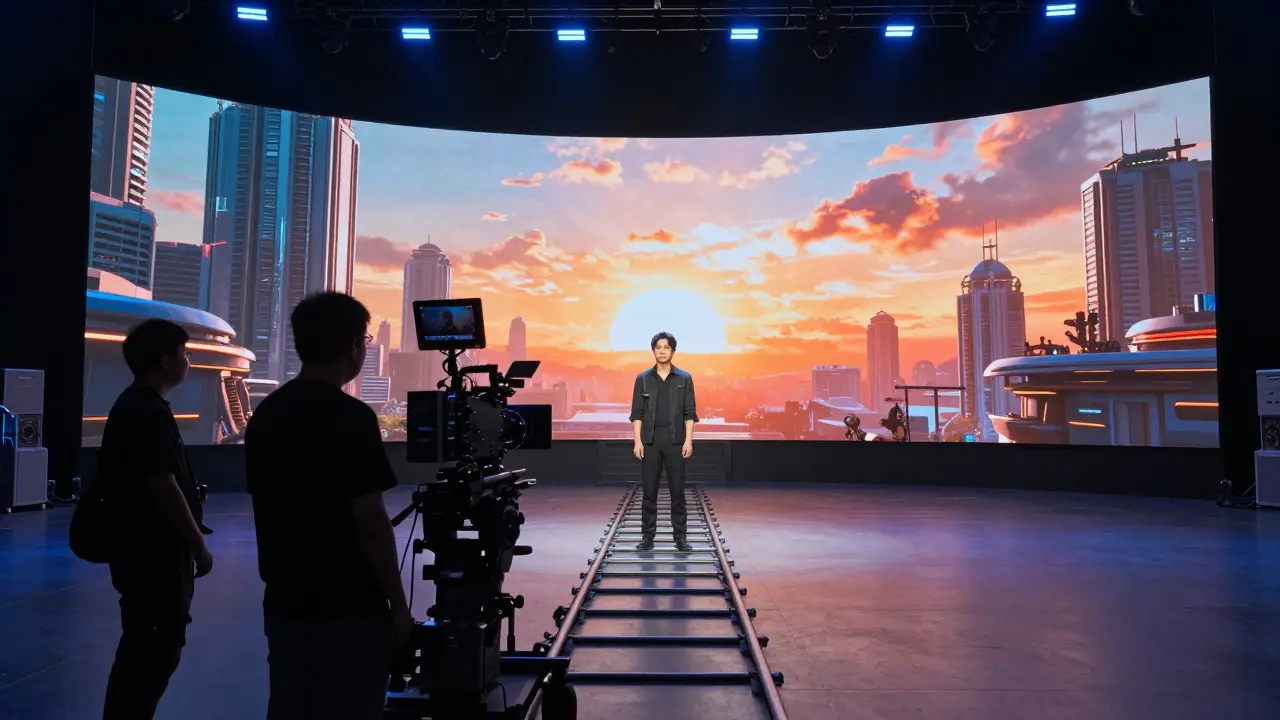
For decades, the green screen was the default for fantasy and sci-fi films. But it had a major flaw: actors were staring at a blank wall, guessing where things were. Enter the LED volume, a massive curved screen wrapped around the set. This technology uses real-time game engines to render backgrounds that match the camera’s position exactly. As the camera moves, the background parallax shifts correctly, creating a sense of depth that flat screens never achieved.
This isn’t just a visual trick. It changes how a scene is lit. Instead of adding artificial lights to mimic a sunset, the LED screen emits the actual light of that sunset onto the actors’ faces. This natural interaction reduces the need for complex lighting rigs and makes the final image look more cohesive. Productions like those using Unreal Engine have reported significant savings because they shoot in-camera effects rather than fixing them in post-production. The result is a faster turnaround and a more immersive experience for the audience.
| Feature | Traditional Green Screen | LED Volume (Virtual Production) |
|---|---|---|
| Actor Reference | None (blank screen) | Real-time rendered environment |
| Lighting Integration | Artificial simulation required | Physical light emitted from screen |
| Post-Production Time | High (compositing heavy) | Low (in-camera effects) |
| Parallax Accuracy | Difficult to match perfectly | Automatic real-time tracking |
AI as a Co-Director
Artificial Intelligence in filmmaking doesn’t mean robots writing scripts. It means tools that handle the repetitive, technical aspects of cinematography. Imagine you’re shooting a dialogue scene across three different locations over two weeks. Keeping the color grade consistent manually is exhausting and prone to error. AI tools now analyze each clip and suggest adjustments to match the baseline look established in the first take.
Beyond color, AI is mastering Generative Pre-visualization. In the past, storyboards were static drawings. Now, teams use AI to generate rough video versions of scenes based on script descriptions. A director can say, "Make the rain heavier," or "Change the lens to a wider angle," and the software updates the preview instantly. This allows for collaborative decision-making before expensive sets are built. It’s not about replacing human creativity; it’s about removing friction from the creative process.
Volumetric Capture and Spatial Video
Green screen replacement is another frontier. Volumetric Capture uses arrays of cameras to record an actor from every angle simultaneously. This creates a 3D model of the performance, known as a photogrammetry mesh. Unlike 2D footage, this data contains depth information. When combined with spatial video formats, viewers can look around the scene if they’re wearing headsets, or simply enjoy a more cinematic depth-of-field effect in standard 2D playback.
This technology is particularly useful for documentaries and interviews. You can place an interviewee in a historically accurate location that no longer exists, or shrink them down to sit on a table next to a prop. Because the capture is volumetric, the lighting and perspective remain consistent regardless of where the viewer’s eye is focused. It adds a layer of immersion that flat photography struggles to achieve.
Sensor Technology and Dynamic Range
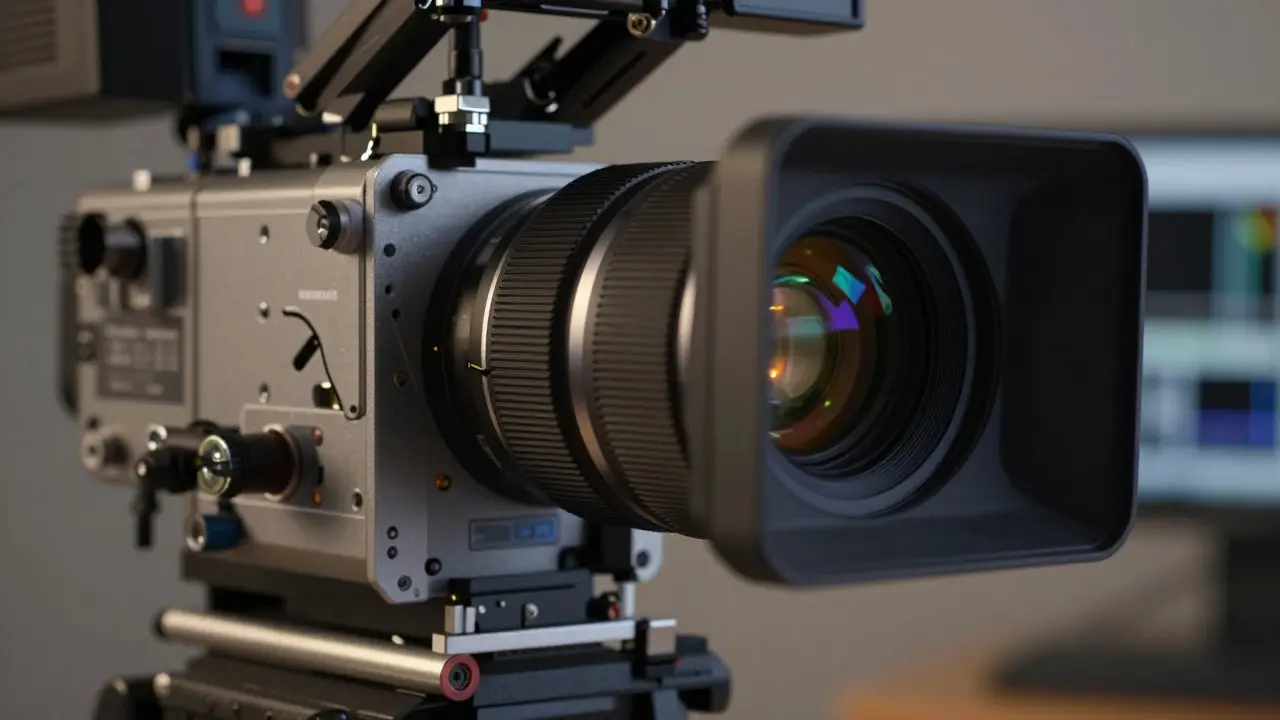
While software gets the headlines, hardware remains the foundation. Modern cinema cameras now feature sensors with dynamic ranges exceeding 18 stops. To put that in perspective, a human eye sees about 14 stops. This means cameras can capture detail in the darkest shadow and the brightest highlight simultaneously without clipping either end. This capability reduces the need for heavy grading to recover lost details.
Additionally, rolling shutter artifacts, once a common complaint in fast-action shots, are becoming obsolete due to global shutter sensors. These sensors expose all pixels at once, eliminating the wobble effect seen when panning quickly. For action-heavy genres, this ensures crisp, stable images even in chaotic movement. Manufacturers are also pushing higher frame rates at full resolution, allowing editors to slow down moments significantly without losing sharpness.

The Impact on Crew Roles
These technologies aren’t just changing what we shoot; they’re changing who shoots it. The role of the gaffer (lighting technician) is evolving. With LED volumes providing base lighting, gaffers now focus more on accentuating features and creating mood rather than building entire light sources from scratch. Similarly, the VFX supervisor is involved earlier in the process, working alongside the director during pre-production to ensure the digital elements align with the live-action plan.
There’s a concern that these tools will make entry-level jobs harder to find. If AI handles basic grading and tracking, do we need as many junior editors? Perhaps. But new roles are emerging. We now have "virtual production technicians" who manage the synchronization between cameras and game engines. We have "data wranglers" who ensure terabytes of volumetric data are organized and accessible. The industry isn’t shrinking; it’s shifting its skill requirements toward tech-literacy and hybrid creative-technical expertise.
Challenges and Pitfalls
It’s not all smooth sailing. The initial cost of setting up an LED volume is substantial. Small independent films still struggle to access this technology, leading to a potential divide between high-budget blockbusters and lower-budget narratives. Furthermore, the learning curve for game engine software is steep. Cinematographers trained in traditional optics may feel out of place when asked to understand shader materials and ray tracing settings.
Another pitfall is over-reliance on digital fixes. Sometimes, filmmakers get so comfortable with the ability to fix things in post that they neglect fundamental cinematographic principles like composition and practical lighting. The best results come when technology serves the story, not the other way around. If a scene looks good because of a digital filter but feels empty because of poor acting or bad framing, the technology hasn’t saved the day.
What’s Coming Next
Looking ahead, the next big leap is likely in Neural Rendering. Current real-time rendering uses mathematical approximations to simulate light. Neural rendering uses machine learning models trained on real-world light behavior to predict how light should bounce and scatter. This could lead to photorealistic simulations that are indistinguishable from real footage, even in complex environments like water or fire.
We might also see standardized file formats for volumetric data, making it easier to share 3D performances between different studios and platforms. Right now, proprietary formats create silos. A universal standard would allow a performer captured in New York to be easily integrated into a scene shot in London without massive conversion work. This interoperability is key to unlocking the full potential of distributed filmmaking.
Is virtual production only for big budget films?
Not anymore. While large-scale LED volumes are expensive, smaller setups and portable LED panels are becoming affordable for mid-range productions. Additionally, software-based virtual production allows creators to use existing green screens with real-time tracking, reducing hardware costs significantly.
Does AI replace cinematographers?
No. AI handles technical execution and consistency, but cinematographers provide artistic vision, emotional tone, and narrative intent. The tool automates the "how," but the human decides the "why." Successful collaborations treat AI as a highly skilled assistant, not a replacement.
What is the main advantage of volumetric capture over green screen?
The primary advantage is context. Actors can see their environment, which leads to more natural reactions and better performance. It also preserves depth information, allowing for flexible compositing and spatial viewing options that flat 2D footage cannot offer.
How does dynamic range affect post-production?
Higher dynamic range means less noise in shadows and fewer blown-out highlights. This gives colorists more latitude to shape the image without introducing artifacts. It simplifies the grading process and allows for more dramatic contrast ratios in the final output.
Are there environmental benefits to these new technologies?
Yes. Virtual production reduces the need to travel to remote locations, lowering carbon footprints associated with crew transport. It also reduces waste from physical set construction. By shooting in controlled indoor environments, productions can reuse infrastructure and minimize material usage.