When you see a new Marvel movie drop every year like clockwork, or a Star Wars spin-off arrive exactly 18 months after the last one, it’s not magic. It’s math. And behind that math are contracts, calendars, and the quiet, brutal reality of actor availability. Franchises don’t run on passion alone-they run on signed pieces of paper and blocked-out dates in a producer’s planner.
Why Star Contracts Are the Backbone of Franchise Scheduling
Think of a lead actor in a major franchise like the keystone in an arch. Remove them, and the whole thing starts to wobble. That’s why studios lock actors into multi-film deals before the first script is even finished. Robert Downey Jr.’s original Iron Man contract didn’t just pay him for one movie-it guaranteed him roles in five sequels and team-up films, all tied to specific release windows. That’s not generosity. That’s risk management.
These contracts aren’t just about money. They’re about control. Studios need to know exactly when an actor will be free. If Chris Evans signs on for three Captain America films, the studio doesn’t just book the director-they book his calendar. His vacation time, his indie film commitments, even his wedding date can be factored into the production timeline. Studios often build in buffer weeks, but if an actor suddenly needs six months off for family reasons, the entire franchise schedule can slip by a year.
The Domino Effect of Actor Availability
It’s not just the leads. Supporting actors matter too. In the Harry Potter series, the core trio-Daniel Radcliffe, Emma Watson, and Rupert Grint-were all minors during filming. Their contracts included mandatory schooling hours and limits on daily work time. That meant filming couldn’t start before September and had to wrap by June every year. The entire production schedule was built around the UK school calendar.
Fast forward to today, and the same logic applies to franchises like Avatar or Mission: Impossible. Tom Cruise doesn’t just show up when the studio calls. He’s already committed to a three-year window for stunt training, physical conditioning, and filming. His availability dictates when stunt rehearsals begin, when locations are locked in, and even when the visual effects team gets their reference footage. If Cruise is tied up in another project, the next Mission: Impossible doesn’t just delay-it gets reshuffled entirely.
How Studios Plan Around Conflicts
Studios don’t just hope actors are available-they plan for the worst. That’s why you’ll often see two or three actors signed to the same franchise with overlapping roles. Look at the Fast & Furious series: Vin Diesel and Michelle Rodriguez are core cast members, but their schedules rarely align perfectly. So the studio films their scenes separately, sometimes months apart. Diesel shoots in Atlanta; Rodriguez shoots in Toronto. Then editors stitch it together.
This approach is called ‘block filming.’ It’s expensive, but it’s the only way to keep a franchise moving when stars are juggling TV deals, Broadway runs, or family obligations. The Lord of the Rings trilogy filmed all three movies back-to-back in New Zealand because the cast couldn’t be guaranteed to return for multiple separate shoots. It saved money, kept continuity intact, and gave the actors a single, focused experience.

What Happens When a Star Leaves-or Can’t Return
When a major actor exits a franchise, the ripple effect is immediate. Paul Walker’s death during the filming of Fast & Furious 7 didn’t just halt production-it forced a complete rewrite. The studio had to pause for over a year, use CGI to complete his scenes, and restructure the entire emotional arc of the film. The next movie, F8, was delayed by eight months to accommodate new casting and reshoots.
Even when actors leave by choice, the timeline shifts. When Mark Hamill stepped back from starring in the sequel trilogy after The Rise of Skywalker, Lucasfilm didn’t just move on-they had to rework the entire narrative structure of the final film to reduce his role. That meant rewriting scenes, changing pacing, and delaying post-production to accommodate the new script.
How Streaming Changed the Game
Before streaming, franchises had rigid release dates tied to summer blockbusters or holiday seasons. Now, with Disney+, Netflix, and Amazon Prime dropping shows weekly, studios can stretch out filming over 18 to 24 months. That’s a game-changer.
Take Marvel’s Disney+ series. Instead of filming six movies in three years, they now film two seasons of a show simultaneously. Actors like Sebastian Stan (Bucky Barnes) or Elizabeth Olsen (Scarlet Witch) can film their TV arcs while also being available for theatrical films. The schedule is more flexible, but the contracts are more complex. Actors now negotiate for ‘cross-platform availability’-meaning they can’t sign on to competing streaming shows during their franchise window.
That’s why you see so many actors doing one Marvel show and one MCU movie per year. Their contracts are layered like a cake: one layer for theatrical, one for streaming, and one for promotional tours. Miss a promotional date? You might lose your next paycheck.

The Hidden Cost of Continuity
Continuity isn’t just about costumes and set design. It’s about people. The same stunt team, the same makeup artists, the same costume designers-they all need to be available year after year. When a franchise keeps the same crew, it saves millions. But if the lead actor changes, the whole crew might need to be replaced.
That’s why studios prefer long-term actor relationships. Even when an actor’s popularity dips, they keep them on. Look at the James Bond franchise: Daniel Craig stayed through five films, even when critics questioned his casting. Why? Because replacing him would have meant retraining the entire production team on a new face, a new voice, a new physicality. The cost of that reset is higher than keeping him.
It’s the same reason Doctor Who recasts the lead every few years-but keeps the same writers, directors, and producers. The actor changes. The machine doesn’t.
What You See Isn’t What You Get
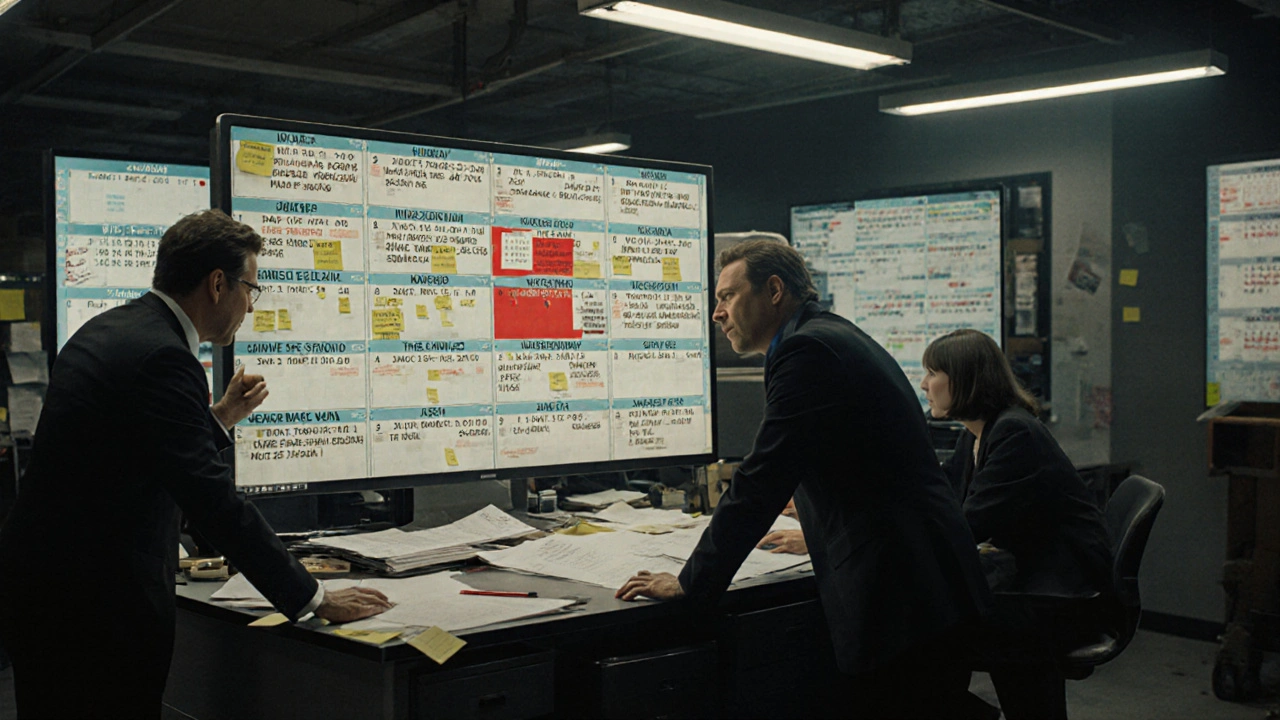
When you hear a franchise is ‘on track’ for a 2026 release, what you’re really hearing is: ‘The lead actor is free from April to November 2025, and we’ve locked the studio for that window.’
Behind every release date is a spreadsheet with dozens of names, time blocks, and contractual obligations. A single actor’s pregnancy, a sudden injury, or a contract dispute can delay a movie by a year. And when that happens, it doesn’t just affect the next film-it affects spin-offs, merchandising, theme park rides, and even video game releases tied to the timeline.
Franchises aren’t made by directors or writers alone. They’re made by agents, lawyers, schedulers, and HR departments who treat actors like critical infrastructure. You don’t notice it because it works. But when it breaks, you feel it.
Why do studios sign actors to multi-film deals before the first movie even releases?
Studios sign actors to multi-film deals to lock in availability, reduce casting risks, and control production timelines. If a lead actor becomes unavailable after a hit movie, delays can cost millions. Signing early ensures the actor is committed to the franchise’s schedule, even if future scripts aren’t written yet. It also gives actors financial security and encourages long-term loyalty.
Can a star’s personal life delay a franchise movie?
Absolutely. Births, illnesses, divorces, and even mental health breaks can delay filming. When Scarlett Johansson took time off after her divorce, Marvel adjusted the release schedule for Black Widow and shifted her scenes to later in the production cycle. Studios build in flexibility, but major life events often force reshuffles that ripple across the entire franchise timeline.
Why do some franchises replace actors while others stick with the same cast?
It depends on the role’s importance and the cost of recasting. Leads in character-driven franchises like James Bond or Doctor Who are meant to be replaced. But in ensemble franchises like Avengers or Fast & Furious, the actors are tied to fan identity. Replacing them risks alienating audiences. Studios weigh fan loyalty against actor availability and budget.
How do streaming platforms affect actor scheduling in franchises?
Streaming allows longer, more flexible filming windows-often 18 to 24 months instead of 6 to 8. This lets actors balance TV and film roles. But it also means contracts now include exclusivity clauses: actors can’t work on competing streaming projects during their franchise window. Studios use this to control release pacing and avoid spoilers.
What happens if a franchise actor refuses to return for the next film?
If an actor refuses to return, studios have a few options: rewrite the character’s exit, use CGI or archival footage, or recast. Rewriting is cheaper but risky-it can break fan expectations. Using CGI, like with Paul Walker, is expensive and emotionally charged. Recasting works only if the character isn’t central. Most franchises try to negotiate first, because losing a lead often means delaying the entire release schedule.
Franchises survive because they’re more than stories-they’re systems. And like any system, they depend on predictable inputs. The actors are the most unpredictable part. That’s why studios treat their contracts like mission-critical software: updated, backed up, and always running.





Comments(8)