You spent two years editing your debut feature in a cramped apartment. You scraped together $150,000 from grants and maxed-out credit cards. Now, you have a finished film that critics love but studios ignore. The biggest hurdle isn't getting into Sundance; it's getting people to actually buy a ticket when the lights go down on a Tuesday night in October. Traditional flat-rate ticketing fails independent cinema because it treats a slow Wednesday afternoon the same as a packed Saturday evening. This mismatch kills momentum before it starts.
Dynamic pricing is a revenue management strategy where ticket costs fluctuate based on real-time demand, time of day, seat location, and advance purchase timing. Unlike blockbuster franchises that rely on volume, indie films depend on maximizing yield per seat. If you leave money on the table during peak times or fail to fill seats during dead zones, your release window shrinks. Here is how small distributors and theater owners can use flexible ticket models to keep art-house preservation alive without breaking the bank.
Why Flat Rates Fail Independent Cinema
Multiplex chains use dynamic pricing extensively. If you book an Avengers sequel opening weekend, you pay more than if you catch a re-run on a Monday. Yet, many independent theaters stick to static pricing: $12 for every showtime, regardless of context. This creates two major problems for low-budget releases.
First, it undervalues scarcity. When a niche documentary has only three screenings left in the city, those tickets are worth more than standard inventory. Second, it overprices risk-averse viewers. A casual moviegoer might hesitate at $12 for an unknown title but jump at $8. By flattening the price curve, you lose both the superfans willing to pay premium and the curious newcomers who need a nudge. Dynamic pricing solves this by aligning cost with perceived value and availability.
Consider the data from recent art-house circuits. Films like "Aftersun" or "The Zone of Interest" saw significant engagement spikes when theaters offered early-bird discounts or last-minute flash sales. These tactics didn't just fill seats; they created urgency. Static pricing lacks this psychological trigger. It assumes every customer has the same willingness to pay, which is rarely true in diverse urban markets like Asheville or Brooklyn.
The Core Mechanics of Flexible Ticketing
Implementing dynamic pricing doesn't require expensive AI software. It starts with understanding the variables that influence demand. You need to track four key factors: time sensitivity, channel preference, audience segmentation, and competitive landscape.
- Time Sensitivity: Tickets purchased 48 hours in advance should cost less than walk-up tickets. This rewards planning and helps forecast attendance.
- Channel Preference: Online bookings often incur processing fees. Pass these directly to the user rather than absorbing them, or offer a discount for direct box office purchases to reduce overhead.
- Audience Segmentation: Students, seniors, and members usually get discounts. But what about "first-time viewers"? Use promo codes to target specific demographics without lowering the base rate for everyone.
- Competitive Landscape: If a major studio release dominates the local market, lower your prices slightly to capture overflow audiences looking for alternatives.
The goal isn't to nickel-and-dime customers. It's to smooth out the revenue curve. A full theater generates buzz, which drives future sales. An empty theater looks like a failure, even if the film is critically acclaimed. Dynamic pricing helps maintain occupancy rates, which signals health to distributors and investors.
Strategic Implementation for Small Distributors
If you're distributing a micro-budget film, you likely don't control the theater chain. However, you can negotiate terms. Many independent cinemas are open to experimenting with revenue splits if it means higher total gross. Propose a tiered model where you take a larger percentage of premium-priced tickets during peak hours, allowing the theater to keep more of the discounted off-peak sales.
Here’s a practical framework for setting initial price points:
| Tier | Trigger Condition | Price Adjustment | Target Audience |
|---|---|---|---|
| Early Bird | Purchase >7 days ahead | -20% Base Price | Planners, Fans |
| Standard | Purchase 1-7 days ahead | Base Price ($12) | General Public |
| Last Minute | Purchase <24 hours ahead | +15% Base Price | Impulse Buyers |
| Off-Peak | Mon-Wed Before 6 PM | -30% Base Price | Students, Seniors |
This structure gives the theater flexibility while protecting your margin. Notice the asymmetry: discounts are deeper than premiums. Why? Because filling empty seats is harder than capturing extra dollars from committed fans. A half-empty screen hurts word-of-mouth more than a slight dip in average ticket price.
Leveraging Data Without Big Tech Tools
You don't need Salesforce to run this. Most modern point-of-sale systems used by indie theaters (like TicketSpice or AtomTickets) allow rule-based automation. Set up alerts for low occupancy. If a Friday night showing is below 40% capacity 24 hours prior, automatically push a social media ad with a unique discount code. Track redemption rates to see if the lift in volume outweighs the drop in price.
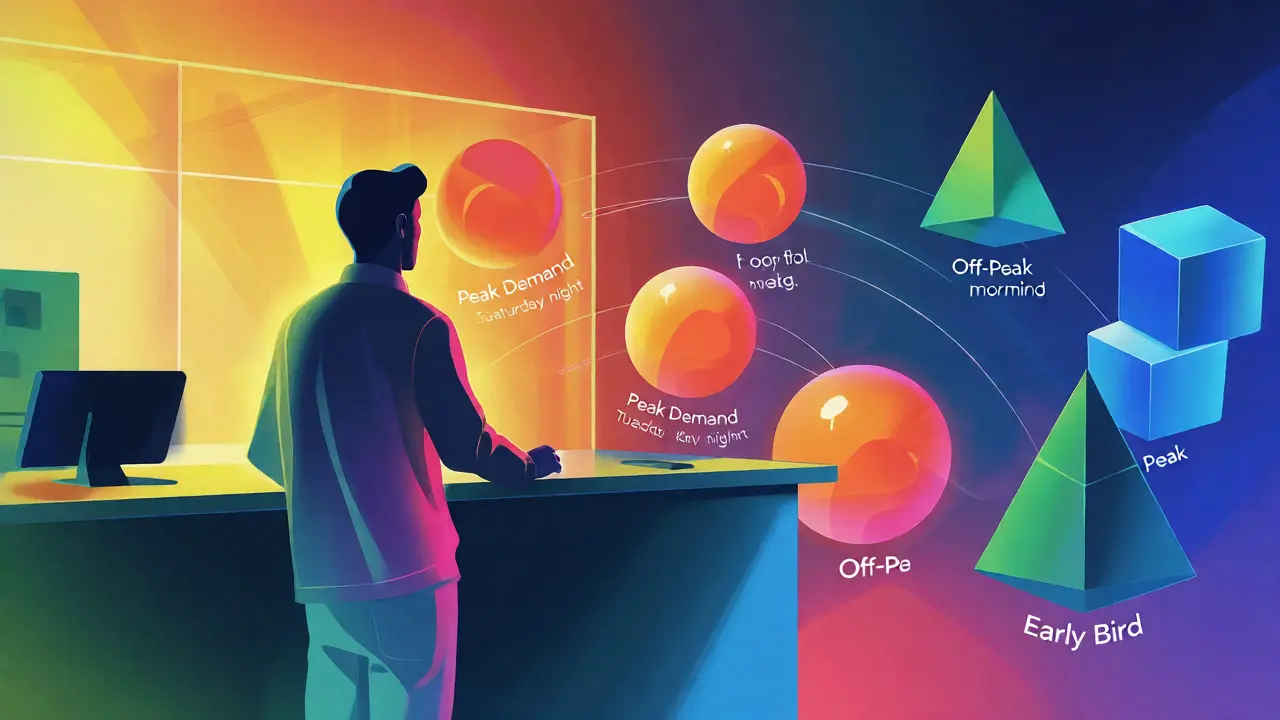
One common pitfall is transparency fatigue. Customers hate feeling cheated. If prices swing wildly without explanation, trust erodes. Be clear about why prices change. Use labels like "Advance Purchase Discount" or "Peak Demand Surcharge." Frame it as a choice: save money by planning ahead, or pay for convenience. This shifts the narrative from "hidden fees" to "smart shopping."
Another tactic is bundling. Pair a discounted ticket with a concession combo. For example, "Tuesday Night Special: Ticket + Popcorn for $10." This increases the average transaction value while making the ticket feel cheaper. Concessions have high margins, so the theater stays happy, and you drive foot traffic.

The Role of Community and Scarcity
Indie films thrive on community engagement. Dynamic pricing can amplify this through limited-time offers tied to events. Host a Q&A with the director after a screening priced at a premium. Offer a "pay-what-you-want" slot for students during matinees. These aren't just discounts; they're experiences. They turn a passive viewing into an active participation event.
Scarcity drives action. Announce that the first 50 tickets for a premiere go for $5. This creates a rush. People share the deal on Instagram Stories. Suddenly, your marketing budget stretches further because users become promoters. Compare this to a static $12 ticket posted quietly online. Which gets shared more? The one with a story and a deadline.
However, avoid over-discounting. If you constantly sell tickets at $5, audiences will anchor their expectations there. Once you raise prices back to $12, they'll complain. Keep discounts strategic and temporary. Use them to launch, not to sustain. Long-term sustainability comes from building a loyal subscriber base, not chasing bargain hunters.
Measuring Success Beyond Box Office Gross
How do you know if dynamic pricing works? Don't just look at total revenue. Look at yield per available seat mile (RevPAS). This metric tells you how efficiently you're monetizing capacity. If RevPAS rises, your strategy is working, even if total attendance stays flat.
Also, monitor repeat visitation. Did the early-bird buyers return for the next film? Did the last-minute buyers become regulars? Dynamic pricing should build habits, not just transactions. If you notice a segment dropping off, adjust the rules. Maybe the off-peak discount was too deep, devaluing the brand. Or maybe the peak surcharge was too high, scaring away casual viewers.
Finally, consider the long-term impact on art-house preservation. Sustainable revenue models keep screens open. Closed theaters mean fewer venues for experimental work. By optimizing ticket strategies, you contribute to the ecosystem's survival. It’s not just about your film; it’s about keeping the door open for the next creator.
Does dynamic pricing confuse older audiences?
Not necessarily, if communicated clearly. Older audiences often appreciate loyalty programs or fixed-price memberships. You can exclude subscribers from dynamic fluctuations, offering them stability while using variable pricing for general admission. Transparency is key-explain the savings for booking early.
Is dynamic pricing legal for all types of films?
Yes, generally. There are no federal laws prohibiting variable ticket prices in the US. However, some local ordinances may require clear disclosure of final prices at checkout. Always check local consumer protection guidelines to ensure compliance.
How much software does my theater need?
You don't need custom AI. Most existing ticketing platforms support rule-based pricing. You set conditions (e.g., "if date = Tuesday AND time < 6 PM, then price = $8"). This logic handles 90% of indie needs without complex algorithms.
Can I apply dynamic pricing to streaming releases?
Absolutely. Platforms like Vimeo On Demand allow promotional codes and time-limited discounts. Launch your film at a higher price, then drop it after two weeks. This mimics theatrical windows and captures different buyer segments effectively.
What is the biggest mistake filmmakers make with pricing?
Undervaluing their work. Filmmakers often fear rejection, so they set prices too low. This attracts bargain hunters who don't care about the film. Higher prices signal quality and attract engaged viewers who are more likely to spread the word.