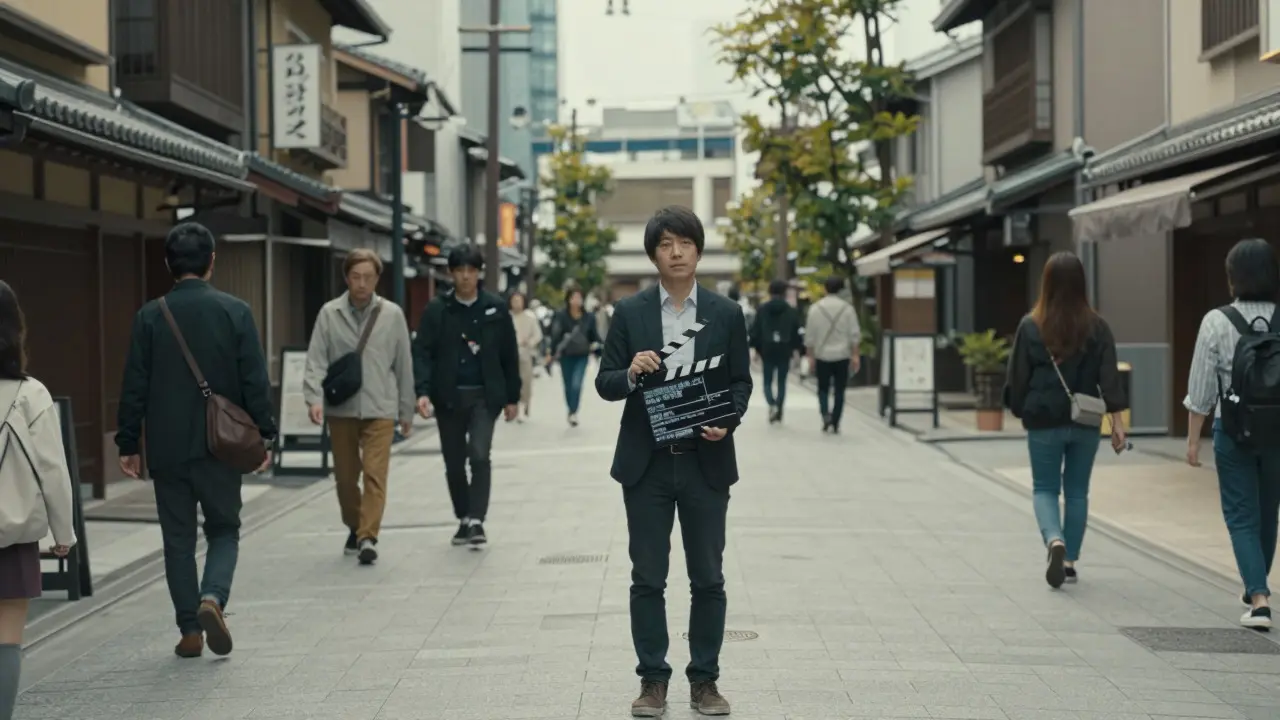
When you watch a movie, do you just see the plot? Or do you notice the way the camera moves, the silence that hangs in the air, or the specific cultural texture of the setting? These elements are not accidental. They are the fingerprints of International Film Directors is a collective group of cinematic visionaries from diverse geographic regions who shape narrative structures through distinct cultural lenses, technical styles, and philosophical approaches to storytelling. Unlike Hollywood-centric productions that often prioritize universal commercial appeal, these filmmakers bring unique regional codes, historical contexts, and artistic traditions to the screen. From the minimalist realism of Japan to the vibrant social commentary of Latin America, their work expands our understanding of what cinema can be.
For decades, the global film industry operated under a heavy bias toward Western narratives. However, the landscape has shifted dramatically. Today, audiences stream films from South Korea, India, France, and Nigeria with equal enthusiasm. This shift isn't just about novelty; it's about accessing different ways of seeing the world. When a director from another culture tells a story, they aren't just translating language; they are translating emotion, history, and social structure into visual form. Understanding these perspectives helps us decode not just the film, but the society behind it.
Key Takeaways
- Cultural Context is Visual: International directors use lighting, pacing, and dialogue density to reflect their local social norms and historical realities.
Comparison of Major International Cinematic Styles Region Key Characteristics Notable Figures Typical Themes Japan Minimalist editing, long takes, focus on negative space Hirokazu Kore-eda, Kiyoshi Kurosawa Family dynamics, memory, impermanence Mexico/Latin America Vibrant color palettes, magical realism, political satire Alejandro G. Iñárritu, Alfonso Cuarón Identity, revolution, modernity vs. tradition South Korea High-concept plots, genre blending, sharp social critique Bong Joon-ho, Park Chan-wook Class disparity, revenge, societal pressure France Intellectual dialogue, experimental structure, literary adaptation Justine Triet, Celine Sciamma Existentialism, romance, moral ambiguity Comparison of Major International Cinematic Styles (Continued) Region Key Characteristics Notable Figures Typical Themes India Emotional intensity, musical interludes, epic scale Premchand Sagar, Anurag Kashyap Fate, family honor, spiritual quest Comparison of Major International Cinematic Styles (Continued) Region Key Characteristics Notable Figures Typical Themes Nigeria Fast-paced production, accessible drama, diaspora connections Kenneth Nnaemeka, Chinonye Eze Urban life, migration, resilience Comparison of Major International Cinematic Styles (Continued) Region Key Characteristics Notable Figures Typical Themes Iran Subtle acting, documentary-like realism, ethical dilemmas Asghar Farhadi, Jafar Panahi Justice, family conflict, censorship Comparison of Major International Cinematic Styles (Continued) Region Key Characteristics Notable Figures Typical Themes Germany Expressionist visuals, psychological depth, historical reflection Maren Ade, Thomas Arslan Memory, trauma, industrial legacy
The Aesthetic Differences You Can Actually See
It’s easy to say “style” is subjective, but there are concrete technical differences between how an American blockbuster and a European art-house film are constructed. Consider the shot length. In many Hollywood thrillers, the average shot lasts four to five seconds. The editing is designed to keep your brain stimulated, preventing boredom. Now, look at a film by Hirokazu Kore-eda, a Japanese director known for gentle, observational storytelling. His shots often last thirty seconds or more. He lets the scene breathe. He trusts the audience to sit with a character’s silence rather than cutting away to a reaction shot. This isn’t just a preference; it reflects a cultural comfort with stillness and indirect communication.
Color grading offers another clear example. Latin American cinema, particularly from Mexico and Argentina, frequently uses saturated, warm colors. This vibrancy mirrors the physical environment and the emotional intensity of the stories. In contrast, Scandinavian cinema, such as films from Denmark or Norway, often employs a desaturated, cool palette. This visual choice reinforces themes of isolation, melancholy, and the vast, empty landscapes of the North. When you recognize these patterns, you stop seeing them as random choices and start seeing them as part of the narrative language.

How Culture Shapes Narrative Structure
Storytelling isn’t just about what happens; it’s about how the information is revealed. Western narratives, heavily influenced by Aristotle, often follow a linear path: setup, conflict, climax, resolution. The protagonist drives the action, and the ending usually provides closure. But international directors frequently challenge this structure. In Iranian cinema, for instance, endings are often open-ended. The problem isn’t necessarily solved; instead, the characters are left in a state of ethical ambiguity. This reflects a philosophical approach where life is seen as a continuous process rather than a series of discrete events to be conquered.
Japanese cinema also diverges from the linear model. Many films rely on circular time or fragmented memories. The past bleeds into the present, and the “resolution” might be an acceptance of loss rather than a victory. This structural difference changes how you engage with the film. You aren’t waiting for the next plot twist; you are observing the internal state of the characters. It requires a different kind of attention from the viewer. You become a participant in the meaning-making process, rather than a passive recipient of a packaged message.
Breaking Language Barriers Through Universal Emotion
One common misconception is that you need to speak the language to understand a foreign film. While subtitles help, the core connection is often non-verbal. Body language, facial expressions, and sound design carry immense weight in international cinema. Because dialogue is sometimes limited by translation barriers, directors often lean heavily on visual storytelling. A glance, a gesture, or the ambient noise of a city can convey more than a monologue ever could.
This reliance on visual cues actually makes many international films more accessible to a global audience than some Hollywood movies. When a film doesn’t rely on witty banter or culturally specific jokes, it taps into raw human emotions: grief, joy, fear, love. These feelings are universal. A mother protecting her child in Seoul feels the same as one in New York. By stripping away the crutch of complex verbal exposition, directors force the audience to connect with the character’s essence. This creates a deeper, more empathetic viewing experience.

The Role of Festivals in Shaping Global Taste
You don’t just discover international films by chance. Institutions play a massive role in curating what reaches your screen. Film festivals like Cannes, Venice, and Berlin are the gatekeepers of prestige cinema. They introduce new voices to the world and set the critical standards for the year. If a film wins the Palme d’Or at Cannes, it signals to distributors and streaming platforms that the film has artistic merit worth investing in.
However, the power dynamic is shifting. Streaming services now produce and distribute films directly from various regions, bypassing traditional festival circuits in some cases. Netflix’s investment in Korean and Spanish content, for example, has allowed directors to tell stories without needing to appease a small number of festival jurors first. This democratization means you have access to a wider range of voices than ever before. You no longer have to wait for a distributor to pick up a niche film; it might already be on your platform, buried in the catalog but ready to be discovered.
Why Watching International Films Expands Your Perspective
Watching cinema from other parts of the world is an act of intellectual humility. It forces you to confront your own biases. When you see how people in different countries handle conflict, love, or death, you realize that your way of doing things is just one option among many. It challenges the idea that there is a single “correct” way to live or tell a story.
This exposure has practical benefits too. In a globalized world, understanding cultural nuances is a professional skill. Whether you work in business, education, or creative fields, being able to read across cultural lines is invaluable. International films serve as low-stakes training grounds for this empathy. They allow you to step outside your immediate reality and inhabit someone else’s world for two hours. It’s a form of travel that costs less than a plane ticket and leaves a lasting impact on how you perceive your own community.
Do I need to know the language to enjoy international films?
No. Most international films are subtitled, and directors often prioritize visual storytelling over dialogue. Focusing on body language, music, and cinematography allows you to connect with the emotional core of the film regardless of the spoken language.
What is the difference between art-house cinema and mainstream international cinema?
Art-house cinema tends to focus on personal expression, experimental techniques, and ambiguous endings, often targeting a smaller, dedicated audience. Mainstream international cinema follows more conventional narrative structures and aims for broader commercial appeal, similar to Hollywood blockbusters but produced locally.
Which international film festivals are most influential today?
The Big Three are Cannes (France), Venice (Italy), and Berlin (Germany). These festivals determine which films gain critical acclaim and secure distribution deals worldwide. Toronto and Sundance also play significant roles in launching independent and international titles to larger audiences.
How does streaming change the way we consume global cinema?
Streaming platforms provide instant access to a vast library of international films, removing the geographical and logistical barriers of theatrical release. This allows viewers to explore niche genres and regional stories on their own schedule, fostering a more personalized and diverse viewing habit.
Are international films generally slower paced than American films?
Often, yes. Many international directors prefer longer takes and slower editing rhythms to emphasize atmosphere and character development. However, this varies greatly by region and genre; for example, South Korean thrillers and Indian action films can be fast-paced and high-energy.