Key Takeaways for Exhibitors
- Xenon has lower entry costs but high ongoing maintenance and energy bills.
- Laser systems offer consistent brightness for 30,000+ hours without lamp changes.
- The "break-even point" usually hits between years 3 and 5 depending on screen count.
- Laser projection provides a wider color gamut (Rec. 2020), drastically improving HDR content.
The Old Guard: How Xenon Lamps Work and Cost
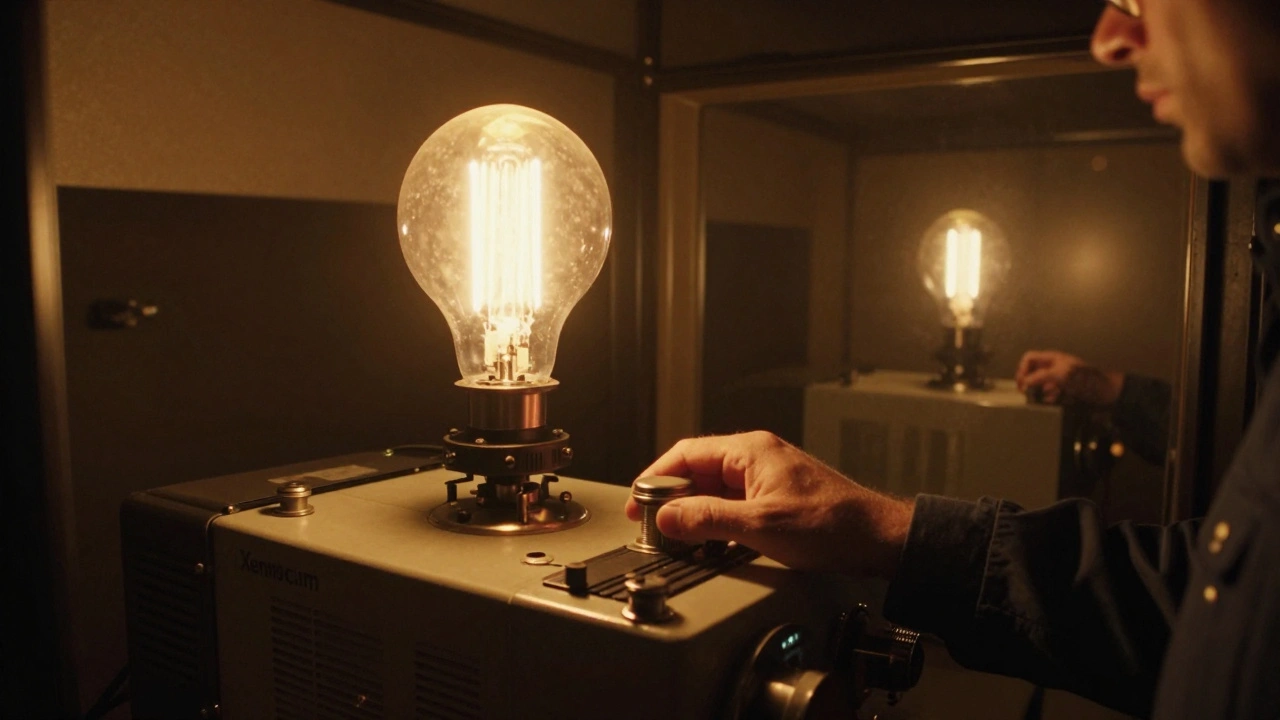
For a long time, the Xenon Lamp is a high-intensity discharge lamp that uses xenon gas to create a powerful white light source for cinema projection. It's a brute-force method. You pump electricity into a gas-filled bulb, and it glows. While it's reliable, it's inefficient. A huge chunk of the energy is wasted as heat, which means your AC units have to work overtime to keep the booth from melting.
The cost curve for Xenon is a jagged line. You have a relatively low initial purchase price for the projector, but then you hit a wall every 500 to 2,000 hours. You have to buy a new lamp, pay a technician to install it, and then deal with the "burn-in" period where the brightness fluctuates. If you're running a 10-screen multiplex, you're essentially managing a constant cycle of bulb replacements. It's a hidden tax on your operational budget that eats away at your margins.
The New Standard: Laser Projection Economics
Now, let's look at Laser Projection is a light source technology using diodes or phosphor to produce a concentrated beam of light, offering higher efficiency and longer lifespans. If you look at the price tag on day one, your stomach might sink. Laser projectors are significantly more expensive than their Xenon counterparts. You're paying for the hardware upfront rather than paying for the light as you go.
However, the cost curve for laser is nearly flat. Once the unit is installed, the cost of "producing light" drops to almost zero for the first decade. There are no lamps to buy and no one to pay for installation every few months. More importantly, laser light doesn't degrade at the same rate. A Xenon lamp loses a noticeable amount of brightness within its first few hundred hours. A laser stays at 100% brightness for thousands of hours. This means your Laser Projection quality remains consistent, ensuring that the 10:00 PM showing looks exactly like the 10:00 AM showing.
| Feature | Xenon Lamp System | Laser Projection System |
|---|---|---|
| Initial Capital Expenditure | Low to Moderate | High |
| Average Lifespan (Light Source) | 500 - 2,000 Hours | 20,000 - 30,000 Hours |
| Energy Consumption | High (Heat waste) | Low (Efficient conversion) |
| Color Consistency | Decays over time | Stable for years |
| Maintenance Frequency | Quarterly/Biannual | Very Rare |
The Tipping Point: When Does the Switch Make Sense?
Deciding when to flip the switch depends on your specific business model. If you're a small indie theater with one screen and low foot traffic, the high upfront cost of laser might be hard to justify. But for most exhibitors, the math changes when you look at the "Total Cost of Ownership" (TCO). Consider the DCI is the Digital Cinema Initiatives, a joint venture of major studios that sets the technical specifications for digital cinema standards. Meeting these specs with Xenon requires frequent, expensive lamp swaps to maintain the required foot-lamberts on screen.
The switch becomes a "no-brainer" when your electricity costs rise or when you move toward high-frame-rate (HFR) content. Because laser systems are more efficient, they reduce the load on your HVAC is Heating, Ventilation, and Air Conditioning systems used to regulate the temperature in projection booths. If your booth is a sauna, you're paying double: once for the lamp and once to cool the room. Laser reduces that thermal load, lowering your utility bill every single month.
Beyond the Budget: The Quality Leap
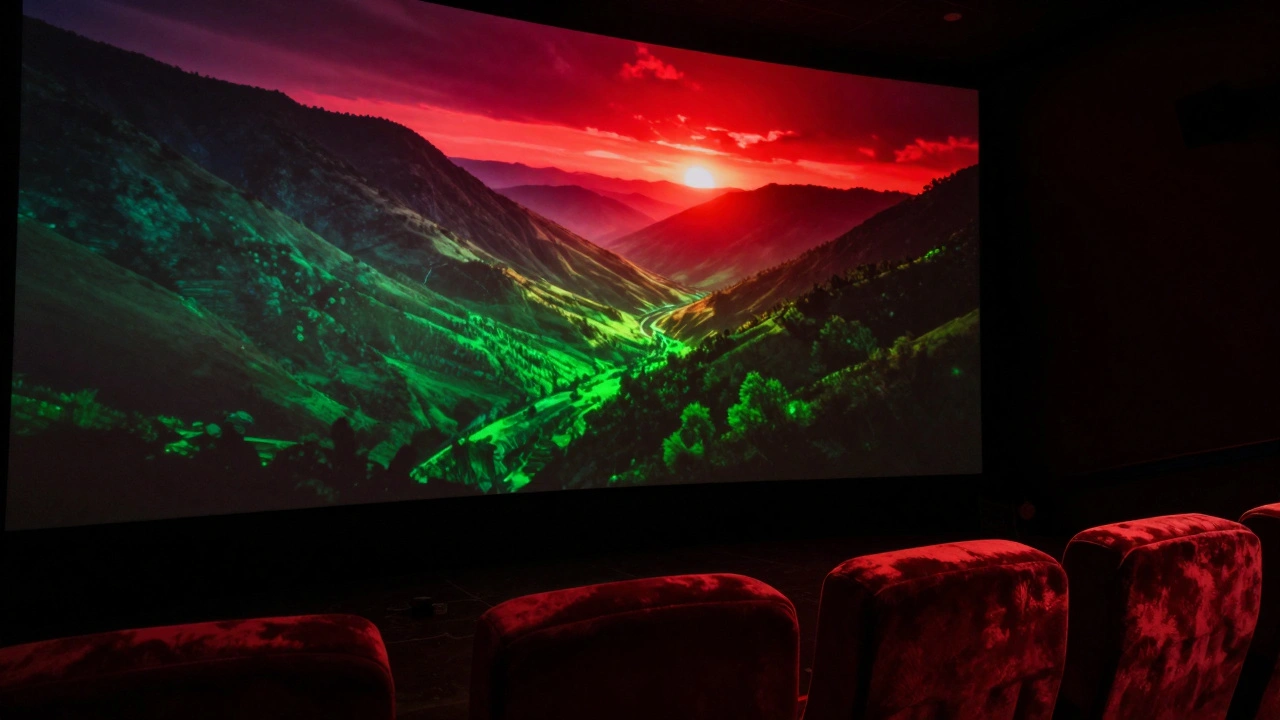
Let's be honest: we aren't just talking about money. We're talking about the experience. Laser projection allows for a much wider color gamut. While Xenon is great for general white light, lasers can hit specific wavelengths of color that make reds deeper and greens more vibrant. This is especially critical for HDR is High Dynamic Range, a technology that increases the contrast between the darkest and brightest parts of an image content.
When you use a DLP is Digital Light Processing, a chip-based technology used in projectors to create images by reflecting light off tiny mirrors chip paired with a laser source, you get deeper blacks. Xenon lamps often have a "glow" that prevents true black, making the image look slightly grey in dark scenes. Laser eliminates this, providing the punchy, high-contrast look that audiences now expect from their home OLED TVs. If your theater looks worse than a living room TV, you're losing your competitive edge.
Common Pitfalls in the Transition
It's not all smooth sailing. Some exhibitors make the mistake of buying the cheapest laser system available, only to find it's a "laser-phosphor" hybrid. These are better than Xenon, but they aren't "pure" RGB lasers. RGB lasers offer the highest color precision but are the most expensive. If you're marketing your theater as a "Premium Large Format" (PLF) destination, don't cut corners on the light source. A hybrid system is a great step up, but it won't give you that ultra-vibrant color that makes people pay a premium for tickets.
Another mistake is ignoring the installation environment. Laser projectors can have different cooling requirements and physical footprints than old Xenon rigs. Make sure your booth layout can handle the new gear before you sign the purchase order. You don't want to find out that your new, efficient projector doesn't fit through the booth door or requires a different power phase than what you have installed.
How long does it actually take to recoup the cost of a laser projector?
For a typical medium-sized screen, the break-even point is usually between 3 and 5 years. This is calculated by totaling the cost of Xenon lamp replacements, the labor to install them, and the increased electricity bills, then comparing that to the higher initial cost of the laser unit.
Do laser projectors require any maintenance at all?
While you don't have to change lamps, you still need to clean filters and ensure the cooling systems are functioning. However, the frequency of these tasks is significantly lower than the rigid schedule required by Xenon lamps.
Will laser projection improve the image for all types of movies?
Yes, but the difference is most noticeable in animated films, action movies with high contrast, and anything shot in HDR. The increased color saturation and deeper blacks make these genres look substantially better than on a Xenon system.
What is the difference between Laser-Phosphor and RGB Laser?
Laser-Phosphor is a middle-ground technology that uses a blue laser to excite a phosphor wheel to create white light. It's cheaper and more efficient than Xenon. RGB Laser uses three separate lasers (Red, Green, Blue), providing the absolute highest brightness and color accuracy available today.
Can I keep my existing screen and just change the projector?
Generally, yes. However, because laser projectors are often much brighter and have better contrast, you might notice flaws in your existing screen (like hot-spotting or wrinkles) that were hidden by the dimmer Xenon light. You may want to consider a screen refresh to fully realize the quality jump.
Next Steps for Your Theater
If you're still running Xenon, start by auditing your lamp logs. Calculate exactly how much you spent on bulbs and labor over the last 24 months. Then, call your power company and estimate the energy savings from a lower-heat system. Once you have those numbers, you'll see that the "expensive" laser projector is actually a long-term savings account. If you're planning a renovation for 2026 or 2027, prioritize the light source first; it's the single most impactful change you can make to your presentation quality.


Comments(9)