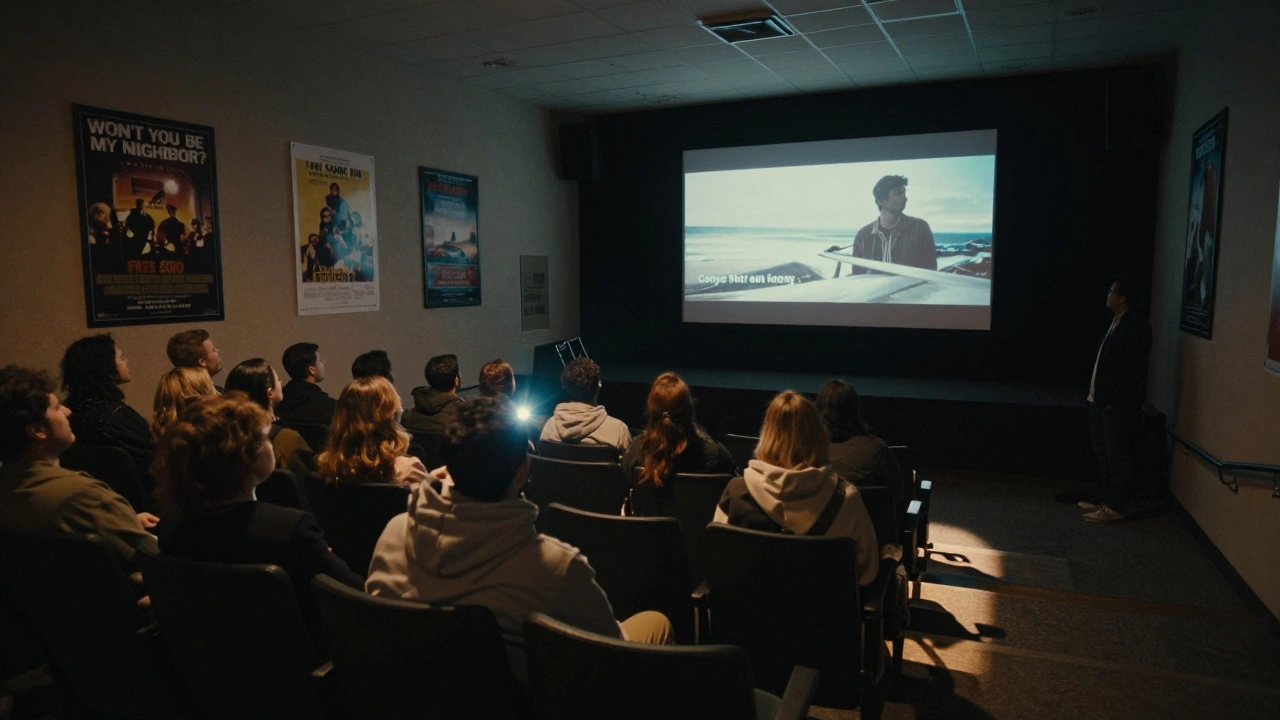
Getting a documentary seen isn’t just about making a great film. It’s about knowing where to take it-and how to get someone to pay attention. Thousands of documentaries are made every year. Only a tiny fraction ever play in theaters. Even fewer land on major TV networks or streaming services. If you’ve finished your film, you’re not done. You’re just getting started.
Theatrical Release: Limited Screens, Big Impact
A theatrical run for a documentary sounds glamorous, but it’s not for everyone. Most indie docs open in just a handful of cities-New York, Los Angeles, Chicago, maybe Austin or Seattle. The goal isn’t to break box office records. It’s to build buzz, earn critical attention, and create momentum for the next steps.
Platforms like Docurama and Kino Lorber specialize in distributing documentaries to theaters. They handle the prints, the advertising, and the booking. You don’t need a huge budget, but you do need a compelling story that can draw an audience. Films like Won’t You Be My Neighbor? and Free Solo didn’t just get lucky-they had clear release strategies. They targeted film festivals first, then used festival buzz to secure limited runs in major cities.
Expect to spend $10,000 to $50,000 on a theatrical campaign. That includes digital cinema packages, marketing materials, and promotional events. If you’re working with a distributor, they’ll often cover some of this. If you’re self-releasing, you’ll need to raise it yourself. The upside? A successful theatrical run can open doors to TV and streaming deals. It signals credibility.
Television: Broadcast, Cable, and Public Media
TV has been the traditional home for documentaries for decades. But the landscape has changed. Networks like PBS, HBO, and National Geographic still buy docs-but they’re pickier than ever. They want stories with broad appeal, strong characters, and production quality that matches their brand.
PBS’s Independent Lens and Frontline are two of the most respected outlets. They pay anywhere from $5,000 to $50,000 for broadcast rights, depending on the film’s scope and audience potential. HBO and Showtime pay more-sometimes $100,000 or higher-but they rarely take first-time filmmakers. You need a track record, or a story so powerful they can’t say no.
Public broadcasting is often the best entry point. American Documentary’s POV series has launched dozens of careers. They don’t pay much upfront, but they offer national exposure and educational distribution rights. That means your film can be used in schools, libraries, and universities for years.
Don’t overlook regional networks. PBS affiliates in states like North Carolina or Minnesota often buy local stories. If your documentary is about a community issue, a regional station might be your first buyer.
Streaming: The New Wild West
Streaming is where most documentaries find their audience today. But it’s not as simple as uploading to Netflix. Platforms like Netflix, Amazon Prime Video, and Hulu have shifted from buying finished films to commissioning them outright. They want control over the creative process, the release date, and the marketing.
That doesn’t mean you can’t get in. Smaller platforms like MUBI, CuriosityStream, and Kanopy are hungry for quality docs. Kanopy, for example, partners with libraries and universities. Your film can reach millions of students and researchers-no subscription needed. They pay licensing fees based on viewership, and they’re open to first-time filmmakers.
Then there’s the direct-to-consumer model. You can sell your documentary on your own website using platforms like Vimeo On Demand or Tribeca Film’s digital storefront. You keep 85% of the revenue. But you’re responsible for marketing. That means email lists, social media ads, and community screenings. One filmmaker in Asheville sold over 5,000 copies of their film on Vimeo in six months by partnering with local environmental groups.
How to Choose the Right Path
There’s no single best route. It depends on your film’s subject, budget, and goals.
If your documentary is about a local issue-say, water rights in Western North Carolina-start with regional TV and community screenings. Build a grassroots following. Then pitch to PBS or Kanopy.
If it’s a global story with emotional stakes-like a refugee family’s journey-aim for Netflix or HBO. But be ready to wait. They often sit on films for over a year before deciding.
If you want full control and direct revenue, go self-distribution. It’s harder, but you keep the profits. And you can sell educational licenses to schools, which can bring in steady income for years.
Here’s what works in 2026:
- Don’t pitch to Netflix unless you have festival awards or celebrity involvement.
- Use film festivals as a launchpad, not an end goal. Sundance gets attention-but so do smaller ones like Full Frame or Hot Docs.
- Build a mailing list from day one. Your audience is your most valuable asset.
- License your film for educational use. It’s low-effort, high-reward.
What Distributors Look For
Distributors aren’t just buying a film. They’re buying a story that can be marketed. They want to know:
- Who is your target audience? (Not ‘everyone’-be specific: ‘parents of teens with anxiety’ or ‘climate policy researchers’)
- Do you have access to key subjects for interviews or promotional events?
- Is there a built-in audience? (e.g., your film is about a popular activist, a trending topic, or a viral moment)
- Can you help with marketing? (Social media followers, press contacts, community ties)
One filmmaker in 2025 sold their film to CuriosityStream because they had 20,000 Instagram followers from their research trips. The distributor didn’t care about the budget-they cared about the audience.
Common Mistakes to Avoid
Most filmmakers fail not because their film isn’t good-but because they make these errors:
- Thinking a festival win guarantees distribution. It doesn’t. Many films screen at Sundance and vanish.
- Signing a deal without reading the fine print. Some contracts give distributors rights to your film for 10+ years with no minimum marketing spend.
- Waiting until the film is done to think about distribution. Start planning during production.
- Ignoring educational markets. Schools and libraries spend millions annually on documentaries. You’re leaving money on the table.
Where to Start Right Now
If you’ve finished your documentary, here’s what to do next:
- Identify your ideal audience. Write it down in one sentence.
- Find three films similar to yours. See where they were distributed. Check IMDb Pro or DocsInDistinction.com.
- Reach out to distributors who specialize in your topic. Don’t email them cold-attend industry events like the American Documentary Showcase or IDFA.
- Create a simple website with a trailer, press kit, and contact info. Even if it’s just a Carrd page.
- Start building your email list. Offer a free short clip or behind-the-scenes video in exchange for sign-ups.
Documentary distribution isn’t a mystery. It’s a series of steps, and you’re already halfway there. The rest is just showing up, being clear about your goals, and talking to the right people.
Can I distribute my documentary on YouTube for free?
Yes, you can upload your documentary to YouTube for free. But don’t expect to make money unless you have millions of views. YouTube’s ad revenue is low for documentaries-most earn less than $100 per month. Worse, you lose control. YouTube can demonetize your film, change its algorithm, or remove it without warning. Use YouTube as a promotional tool, not your main distribution channel.
How much money can I make from documentary distribution?
It varies wildly. A small indie doc might earn $5,000 from a PBS license and $10,000 from educational sales. A hit like The Social Dilemma earned over $2 million from Netflix. Most filmmakers make between $10,000 and $50,000 total across all platforms. Self-distribution can bring in more if you’re good at marketing, but it takes time and effort. Don’t expect to quit your day job overnight.
Do I need a sales agent to get distribution?
You don’t need one, but it helps. Sales agents have relationships with distributors and know what buyers want. They take 10% to 30% of your revenue, but they handle the heavy lifting: pitching, negotiating, managing contracts. If you’re new, a good agent can save you months of rejection. Look for agents who specialize in documentaries, like The Film Sales Company or Submarine Deluxe.
What’s the difference between licensing and buying rights?
Licensing means you keep ownership of your film but allow someone to show it for a set time and territory-for example, a two-year license for broadcast in the U.S. Buying rights means the buyer owns your film outright. Most distributors license. Avoid selling rights unless you’re getting a large upfront payment and no strings attached. Never sign away global rights without a clear exit clause.
Can I distribute my documentary internationally?
Absolutely. Many distributors specialize in international sales. Festivals like Berlinale and Cannes Docs are key for global exposure. You can also license your film to broadcasters in Canada, the UK, Australia, or Germany. Some platforms like Kanopy and CuriosityStream have global audiences. But remember: language and cultural context matter. A documentary about U.S. healthcare won’t resonate the same way in Japan without subtitles and local context.
Documentary distribution isn’t about luck. It’s about strategy, persistence, and knowing where your film belongs. The platforms are out there. The audiences are waiting. You just have to reach them.







Comments(8)