Every year, when the Oscars roll around, people tune in for the big reveals - Best Picture, Best Actor, Best Director. But for many, the most emotional moments come from the music. A swelling orchestral score. A powerful original song that stops the room dead. These aren’t just background noise. They’re storytelling tools that can make or break a scene. And the Academy takes them seriously - so seriously that there are two separate categories for music: Original Score and Original Song. But knowing the difference? That’s where things get tricky.
What’s the Difference Between Original Score and Original Song?
At first glance, it seems simple: one is for music without words, the other for songs with lyrics. But the rules are tighter than most people realize.
Original Score is awarded to the instrumental background music written specifically for the film. Think of Hans Zimmer’s haunting themes in Inception or John Williams’ soaring strings in Schindler’s List. It’s not just the soundtrack. It’s the entire musical architecture of the movie - the leitmotifs, the transitions, the emotional cues woven into every scene. The composer doesn’t just write one piece. They write dozens, often hundreds, of interconnected musical ideas that serve the narrative.
Original Song, on the other hand, must have both lyrics and melody, and be written specifically for the film. It can’t just be a pre-existing track slapped into the movie. It has to be introduced in the film - either performed on screen by a character, played over the credits, or used in a way that’s essential to the story. Think of Let It Go from Frozen or Glory from Selma. The song has to earn its place.
Here’s the catch: a song can’t compete in both categories. If a song has lyrics and is used prominently, it’s locked into Original Song. Even if the score uses the same melody instrumentally later in the film, the score category can’t claim it. The Academy has a strict separation.
How Are They Evaluated?
The judging process for each category is completely separate - and each has its own committee.
For Original Score, a 10-member committee of music professionals reviews every eligible submission. They listen to the full score - not just highlights - and judge based on:
- Originality - is the music fresh and unique to the film?
- Integration - does it serve the story, or does it feel tacked on?
- Technical execution - orchestration, arrangement, pacing, emotional impact
They don’t just listen once. They listen multiple times. And they compare submissions side by side. A score that’s emotionally powerful but repetitive won’t win. A technically brilliant one that doesn’t connect? Also out.
For Original Song, the process is similar but with a twist. The committee listens to the song in context - how it’s used in the film, how it’s performed, and whether it feels necessary. A song that’s catchy but doesn’t advance the story? It won’t make the cut. A song that’s subtle, emotional, and deeply tied to a character’s arc? That’s the kind that wins.
There’s also a rule that the song must be written specifically for the film. No reusing old material. No remixing. Even if a song was written years ago but newly recorded for the movie, it’s disqualified. The song must be created for the film’s narrative.
Common Mistakes That Get Entries Disqualified
Every year, some submissions get rejected - not because they’re bad, but because they break the rules. Here are the most common reasons:
- Using pre-existing music - If a song was released before the film’s production started, it’s ineligible. Even if it’s a new version.
- Lyrics that aren’t original - If the lyrics are borrowed from a poem, book, or public domain text, it doesn’t count. The words must be newly written for the film.
- Score that’s mostly licensed tracks - If a film uses a lot of existing songs and only has 20% original music, the score submission gets tossed.
- Not enough original material - The score must contain at least 35% original music. If it’s mostly adaptations or arrangements of classical pieces, it’s not eligible.
- Song not introduced in the film - The song must appear in the film’s soundtrack and be heard by the audience during the movie’s runtime. If it’s only on the credits and nowhere else? It might not qualify.
In 2023, a major contender in the Original Score category was disqualified because 40% of its music came from a 1980s synth-pop album. The Academy’s rules are strict, and they enforce them.
What About Songs With No Lyrics?
This one trips up a lot of people. If a song has no lyrics - say, a vocal hum or a wordless choir - can it compete in Original Song?
No. The Academy requires lyrics. Not just melody. Not just vocals. Actual words. Even if those words are nonsense syllables like “la la la,” they still count as lyrics. But if it’s purely an instrumental vocalization - like a sigh, a chant without language, or a hum - it doesn’t qualify as an Original Song. It might be part of the score instead.
That’s why “The Bear”’s haunting vocal theme didn’t qualify for Original Song in 2024. It was wordless. It was beautiful. But it was classified as part of the score.
Who Gets the Credit?
For Original Score, the award goes to the composer. If there are multiple composers, they all share it. If a producer or arranger added major elements, they usually don’t get credit unless they co-wrote the music.
For Original Song, it’s different. The award goes to the writers - the lyricist and the composer. Not the performer. Not the producer. Just the people who wrote the song. So if Beyoncé sings a song in a film, but didn’t write it, she doesn’t get the Oscar. The writers do.
That’s why you’ll see names like Benj Pasek and Justin Paul on the screen - not the singers. They wrote “City of Stars” from La La Land. Emma Stone sang it. But the award went to the writers.
Recent Winners and Trends
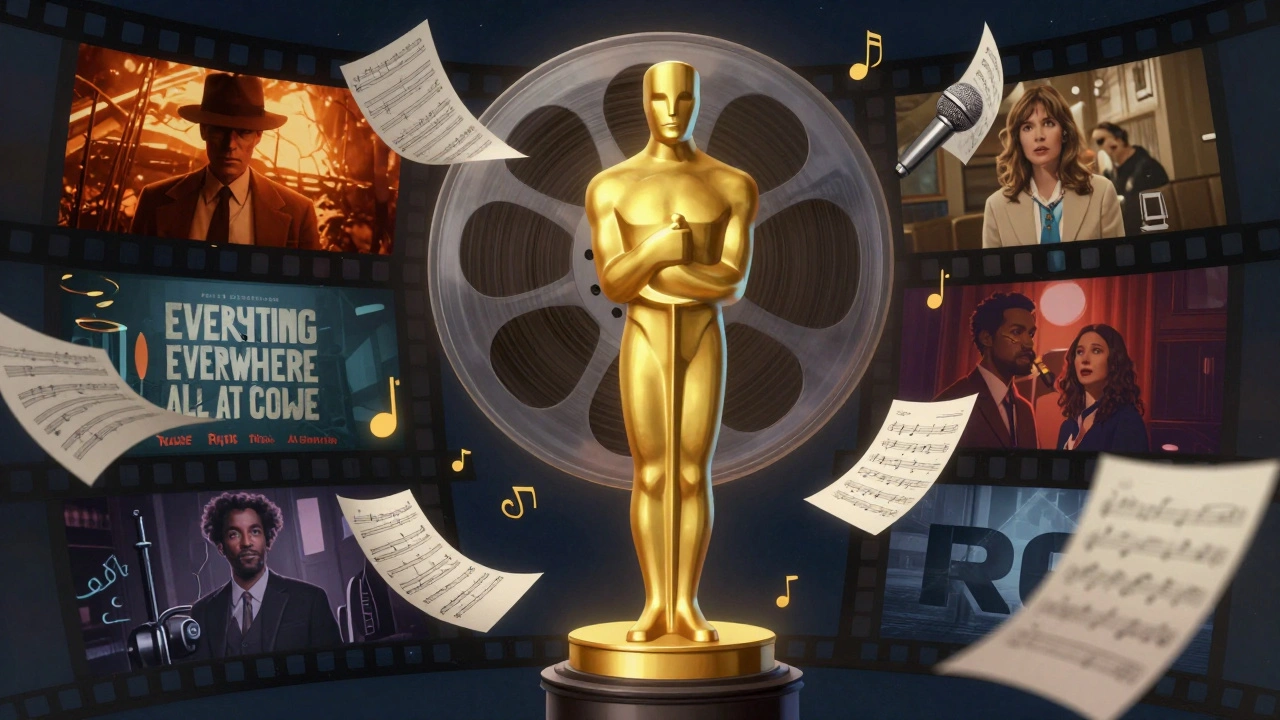
Over the last five years, Original Score winners have leaned toward emotional, character-driven themes. Oppenheimer (2024) won with a tense, minimalist score that used ticking clocks and low strings to mirror the anxiety of nuclear development. Everything Everywhere All At Once (2023) used a mix of orchestral and electronic elements to reflect its chaotic multiverse.
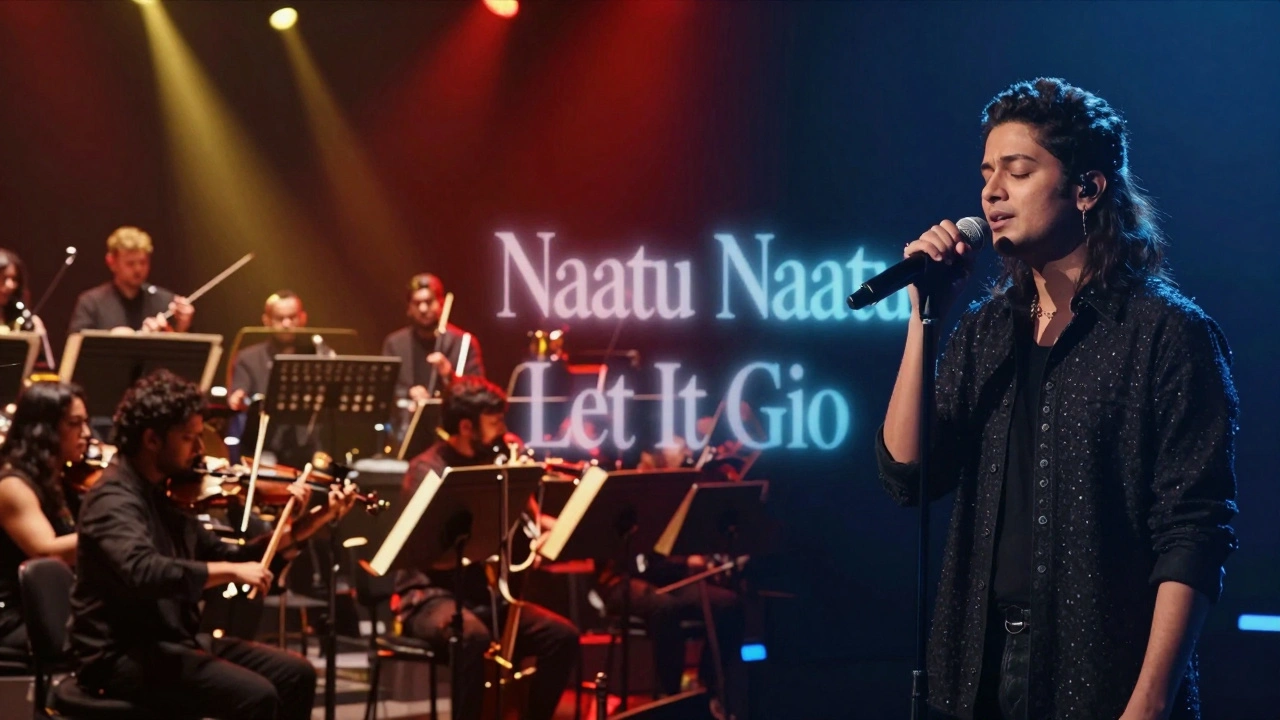
Original Song winners have been more diverse. “Naatu Naatu” from RRR (2023) broke barriers as the first Indian song to win - a high-energy dance number that was integral to the film’s climax. “Lift Me Up” from Black Panther: Wakanda Forever (2023) was a quiet, soulful ballad that gave voice to grief.
The trend? Original Song is no longer dominated by Hollywood ballads. The Academy is embracing global sounds, non-English lyrics, and songs that aren’t just catchy - they’re necessary.
What Makes a Winning Submission?
If you’re a composer or songwriter aiming for an Oscar, here’s what you need to know:
- Original Score: Don’t just write music. Write a sonic identity for the film. Make it unforgettable. Make it inseparable from the visuals.
- Original Song: Don’t write a pop single. Write a moment. The song should feel like it could only exist in that movie. If you can imagine it in a different film, it’s not strong enough.
- Timing matters. Submit early. The Academy’s deadline is in December. Late entries get disqualified.
- Documentation matters. You need proof that the music was written for the film - emails, recordings, timestamps, production notes. Keep them.
There’s no formula. But there’s a pattern. The winners aren’t always the most complex. Sometimes, they’re the simplest. A single piano theme. A few lines of lyrics. But they hit hard. They stick. And they belong to the movie - not just to the soundtrack.
Can a film win both Best Original Score and Best Original Song in the same year?
Yes. Several films have done it. The Lion King (1994) won both. La La Land (2016) did too. Encanto (2021) won Best Original Song and was nominated for Best Original Score. The categories are judged separately, so a film can excel in both. But it’s rare. Most films focus on one.
Can a song win Best Original Song if it’s only played during the credits?
Yes - but only if it’s clearly part of the film’s narrative. If the song appears during the end credits and was written specifically for the film, it qualifies. However, if it’s just a pop song added to the credits with no connection to the story, it won’t be accepted. The Academy looks for narrative integration, not just placement.
What if a song uses a melody from the score?
That’s allowed - and common. Many films use the main theme from the score as the basis for the song. For example, Beauty and the Beast (1991) used the orchestral theme in its vocal version. The Academy allows this as long as the song has original lyrics and was written for the film. The melody can be shared, but the lyrics must be new.
Can a non-English song win Best Original Song?
Absolutely. “Naatu Naatu” from RRR (2023) won in Telugu. “Jai Ho” from Slumdog Millionaire (2008) won in Hindi. The Academy doesn’t require English lyrics. What matters is emotional impact, originality, and integration into the film. Language is not a barrier - storytelling is.
Do composers need to be members of the Academy to submit music?
No. You don’t need to be an Academy member to submit. The film’s studio or distributor handles the submission. But only Academy members in the Music Branch vote on the nominees and winners. So while anyone can enter, only insiders decide who wins. That’s why studio campaigns matter - they get music in front of voters.





Comments(5)