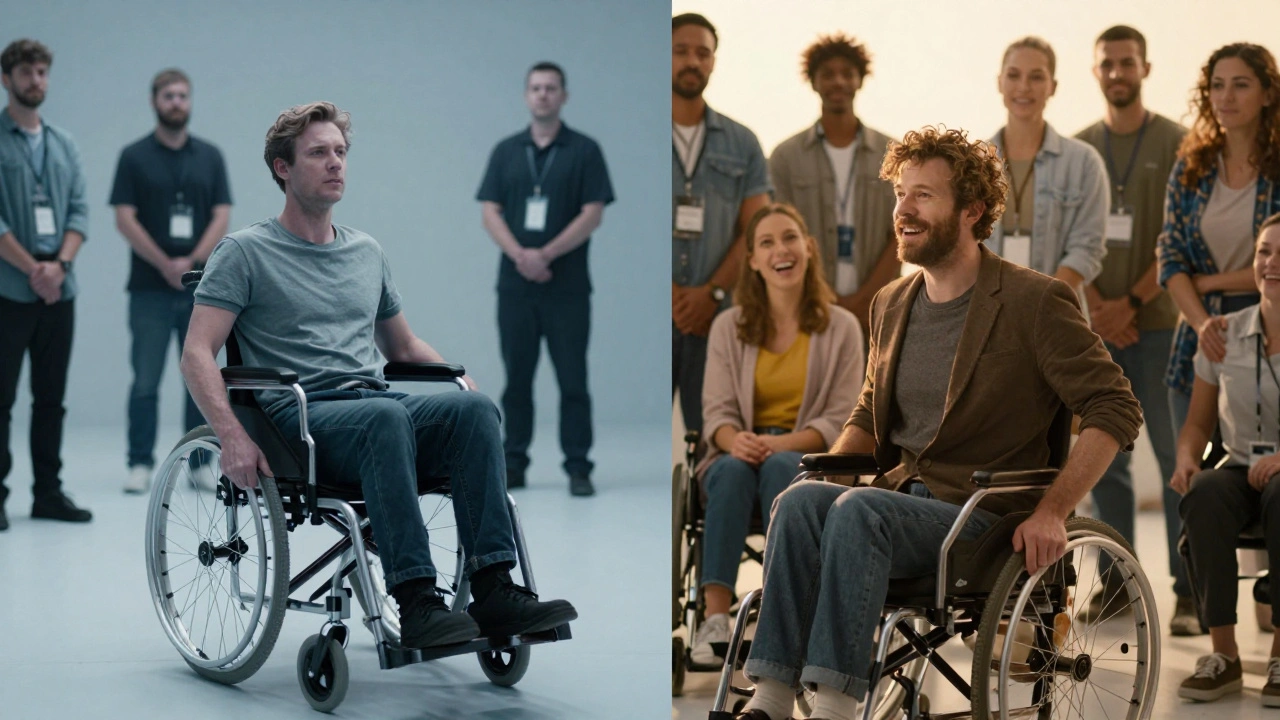
For decades, the silver screen has told a story that simply isn’t true. You’ve seen it countless times: a character with a wheelchair, a prosthetic limb, or a visual impairment is played by an able-bodied actor who spends three weeks learning how to move differently for the role. It’s called "inspiration porn," and it’s exhausting. But something is shifting. The conversation around disability representation in cinema is no longer just about visibility-it’s about authenticity. We are moving past the era of tokenism into a time where disabled actors are not just present, but leading the narrative.
This shift isn't just a moral imperative; it's a creative revolution. When you cast disabled people to play disabled characters, you get nuance, humor, trauma, and joy that an outsider can never fully replicate. From the groundbreaking work of A24 on projects like *Coda* to the raw honesty of *The Last of Us*, the industry is finally waking up to the fact that lived experience is the best special effect there is.
The Problem with "Inspiration Porn" and Tokenism
To understand where we are going, we have to look at where we’ve been stuck. For years, Hollywood relied on a trope known as "inspiration porn." This term, coined by disability activist Stella Young, describes media that portrays disabled people merely as sources of inspiration for non-disabled people, rather than as complex human beings living full lives. Think of the movie *My Left Foot*, where Daniel Day-Lewis won an Oscar for playing a man with cerebral palsy. While his performance was technically impressive, it stripped the real person, Christy Brown, of his own agency and voice.
This pattern creates a dangerous feedback loop. Non-disabled audiences start to believe that disability is a tragedy to be overcome or a lesson to be learned, rather than a natural part of human diversity. Meanwhile, disabled viewers see themselves reduced to plot devices. They don’t see their struggles with accessibility, their specific cultural references, or their mundane daily realities reflected back at them. Instead, they see a caricature designed to make the audience feel good about themselves.
Tokenism is another layer of this problem. A studio might cast one disabled actor in a minor role to check a diversity box, but that character often exists solely to teach the protagonist a lesson about resilience. These characters rarely get romantic subplots, comedic moments, or flaws that aren’t directly tied to their disability. They are flat, two-dimensional figures used to prop up the emotional journey of an able-bodied lead.
Why Lived Experience Matters in Performance
You might argue that acting is all about imagination-that any talented performer can embody anyone. And while technical skill matters, there is a profound difference between imitation and embodiment. When a disabled actor plays a disabled character, they bring lived experience to the table. This means they understand the micro-interactions of navigating a world not built for them.
Consider the physicality of movement. An able-bodied actor learning to use a wheelchair might master the mechanics of pushing wheels, but they may miss the subtle tension in the shoulders, the way weight shifts when turning sharply, or the fatigue that sets in after hours of travel. A disabled actor knows these things instinctively. Their performance feels grounded because it is. This authenticity resonates with audiences, creating a sense of realism that draws viewers deeper into the story.
It also extends to emotional truth. Disability is not a monolith. There are distinct cultures within the deaf community, the blind community, and the neurodivergent community. Each has its own history, slang, humor, and social norms. A deaf actor brings an understanding of Deaf culture-capital D, meaning the cultural identity, not just the medical condition-that an hearing actor cannot research their way into. This depth prevents stereotypes and allows for characters who are funny, angry, lazy, ambitious, and everything in between, independent of their disability.
Barriers Beyond the Camera
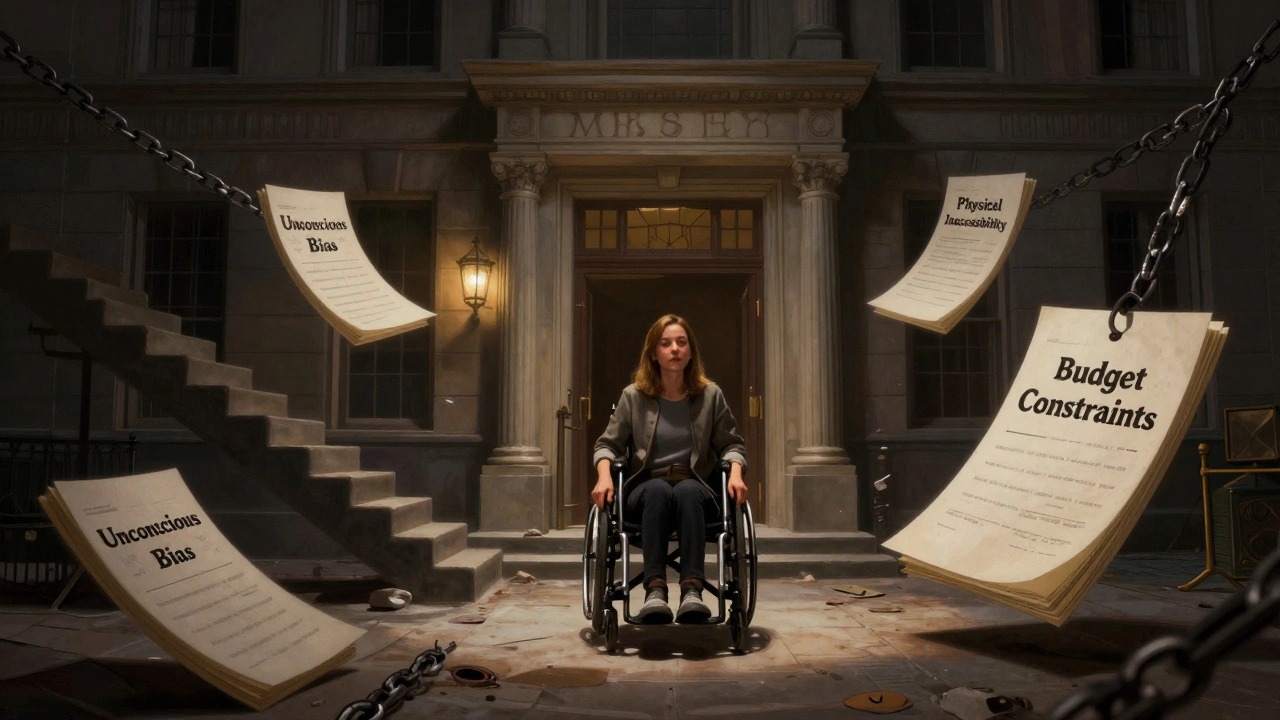
If the case for authentic casting is so clear, why is it still so rare? The answer lies in systemic barriers that go far beyond casting calls. The film industry is structurally inaccessible. Many studios lack basic accommodations, making it difficult for disabled professionals to even enter the building, let alone work on set.
- Physical Accessibility: Many production offices and soundstages do not have ramps, elevators, or accessible restrooms. For an actor using a mobility aid, simply getting to the audition room can be an insurmountable hurdle.
- Communication Barriers: Scripts are often distributed digitally without compatible screen-reader formatting. Auditions may lack sign language interpreters or closed captioning for deaf actors.
- Financial Constraints: Disabled actors often require personal care attendants or specialized equipment to work. Studios frequently refuse to budget for these reasonable accommodations, viewing them as "extra costs" rather than essential infrastructure.
- Unconscious Bias: Directors and producers often harbor fears that working with disabled actors will slow down production or complicate shooting schedules. These assumptions are rarely tested but heavily influence hiring decisions.
These barriers create a pipeline problem. If disabled talent cannot access auditions, they cannot build resumes. If they cannot build resumes, producers claim there is "no experienced disabled talent available." It’s a self-fulfilling prophecy that keeps the status quo intact.
Success Stories That Changed the Game
Despite these hurdles, breakthroughs are happening. Recent productions have proven that authentic casting leads to critical acclaim and commercial success. One of the most notable examples is CODA (Child of Deaf Adults), which featured deaf actors in leading roles. The film won the Academy Award for Best Picture, signaling a major shift in industry standards. It showed that stories centered on disabled experiences could resonate universally.
Another powerful example is the HBO series The Last of Us. The character of Ellie, who survives a fungal apocalypse, is portrayed by Bella Ramsey. However, the show also made headlines for its handling of disability when it introduced a storyline involving a character with a spinal injury. More importantly, behind the scenes, the production hired consultants from the disability community to ensure accurate portrayal. This collaboration resulted in scenes that felt genuine rather than exploitative.
In television, Speechless was praised for casting Mika Alonso, a deaf actress, in the lead role. While the show faced some criticism for its family dynamics, Alonso’s performance brought a level of authenticity to the depiction of selective mutism and deafness that previous shows had lacked. Her advocacy during the production helped educate crew members and opened doors for other deaf performers.
These successes demonstrate that when studios invest in authenticity, audiences reward them with attention and respect. The financial argument against disabled casting crumbles in the face of box office returns and streaming numbers.
The Role of Advocacy Organizations
Change doesn’t happen in a vacuum. It is driven by organizations dedicated to dismantling barriers and creating opportunities. Groups like The National Center for Accessible Media (NCAM) provide resources and training for filmmakers to make their content more accessible. They offer guidelines on captioning, audio description, and inclusive design.
Similarly, Disability Rights Education & Defense Fund (EDF) advocates for policy changes that protect disabled workers in entertainment. They push for legislation that mandates reasonable accommodations and prohibits discrimination in hiring practices. Their work ensures that the legal framework supports the cultural shift toward inclusion.
Actor-led collectives are also rising. Networks of disabled performers share audition tips, advocate for better contracts, and mentor newcomers. These communities build solidarity and power, allowing individuals to speak with a unified voice when negotiating with studios. They remind the industry that disabled artists are not a charity case-they are professionals demanding fair treatment.
How Filmmakers Can Do Better
If you are a filmmaker, producer, or writer, you have the power to change this narrative. Here are practical steps you can take to ensure your project is truly inclusive:
- Hire Disabled Consultants Early: Don’t wait until post-production. Bring disabled experts into the script development phase. They can identify problematic tropes and suggest authentic dialogue and scenarios.
- Cast Authentically: Make it a non-negotiable rule that disabled roles are played by disabled actors. Remove able-bodied actors from consideration for these parts entirely.
- Budget for Accommodations: Include line items in your budget for sign language interpreters, screen readers, accessible transportation, and personal care attendants. Treat these as standard operating costs, not extras.
- Create an Inclusive Set Culture: Train your crew on disability etiquette and awareness. Ensure everyone understands how to communicate effectively with disabled colleagues. Foster an environment where questions are welcomed and mistakes are corrected respectfully.
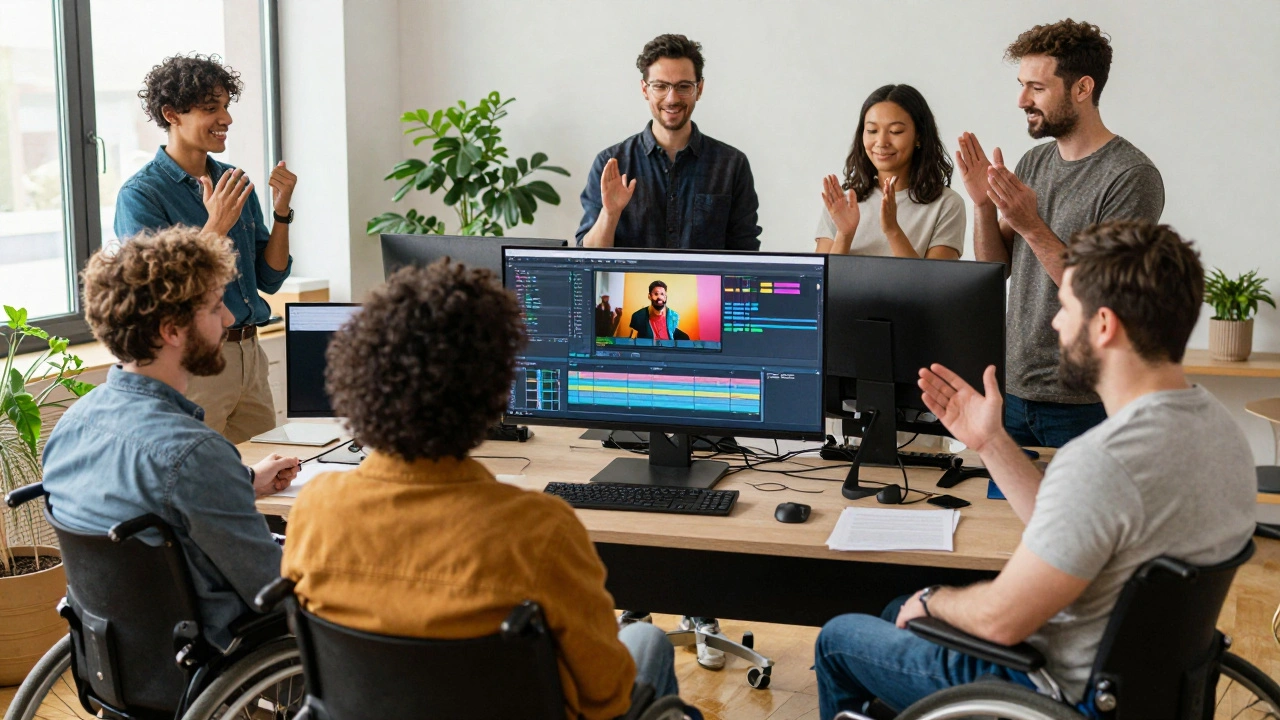
- Amplify Disabled Voices: Look beyond acting. Hire disabled writers, directors, cinematographers, and editors. Diversity behind the camera ensures diversity in front of it.
These actions require effort, but they yield results. Audiences are smarter than we give them credit for. They can tell when a story is respectful and when it is exploitative. By prioritizing authenticity, you build trust with your audience and contribute to a more equitable industry.
The Future of Inclusive Storytelling
We are standing at a crossroads. The old model of exclusion is crumbling under the weight of public scrutiny and artistic demand. The new model-one rooted in authenticity, respect, and collaboration-is gaining momentum. As technology advances, tools like AI-driven captioning and virtual reality environments will further reduce barriers, making it easier for disabled creators to participate fully.
But technology alone won’t solve this. We need sustained commitment from every level of the industry. Studios must stop treating inclusion as a PR stunt and start treating it as a core value. Audiences must continue to support projects that prioritize authentic representation, voting with their wallets and their voices.
When we include disabled actors and perspectives, we don’t just help disabled people. We enrich storytelling for everyone. We gain new lenses through which to view the human experience. We discover that disability is not a deviation from the norm, but a vital thread in the fabric of our shared humanity. The future of film depends on recognizing this truth.
What is "inspiration porn" in the context of disability representation?
Inspiration porn refers to media portrayals that depict disabled people primarily as sources of inspiration for non-disabled people, rather than as complex individuals with their own goals, struggles, and joys. It reduces disability to a motivational tool for others, ignoring the reality of disabled lives.
Why is authentic casting important for disabled roles?
Authentic casting ensures that disabled characters are portrayed by disabled actors who bring lived experience to the role. This leads to more nuanced, realistic performances that capture the physical, emotional, and cultural nuances of disability, avoiding stereotypes and clichés.
What are common barriers preventing disabled actors from working in film?
Common barriers include physical inaccessibility of studios, lack of communication accommodations like sign language interpreters, insufficient budgeting for reasonable accommodations, and unconscious bias among hiring managers who fear disabled actors will complicate production.
Can you name some successful films or shows with authentic disability representation?
Yes, notable examples include CODA, which won Best Picture and featured deaf actors in leading roles, and Speechless, which starred deaf actress Mika Alonso. The Last of Us also received praise for its collaborative approach to portraying disability accurately.
How can filmmakers make their sets more inclusive for disabled professionals?
Filmmakers can hire disabled consultants early in development, budget for accommodations like interpreters and accessible transport, train crews on disability etiquette, and actively seek out disabled talent for both on-screen and behind-the-camera roles.
Is there a legal requirement for studios to accommodate disabled actors?
In many countries, including the United States, laws such as the Americans with Disabilities Act (ADA) require employers to provide reasonable accommodations unless doing so causes undue hardship. This applies to film studios and production companies as well.
What is the difference between Deaf culture and deafness as a medical condition?
Deaf culture (with a capital D) refers to a distinct linguistic and cultural community centered around sign languages and shared experiences. Deafness as a medical condition refers to the physiological loss of hearing. Not all deaf people identify with Deaf culture, and respecting this distinction is crucial for authentic representation.
Why do some producers still resist casting disabled actors?
Resistance often stems from unfounded fears that disabled actors will slow down production, require expensive accommodations, or limit marketing appeal. These assumptions are increasingly being disproven by the success of authentically cast projects, yet outdated biases persist in some circles.