You spent two years writing, shooting, and editing your feature. You premiered at a festival, got some applause, maybe even won a small award. Then came the silence. The distributor you hoped would call never did. Or worse, they offered you a deal that looked more like charity than business: zero advance, 70/30 split in their favor, and no guarantee anyone will actually see your movie.
Here is the hard truth most indie filmmakers ignore until it’s too late: DTC (Direct-to-Consumer) film distribution is not just a backup plan anymore-it is often the primary path to profitability for independent cinema. But "direct-to-consumer" doesn’t mean uploading a file to Vimeo and hoping for magic. It means building a machine that turns strangers into fans, and fans into customers, without a middleman taking a massive cut before you see a dime.
The Shift from Gatekeepers to Community
For decades, the film industry operated on a scarcity model. There were only so many screens, so many slots on Netflix, and so many shelf spaces in Blockbuster. If you didn’t get picked by a gatekeeper, you didn’t exist. Today, we live in an abundance model. The barrier to entry has collapsed. Platforms like Vimeo OTT, Uscreen, and Wistia allow any filmmaker to launch their own streaming service or rental page with a few clicks.
But here is where most people mess up: they think technology solves distribution. It doesn’t. Technology solves delivery. Distribution is still about attention. If you don’t have an audience, you are just shouting into a void with a high-definition camera. The goal of DTC isn’t to replace traditional sales agents entirely; it’s to retain control over your intellectual property and your customer data. When you sell through Amazon Prime Video Direct, you rarely know who watched your film. When you sell through your own DTC site, you own the email address. That email address is worth more than the $4.99 rental fee because it allows you to market your next project for free.
Defining Your Core Audience Before You Shoot
You cannot build an audience after the fact if you haven’t defined who they are during production. This sounds obvious, but ask ten indie directors who their target demographic is, and nine will say, "Everyone." Everyone is no one. To succeed in DTC, you need a niche. Are you making a horror film for Gen Z fans of A24 aesthetics? A documentary about sustainable farming for eco-conscious millennials? A romantic comedy for rom-com die-hards who hate modern dating apps?
Once you identify this micro-niche, you need to go where they already hang out. This isn’t about blasting ads on Facebook. It’s about community integration. If you’re making a surf documentary, you don’t just post clips on Instagram. You partner with surf shops, attend local competitions, and engage with surf forums. You provide value before you ask for a sale. This pre-launch engagement builds what marketers call "warm traffic." These aren’t cold leads; they are people who already care about the subject matter of your film.
The Pre-Launch Strategy: Building the Email List
Your website should be live six months before your release date. Not a flashy trailer-only page, but a functional landing page with one clear call to action: join the waitlist. Why do people join waitlists? Because they fear missing out (FOMO). Offer something tangible for signing up early. Maybe it’s exclusive behind-the-scenes footage, a digital poster pack, or early access tickets to virtual Q&As.
Let’s look at a realistic scenario. Imagine you spend $500 on targeted social media ads leading to your landing page. If your conversion rate is 2% (which is standard for cold traffic), you get 100 emails. If you nurture those emails with weekly updates-progress reports, cast interviews, production struggles-you build trust. By launch day, you might have 2,000 subscribers. If 10% of them buy your film at $10, that’s $2,000 in revenue on day one. Compare that to waiting for a distributor to put your film on a platform where you make $0.50 per view. You need thousands of views to match that initial $2,000, and you likely won’t get them without the same marketing effort anyway.
| Metric | Traditional Distributor | Direct-to-Consumer (Self-Distributed) |
|---|---|---|
| Revenue Share | Typically 70-80% to distributor/platform | Typically 85-90% to creator (minus payment processing fees) |
| Customer Data | Owned by platform/distributor | Owned by filmmaker (email, purchase history) |
| Time to Payment | 6-12 months (or longer) | Instant to 30 days (depending on processor) |
| Marketing Control | Limited; relies on distributor’s priorities | Total control over messaging and timing |
| Upfront Cost | Low (often covered by distributor) | High (platform fees, ad spend, PR) |

Choosing the Right Tech Stack
Don’t overcomplicate your tech stack. You don’t need custom code. You need reliability and ease of use. Most successful indie DTC campaigns use a simple combo: a website builder (like Squarespace or Webflow) integrated with a video hosting platform that supports pay-per-view or subscription models.
Consider these options based on your needs:
- Vimeo OTT: Great for filmmakers who want a white-label experience. It handles the checkout, player, and analytics. You can charge rentally or subscription-based. Costs start around $20/month plus transaction fees.
- Gumroad: Surprisingly effective for selling digital downloads or private stream links. It’s incredibly easy to set up, though less polished as a "cinema" experience.
- Uscreen: Best if you plan to turn your film library into a long-term channel. It offers robust membership features, which is key if you plan to release multiple projects under one brand.
Avoid platforms that lock your content away or make it difficult to export your user list. Your leverage lies in portability. If Vimeo raises prices next year, you want to be able to move your 5,000 subscribers to Uscreen without losing them.
Marketing Tactics That Actually Work
Posting a trailer on Instagram is not a strategy. It’s a tactic. And usually, a weak one. Here are three tactics that consistently drive DTC sales for indie films:
- The "Found Family" Approach: Identify 50 micro-influencers in your niche. Not celebrities, but people with 5k-20k engaged followers. Send them a personal note, not a generic press kit. Ask them to host a watch party or review the film honestly. Their endorsement feels authentic because it is.
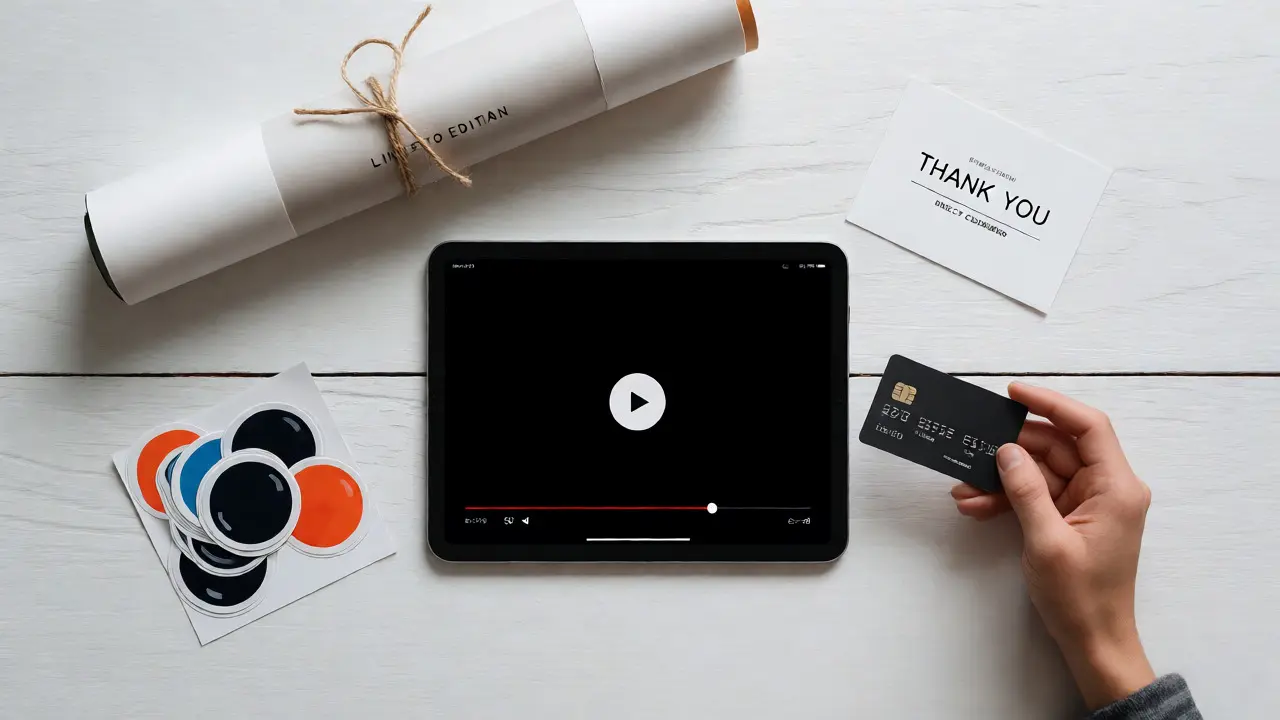
- Bundling with Physical Goods: People love tangible connections to art. Sell a bundle: Digital Rental + Limited Edition Poster + Sticker Pack. Charge $25 instead of $10. The perceived value jumps, and your margin increases significantly. Shipping costs eat into profit, but the higher ticket price offsets it.
- Live Events as Sales Drivers: Host a live Zoom Q&A with the director and lead actor immediately after the premiere week. Promote it heavily. Attendance requires a purchase link. This creates urgency. People buy to participate in the event, then stay for the film.
Remember, your first 100 sales are the hardest. They come from your friends, family, and crew. Don’t underestimate them. Encourage them to share their purchase receipt on social media. Social proof triggers algorithmic visibility and peer curiosity.
Post-Launch: Retaining the Audience
Most filmmakers disappear after the release window closes. Big mistake. Your DTC audience is now a database of people who liked your work enough to pay for it. Treat them like VIPs. Send a thank-you email with a discount code for your next project. Ask for feedback. Did they find the subtitles readable? Was the audio mix balanced? Use this data to improve your next film.
If you maintain this relationship, you stop starting from zero every time you make a new movie. You start with 1,000 guaranteed buyers. Over three films, that base grows. By your fourth project, you might not need a distributor at all. You’ll have your own studio ecosystem.
Pitfalls to Avoid
First, don’t underprice your film. Charging $2.99 signals "cheap" and "disposable." Charging $9.99 signals "premium" and "worth watching." Indie films compete with Netflix, Hulu, and HBO. You need to position yourself as a curated experience, not just another content blob.
Second, don’t ignore SEO. Even on your own site, people search for specific genres or themes. Optimize your landing page titles and descriptions. If your film is about "cyberpunk hackers," make sure those words appear in your meta tags. Organic search traffic is free and lasts forever, unlike paid ads that stop when you stop paying.
Third, don’t try to do everything alone. Hire a freelance marketer for the launch week. Spend $1,000 on professional PR help. The ROI on expert advice is almost always positive compared to the learning curve of figuring it out yourself while trying to edit your next script.
Frequently Asked Questions
Is direct-to-consumer distribution profitable for low-budget films?
Yes, but only if you treat marketing as part of the production budget. If you spend $50,000 making a film and $0 on marketing, you will likely lose money. However, if you spend $10,000 on marketing and generate $30,000 in direct sales, you break even faster than relying on vague royalty checks from aggregators. The key is controlling your costs and maximizing your per-unit revenue.
Do I need a large social media following to succeed with DTC?
No. You need an engaged following, not necessarily a large one. 1,000 highly engaged fans in a specific niche (e.g., retro sci-fi enthusiasts) are worth more than 100,000 random followers. Focus on quality interactions and community building rather than vanity metrics like follower count.
Can I combine DTC with traditional distribution deals?
Absolutely. Many filmmakers use a hybrid model. They sign a non-exclusive deal with a platform like Amazon or Apple TV+ for broad reach, while simultaneously running a DTC campaign on their own site. The DTC campaign captures superfans who want bonus content or to support the creator directly, while the traditional deal captures casual viewers who prefer using existing subscriptions.
What are the typical fees for DTC platforms?
It varies. Vimeo OTT charges a monthly fee (starting ~$20-$100) plus a transaction fee (usually 10%). Gumroad takes a flat percentage (around 10%) with no monthly fee. Uscreen has higher monthly tiers ($79+) but lower transaction fees. Always calculate the total cost per sale, including credit card processing fees (typically 2.9% + $0.30).
How long should my DTC campaign last?
The core push should last 4-6 weeks around your release date. However, your storefront should remain open indefinitely. Films are evergreen assets. Continue to drive traffic via SEO and social snippets for years. Many indie films see steady trickle sales long after the initial hype dies down.