
Key Takeaways for Retention
- Tentpoles create the initial surge of new sign-ups.
- Anchors keep existing users engaged between major releases.
- Scheduling gaps are the primary drivers of churn.
- Cross-pollination turns a single-film viewer into a long-term fan.
The Psychology of the Binge-and-Bolt
Most streaming services fall into the trap of the "big drop." They release a high-budget original and expect it to sustain growth for a quarter. But here is the reality: a single blockbuster doesn't create loyalty; it creates a spike. When a user signs up specifically for Netflix's latest movie, their relationship with the platform is transactional, not emotional. To fix this, we need to move toward a model of churn reduction that uses content to create a predictable rhythm of value.
Churn isn't just about a lack of content; it's about a lack of anticipation. If a user doesn't know what's coming next month, they have no reason to keep their credit card on file. By scheduling films as anchors, you shift the user's mindset from "I'm here for this movie" to "I'm here because this platform always has something I love every few weeks."
Defining Tentpoles vs. Anchors
Not all films serve the same purpose. If you treat every movie like a blockbuster, you'll burn through your budget and your audience's patience. You need a mix of Tentpole Films and Anchor Films.
A Tentpole is your "loud" content. These are the high-budget, high-marketing-spend projects designed to capture the cultural zeitgeist. Think of them as the front door of your service. Their job is acquisition. They bring in the masses who have never heard of you or who lapsed a year ago. However, Tentpoles are volatile. They create a massive peak in viewership followed by a steep drop.
Anchors, on the other hand, are the "quiet" but consistent wins. These might be mid-budget genre films, curated indie acquisitions, or spin-off movies from existing series. Their job isn't to bring in millions of new people, but to give the existing 10 million people a reason to stay. While a Tentpole is a firework, an Anchor is a steady heartbeat.
| Attribute | Tentpole Films | Anchor Films |
|---|---|---|
| Primary Goal | User Acquisition | Subscriber Retention |
| Budget Range | High ($100M+) | Moderate ($10M - $50M) |
| Marketing Focus | Mass Market / Global | Niche / Community-based |
| Expected Lifespan | Short-term Spike | Long-term Steady Viewing |
| Risk Level | High (All-or-nothing) | Low (Predictable ROI) |
Scheduling the 'Retention Bridge'
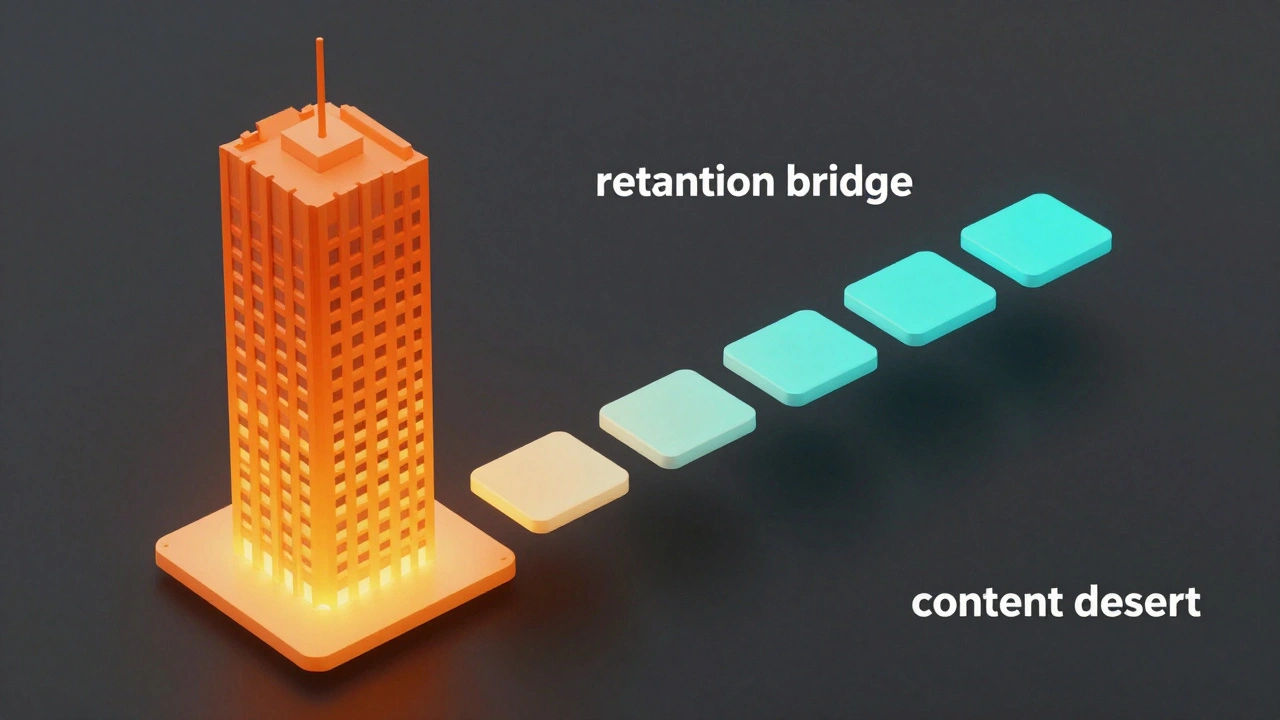
The biggest mistake platforms make is leaving a "content desert" after a major release. If you drop a massive film in November and nothing of equal quality until February, you've just given your users a two-month window to realize they aren't using the app. This is where the scheduling anchor comes in.
The goal is to build a bridge. If your Tentpole is a massive superhero movie, your anchors should be scheduled every 14 to 21 days leading up to and following that event. These anchors should be semantically related to the Tentpole. For example, if you're releasing a galactic epic, schedule a documentary on deep space exploration two weeks prior and a smaller, character-driven spin-off film three weeks after. This keeps the user in the "mental neighborhood" of your big hit.
Consider the Disney+ approach with the Marvel Cinematic Universe. They don't just release a movie; they release a series of connected pieces of media. The movie is the Tentpole, but the episodic series and the shorter specials act as anchors that prevent the user from hitting the cancel button during the gaps between theatrical-grade releases.
Strategies for Cross-Pollination
To truly reduce churn, you have to move the user from a single-entity interest to a multi-entity interest. If a user only likes "Crime Thrillers," they will leave once the thrillers are gone. If you can move them toward "Dark Dramas" or "True Crime Documentaries," you've expanded their surface area for retention.
How do you do this with films? By using curated adjacency. When a user finishes a Tentpole film, the algorithm shouldn't just suggest "more movies like this." It should suggest a specific Anchor film that bridges the gap to another genre. If someone watches a high-action spy movie (Tentpole), suggest a sophisticated political drama (Anchor) that leads them into your prestige series (Long-term Anchor). You are essentially training the user to find value in different corners of your library.
This is why Hulu and Max often bundle their film premieres with themed "collections." By grouping a new original film with a curated list of older library titles, they transform a single piece of content into a destination. You aren't just selling a movie; you're selling a mood.
Avoiding the 'Content Fatigue' Pitfall
There is a danger in over-scheduling. If you push too many anchors, you dilute the impact of your Tentpoles. If every Tuesday is "New Movie Day," the users stop feeling the excitement. The scarcity of the event is what drives the social conversation, and the social conversation is what drives the sign-ups.
The secret is the cadence of anticipation. You want the user to be slightly hungry. The ideal rhythm is a "High-Medium-Low" pulse. High (Tentpole) $ ightarrow$ Medium (Mid-budget Anchor) $ ightarrow$ Low (Library highlight or Short film). This creates a wave-like pattern of engagement. When the wave hits its lowest point, the marketing for the next Tentpole should already be hitting their inbox. This creates a loop where the user is always looking forward to the next peak.

Measuring Success Beyond the View Count
Most executives look at "Total Views" to judge a film's success. This is a vanity metric. For churn reduction, you need to look at Retention Lift. This means measuring how many people who watched a specific film stayed subscribed for an additional 30, 60, or 90 days compared to those who didn't.
A film that gets 10 million views but has a 40% churn rate the next month is a failure. A film that gets 2 million views but keeps 90% of those viewers subscribed for six months is a goldmine. This is why Anchor films are often more valuable than Tentpoles in the long run. They don't bring the crowds, but they keep the house full.
To track this, use Cohort Analysis. Group users by the first film they watched. If the "Slasher Film Cohort" churns faster than the "Period Drama Cohort," you know you need more anchors in the horror space to keep those specific users engaged. You can't apply a one-size-fits-all schedule to a diverse user base.
The Roadmap for 2026 and Beyond
As we move further into the 2020s, the cost of acquiring a new customer is skyrocketing. It is now five times more expensive to find a new subscriber than to keep an old one. This means the shift from "Acquisition-First" to "Retention-First" content is no longer optional-it's a survival requirement.
Platforms that survive will be those that master the art of the Content Calendar. This involves treating your library as a living organism rather than a warehouse. Stop dumping content; start pacing it. Use your Tentpoles to shake the world, and use your Anchors to make your platform a permanent part of the user's weekly routine.
What is the difference between a tentpole and an anchor in streaming?
A tentpole is a high-budget, high-visibility film intended to attract new subscribers and generate massive cultural buzz. An anchor is a more moderately budgeted or curated film designed to maintain a steady level of engagement and prevent existing users from canceling their subscriptions between major releases.
How does a 'content desert' affect churn?
A content desert occurs when there is a significant gap in time between interesting releases. During this period, users often realize they aren't using the service and decide to cancel their subscription. Scheduling anchor films every few weeks fills this gap and maintains the perceived value of the service.
Can low-budget films really reduce churn?
Yes. While they don't attract as many new users, low-to-mid budget films that cater to specific niches (like horror or true crime) create a sense of community and consistent value. If a user knows a platform consistently delivers the type of niche content they love, they are much less likely to churn.
What is 'curated adjacency' in content scheduling?
Curated adjacency is the practice of suggesting content that is slightly different in genre but shares a similar mood or theme with the film the user just finished. This expands the user's interest and makes them rely on the platform for multiple types of entertainment, increasing the likelihood they will stay subscribed.
How should streaming platforms measure the success of anchor films?
Instead of focusing on total views, platforms should measure 'Retention Lift.' This involves analyzing the churn rate of the specific group of users who watched the anchor film compared to those who didn't, determining if the film actually kept users subscribed longer.






Comments(6)