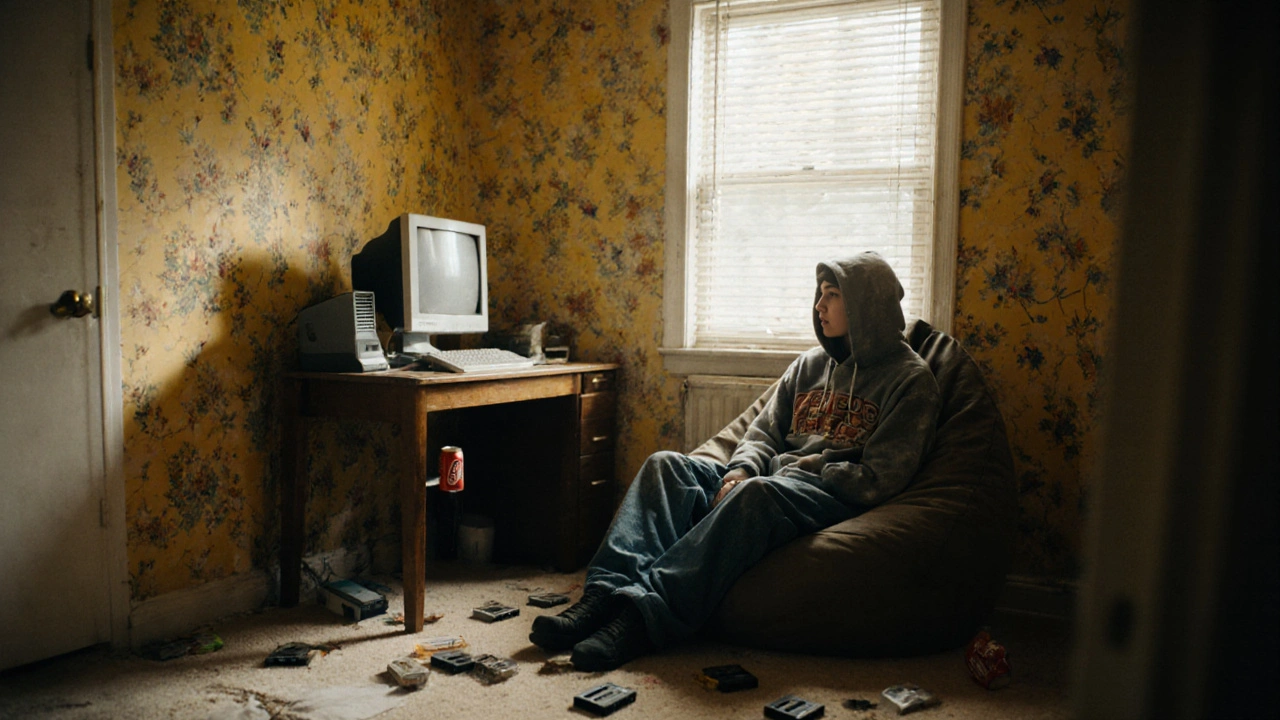
Ever watched a movie and thought, ‘How did they make this look so real with so little money?’ That’s the magic of budget-conscious production design. It’s not about having the biggest budget-it’s about seeing potential where others see limits. On indie films, student projects, or even micro-budget shorts, production designers are the unsung heroes who turn empty warehouses into 1970s diners, backyards into war zones, and thrift stores into period costumes. You don’t need millions. You need creativity, resourcefulness, and a clear plan.
Start with the Story, Not the Set
Before you even sketch a floor plan, ask: What does this scene need to feel true? Not what it needs to look expensive. A cluttered kitchen in a drama about financial stress doesn’t need marble countertops-it needs chipped paint, mismatched mugs, and a fridge that hums too loud. The emotional truth of the scene matters more than the price tag of the furniture.Look at films like Little Miss Sunshine or The Florida Project. Both used real locations, minimal set dressing, and natural lighting to build worlds that felt lived-in. Their production designers didn’t build sets-they found them, then tweaked them. You can do the same. Walk around your city with a notebook. Note abandoned gas stations, old libraries, vacant apartments. These aren’t ruins-they’re raw materials.
Repurpose, Don’t Purchase
The average indie film spends 15-20% of its budget on production design. That’s not much. So every dollar must count. Instead of buying new props, ask yourself: What can I borrow, rent, or rebuild?- Thrift stores are goldmines. A $3 lamp can become a 1950s bedside fixture with a coat of spray paint and a new shade.
- Facebook Marketplace and Craigslist often have free or cheap furniture listings labeled ‘moving sale’ or ‘dumpster dive.’ People give away sofas, bookshelves, and even TVs just to get rid of them.
- Local theaters, schools, and community centers often have storage rooms full of unused sets and props. Ask if you can borrow them. Most will say yes if you promise to return them clean.
One production designer in Austin turned a broken-down pickup truck into a 1980s family vehicle by stripping the interior, painting it matte brown, adding fake wood paneling from Home Depot, and installing a vinyl record player from eBay. The total cost? $120. The scene looked authentic. The director never knew it wasn’t real.
Paint Is Your Best Friend
Paint doesn’t just cover flaws-it transforms spaces. A blank white wall can become a brick facade, a rusted metal shed, or a sun-bleached beach house with the right color mix and technique.Use these tricks:
- For brick: Mix burnt sienna, raw umber, and a touch of black. Dry brush it with a stiff brush to create texture. Add white highlights where light hits.
- For wood paneling: Use a base coat of tan, then drag a slightly damp sponge with darker brown to mimic grain.
- For aged plaster: Apply a thin wash of gray over white, then lightly sand edges to reveal the base coat underneath.
Don’t forget ceiling treatment. A dirty, yellowed ceiling makes a room feel lived-in. A clean white one? It looks like a studio set. Even a little dust on the top corners sells realism.
Lighting Is Part of the Set
You can’t control sunlight, but you can control how it hits your set. Natural light is free-and it’s the most convincing light source. Use it.Position your camera so the sun comes through a window at the right angle. Hang sheer curtains to soften harsh midday light. Use white foam core boards as reflectors to bounce light into shadows. A $10 reflector from Amazon can replace a $500 lighting kit.
At night, use practical lights-lamps, string lights, LED strips-built into the set. A flickering bulb in a hallway isn’t a prop. It’s a character. It tells the audience this place is old, maybe a little broken, but still alive. Realism comes from imperfection.
Use Color to Tell Time and Mood
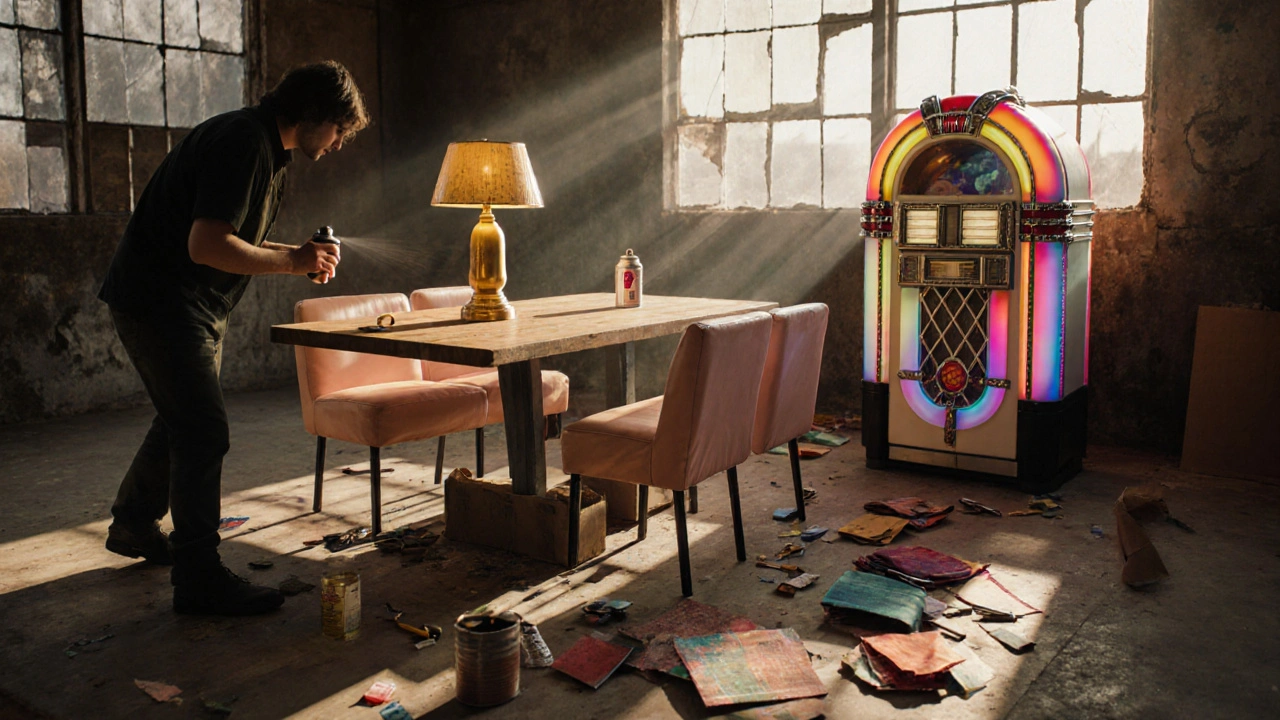
Color isn’t just decoration-it’s storytelling. In a film set in the early 2000s, avoid bright, saturated tones. Those were the days of beige carpets, mustard yellows, and avocado green appliances. A 1990s bedroom should feel muted, slightly washed out.Here’s a quick cheat sheet:
| Decade | Dominant Colors | Key Props to Include |
|---|---|---|
| 1970s | Orange, brown, mustard, avocado green | Shag carpet, wood paneling, rotary phone |
| 1980s | Teal, coral, gold, dark wood | Plastic furniture, cassette tapes, CRT TV |
| 1990s | Beige, olive, gray, muted pastels | Floral wallpaper, beanbag chairs, dial-up modem |
| 2000s | White, gray, stainless steel, blue accents | Plastic CD racks, flip phones, IKEA furniture |
These palettes aren’t just nostalgic-they’re psychological. A 1990s kitchen with beige cabinets and a yellow linoleum floor feels more real than a modern white kitchen with stainless steel appliances. Why? Because people remember how their homes looked, not how they were advertised.
Build With What You Have-Then Improve
Don’t wait for the perfect location. Start with what’s available. A garage? Turn it into a teenager’s bedroom. A church basement? That’s your haunted house. A friend’s apartment with a weirdly shaped living room? That’s your thriller’s creepy hallway.Once you’ve locked in the space, ask: What’s missing? A doorway? Build one from plywood and paint it to match the wall. A window that doesn’t open? Cover it with blackout fabric and add a fake curtain. A ceiling that’s too high? Hang strings of lights or fabric to bring it down visually.
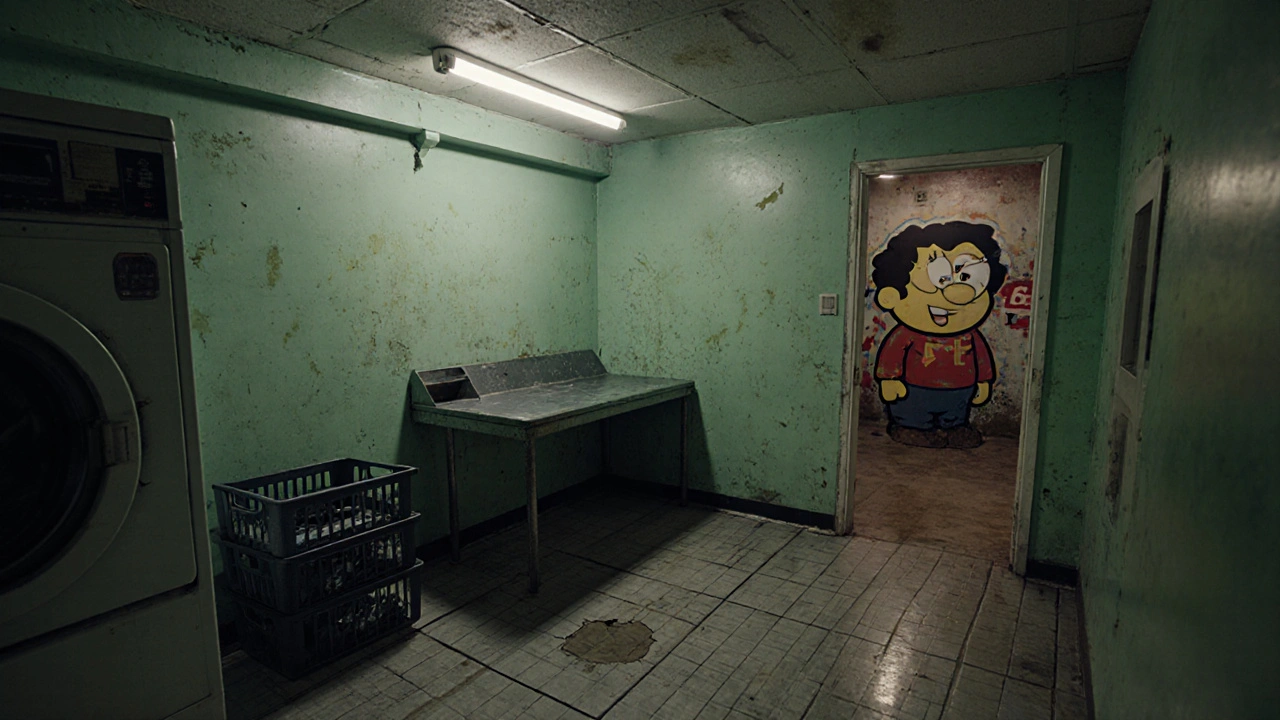
One team in North Carolina turned a vacant laundromat into a 1992 police interrogation room by removing the washers, painting the walls a sickly green, adding fluorescent lights from Home Depot, and placing a metal table they found at a yard sale. They didn’t buy a single new prop. The scene played in a festival and won best production design.
Work With What’s Around You
Your location isn’t a limitation-it’s your advantage. Small towns have character. Big cities have texture. Even your own neighborhood has stories.Use local landmarks. A faded mural on a brick wall? Use it as a backdrop. A boarded-up storefront? Turn it into a crime scene. A park with old benches? That’s your emotional climax location.
Local businesses often help. A hardware store might donate leftover paint. A café might let you use their chairs for a diner scene if you credit them in the end titles. A florist might give you wilted flowers for a funeral scene. People want to be part of something real. Ask.
Document Everything-Even the Cheap Stuff
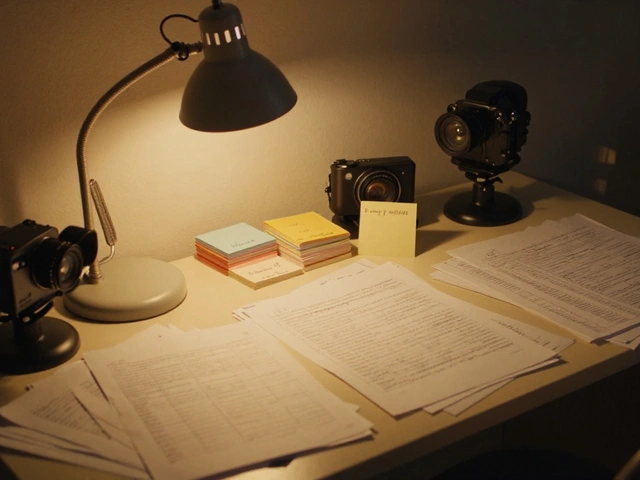
Keep a production design journal. Take photos of every location, every prop, every paint mix. Label them. Why? Because you’ll forget. And if you shoot out of order (which you will), you need to match lighting, color, and texture across scenes.Also, track what you borrowed. Write down who lent you the couch, the lamp, the typewriter. Return it with a thank-you note and a copy of the film. That’s how you build trust-and get help on your next project.
What to Avoid
Don’t waste money on these:- Custom-built furniture unless absolutely necessary
- Expensive props that won’t be seen clearly on camera
- Overloading a set with too many details
- Buying brand-new items that look too perfect
Perfect is boring. Real is messy. A slightly crooked picture frame, a half-empty soda can on a table, a dog chew toy under a chair-these are the things that make a set breathe.
Final Tip: Shoot in Sequence When You Can
If you’re shooting on a tight schedule, try to film scenes in order. Why? Because your set changes over time. A room might look clean on day one, dusty on day three, and broken on day five. If you shoot out of order, you’ll have to recreate those changes artificially.Even a small detail-like a crack in the wall that widens as the story progresses-can be a powerful visual cue. But only if you’re shooting in sequence.
Can you really make a movie look professional on a $5,000 budget?
Yes. Films like Primer and Night of the Living Dead were made for under $10,000 and are now considered classics. The key isn’t money-it’s focus. Spend your budget on the elements that matter most: lighting, color, texture, and real locations. Avoid expensive rentals, custom builds, and unnecessary props. Use what’s around you. A well-lit, thoughtfully dressed room with one strong prop will always beat a cluttered, expensive set with no emotional truth.
What’s the most important tool for low-budget production design?
Your eyes. Not a tape measure, not a paintbrush, not a hammer-your eyes. Learn to see spaces differently. Look at a blank wall and imagine it as brick. Look at a broken chair and see its potential as a 1970s living room piece. Training yourself to see possibilities, not limitations, is the first and most valuable skill in production design.
Do I need a degree in production design to do this?
No. Many of the best production designers started as art students, set painters, or even costume volunteers. What matters is curiosity, persistence, and the willingness to learn by doing. Watch how real homes are arranged. Study the details in films you love. Take notes. Experiment. Build something-even if it’s just a tiny model of a room on your kitchen table. Experience beats credentials every time.
How do I find free or cheap locations?
Start with your network. Ask friends, family, coworkers. Check Facebook groups like ‘Free Stuff [Your City]’ or ‘Film Crews Seeking Locations.’ Contact local churches, libraries, and community centers-they often have unused rooms. Abandoned buildings? Talk to the owner. Sometimes they’ll let you use it for free if you promise to clean up and take photos for them. Always get written permission, even for free locations.
What’s the biggest mistake beginners make?
Trying to do too much too soon. You don’t need a full set for every scene. Focus on the key areas: where the actors will be, where the camera will look. Leave the rest blank or blurred. A cluttered set distracts. A clean, intentional set tells the story. Less is more. Always.
Production design on a budget isn’t about cutting corners. It’s about choosing where to spend your energy. It’s about seeing the story in the space, not the space in the story. The best sets aren’t the ones with the biggest budgets-they’re the ones that feel real. And reality doesn’t cost much. It just takes attention.


Comments(10)