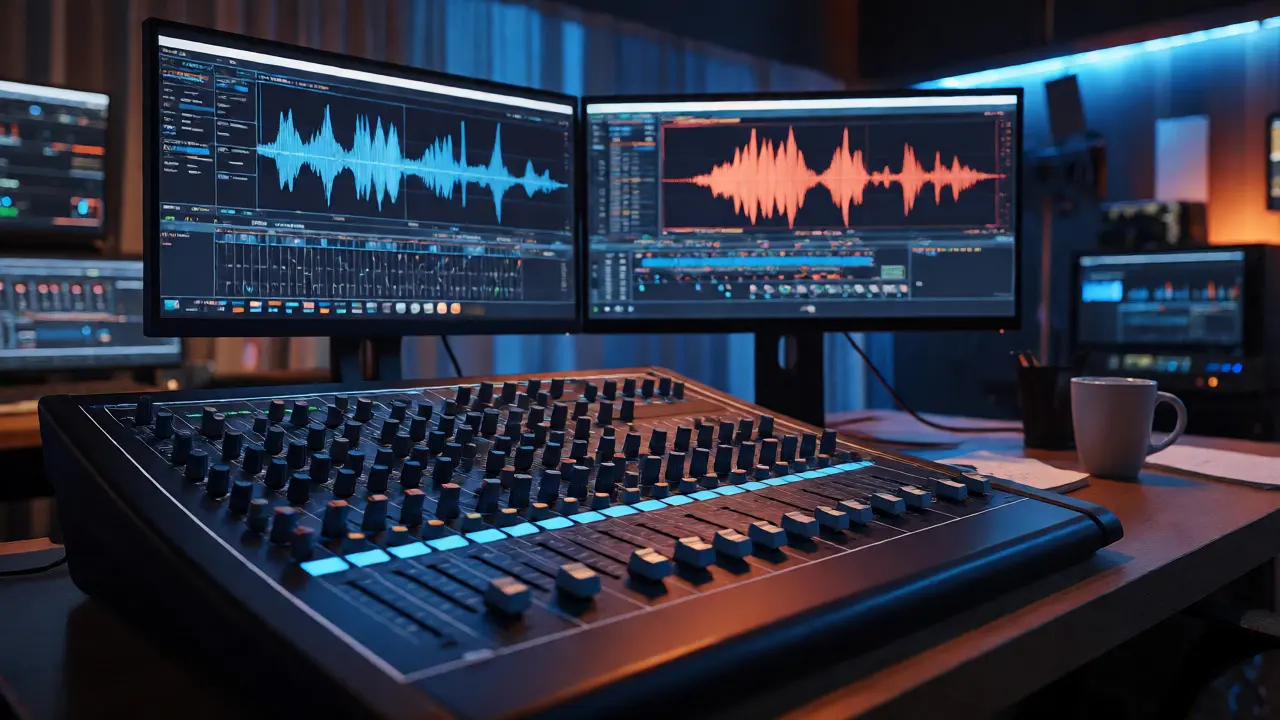
You just finished the final mix. The director is happy. The festival premiere went off without a hitch. You’re ready to send your files to the distributor, expecting a quick upload and a check in a few weeks. Then comes the email: "Please provide separate M&E and all music/dialogue/SFX stems." Suddenly, that simple delivery turns into a week of re-rendering, organizing, and double-checking levels. Why does this happen? Because distributors aren't just buying your movie; they're buying the right to sell it globally. And global sales require flexibility.
Understanding M&E Tracks and film stems isn't just technical homework-it's insurance for your revenue. If you hand over a flattened stereo mix, you lock yourself out of foreign markets where dialogue needs dubbing or where local broadcasters need specific loudness compliance. Let’s break down exactly what these deliverables are, why they matter, and how to create them without pulling your hair out.
Why Distributors Demand Separated Audio
Think of your final mix as a baked cake. It tastes great, but you can’t remove the eggs once they’re mixed in. In contrast, Film Stems are like the ingredients kept separate-flour, sugar, eggs, butter. This separation allows international distributors to adjust the recipe for different audiences.
The primary reason for this request is localization. When a film is released in Germany, Japan, or Brazil, the original English dialogue is often replaced with dubbed voices. To do this properly, the new voice actors need to hear the background sounds (music and effects) clearly so they can match the timing and emotion. If you only give them the full mix, the dubbed voices will fight with the original English speech, creating a muddy, unintelligible mess. An M&E Track (Music and Effects) solves this by providing a version of the film’s audio with absolutely no dialogue.
| Deliverable Type | Contents | Primary Use Case | Distributor Need Level |
|---|---|---|---|
| Full Mix | Dialogue + Music + SFX combined | Domestic theatrical release, streaming platforms | Low (for global rights) |
| M&E Track | Music + SFX (No Dialogue) | Dubbing, foreign language releases | Critical |
| Stems | Separate groups (Dial, Music, FX) | Broadcast compliance, remixing, archival | High |
Decoding the M&E Track
An M&E track is not simply the final mix with the dialogue muted. That’s a common mistake beginners make. If you just mute the dialogue bus, you might leave behind reverb tails, ambient noise recorded on set, or even faint breaths that were part of the performance. These artifacts will clash with the new dubbed dialogue.
A true M&E requires active reconstruction. You need to ensure that any sound effect that was panned center or shared frequency space with the dialogue is still audible and balanced. For example, if a character slams a door while speaking, the door slam must remain crisp and clear in the M&E. Often, this means going back to the raw sound effects library and replacing compromised elements. It’s about preserving the sonic landscape minus the human voice.
Here is a quick checklist for creating a clean M&E:
- Check for bleed: Ensure no microphone leakage from actors remains.
- Fill gaps: If a scene relied entirely on dialogue for pacing, add subtle room tone or ambience to keep it alive.
- Balance levels: Sometimes dialogue masked certain frequencies. You may need to boost mid-range frequencies in the music or FX to compensate.
- Verify sync: Make sure lip-sync points are obvious enough for dubbing directors to follow, even without speech.
What Are Film Stems and How Do They Differ?
If an M&E is the "no-dialogue" version, Film Stems are the building blocks used to construct both the full mix and the M&E. Typically, a standard stem package includes three main components:
- Dialogue Stem (Dial): All spoken words, including ADR (Automated Dialogue Replacement), foley footsteps close-mic’d, and sometimes crowd walla if specified.
- Music Stem (Mus): The entire score and source music (music coming from radios or TVs within the scene).
- Effects Stem (FX): Hard effects (gunshots, doors), atmospheric backgrounds (wind, traffic), and foley (cloth movement, prop handling).
Some high-end deliveries ask for four stems, separating Foley from General FX. This gives sound designers maximum control during the dubbing process. For instance, if a foreign market wants to reduce the intensity of the action sequences, they can lower the FX stem without touching the emotional weight of the music.
It’s crucial to render these stems at the same timecode start point and with identical length. If your dialogue stem starts at 01:00:00:00 but your music stem starts at 01:00:00:02, the sync will be off by two frames. In digital cinema, two frames can mean the difference between perfect lip-sync and noticeable drift.

Technical Specifications: Sample Rate and Bit Depth
Distributors rarely accept compressed formats like MP3 for masters. They want uncompressed WAV files. But which sample rate? Which bit depth? This depends on your project’s origin and target platform.
For most modern feature films and TV series, the industry standard is 48 kHz sampling rate at 24-bit depth. This provides ample headroom for dynamic range and high-frequency detail. However, if your project was shot at 24 fps or 25 fps, ensure your audio session matches the video frame rate precisely. Mismatched frame rates cause audio drift over long durations-a nightmare for editors who have to manually nudge audio every ten minutes.
Always deliver mono or stereo interleaved files unless specifically asked for multichannel (5.1 or 7.1). Most distributors prefer stereo stems because they are easier to handle and take up less storage space. If you delivered a 5.1 surround mix, you usually need to fold it down to stereo for the stem delivery, ensuring the center channel (dialogue) doesn’t disappear when summed to left/right.
Common Pitfalls in Delivery Packages
Even experienced post-production teams trip up on delivery specs. Here are the top three issues that cause rejected packages:
1. Missing Head/Tail Sync Marks: Many broadcast standards require black bars or countdown leaders before the actual content begins. If your stems don’t align with these marks, the distributor has to shift everything manually. Always include a 2-pop (a single frame of white flash synced to audio) at the head of the file to verify sync.
2. Loudness Compliance Ignored: Streaming giants like Netflix and Amazon enforce strict loudness standards (e.g., -27 LUFS integrated for Netflix). If your stems sum to a mix that exceeds these limits, the platform will automatically compress your audio, potentially ruining your dynamic range. Check your stems’ combined loudness against the target spec before sending.
3. Naming Convention Chaos: Sending files named mix_final_v2.wav, dial_new.wav, and music_final_final.wav is a recipe for disaster. Use clear, standardized naming conventions. For example: [ProjectName]_[Scene#]_[Type]_v[Version].wav. Clarity saves hours of confusion later.
How to Prepare Your Session for Export
Preparation is half the battle. Before you hit export, organize your DAW (Digital Audio Workstation) session. Group all dialogue tracks into a single bus labeled "DIAL." Do the same for "MUS" and "FX." Route these buses to their own output channels. This makes exporting stems a one-click operation rather than selecting individual tracks repeatedly.
Run a pass-through test. Solo each stem and listen for errors. Did you accidentally leave a temporary placeholder sound effect in the FX stem? Is there stray silence in the dialogue stem that shouldn’t be there? Fix these now. It’s much faster to fix a bad edit in your session than to explain to a distributor why their dubbing team is hearing ghost noises.
Finally, document everything. Include a text file with your delivery notes. Specify the frame rate, sample rate, bit depth, and any special instructions (e.g., "Music stem contains source music only"). This small step shows professionalism and reduces back-and-forth emails.
Frequently Asked Questions
Do I really need to provide M&E tracks if my film is already dubbed in other languages?
Yes, you still need them. Even if a distributor creates the dubs themselves, they need the M&E track to lay under the new voice recordings. Without it, they cannot produce the localized versions efficiently. Additionally, some territories may prefer subtitles over dubbing, but they still use the M&E for promotional trailers and clips.
What is the difference between stems and tracks?
In audio post-production, "stems" refer to grouped collections of similar audio elements rendered together (e.g., all dialogue tracks mixed into one file). "Tracks" usually refer to individual recordings or layers within the editing software. Stems are the deliverable format; tracks are the working components.
Can I just mute the dialogue bus to create the M&E?
Not always. Muting the dialogue bus removes the voice, but it also removes any processing applied to that bus, such as reverb or EQ that might affect the perceived balance of the remaining elements. More importantly, if dialogue was recorded live on set with significant background noise, muting it leaves that noise in the mix, which interferes with dubbing. A proper M&E often requires manual cleanup and replacement of compromised elements.
What file format should I use for delivering stems?
Uncompressed WAV files are the industry standard. Specifically, 48kHz/24-bit PCM WAV files are preferred for most professional distributions. Avoid MP3 or AAC for master deliverables as they introduce compression artifacts that degrade quality during further processing.
Who is responsible for creating the M&E track?
Typically, the post-production sound team or the supervising sound editor creates the M&E track as part of the final audio mix delivery. It is considered a standard deliverable alongside the full mix and stems. Confirm this responsibility early in your contract negotiations to avoid scope creep.



Comments(1)