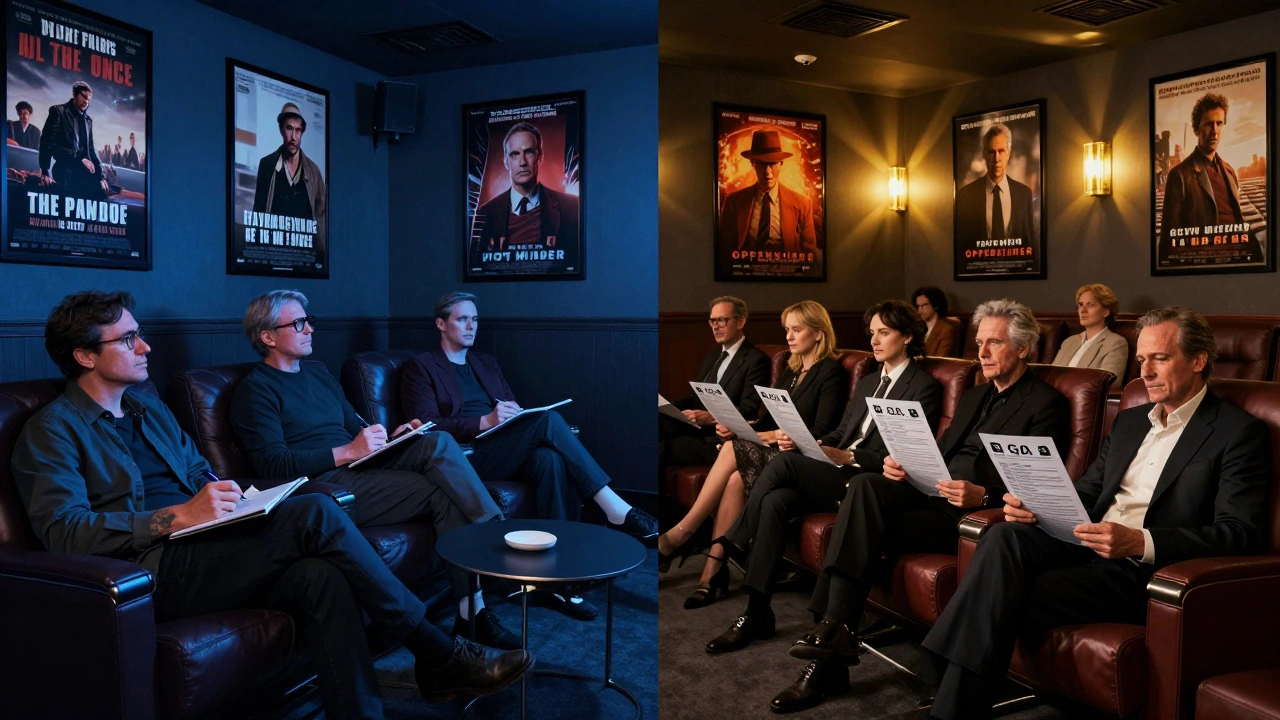
Why the Critics’ Picks Don’t Always Win the Big Prize
Every year, the same thing happens. A movie sweeps the critics’ awards-Golden Globes, Critics’ Choice, New York Film Critics Circle-and everyone assumes it’s locked for the Oscar. Then the Academy votes, and the winner is something completely different. Critics’ awards and industry awards aren’t just different in name. They’re built on different rules, different people, and different goals. That’s why you get Everything Everywhere All at Once winning everything in 2023, but Oppenheimer cleaning up at the Oscars in 2024, even though critics had already crowned The Holdovers as their favorite.
Who Votes? The Real Difference Behind the Trophies
Critics’ awards are decided by film journalists-writers, reviewers, podcasters-who watch hundreds of movies a year. Their job is to spot art, innovation, and bold storytelling. They don’t care if a film makes money. They care if it changes how you think about cinema. The Los Angeles Film Critics Association and the New York Film Critics Circle are made up of about 30 to 50 people each. Their votes are often split between indie darlings and foreign language films that never hit mainstream theaters.
Industry awards? Those are voted on by the people who actually make movies. The Producers Guild of America (PGA), the DIRECTORS Guild of America (DGA), and the Screen Actors Guild (SAG) each have thousands of members. A PGA winner has a 90% chance of winning Best Picture at the Oscars. Why? Because producers know what it takes to get a film made, marketed, and seen by audiences. A DGA winner? That’s the director the industry trusts to lead a massive team under pressure. These aren’t critics-they’re coworkers.
The Money Factor: Who Pays for the Campaign?
Here’s the uncomfortable truth: industry awards are influenced by money. Studios spend millions on Oscar campaigns-screenings in Beverly Hills, ads in trade papers, lobbying, and even free gifts. Critics don’t get swayed by that. They don’t get invited to VIP screenings with champagne and canapés. Their reviews are written in their own time, often before the studio even starts campaigning.
But when it comes to the Oscars, campaign spending matters. In 2021, Mank won 12 critics’ awards but lost Best Picture to Parasite and then Minari and The Father got overlooked entirely. Meanwhile, Nomadland-a low-budget film with minimal marketing-won the Oscar because it had the right combination of critical buzz and studio-backed momentum. The industry didn’t just vote for the best film. They voted for the one they believed could win.
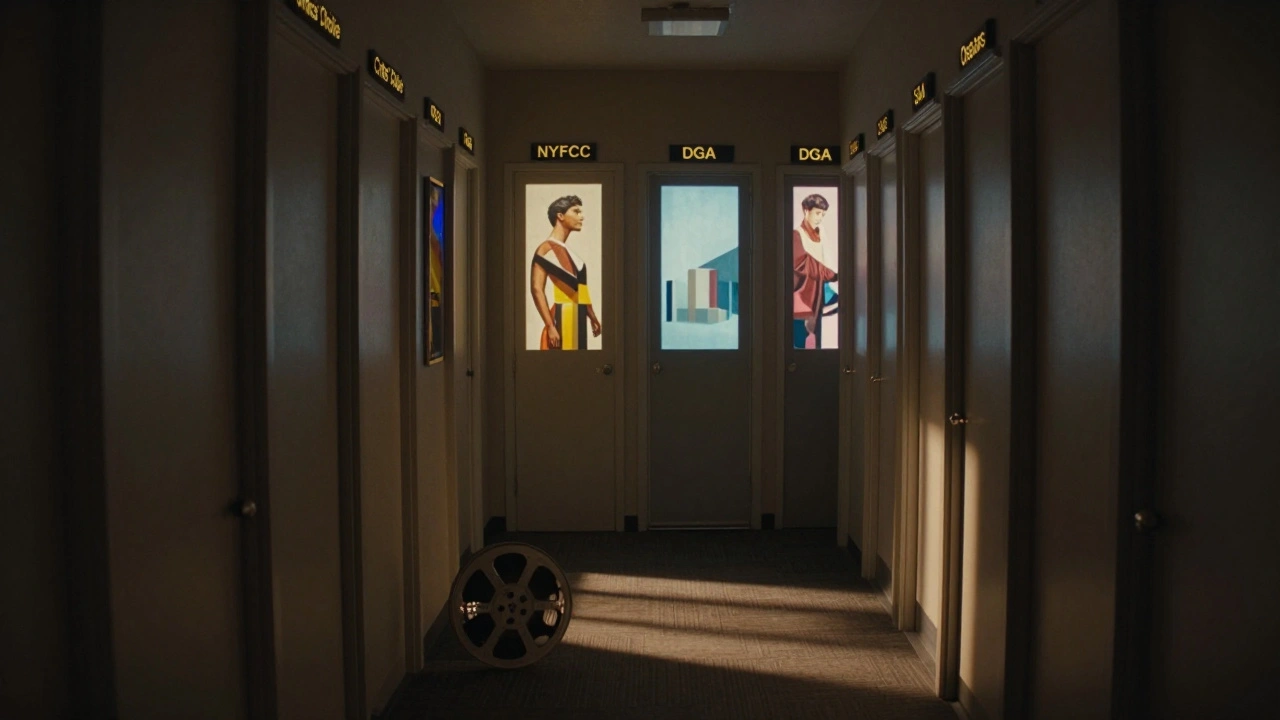
Timing: Critics See It First, Industry Decides Last
Critics’ awards start in December. The Golden Globes drop in January. Critics’ Choice follows. By then, most people have already seen the films. But the Academy doesn’t vote until late February. That’s three months of campaigning, reshuffling, and recalibration. During that time, studios re-cut trailers, launch new ad campaigns, and even release special editions to remind voters. A film that looked like a dark horse in December can become the front-runner by February.
Take Green Book in 2019. Critics hated it. It won the People’s Choice Award at TIFF but was panned by reviewers. Yet it won Best Picture because it appealed to older Academy voters who connected with its emotional arc. The critics saw it as clichéd. The industry saw it as safe. That’s the gap.
What Wins What? Patterns That Never Change
There are clear patterns in how these awards split:
- Critics’ awards favor: foreign language films, experimental narratives, documentaries, small-scale dramas, and debut directors.
- Industry awards favor: big-budget epics, biopics, historical dramas, ensemble casts, and films with clear emotional arcs.
- Acting awards often align-SAG and Oscars love powerful performances, no matter the genre.
- Screenplay awards usually go to critics’ picks: original, quirky, or deeply personal scripts.
- Editing and cinematography go to industry favorites-films that required massive technical coordination.
In 2022, The Power of the Dog won nearly every critics’ award, including Best Picture from the New York Film Critics Circle. But it lost the PGA and DGA to CODA. Then CODA won Best Picture at the Oscars. Why? Because CODA was easier to sell. It had a simple, uplifting story. The Power of the Dog was haunting, slow, and psychologically complex. Critics loved it. The industry wanted something that felt like a win.

What Happens When They Agree?
When critics and industry awards align, it’s usually because the film hits both sides of the coin. Everything Everywhere All at Once won the PGA, DGA, SAG, and every critics’ award in 2023. Why? Because it was wildly original (critics’ dream) but also had massive emotional stakes and a perfect ensemble (industry’s sweet spot). Parasite in 2020 did the same. It was a genre-bending masterpiece that also told a universal story about class.
These films are rare. Most movies that win critics’ awards are too niche for the broader industry. And most industry favorites are too safe for critics who crave risk.
Why This Matters to Moviegoers
It’s not just about who wins a trophy. It’s about what kind of movies get made next. If studios only chase critics’ awards, they’ll keep funding art films that never turn a profit. If they only chase industry awards, they’ll keep churning out safe, predictable biopics and superhero spin-offs.
The real winners? Audiences who watch both. The films that win critics’ awards often become cult classics. Manchester by the Sea didn’t win many industry awards in 2016, but it’s now studied in film schools. Meanwhile, Argo won Best Picture in 2013, but it’s rarely remembered outside of awards season.
Don’t let the trophies dictate what you watch. Use critics’ awards to find hidden gems. Use industry awards to spot the films that moved the people who actually make movies. The best way to understand cinema isn’t to pick a side-it’s to see both.
What to Watch Next: The Pattern for 2026
Looking ahead to the 2026 awards season, here’s what to expect:
- Big-budget historical dramas like The Brutalist and The Piano Lesson will dominate industry awards.
- Experimental films like Wicked (if it qualifies as drama) and The Substance will sweep critics’ circles.
- Documentaries like 20 Days in Mariupol will win critics’ prizes but rarely get Oscar traction unless they’re tied to a major news event.
- Streaming films will keep winning SAG awards-but still struggle at the Oscars unless they have a theatrical run.
The divide isn’t going away. It’s how the system works. The only way to predict the Oscars is to understand both sides-and never assume one tells the whole story.
Why do critics’ awards often differ from the Oscars?
Critics’ awards are voted on by film journalists who prioritize originality, artistry, and bold storytelling. The Oscars are voted on by industry professionals-directors, actors, producers-who value craftsmanship, emotional impact, and commercial viability. The two groups have different goals, different viewing habits, and different pressures. That’s why a film like The Holdovers wins critics’ awards but loses the Oscar to something like Oppenheimer.
Do industry awards predict the Oscar winner?
Yes, more than any other award. The Producers Guild of America (PGA) has predicted the Best Picture Oscar winner in 19 of the last 20 years. The Directors Guild (DGA) and Screen Actors Guild (SAG) are also strong indicators. That’s because the Oscar voting body includes members from all these guilds. If a film wins PGA, DGA, and SAG, it’s almost always the frontrunner.
Can a film win critics’ awards and lose the Oscar?
All the time. In 2021, Mank won 12 critics’ awards but didn’t win Best Picture. In 2019, Green Book won the People’s Choice Award and Best Picture at the Oscars, despite being widely panned by critics. Films that are too niche, too slow, or too challenging often lose to safer, more emotionally accessible stories-even if critics consider them superior.
Why do studios spend so much on Oscar campaigns?
Because industry awards-and especially the Oscars-drive box office, streaming deals, and long-term legacy. A Best Picture win can add $50 million to a film’s revenue. Studios spend millions on screenings, ads, and lobbying because the return on investment is massive. Critics don’t care about campaign tactics-they just watch and review. The industry does.
Should I trust critics’ awards or industry awards more?
Neither. Use critics’ awards to find bold, overlooked films you might miss. Use industry awards to spot the movies that moved the people who make them. The best approach is to watch both. A film that wins both is rare-but when it happens, it’s usually something truly special.







Comments(6)