Every year, between September and February, movie studios spend more on advertising than most small countries. But it’s not just about billboards or Super Bowl spots. The real battle happens in quiet rooms with critics, influencers, and industry insiders-where trade ads and awards PR do the heavy lifting to turn a film into an Oscar contender. This isn’t luck. It’s strategy. And it’s expensive.
What Are Trade Ads, Really?
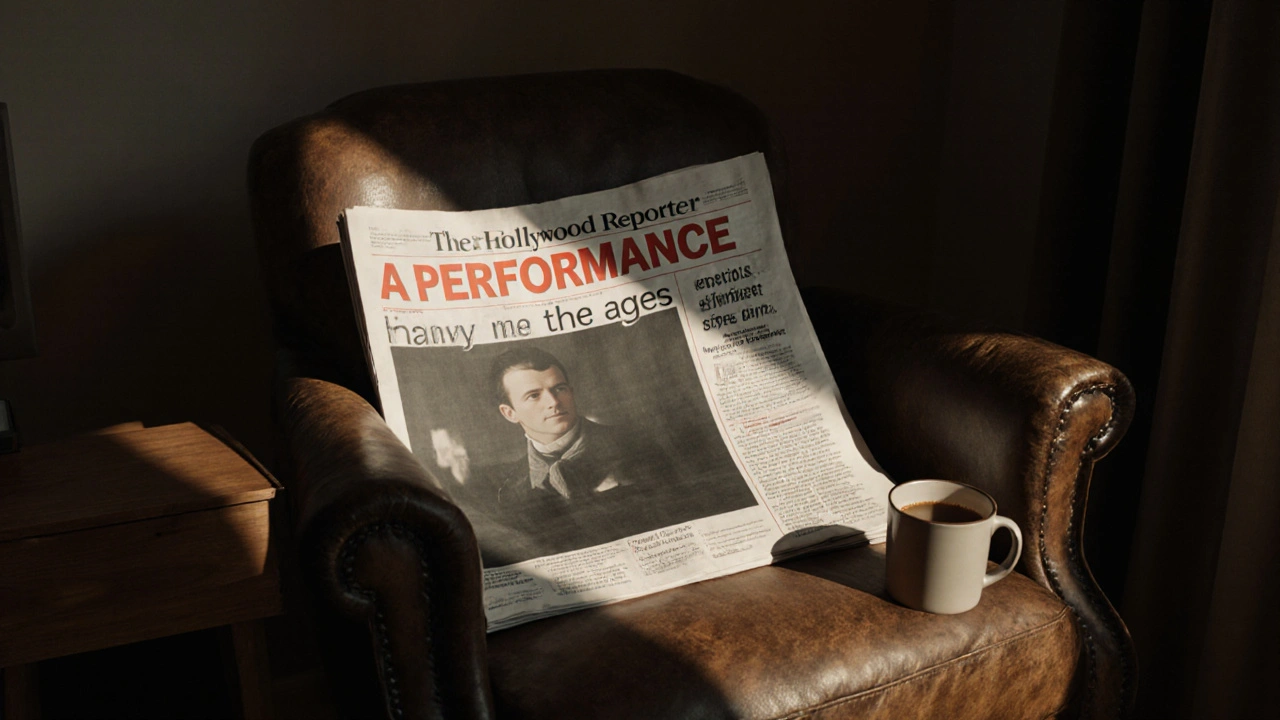
Trade ads aren’t for you. They’re for the people who decide what gets seen. These are full-page ads in Variety, The Hollywood Reporter, and Deadline. They don’t show trailers or cute behind-the-scenes clips. They show stills-often one perfect frame-paired with a line like: "A performance for the ages" or "The most talked-about film of the year."
These ads cost $20,000 to $50,000 each. A studio might run 20 of them in the final six weeks before voting closes. That’s half a million dollars just to get attention from Academy members. No social media. No hashtags. Just cold, printed persuasion.
Why print? Because Academy voters-over 10,000 strong-are mostly older, traditional, and still read physical publications. They see these ads on their coffee tables, in their offices, during quiet Sunday mornings. The message isn’t loud. It’s persistent. And it works.
The PR Machine Behind the Scenes
Trade ads are just the tip. The real engine is awards PR. Agencies like CAA, WME, and independent specialists like Gideon Yago or Jules Asner don’t just send press releases. They orchestrate campaigns.
Here’s how it works: After a film premieres at TIFF or Venice, the PR team starts inviting critics to private screenings. They don’t just invite anyone-they target the ones who write for outlets that influence voters. They host Q&As with directors and actors in Los Angeles, New York, and London. They send out screeners-DVDs or digital links-early, so voters can watch at home.
They also organize roundtables. A studio might bring together five lead actors from different films for a single interview. The goal? Make sure the press writes about them together. That way, when voters read the article, they remember all five names. It’s not about one performance. It’s about making the whole slate unforgettable.
And then there’s the screening schedule. A studio might host 30+ invite-only screenings in the final month. Each one costs $5,000 to $10,000-venue, catering, transportation, staff. Why? Because voters don’t just watch films in theaters anymore. They watch them on laptops, tablets, phones. The studio wants to make sure they watch it in the right context: with a good screen, no distractions, and maybe a glass of wine.
Where Do Film Messages Land?
It’s not about box office. It’s about perception. A film can make $10 million and still win Best Picture. Why? Because the message landed.
Take Manchester by the Sea in 2016. It grossed $80 million worldwide-not huge. But its trade ads focused on Casey Affleck’s quiet, devastating performance. The PR team made sure every critic who wrote about it mentioned "the performance of the year." By the time voting started, it wasn’t just a movie. It was an event.
Same with Parasite in 2019. The campaign didn’t push the horror or the class struggle. It pushed the idea that this was the first non-English film that could win Best Picture. They gave voters the permission to vote for it. That’s what awards PR does: it removes doubt.
Messages land where voters live-in their minds, in their conversations, in their ballots. A single line in a THR ad can trigger a chain reaction. A well-timed tweet from a respected critic can turn a quiet film into a frontrunner. A dinner with a voting member can seal the deal.

The Cost of Winning
Big studios spend $15 million to $25 million on a full awards campaign. Independent films? They scrape together $1 million to $3 million. Sometimes less.
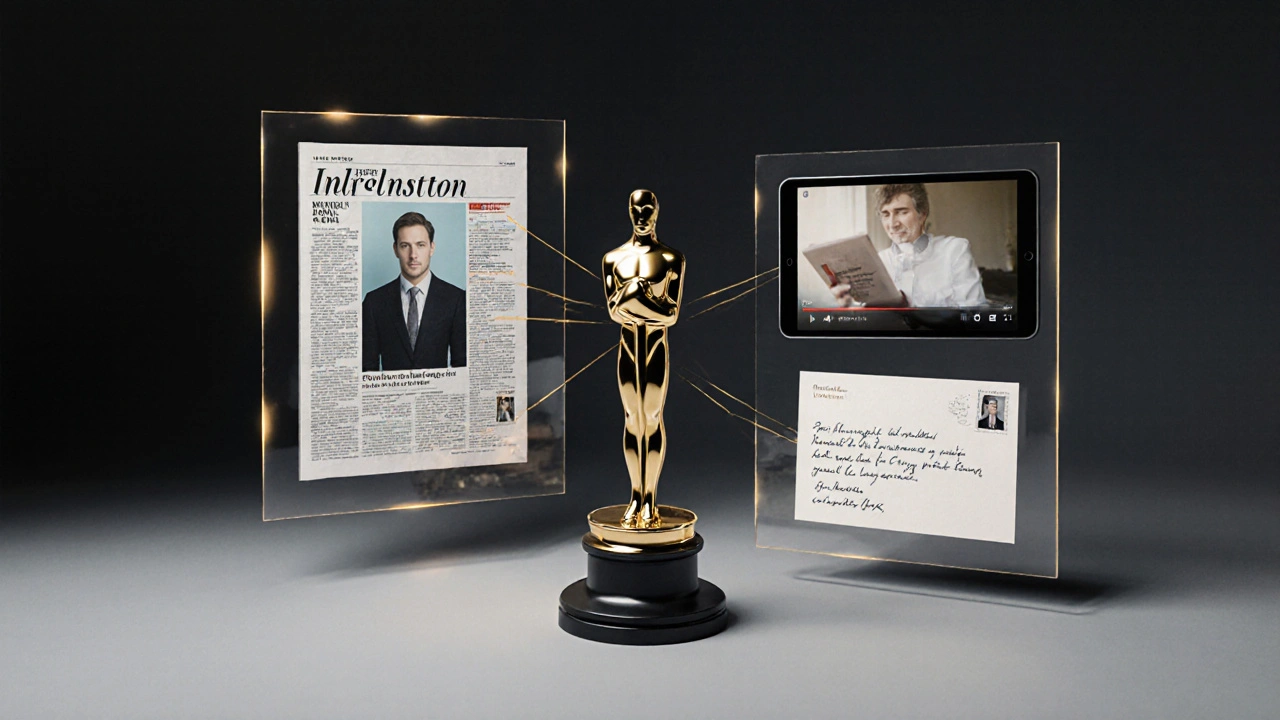
That’s not just ads and screenings. It’s hiring consultants. Paying for travel. Buying tickets for voters. Hosting events. Even printing custom postcards with a still from the film and a handwritten note from the director.
And it’s not guaranteed. In 2021, The Power of the Dog spent an estimated $20 million and won five Oscars. But West Side Story spent nearly the same and walked away with just two. The message didn’t land the same way.
What separates winners from also-rans? Timing. Tone. And truth. The best campaigns don’t lie. They reframe. They don’t say "This is the best film ever." They say, "This is the one you’ll remember in 10 years."
What Works Now? Trends in 2025
The rules are changing. More voters are younger. More vote online. Streaming has replaced physical screeners. But the core hasn’t changed.
Today, the most effective campaigns blend old-school tactics with digital nuance:
- Targeted digital ads on platforms like YouTube and Instagram now reach voters under 40 who don’t read THR anymore.
- Podcast sponsorships with indie film shows like The Q&A with Jeff Goldsmith are more trusted than traditional press.
- Personalized video messages from actors to voters-sent via email or direct mail-are rising. One campaign sent 500 custom 30-second clips to Academy members, each with a personal note.
- Hashtag campaigns like #SeeThePerformance or #RememberThisFilm are used not to go viral, but to create a sense of shared experience among voters.
But here’s the catch: the most successful campaigns still rely on one thing no algorithm can replace-personal relationships. A producer who calls a voter personally. A casting director who invites a critic to lunch. A director who shows up to a screening and stays for the Q&A.
Why This Matters Beyond Awards
Winning an Oscar doesn’t just mean a statue. It means a 300% boost in streaming views. A 500% increase in home video sales. A director gets a $20 million budget for their next film. An actor gets to pick their roles.
But even if a film doesn’t win, the campaign can still pay off. Marriage Story didn’t win Best Picture in 2019, but it became one of Netflix’s most-watched films of the year. Why? Because the campaign made people believe it mattered.
Trade ads and awards PR aren’t about vanity. They’re about legacy. They’re about making sure a film isn’t forgotten. In a world where 400+ movies hit streaming platforms every year, the ones that survive are the ones that were fought for.
What Happens After the Ceremony?
On Oscar night, the lights go off. The speeches end. And the campaign? It doesn’t end. It just changes.
Winners get re-released in theaters. They get special editions on Blu-ray. They get educational packages for film schools. They get added to museum retrospectives.
Losers? They get a quiet push toward streaming algorithms. A well-placed editorial feature. A YouTube playlist titled "Oscar Nominated Films You Missed."
The goal isn’t just to win. It’s to make sure the film keeps talking long after the ceremony.
Do trade ads actually influence Oscar voters?
Yes. While voters say they decide based on the film itself, multiple surveys and insider reports confirm that trade ads shape perception. A 2023 study by the University of Southern California’s Annenberg School found that voters who saw multiple trade ads for a film were 47% more likely to rank it in their top three. The ads don’t convince people to like a film-they make them feel like they should pay attention to it.
How much do awards PR agencies charge?
Top-tier agencies like CAA or WME charge $500,000 to $1.5 million for a full campaign. Smaller boutique firms charge $150,000 to $500,000. Some independent consultants work on retainer, charging $20,000 to $40,000 per month. The cost depends on the number of films, the scope of screenings, and how many voters are targeted.
Can a small indie film win without a big PR budget?
Yes, but it’s rare. Films like Moonlight and Minari won major awards with modest campaigns because they had one thing bigger than money: cultural resonance. They tapped into conversations already happening-about identity, family, belonging. The PR team didn’t invent the message; they amplified it. That’s the only way a small film can compete: by being impossible to ignore.
Why do studios spend so much on campaigns for films that don’t make much money?
Because awards boost long-term value. A Best Picture win can add $50 million to a film’s lifetime revenue through streaming, licensing, and home media. Studios see it as an investment, not an expense. Everything Everywhere All at Once made $140 million worldwide after its Oscar sweep-more than double its pre-awards projection.
Is there a way to tell if a film’s campaign is working?
Look at the buzz. If critics are comparing the film to past winners, if actors are being called "Oscar-worthy" in multiple outlets, if the film keeps appearing in "must-see" lists-it’s working. Also, check the trade ads. If a film is running ads in multiple issues of THR and Variety in November and December, it’s in the race. The ads are the scoreboard.




Comments(5)