Key Takeaways for Filmmakers
- Prioritize niche festivals over general ones to reach an audience that values nonfiction storytelling.
- Understand the difference between "industry-heavy" markets and "community-centric" showcases.
- Use a tiered strategy: target a "Big Three" premiere before moving to regional specialties.
- Leverage festivals not just for awards, but for finding sales agents and distributors.
The Power of the Nonfiction Specialization
Why bother with a documentary-only event? Because the curators at these festivals aren't just looking for a "good movie"; they are looking for specific modes of nonfiction. When you submit to a general festival, you're competing against narrative shorts and high-budget features. At a documentary-specific event, the competition is purely about truth, perspective, and cinematic journalism.
For instance, IDFA is the International Documentary Film Festival Amsterdam, widely regarded as the most influential documentary festival in the world. It doesn't just show films; it runs a massive market where the world's biggest buyers hunt for the next big hit. If your film has global political relevance or a high production value, this is where the real business happens.
Then you have Hot Docs is North America's largest documentary festival based in Toronto. Unlike some European festivals that focus on the avant-garde, Hot Docs is a powerhouse for accessibility and North American distribution. Getting a slot here often leads directly to a deal with a streaming giant or a public broadcaster like PBS.
Mapping Your Festival Strategy
You can't hit every festival. Between submission fees and travel costs, your budget will vanish. The secret is a tiered approach. You don't start with a local city fest; you start with the "heavy hitters" to build prestige, then move to the mid-tier specialists to build momentum.
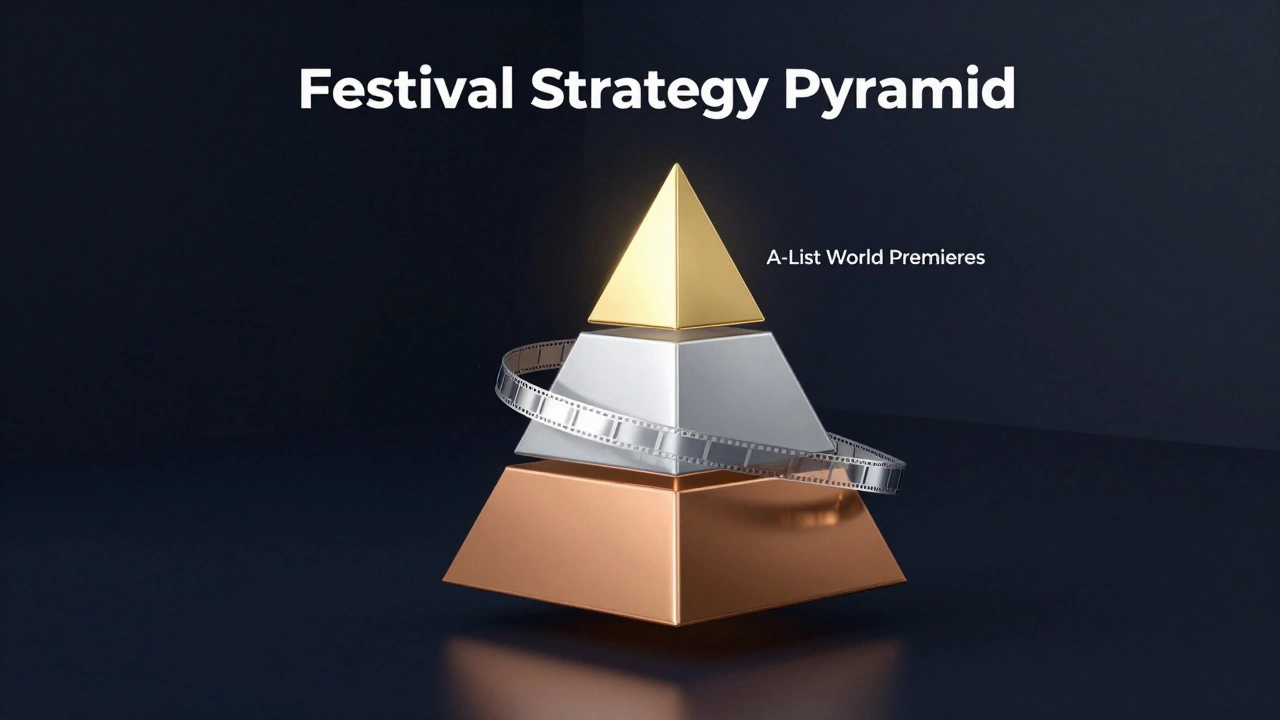
Think of it as a pyramid. At the top are the "A-List" events. These are the ones that give you a "World Premiere" stamp, which is essentially currency in the film world. If you land a premiere at Sundance Film Festival is a premiere independent film festival held annually in Utah, known for launching high-profile documentary debuts , your phone will start ringing with offers from distributors. If that doesn't happen, you move to the mid-tier.
Mid-tier festivals like Sheffield DocFest is a leading UK-based documentary festival that emphasizes the intersection of film, journalism, and digital media are incredible for networking. They might not have the same red-carpet glare as Sundance, but they attract the people who actually fund these projects.
| Festival Type | Primary Goal | Key Example | Best For |
|---|---|---|---|
| Industry Giant | Sales & Distribution | IDFA | High-budget, global appeal |
| Cultural Hub | Prestige & Reviews | Hot Docs | North American market entry |
| Innovation/Indie | Creative Networking | Sheffield DocFest | Experimental styles, journalistic rigor |
| Regional Specialty | Community Engagement | Local Doc Fests | Hyper-local subjects, grassroots reach |

Navigating the Submission Minefield
The biggest mistake filmmakers make is the "spray and pray" method. They submit to 50 festivals at once. This is a disaster for two reasons: money and premiere status. Many top-tier festivals require a "World Premiere" or at least a "Regional Premiere." If you screen your film at a tiny local fest in your hometown first, you might disqualify yourself from the biggest stages in the world.
Instead, create a calendar. Research the deadline dates-which are often months before the actual event. Use a platform like FilmFreeway is the industry-standard digital platform for film festival submissions and management to track your entries, but don't let the platform's suggestions dictate your strategy. Be surgical. If your film is about climate change, look for festivals that have a specific "Environmental' or "Green" category.
When writing your director's statement, stop talking about how "important" the subject is. Programmers know the subject is important; they want to know why the documentary film festivals circuit needs your specific cinematic approach. Did you use 16mm film to evoke a specific era? Did you spend two years building trust with a marginalized community? Give them the "how," not just the "what."
Beyond the Screening: The Business of Nonfiction
A festival is not just a place to watch your movie with a crowd. For a nonfiction filmmaker, it's a trade show. The most valuable part of the experience isn't the applause; it's the lobby. This is where you meet Sales Agents are professionals who act as intermediaries between filmmakers and distributors to sell broadcast and theatrical rights .
If you aren't attached to a sales agent, you are essentially a freelancer trying to sell a house without a realtor. You can do it, but it's ten times harder. Use these festivals to pitch your next project. Most documentary fests have "Pitching Forums" where you can present a concept to a panel of executives from Netflix, HBO, or the BBC. This is how you move from "one-hit wonder" to a sustainable career.
Don't forget the importance of the Q&A. This is your only chance to control the narrative of your film. Instead of just thanking the audience, use the Q&A to highlight the gaps in the story-things you couldn't fit in the edit. This often sparks conversations with producers who might be interested in a follow-up or a series expansion.
Common Pitfalls to Avoid
One major trap is the "Award Chaser" mentality. You'll see festivals that offer "Official Selection" laurels for a small fee or guarantee a screening if you pay a certain amount. Avoid these. In the industry, these are known as "vanity festivals." Real programmers see right through them, and having a dozen meaningless laurels on your poster can actually make your film look amateur.
Another issue is ignoring the legalities of Clearance is the process of obtaining legal permission to use copyrighted music, footage, or images in a film . A festival might accept your film, but if a major distributor sees it and notices you haven't cleared the rights to a 30-second clip of a news broadcast, they won't touch it. Use the festival run to identify any "red flags" in your legal paperwork before the lawyers from a big studio start digging.
Finally, don't neglect the press kit. A simple PDF isn't enough. You need high-resolution stills, a punchy one-paragraph synopsis, and a director's bio that sounds professional but human. When a journalist is deciding which five films to cover in their review, the one with the best press kit usually wins.
What is the difference between a world premiere and a regional premiere?
A world premiere is the very first time a film is shown publicly anywhere. A regional premiere means it's the first time the film is shown in a specific geographic area (like North America or Europe). Many top-tier festivals require a world premiere to accept a film into their main competition.
Should I submit to festivals before or after finding a distributor?
Generally, you should submit to festivals first. A successful run at a prestigious festival creates demand and "buzz," which gives you significant leverage when negotiating with distributors. If you sign a distribution deal too early, you might lose control over where and when your film can premiere.
How much should I budget for festival submissions?
Depending on the scale of your run, a modest budget ranges from $500 to $3,000. Remember that fees vary by deadline (early bird is cheaper). You should also budget for travel and lodging if you are required to attend the screening, as most festivals do not cover these costs for independent filmmakers.
Can I submit the same film to multiple festivals at once?
Yes, and you usually have to. Because acceptance rates are low, you must apply to many. However, if a festival offers you a slot with a "premiere requirement," you may need to withdraw the film from other festivals that have already accepted it to maintain that status.
What happens if a festival rejects my documentary?
Rejection is the norm, not the exception. Often, it's not about the quality of the film, but the "fit" of the programming slate. If you get a few rejections, look at your trailer and your synopsis-these are the first things programmers see. A weak trailer can kill a great film's chances.
Next Steps for Your Film Run
If you're just finishing your final cut, start by auditing your legal clearances. Ensure every piece of music and archival clip is documented. Once that's done, build your "Dream List" of five A-list festivals, ten mid-tier specialists, and five regional events. Don't just apply; follow the festival's social media and see what kind of films they've picked in the last three years. If they only pick 90-minute political thrillers and you've made a 40-minute poetic essay film, save your money and look elsewhere.
For those who have already been accepted, start networking now. Reach out to other filmmakers in your cohort. The people you meet in the lounge at Hot Docs or IDFA will likely be the people you co-produce with on your next project. The festival circuit is a marathon of endurance, but for a nonfiction film, it's the only real way to move from a hard drive to a global audience.




Comments(8)