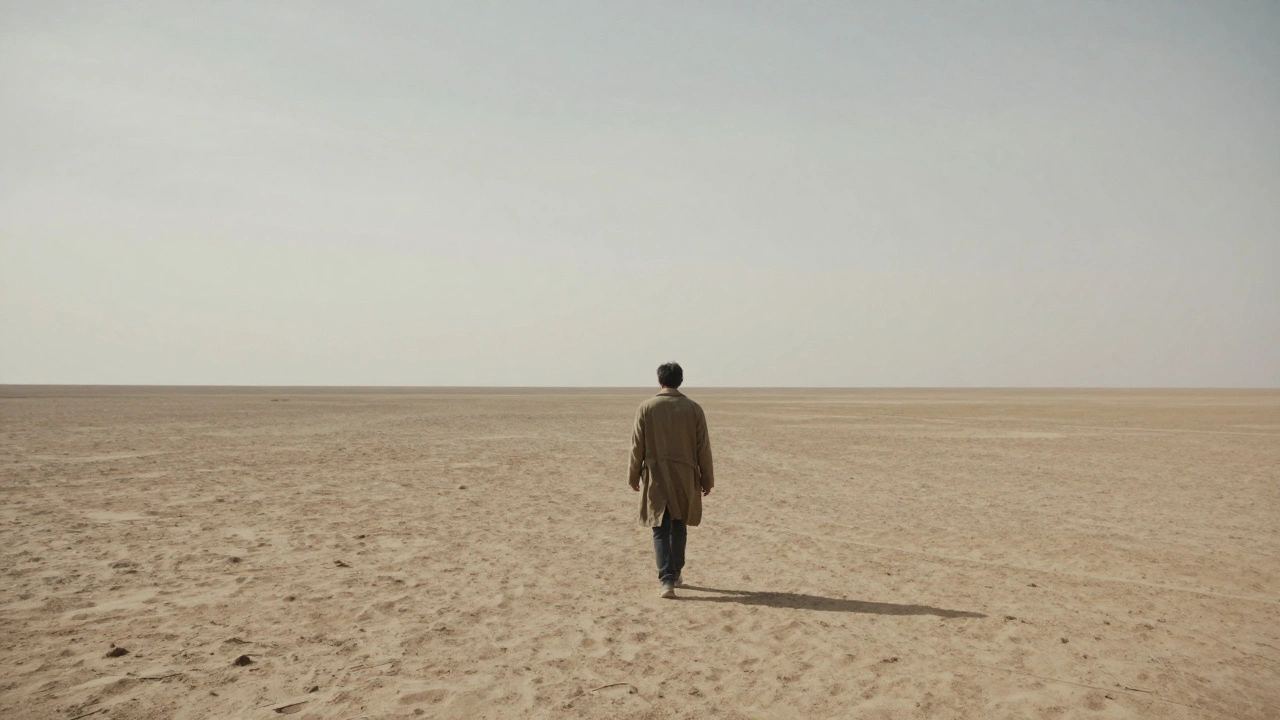
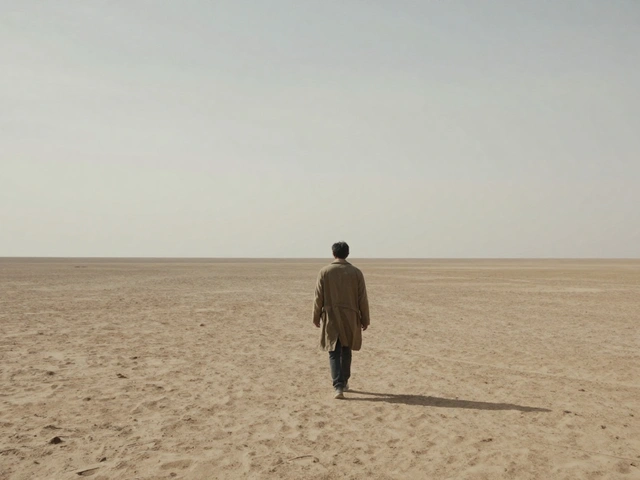
Every great film starts with a frame. Not the edge of the screen, but the careful arrangement of everything inside it. Think about the opening shot of There Will Be Blood-a lone figure walking across a barren landscape. No dialogue. No music. Just dirt, sky, and silence. Yet you feel the weight of isolation, the coming storm. That’s not luck. That’s composition and framing at work.
What Is Film Composition?
Composition in film is how directors and cinematographers place objects, people, and space within the frame. It’s not just about making things look pretty. It’s about guiding your eyes, controlling your emotions, and telling the story without a single word.
Think of it like a photograph, but moving. You’re not just capturing a moment-you’re building meaning. A character centered in the frame feels important, alone, or trapped. A character pushed to the edge? They’re marginalized, lost, or on the verge of leaving. These aren’t accidents. They’re choices.
One of the most common tools is the rule of thirds. Imagine the frame divided into nine equal parts by two horizontal and two vertical lines. Placing key elements along those lines or at their intersections creates balance without symmetry. In The Grand Budapest Hotel, Wes Anderson uses this rule obsessively. Doors, windows, and characters sit precisely where the lines cross. It’s not just stylish-it signals order, control, and a world that’s meticulously curated.
Why Framing Matters More Than You Think
Framing is what you choose to include-and what you leave out. A tight close-up on someone’s eyes tells you they’re scared. A wide shot showing them alone in a massive room tells you they’re powerless. The same person, two completely different stories.
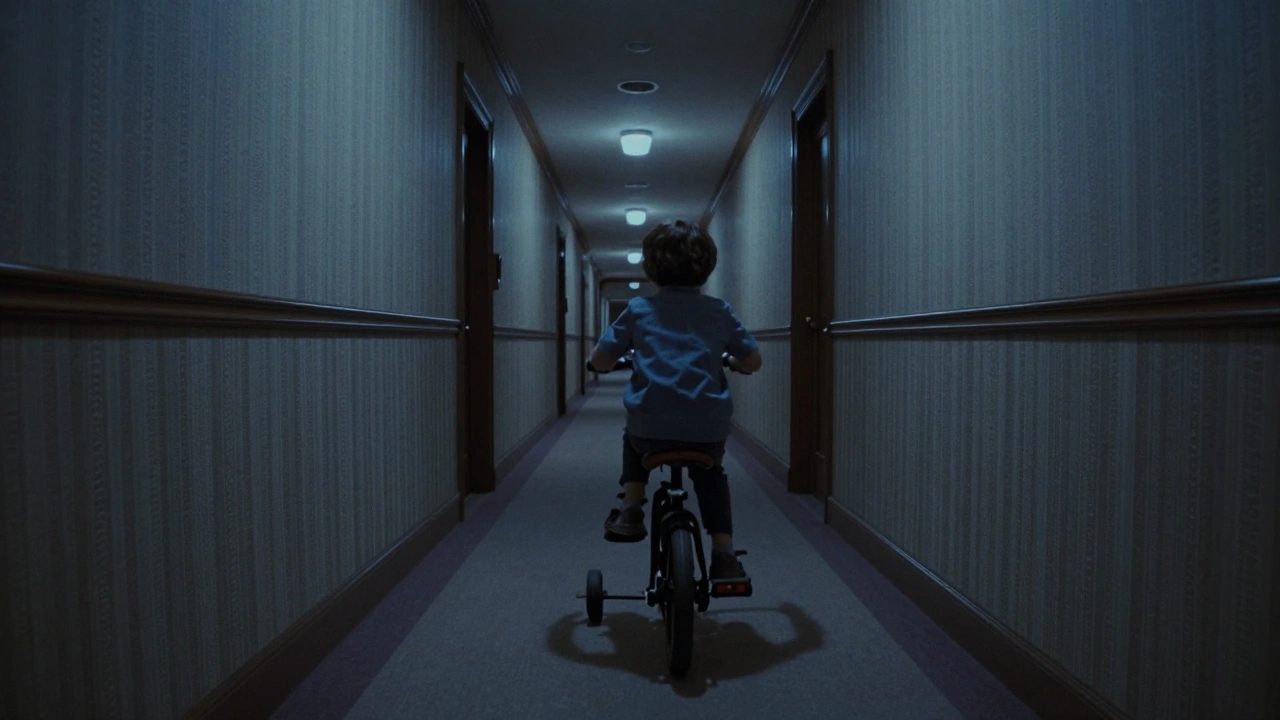
Take the hallway scene in The Shining. Danny rides his tricycle down the endless corridor. The camera stays low, tracking him from behind. The walls stretch out like a tunnel. You don’t see the killer yet. But you feel the dread. That’s framing doing the heavy lifting. The space itself becomes a character.
Low-angle shots make characters look powerful. High-angle shots make them look small. Dutch angles-where the frame is tilted-create unease. In Batman Begins, when Bruce Wayne is in the pit, the camera tilts as he looks up at the light. You don’t just see his struggle-you feel it in your bones.
Leading Lines and Visual Pathways
Your eyes naturally follow lines. Roads, fences, staircases, even shadows can pull the viewer’s attention where the filmmaker wants it to go. In Blade Runner 2049, the neon-lit streets aren’t just set design. They’re visual arrows pointing toward the protagonist, guiding you through the chaos of the city.
Architectural lines in 1917 lead your eye from one soldier to the next, across trenches and ruined buildings. The camera doesn’t cut. It glides. And those lines? They don’t just show movement-they show inevitability. The war is swallowing everything.
Even negative space-the empty areas around a subject-can be powerful. In Arrival, the alien ship hovers silently in a vast field. The emptiness around it isn’t empty at all. It’s tension. It’s mystery. It’s the unknown.
Color, Light, and Depth
Composition isn’t just about shapes and positions. Color and light shape how we feel. A warm orange glow in a kitchen scene feels safe. A cold blue hallway feels clinical, lonely.
In Mad Max: Fury Road, the desert is bleached white, the sky is hazy orange. The characters wear bright red or green. They pop out like fire against the dust. That contrast isn’t just eye-catching-it tells you who’s alive, who’s fighting, who’s fading.
Depth of field controls what’s in focus. A shallow depth-where only the character’s face is sharp and the background is blurry-forces you to focus on emotion. A deep depth-where everything from the front to the back is clear-shows context, environment, consequence. In Parasite, the Kim family’s basement apartment is always shot with deep focus. You see the stairs leading up to the wealthy house. You see the floodwaters rising. You see the inequality, even when no one speaks it.
Camera Movement and Composition
A static shot can feel calm. A tracking shot can feel urgent. A crane shot can feel godlike. How the camera moves changes the meaning of the frame.
In 1917, the entire film feels like one continuous shot. The camera follows the soldiers through mud, trenches, and burning towns. There are no cuts to reset your perspective. You’re stuck with them. The composition shifts constantly-not because it’s flashy, but because the world is collapsing around them.
Compare that to the slow push-in in The Godfather when Michael Corleone sits alone in the restaurant. The camera moves closer. The background fades. The noise drops out. You’re not just watching a man make a decision. You’re inside his head.
Breaking the Rules-When to Ignore Composition
Rules exist to be broken. Sometimes, chaos tells the truth.
In The Blair Witch Project, shaky handheld cameras, off-center framing, and awkward cuts aren’t mistakes. They’re the point. The film feels real because it looks like someone dropped the camera in terror.
Or look at Requiem for a Dream. The rapid cuts, extreme close-ups, and distorted angles mirror addiction. The composition doesn’t follow rules-it follows a mind unraveling.
Even in big-budget films, directors break composition to show instability. In Joker, the framing gets tighter as Arthur’s mental state collapses. The walls close in. The background disappears. The world stops making sense. That’s not bad cinematography. That’s perfect storytelling.
How to Train Your Eye
You don’t need a camera to learn composition. Start watching films with the sound off. Just watch the frames. Ask yourself:
- Where is the character? Why there?
- What’s in the background? What’s missing?
- Is the light warm or cold? Why?
- Is the frame symmetrical or unbalanced? What does that tell you?
Pause scenes. Study them. Take notes. Notice how directors use empty space, color, and angles to build tension, sadness, or hope.
Try this: Pick your favorite film. Rewatch one scene five times. Each time, focus on a different element-first the lighting, then the framing, then the movement. You’ll start seeing how every choice adds up.
What Makes a Frame Great?
A great frame doesn’t shout. It whispers. It doesn’t show you everything-it shows you just enough. And it leaves you with a feeling you can’t shake.
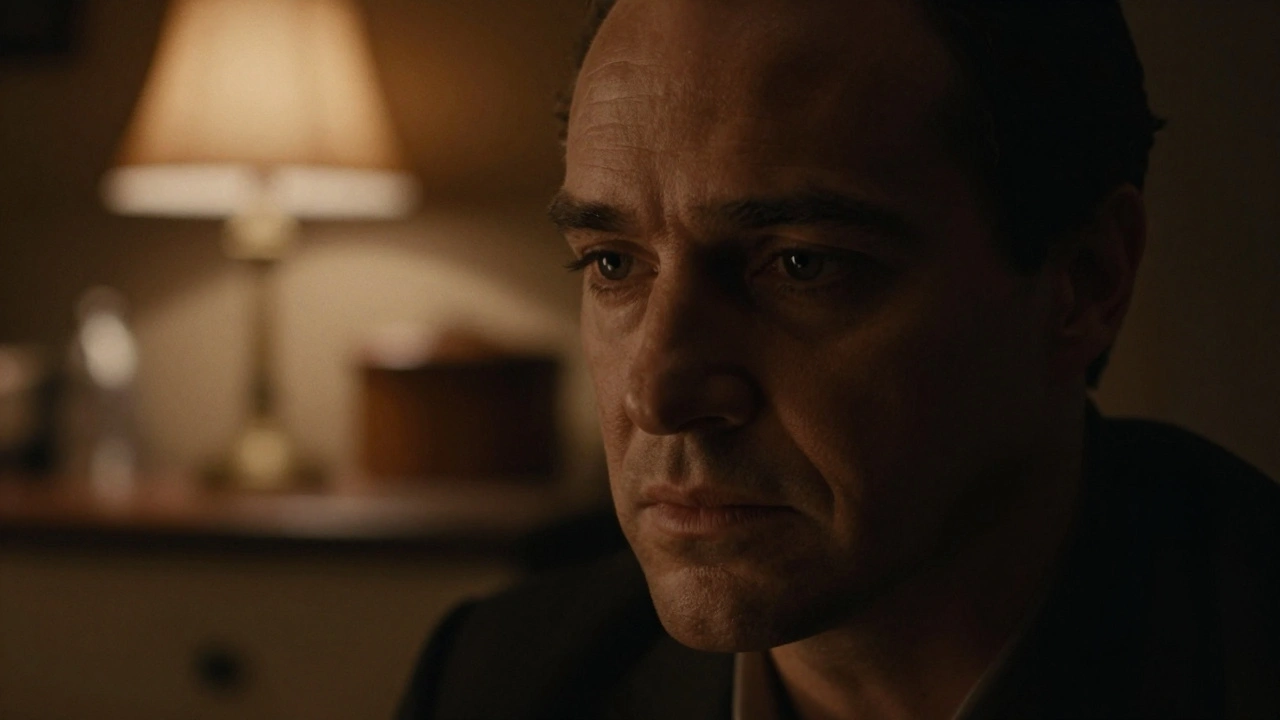
It’s why you remember the shot of the lone tree in The Revenant-standing against a snowstorm, barely visible. Or the window in There Will Be Blood where Daniel Plainview stares out, his face half in shadow. You don’t need to hear him speak. You already know what he’s thinking.
That’s the power of visual language. It doesn’t translate. It doesn’t need subtitles. It lives in the space between what’s seen and what’s felt.
Next time you watch a film, don’t just watch the story. Watch the frame. Because the story isn’t just what happens. It’s how it’s shown.


Comments(9)