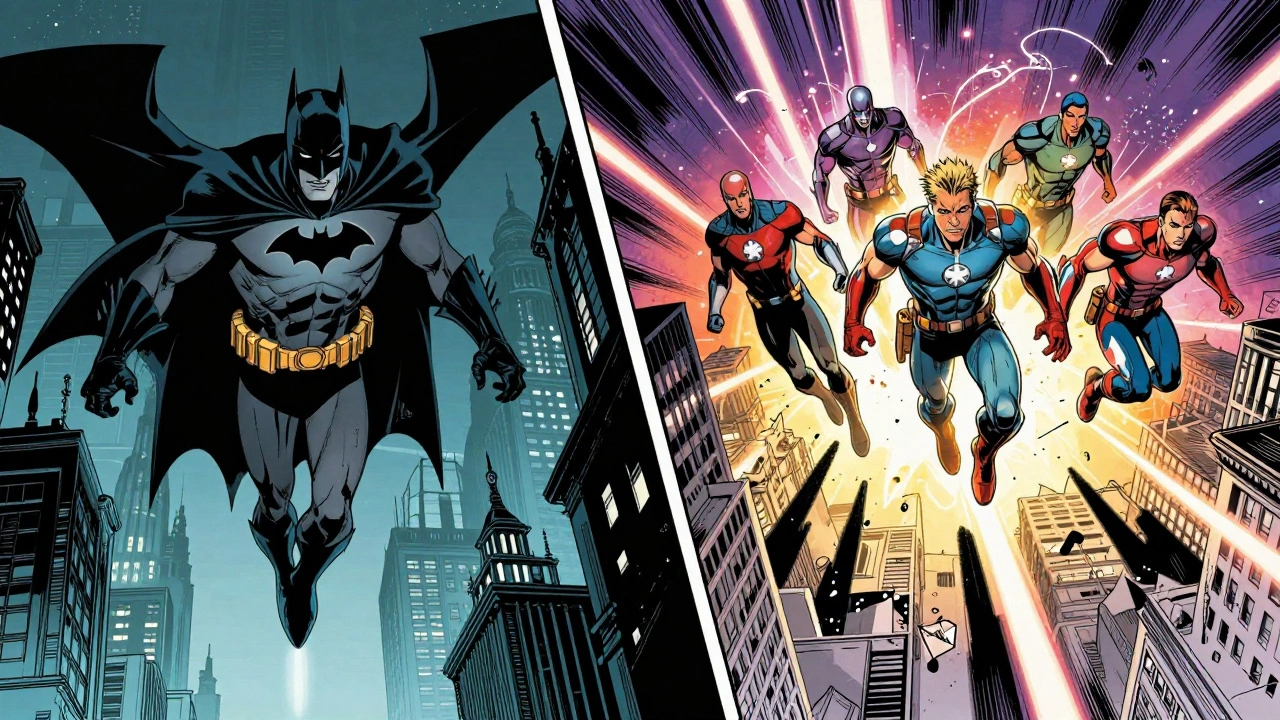
When comic book adaptations first hit theaters in the 1970s, most people thought they were a joke. Tim Burton’s Batman in 1989 changed that. But it wasn’t until the 2000s that studios realized these stories weren’t just for kids in spandex-they were global box office gold. Today, comic book and graphic novel adaptations make up nearly 30% of the top-grossing films worldwide. That’s not luck. It’s a carefully engineered shift in how stories are told, marketed, and consumed.
Why Comic Books Work So Well on Screen
Comic books aren’t just drawings on paper. They’re visual storytelling machines. Each panel is a shot. Each speech bubble is dialogue. The pacing is already broken into scenes. That’s why translating them to film feels natural-not forced. Directors don’t have to invent structure; they inherit it. Take Watchmen (2009). Zack Snyder kept nearly every panel from Alan Moore’s original graphic novel intact. The result? A film that felt like a moving comic. Fans loved it. Critics hated it. But it made $185 million globally on a $130 million budget. That’s proof: audiences don’t need Hollywood to reinvent the source. They want the soul of it. Superhero stories have a built-in advantage: iconic characters. Spider-Man, Batman, Iron Man-they’re cultural symbols. Their costumes, their catchphrases, their origin stories are known by people who’ve never read a single issue. That’s brand recognition no marketing team can buy.The Rise of the Graphic Novel Film
Not all adaptations are about capes and lasers. Some of the most powerful films come from indie graphic novels. Persepolis (2007) was a black-and-white memoir about growing up during the Iranian Revolution. Made with simple animation, it earned an Oscar nomination and won Best Screenplay at Cannes. It didn’t need CGI. It didn’t need a star. It just needed truth. From Hell (2001) turned a gritty, historical graphic novel into a dark thriller about Jack the Ripper. The Road (2009), adapted from Cormac McCarthy’s novel with illustrations by Charles Burns, used the book’s bleak tone to shape its cinematography. These films prove that graphic novels aren’t just about superheroes-they’re about human pain, politics, identity, and survival. The difference between comic book adaptations and graphic novel films? Tone. Scope. Audience. Superhero movies aim for mass appeal. Graphic novel films aim for emotional impact. Both succeed, but in different ways.How Studios Choose What to Adapt
It’s not random. Studios look for three things: existing fanbase, visual potential, and franchise potential. Marvel didn’t adapt Iron Man because it was the most popular comic. They picked it because it was relatively unknown-meaning they owned the rights cheaply. Robert Downey Jr. was a risky casting choice. But that risk paid off. Iron Man (2008) launched the Marvel Cinematic Universe, now worth over $30 billion. DC went the opposite route. They adapted Batman and Superman first-characters everyone knew. But they struggled because they didn’t build a shared universe until years later. When they did, with Man of Steel (2013), they tried to match Marvel’s tone. It didn’t work. Audiences wanted grit, not glossy optimism. Independent studios like Netflix and Amazon now compete by picking overlooked titles. The Umbrella Academy came from a small publisher. Y: The Last Man was considered "too weird" for Hollywood. Both became hit TV shows. The lesson? The best adaptations aren’t always the biggest names. They’re the ones that feel fresh.
What Gets Lost in Translation
Comics rely on silence. A single panel can show a character’s grief without a word. Film can’t do that easily. That’s why many adaptations feel too loud. Scott Pilgrim vs. the World (2010) nailed the comic’s rhythm by using visual effects to mimic panel transitions-flashing text, cartoon sound effects, split screens. It was a love letter to the source. But it bombed at the box office. Why? Because most audiences weren’t looking for a comic book movie. They were looking for a superhero movie. Another problem: pacing. Comics can take 12 issues to tell a story. Movies have two hours. That means cuts. Characters get merged. Subplots vanish. In Green Lantern (2011), the entire emotional arc of Hal Jordan’s grief over his father was trimmed to a single line. Fans noticed. Critics mocked it. The movie made $220 million-but lost $100 million after marketing costs. The best adaptations don’t try to copy every page. They capture the spirit. Logan (2017) didn’t have a single superhero suit. It was a western. A road movie. A father-son story. But it was still Wolverine. Because it kept the pain, the rage, the loneliness of the character.What Makes a Great Adaptation
There’s no formula. But there are patterns. First, respect the tone. Spider-Man: Into the Spider-Verse (2018) didn’t try to be photorealistic. It looked like a comic book animated by hand. It won the Oscar for Best Animated Feature. Why? Because it trusted the medium. Second, cast for character, not fame. Tom Holland wasn’t a star when he was cast as Spider-Man. He was a kid with energy. That’s what Peter Parker needed. Third, don’t over-explain. In The Dark Knight, the Joker doesn’t have a backstory. He says, "I’m not a monster. I’m just ahead of the curve." That line works because it’s mysterious. The movie didn’t feel the need to justify his chaos. And fourth-listen to the fans. When Marvel released Deadpool (2016), they let Ryan Reynolds rewrite the script. He made it R-rated. He made it funny. He made it messy. And it became the highest-grossing R-rated superhero film ever.
The Future: Beyond Superheroes
The next wave of adaptations won’t be about Avengers. It’ll be about stories that were ignored. Berserk is a dark fantasy manga with 40 million copies sold. Netflix is adapting it. Black Hole by Charles Burns-a surreal teen horror comic-is in development at A24. March, the graphic novel trilogy about John Lewis and the Civil Rights Movement, is being turned into a film by Ava DuVernay. These aren’t just movies. They’re cultural moments. They’re proof that comics aren’t just entertainment. They’re history. They’re protest. They’re poetry. The next decade will see more graphic novels adapted-not because they’re trendy, but because they’re necessary. Audiences are tired of the same origin stories. They want something real. Something raw. Something that looks like life, not a CGI explosion.What’s Next for Fans
If you love these adaptations, here’s what to watch for:- Swamp Thing (2026) reboot-back to its horror roots, not the 1980s camp version
- Usagi Yojimbo-a samurai rabbit comic being adapted by Legendary Pictures
- Y: The Last Man Season 2-after its TV series cancellation, a film version is now in talks
- Black Hammer-a deconstruction of superhero tropes, set for a 2027 release
Frequently Asked Questions
Why are comic book adaptations so popular now?
They’re popular because they offer ready-made characters, visual styles, and story structures that studios can build on. Audiences already know these characters, so marketing is easier. Plus, modern CGI lets filmmakers bring even the wildest panels to life. But the real reason? People crave mythic stories-and comics are modern mythology.
Are graphic novel adaptations different from comic book adaptations?
Yes. Comic book adaptations usually come from serialized superhero stories with ongoing arcs. Graphic novel adaptations are often standalone, literary works-like Maus or Blankets. They tend to be darker, more personal, and aimed at adults. Studios treat them differently: graphic novels get indie budgets and arthouse releases; superhero comics get blockbuster budgets and global marketing.
What’s the most successful comic book adaptation ever?
Avengers: Endgame (2019) holds the record for highest-grossing film of all time at $2.798 billion. But in terms of cultural impact, The Dark Knight (2008) might be more significant. It turned a superhero movie into a serious cinematic event, proving comics could be art, not just entertainment.
Why do some comic adaptations fail?
They fail when they ignore the source material’s heart. Superman Returns (2006) looked like the comics but felt empty. Green Lantern (2011) tried to explain everything and lost the wonder. The best adaptations don’t copy panels-they capture mood, tone, and emotion. If the film feels like a marketing pitch, not a story, audiences walk away.
Will comic book movies ever decline?
They’ll evolve, not disappear. Audiences are already tired of origin stories and team-ups. The next wave will focus on genre-blending: horror comics like Locke & Key, political satires like The Boys, and literary adaptations like Persepolis. The genre won’t die-it’ll get smarter, weirder, and more diverse.




Comments(5)