Winning an award for an animated film isn’t just about pretty pictures. It’s about storytelling that sticks with you long after the credits roll. Studios spend years crafting these films-not just drawing frames, but building worlds, voices, and emotions that feel real. The big awards like the Oscars, Annie Awards, and Golden Globes don’t just reward technical skill. They reward heart. They reward risk. And they reward consistency.
What Awards Actually Matter for Animated Films
The Academy Award for Best Animated Feature is the most visible prize, but it’s not the only one that shapes careers. The Annie Awards, run by ASIFA-Hollywood, are the industry’s own honors-voted on by animators, directors, and producers. These are the awards that peers respect most. A film can win an Oscar and miss the Annies, or vice versa. That’s because the Oscars lean toward broad appeal, while the Annies reward innovation and craft.
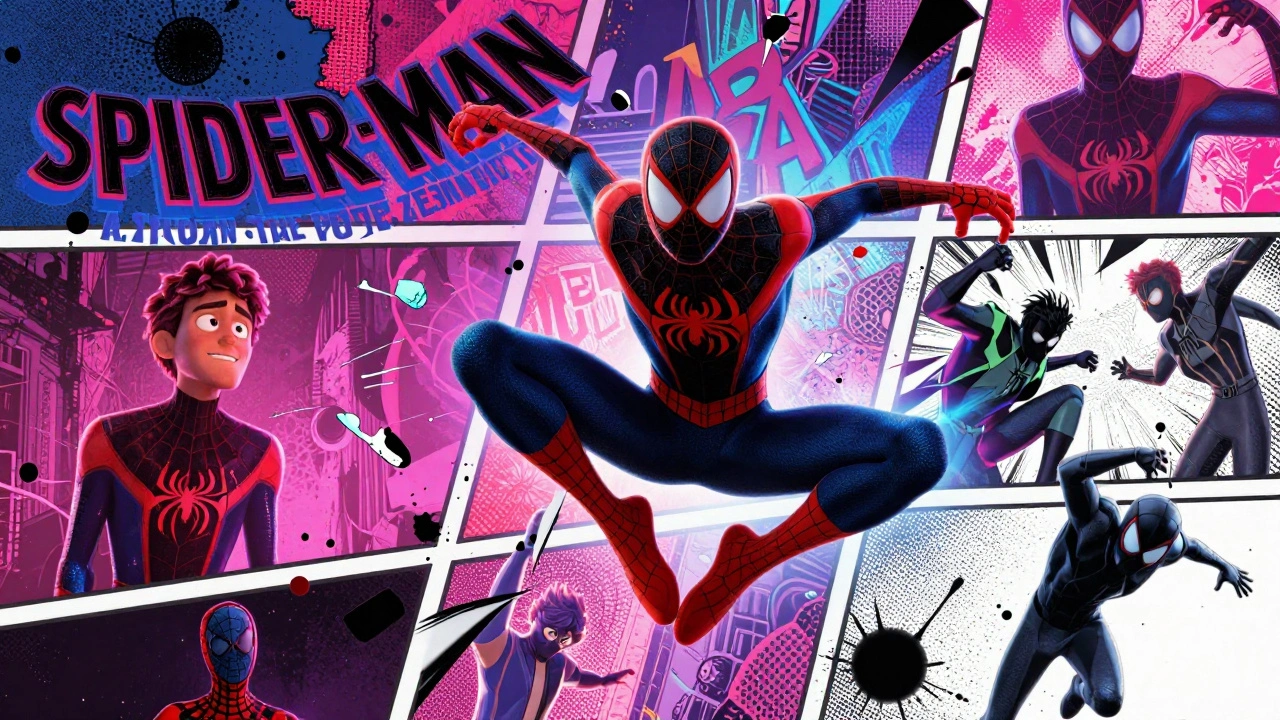
For example, Spider-Man: Across the Spider-Verse won the 2024 Oscar for Best Animated Feature. But it also swept the Annies that year, taking home seven awards including Best Feature and Best Direction. Why? Because it didn’t just look different-it broke the rules of how animation could move, feel, and tell a story. It used comic book panels as motion, layered styles within a single scene, and gave voice to a generation that had never seen themselves in an animated hero.
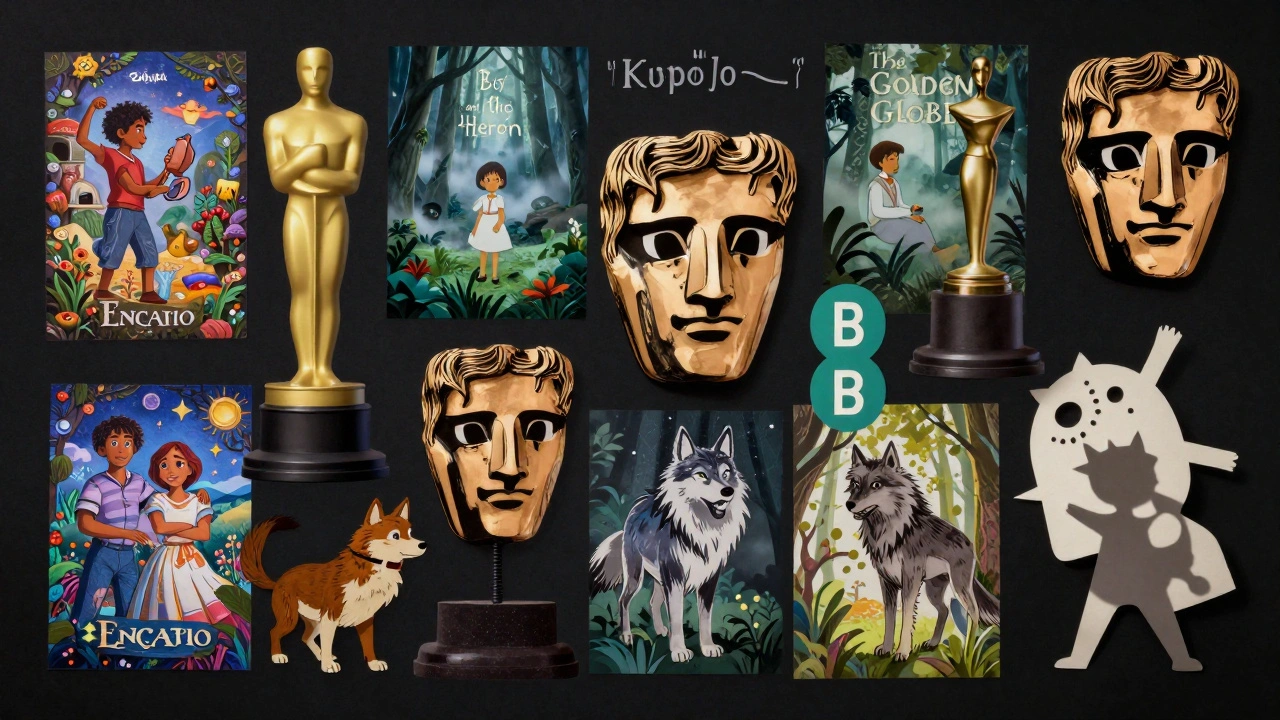
Other major awards include the Golden Globe for Best Animated Feature Film and the BAFTA for Best Animated Film. These matter because they influence how studios pitch future projects. A Golden Globe nod can mean a bigger marketing budget. A BAFTA win opens doors in Europe and beyond.
How Studios Build Award-Winning Campaigns
Winning isn’t accidental. It’s planned. Studios like Pixar, DreamWorks, and Studio Ghibli don’t just make films-they run year-round award campaigns. They screen films for voters, host Q&As, send out physical DVD packages with behind-the-scenes booklets, and even organize special events in Los Angeles and New York.
Smaller studios do the same, but differently. Independent films like The Boy and the Heron (2023) or Guillermo del Toro’s Pinocchio (2022) rely on word-of-mouth and critical buzz. They don’t have the marketing budgets of Disney, but they have something else: unique vision. Voters notice when a film feels personal. When a director puts their own grief, joy, or fear into every frame.
One studio that mastered this was Laika. Their stop-motion films-Coraline, ParaNorman, Kubo and the Two Strings-never broke box office records. But they won dozens of awards because they proved that handcrafted animation could be as emotionally powerful as CGI. They didn’t chase trends. They doubled down on texture, shadow, and silence. That’s what voters remember.
The Hidden Rules of Voting
There’s no official rulebook, but animators and voters know the unwritten ones:
- **Don’t release too early.** Films that come out in January often get forgotten by award season. The sweet spot is September to November.
- **Avoid sequels unless they’re groundbreaking.** Toy Story 4 won because it added something new to a beloved story. Shrek 5 won’t win unless it reinvents the wheel.
- **Diversity in storytelling matters.** Films that explore grief, identity, or cultural heritage-like Encanto or Turning Red-get extra attention from voters who want to see the world reflected on screen.
- **Voice casting counts.** A star voice doesn’t guarantee a win, but a voice that *feels* right does. When Halle Bailey sang in The Little Mermaid live-action, it sparked conversations. In animation, when someone like John Mulaney voices a character who’s both funny and heartbreaking, voters notice.
Also, voters don’t watch every nominee. They pick the ones they remember. That’s why pacing matters. A film that hits emotional beats at the right moments-like the silence after a character’s loss in Grave of the Fireflies-sticks in memory longer than one with nonstop action.
Why Some Studios Keep Winning
Pixar has won 11 Oscars for Best Animated Feature. Studio Ghibli has never won an Oscar, but they’ve won every other major international award. Why the difference?
Pixar mastered the formula: emotional core + humor + universal themes. Inside Out taught kids about depression. Up made people cry in the first five minutes with a silent montage. They didn’t just make cartoons-they made emotional experiences that adults and children could share.
Studio Ghibli, on the other hand, makes films that are deeply rooted in Japanese culture, nature, and philosophy. My Neighbor Totoro doesn’t have a villain. It doesn’t need one. It’s about quiet wonder. That’s not always what American voters look for-but it’s what global audiences cherish. Ghibli’s awards come from Cannes, the European Film Awards, and Japan’s own Japan Academy Prize.
The lesson? There’s no single path to recognition. Some studios win by speaking to the world. Others win by speaking truthfully to their own.
What’s Changing in 2025
Streaming changed everything. Ten years ago, animated films had to open in theaters to be eligible for Oscars. Now, Netflix’s The Sea Beast and Amazon’s The Legend of He-Man can compete. That’s opened the door for more experimental styles-hand-painted animation, 2D digital hybrids, even AI-assisted frames.
But here’s the catch: voters still care about the *intention* behind the tech. A film using AI for background textures? Fine. A film using AI to generate dialogue or character motion? That’s a red flag. Voters want to know who’s behind the hand that drew the line. They want to see the artist’s fingerprint.
Also, more studios are hiring writers and directors from outside the traditional animation pipeline. Wish (2023) had a director who came from live-action musicals. Chicken Run: Dawn of the Nugget (2023) brought in a British comedy writer who’d never touched animation before. The result? Fresh voices, new rhythms, and stories that feel less formulaic.
What Winning Doesn’t Guarantee
Winning an award doesn’t mean box office success. Wolfwalkers (2020) won the Annie Award for Best Feature and was nominated for an Oscar, but it made less than $5 million worldwide. Elemental (2023) made over $400 million but didn’t win any major awards. Awards and money don’t always line up.
Winning also doesn’t mean a studio is safe. Even Pixar has had missteps. Lightyear (2022) was a technical marvel but didn’t connect emotionally. It didn’t win anything. Studios learn fast. They watch what voters respond to-and they adapt.
The real winners are the animators who keep pushing boundaries, even when no one’s watching. The ones who stay up all night perfecting a single tear falling from a character’s eye. The ones who know that awards are nice-but the real reward is knowing you made something that moved someone.
What animated film has won the most Oscars?
As of 2025, Pixar’s Toy Story 3 (2010) and Inside Out (2015) are tied for the most Oscar wins in the Best Animated Feature category, each winning one. No animated film has ever won more than one Oscar in that category. However, Shrek (2001) was the first winner, and Spider-Man: Across the Spider-Verse (2023) is the most recent. No animated film has won multiple Oscars in other categories like Best Original Song or Best Original Score in the same year.
Do animated films need to be released in theaters to qualify for awards?
No. Since 2020, the Academy of Motion Picture Arts and Sciences removed the theatrical release requirement for animated films. Streaming releases on platforms like Netflix, Apple TV+, and Disney+ are now fully eligible for the Oscars and other major awards. This change opened the door for independent and international studios that don’t have the resources for wide theatrical distribution.
Why don’t Studio Ghibli films win more Oscars?
Studio Ghibli films rarely compete for Oscars because they’re not submitted by Japanese studios as official entries. Japan often selects live-action films for Oscar consideration. Even when Ghibli films are submitted, like The Wind Rises (2013), they face stiff competition from Hollywood productions that are heavily campaigned for. Ghibli’s strength lies in international film festivals and regional awards like the Japan Academy Prize and the European Film Awards, where their storytelling style is deeply appreciated.
Can AI-generated animation win major awards?
AI-generated animation alone won’t win major awards. The Academy and other award bodies require human creativity to be the driving force behind the film. If AI is used for background rendering, color correction, or asset generation, that’s acceptable. But if AI generates key animation, character movement, or narrative decisions without human oversight, the film will likely be disqualified. Voters want to see the artist’s hand-whether it’s a pencil stroke or a digital brush.
What’s the most surprising film to ever win Best Animated Feature?
Many expected Toy Story 3 or WALL-E to win in 2010, but Up took the award instead. It was a surprise because it was considered more of a drama than a traditional animated comedy. But voters connected with its opening sequence-a 4-minute silent tribute to love and loss. That moment proved animation could do what live-action struggles with: convey deep emotion without dialogue. It changed how studios approached storytelling forever.
Where to Go From Here
If you’re an animator, a student, or just someone who loves animated films, the best thing you can do is watch-not just the winners, but the ones that got overlooked. Look at films from South Korea, France, Poland, and Brazil. Watch student films from CalArts or Gobelins. Notice how different cultures use color, silence, and movement.
Awards are a mirror. They show what the industry values today. But the real legacy is built by those who keep creating, even when no one’s watching. The next great animated film might not be from Pixar or Disney. It might be from a garage studio in Lisbon, or a single artist working in a basement in Osaka. All it takes is one story, told with truth, to change everything.



Comments(9)