Why color in theaters isn’t just about brightness
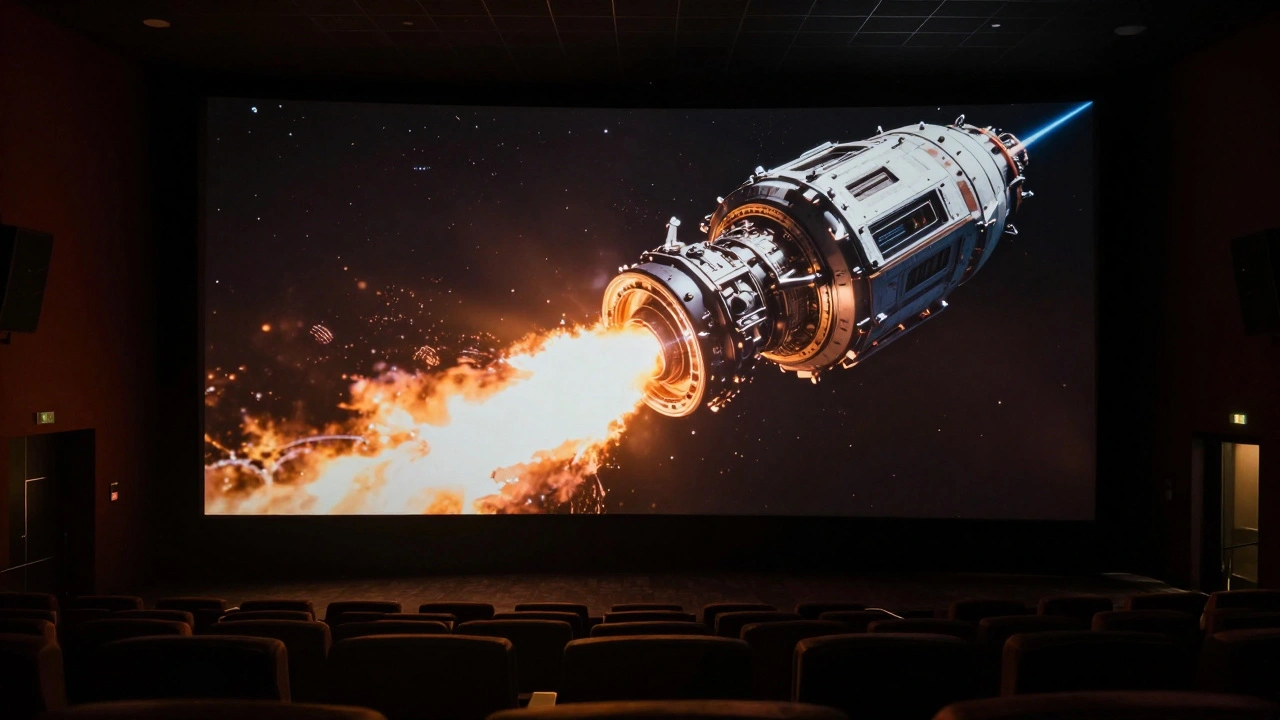
When you sit down in a modern theater and watch a film like Dune: Part Two or The Marvels, you’re not just seeing a movie-you’re experiencing what the director and cinematographer carefully crafted. That deep black in the desert scene, the glowing orange of a spaceship engine, the subtle shift from dusk to night in a quiet room-all of it was chosen on purpose. But here’s the problem: not every theater shows it the same way. Without proper color science, those intentional details get lost, flattened, or washed out. That’s where HDR tone mapping comes in.
What HDR tone mapping actually does
HDR stands for High Dynamic Range. It means a movie can show more detail in the darkest shadows and the brightest highlights than standard HD ever could. But here’s the catch: your theater’s projector might only be able to hit 100 nits of brightness, while the film was mastered for 4,000 nits. So how do you fit all that detail into a smaller range without losing the story?
That’s where tone mapping steps in. Think of it like translating a poem from English to Japanese. You don’t translate word-for-word-you preserve the emotion, the rhythm, the meaning. HDR tone mapping does the same with light and color. It doesn’t just shrink the range. It intelligently shifts brightness and contrast so the darks still feel deep, the highlights still pop, and the colors stay true to what the filmmakers intended.
How studios lock in the vision
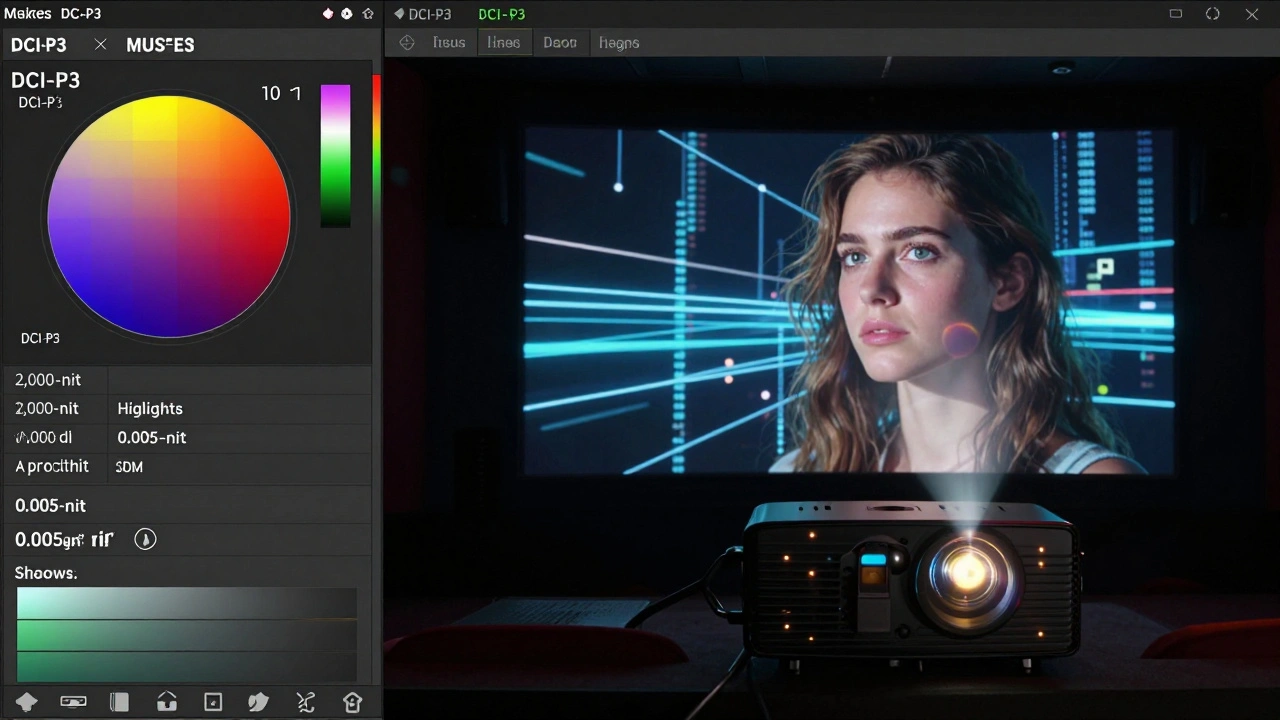
Major studios like Warner Bros., Universal, and Sony don’t just hand over a file and say "show it however you can." They use something called a DCI-P3 color space and Perceptual Quantizer (PQ) mastering. These are industry standards that define exactly how colors and brightness should behave. The film’s master file includes metadata that tells the projector: "This scene should hit 2,000 nits here," or "This shadow needs to stay at 0.005 nits."
But projectors vary. A Barco laser projector in a premium theater might handle 10,000 nits. A smaller indie theater might use a 4K DLP with 1,200 nits. The tone mapper reads the metadata and adapts-without changing the artistic intent. It’s not about making things brighter. It’s about keeping the contrast relationships intact. If a character’s face is half in shadow and half in candlelight, the tone mapper makes sure the shadow doesn’t turn into gray mush.
The difference between bad and good tone mapping
Not all theaters do this right. Some use simple compression-just cranking up the brightness and cutting the contrast. That’s what you see in older theaters or budget setups. You lose texture in snowflakes. You can’t tell if a character’s eyes are wet or just shiny. You can’t see the cracks in a wall because everything got pushed into the same mid-gray.
Good tone mapping, like what you find in Dolby Cinema or IMAX with Laser, uses advanced algorithms trained on real film data. It knows that skin tones shouldn’t get oversaturated. It knows that a sunset should feel warm, not neon. It even accounts for ambient light in the theater-because if the lobby lights are still on, the system subtly adjusts to keep the contrast alive.
A study by the Society of Motion Picture and Television Engineers (SMPTE) in 2024 showed that theaters using perceptual tone mapping retained 92% of the original contrast detail, while those using linear mapping lost 67%. That’s not just technical-it’s emotional. You feel the tension in a quiet scene because the shadows are still there.
Why this matters for the future of cinema
Streaming services have made it easy to watch movies at home. But theaters are fighting back-not by bigger screens or louder speakers, but by showing movies the way they were meant to be seen. HDR tone mapping is part of that. It’s why you’ll see theaters advertising "Mastered in HDR" or "Filmmaker Approved." It’s a promise: what you see here is what they saw in the editing suite.
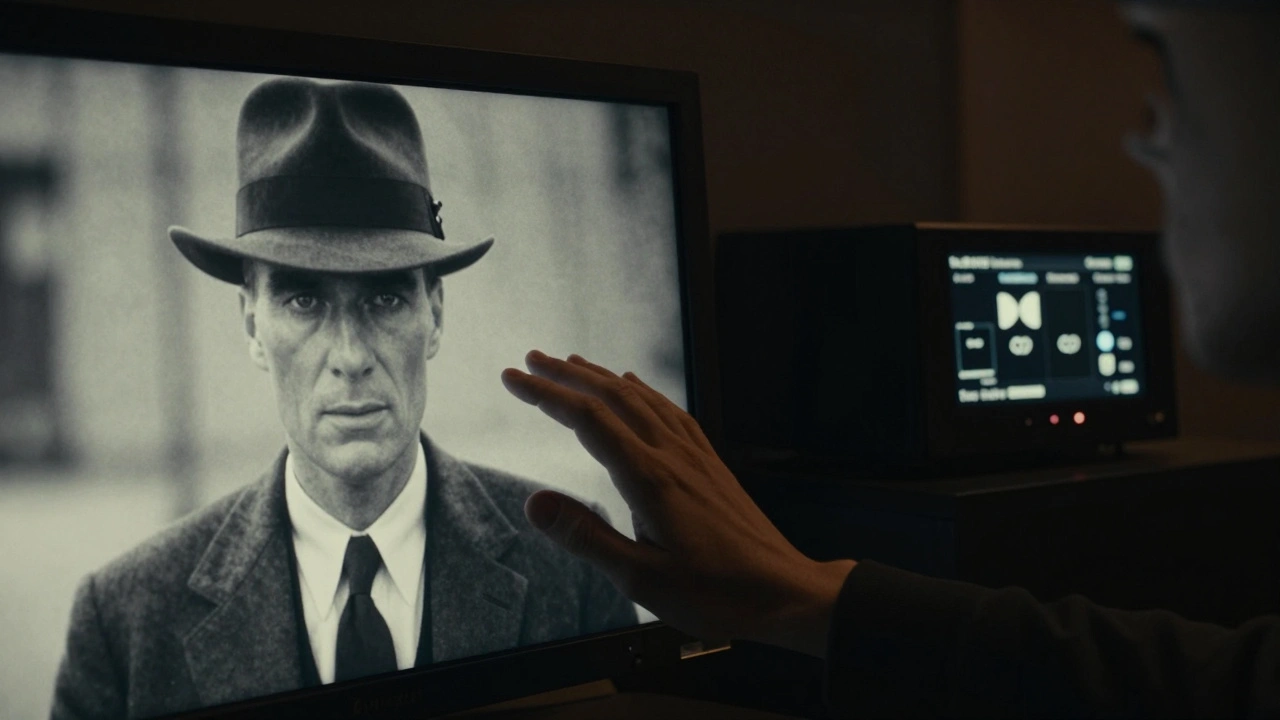
When Christopher Nolan shot Oppenheimer on 70mm film, he didn’t just want high resolution-he wanted the grain, the contrast, the flicker of real light. His team spent months testing how HDR tone mapping would handle those textures on digital projectors. The result? A black-and-white film that feels more alive than ever, with shadows so deep they feel like velvet. That didn’t happen by accident. It happened because someone in the theater’s control room ran the right algorithm at the right time.
What you can look for in a theater
If you care about seeing movies the way filmmakers intended, here’s what to check before you buy your ticket:
- Look for theaters using Dolby Cinema or IMAX with Laser-they use advanced tone mapping certified by studios.
- Avoid theaters that don’t mention HDR or tone mapping at all. If they just say "4K digital," they’re likely using basic mapping.
- Check if the movie listing says "Mastered for HDR" or "Filmmaker Approved." That’s a sign they’ve preserved the original metadata.
- Pay attention to dark scenes. If you can’t see details in shadows-like a character’s face in a dim room-you’re not getting the full experience.
It’s not just about tech-it’s about trust
Color science in theaters isn’t a gimmick. It’s a covenant. Filmmakers spend months, sometimes years, shaping every frame. They work with colorists who tweak hues for emotional impact. A blue might be cooler in one scene to feel lonely. A red might be deeper to feel dangerous. If a theater turns that red into orange just because its projector can’t handle the intensity, it’s not just a technical error-it’s a betrayal of the story.
HDR tone mapping is the quiet guardian of that trust. It doesn’t shout. It doesn’t add effects. It just makes sure the light you see matches the light the artist meant to create. And that’s why, even in a world of streaming and home theaters, the big screen still matters. Because when the lights go down, you’re not just watching a movie. You’re stepping into someone else’s vision-and that vision deserves to be shown exactly as it was meant to be seen.