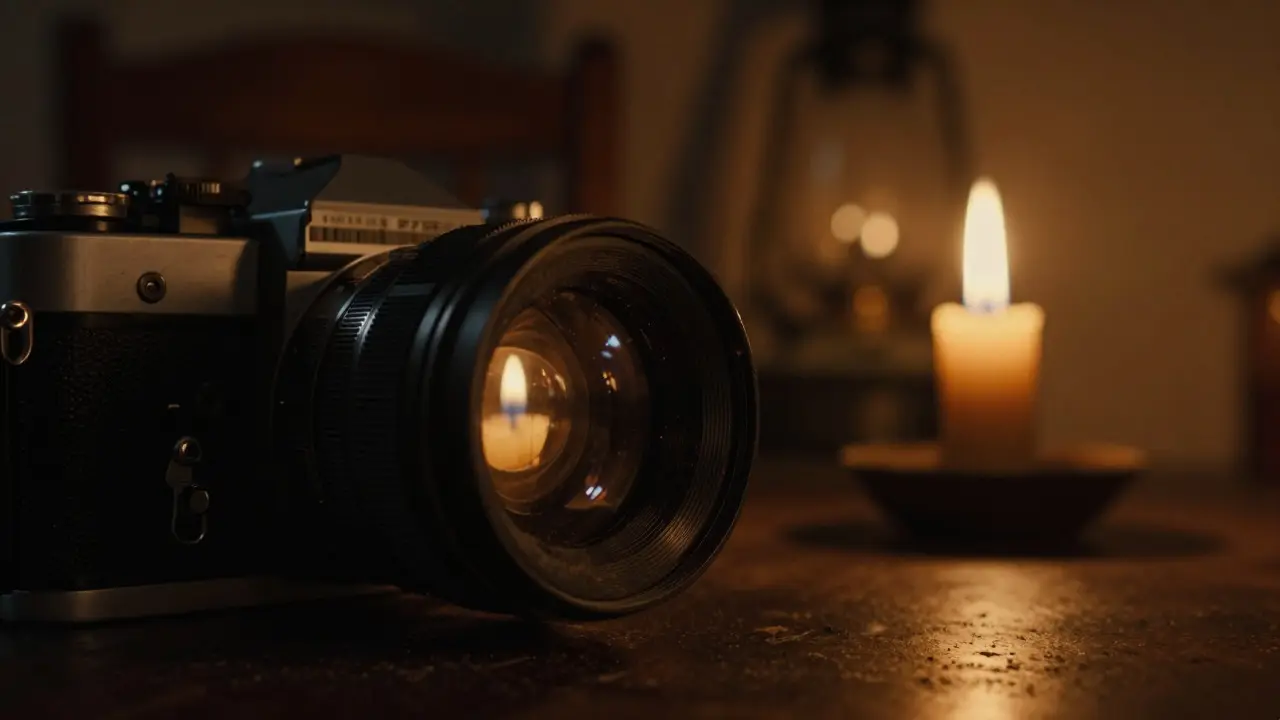
Ever watched a period piece where the lighting felt wrong? Maybe it was too bright for a candlelit room in 1890, or the shadows looked too sharp for a pre-flashbulb era. That disconnect isn't just a nitpick; it’s a failure of cinematography to serve the story’s time. When cameras and lights don’t match the era they’re depicting, the audience feels it, even if they can’t name why.
The core challenge is that modern digital sensors are incredibly sensitive, while historical light sources were dim and inconsistent. Achieving authenticity means fighting against the convenience of high-key studio lighting and embracing the limitations of the past. It requires understanding not just how things looked, but how they *felt* to be seen by people living in that time.
Why Light Defines the Era
Historical Lighting is the use of period-appropriate light sources and techniques to create visual authenticity in film. Before electric bulbs became widespread, scenes were lit by candles, oil lamps, gaslight, or daylight. Each source has a distinct color temperature and flicker pattern. Candles emit a warm, low-intensity glow (around 1850K) with noticeable flicker. Gaslight is slightly cooler (around 1900K) and more stable but still has movement. Daylight varies from 3000K at sunrise/sunset to 5600K at noon.
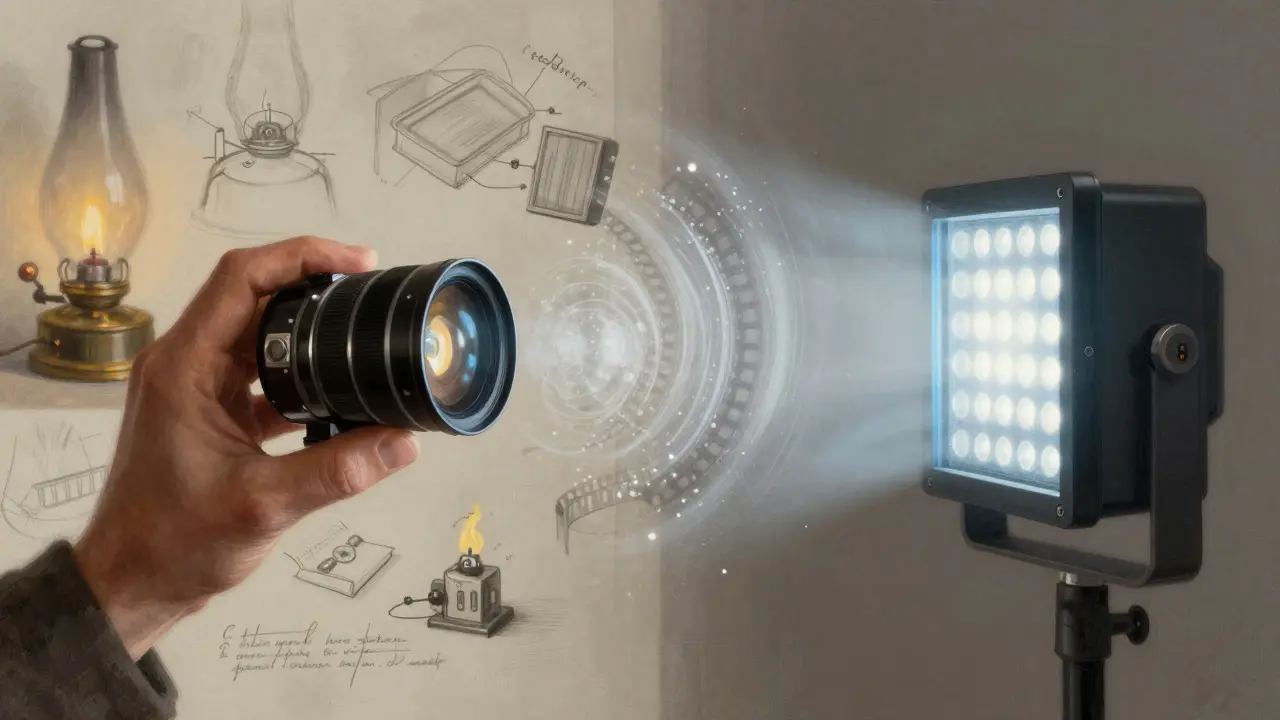
Modern cinematographers often cheat by using LED panels to simulate these sources because LEDs are quiet, cool, and controllable. But this removes the organic imperfection that defines the era. For true historical accuracy, you need to replicate the *behavior* of the light, not just its color. This means accepting lower exposure values, which leads to grainier images in film or higher ISO noise in digital, both of which add texture and realism.
Camera Technology and Visual Texture
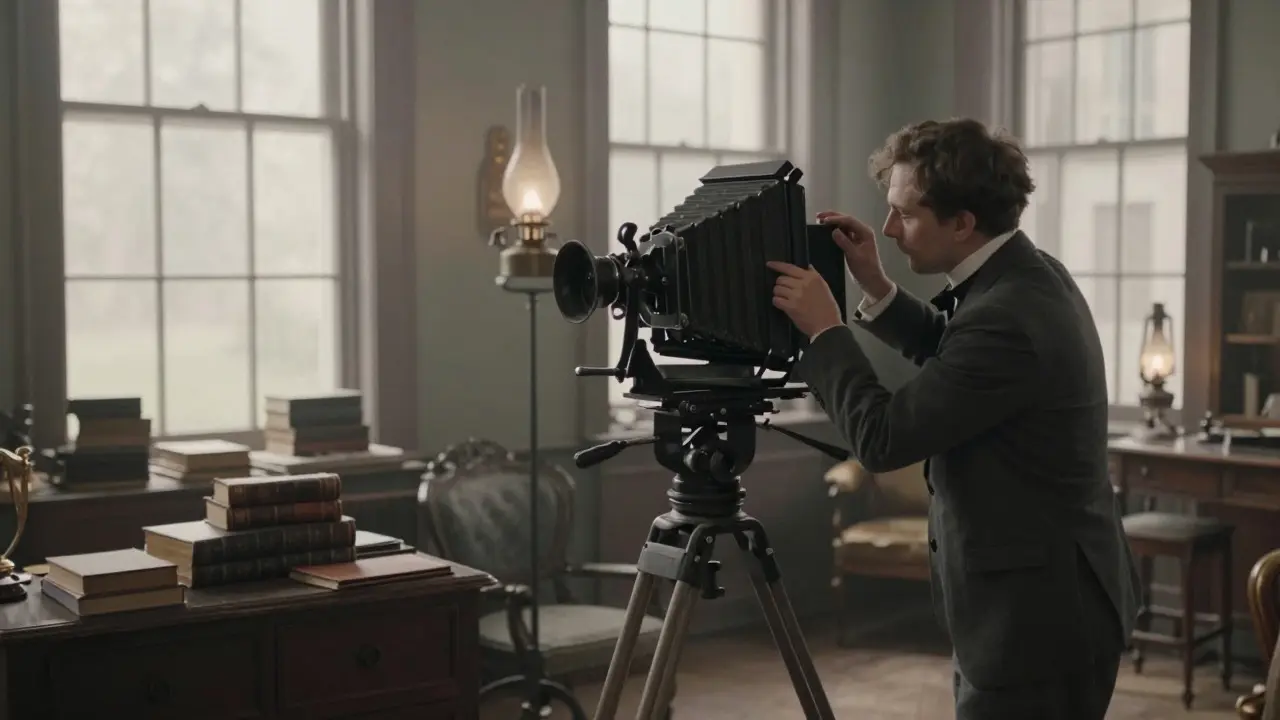
Period Camera Aesthetics refers to visual characteristics derived from historical camera systems, including lens flares, depth of field, and sensor/film grain. Cameras in the 1920s used large-format film and simple lenses with wide apertures. This created shallow depth of field and significant lens flare when shooting toward light sources. Modern anamorphic lenses can mimic some of these traits, but the key is matching the *optical physics* of the era.
- Grain Structure: Film stock from the 1930s had coarser grain than modern 35mm. Digital emulations can replicate this, but only if the grain size matches the original stock’s sensitivity (ISO).
- Lens Flare: Early lenses had fewer anti-reflective coatings, causing strong halos and ghosts. Modern lenses are coated to minimize this, so cinematographers must use vintage glass or specific filters to reintroduce these artifacts.
- Motion Blur: Shutter angles on early cameras varied. A 180-degree shutter angle creates smooth motion, but some period films experimented with different angles, affecting how fast movement looks.
Using a modern 4K digital sensor without adjusting for these factors results in an image that is too clean, too sharp, and too sterile for a pre-digital era. The goal is not to make the image look “old” for the sake of it, but to ensure the visual language aligns with the technological constraints of the characters’ world.
Practical Techniques for Authenticity
Achieving this balance requires deliberate choices during pre-production and on set. Here’s how top cinematographers approach it:
- Research Primary Sources: Study photographs, newsreels, and home movies from the target era. Notice how shadows fall, how highlights bloom, and how colors appear under available light.
- Test with Real Sources: Before locking your look, shoot test frames using actual candles, gas lamps, or tungsten bulbs. Compare them to LED simulations. You’ll likely find the real sources have more dynamic range and natural falloff.
- Limit Your Palette: Period films often have muted color palettes due to dye fading in old film stocks or limited color chemistry. Desaturate your grades slightly to avoid the hyper-realistic pop of modern digital color science.
- Embrace Imperfection: Allow for slight focus shifts, minor light leaks, and uneven exposure. Perfectly balanced lighting can feel artificial in a period context.
For example, in a scene set in 1910 Paris, using a single practical candle as the key light forces you to work with very low lux levels. This creates deep shadows and a sense of intimacy that no studio light can fully replicate. The audience subconsciously accepts the darkness as part of the reality, enhancing immersion.
Common Pitfalls to Avoid
Even experienced crews fall into traps that break authenticity. Watch out for these:
- Over-Lighting: Adding extra HMI or LED units to “clean up” the image ruins the mood. If the scene is dark, let it be dark.
- Anachronistic Colors: Neon signs didn’t exist until the late 19th century, and their color profiles have changed over time. Use accurate historical references for any colored light sources.
- Digital Over-Processing: Heavy VFX cleanup or excessive sharpening in post-production strips away the organic feel of the image. Keep grading subtle.
| Light Source | Color Temperature | Era of Dominance | Cinematographic Challenge |
|---|---|---|---|
| Candle | ~1850K | Pre-1880s | Very low intensity, high flicker, difficult to expose consistently |
| Gaslight | ~1900K | 1880s-1920s | Moderate flicker, requires careful placement to avoid fire hazards on set |
| Tungsten Incandescent | ~2700K | 1920s-Present | Stable output, but heat management is critical near actors/costumes |
| Daylight (Natural) | 3000K-5600K | All Eras | Uncontrollable, requires scheduling around weather and time of day |
Case Studies in Success
Films like There Will Be Blood (2007) and The Revenant (2015) are often cited for their commitment to natural light. In There Will Be Blood, cinematographer Robert Elswit used long exposures and minimal artificial light to capture the vastness of the California landscape in the early 1900s. The result was an image that felt raw and unmediated, mirroring the harshness of the era.
In contrast, Mad Max: Fury Road (2015), while not strictly a period piece, uses a similar philosophy of practical effects and natural lighting to create a timeless, gritty aesthetic. The lesson here is that authenticity comes from consistency, not just historical precision. If every frame adheres to a unified visual logic rooted in the era’s constraints, the audience buys into the world.
Tools and Technologies for Modern Production
You don’t need to rebuild a 1920s studio to achieve period looks. Modern tools help bridge the gap:
- Vintage Lenses: Brands like Kowa, Zeiss, and Cooke offer reissued or restored lenses from the 1930s-1960s. These provide unique bokeh, flaring, and softness that modern lenses lack.
- LED Panels with Tunable Color: High-end LEDs can now accurately mimic the spectrum of gaslight or candlelight. They are silent and cool, making them ideal for close-up shots where heat would be problematic.
- Digital Emulation Software: Tools in DaVinci Resolve or Adobe Premiere allow you to apply film grain, halation, and color curves that match specific historical stocks like Kodak Tri-X or Eastman Panchro.
The key is using these tools to *enhance* authenticity, not replace it. Always start with the physical reality of the scene, then refine it in post.
FAQ
Is historical accuracy in cinematography always necessary?
Not always. Some directors prefer a stylized look that blends eras. However, for dramas aiming for realism, strict adherence to period lighting and camera aesthetics strengthens immersion. The choice depends on the film’s tone and narrative goals.
How do I simulate candlelight without using actual candles on set?
Use small, high-CRI LED tubes or panels with a warm color temperature (1800K-2000K). Add a fan or mechanical shaker to create flicker. Test the setup against a real candle to match the intensity and movement patterns.
What is the biggest mistake cinematographers make with period films?
Over-lighting scenes to hide technical limitations. Audiences are forgiving of darkness but suspicious of overly bright, evenly lit interiors in pre-electric eras. Trust the shadows.
Can digital cameras achieve authentic period looks?
Yes, but it requires careful calibration. Use lenses with vintage characteristics, manage ISO to introduce natural noise, and grade the footage to match the color response of historical film stocks. The sensor itself is neutral; the look comes from the optics and post-processing.
How important is sound design in relation to visual authenticity?
Extremely important. Visual authenticity is reinforced by sound. If the lighting suggests a quiet, intimate candlelit room, the sound should reflect that-minimal ambient noise, no modern hums. Dissonance between sight and sound breaks immersion faster than visual errors alone.


Comments(10)