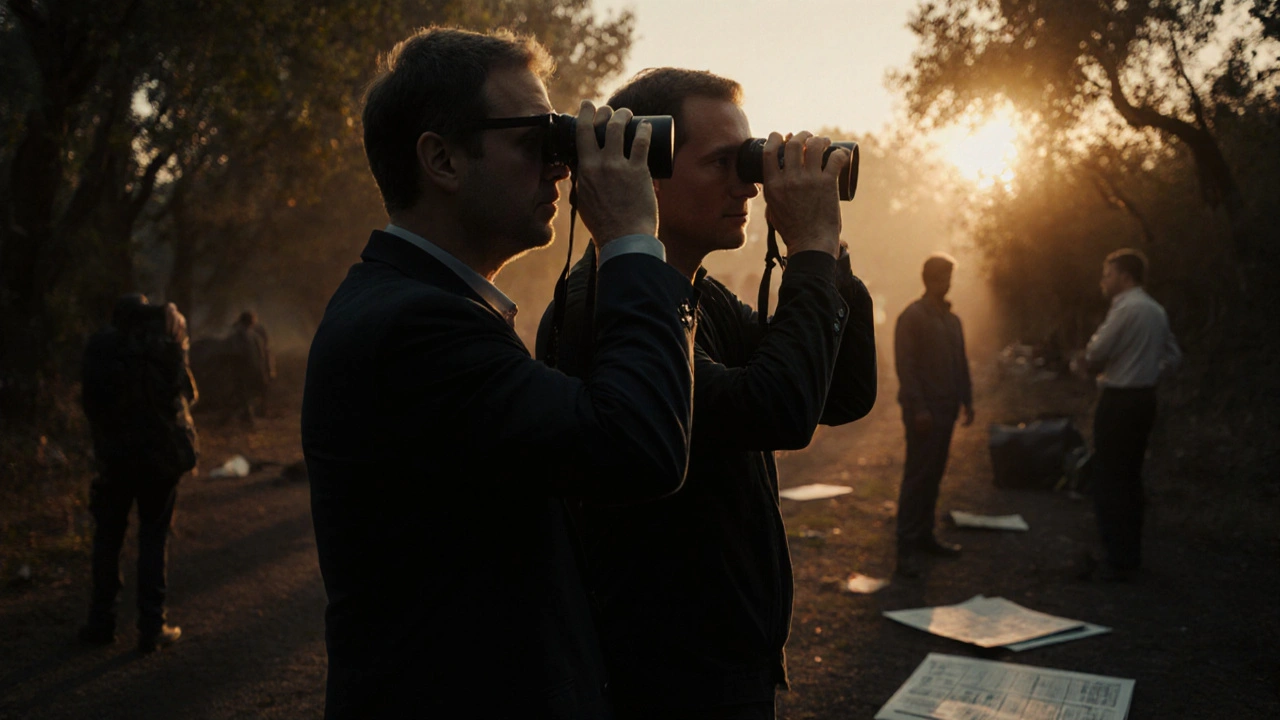
Every great film starts with a conversation-quiet, intense, sometimes heated-that happens long before the first light is set or the camera rolls. It’s not between actors or producers. It’s between the director and the cinematographer. This isn’t just teamwork. It’s a creative marriage. One holds the story in their head. The other holds the tools to make it visible. Together, they turn script pages into living images.
The Invisible Partnership
You don’t see the cinematographer’s name on the marquee. But you feel their work. The way light pools in a hallway in Blade Runner 2049. The shaky handheld grip that makes a chase scene feel like it’s happening in your chest. The color grading that turns a summer day into something haunting. That’s the cinematographer’s voice. And it only speaks clearly when the director listens.
Too many films fail because this partnership breaks down. The director says, "I want it dark," and the cinematographer hears, "Make it murky." The cinematographer suggests a slow dolly move to build tension, but the director cuts it because they’re worried about pacing. These aren’t creative differences. They’re communication failures.
The best director-cinematographer teams don’t just work together-they anticipate each other. Roger Deakins and Denis Villeneuve have made seven films together. They don’t need long meetings. A glance at a location, a sketch on a napkin, a single word-"cold," "tight," "wide"-and they’re already moving in sync.
Who Does What? (And Why It Matters)
Let’s clear up a myth: the director doesn’t just say "frame it nicely," and the cinematographer magically makes it happen. That’s not how it works. The cinematographer is the head of the camera and lighting crew. They decide lens choices, exposure, movement, and how light behaves on skin, metal, or rain. But they don’t invent the story’s emotional arc. That’s the director’s job.
Here’s how it breaks down:
- Director: Decides what the scene means. Why is this character crying? What should the audience feel when the door slams? They guide performance, pacing, and narrative rhythm.
- Cinematographer: Decides how the audience sees it. What lens makes the room feel smaller? What filter turns daylight into something eerie? Where should the light come from to show guilt on a face?
Think of it like cooking. The director is the chef who knows the dish should taste like regret. The cinematographer is the sous-chef who chooses the spice blend, the heat level, and the plating. One can’t make the dish without the other.
On The Revenant, director Alejandro G. Iñárritu wanted the film to feel like a dream you can’t wake up from. Cinematographer Emmanuel Lubezki used only natural light-sunrise, sunset, firelight. No lamps. No reflectors. That meant shooting in windows of opportunity: 20-minute bursts of golden hour, every day. The director had to adjust the shooting schedule around the sun. The cinematographer had to adapt his gear to work in freezing conditions. Neither could’ve done it alone.
How They Talk: The Language of Light and Motion
Good collaborations don’t rely on vague terms like "I want it moody" or "make it cinematic." They build a shared vocabulary.
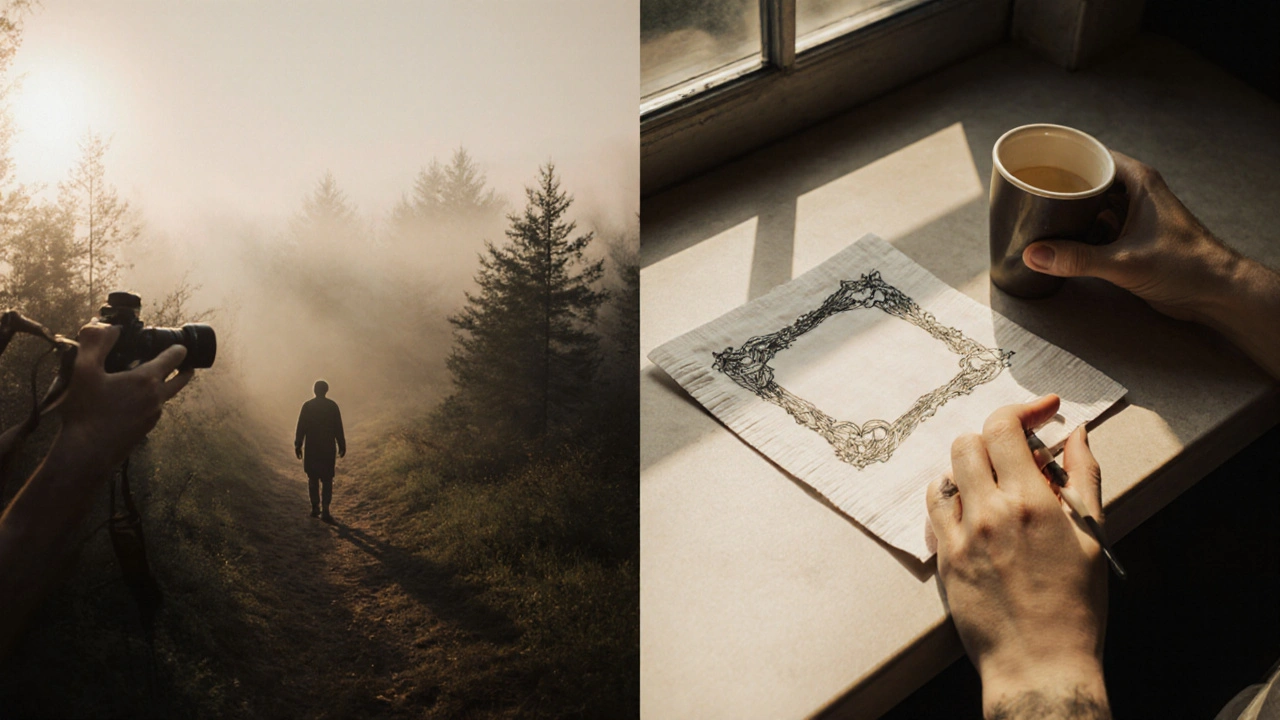
Some teams use mood boards-collections of photos, paintings, or film stills that show the tone they’re chasing. Others sketch frames by hand. Some just talk for hours over coffee, describing how a scene should feel in their body. "It should feel like you’re holding your breath," one director told his DP. That became the guiding rule for every camera move in the film.
On 1917, director Sam Mendes and cinematographer Roger Deakins wanted the entire film to look like one continuous shot. That meant planning every movement-actor’s walk, camera path, lighting shift-down to the second. They rehearsed with stand-ins, marked the ground with tape, and timed every transition. The director didn’t just say "make it seamless." He said, "The camera has to feel like it’s breathing with the soldier." That became their mantra.
It’s not about technical perfection. It’s about emotional precision. A cinematographer doesn’t just capture action-they capture silence. They don’t just record movement-they record anticipation.
When It Goes Wrong
Not every partnership works. Sometimes, the director is a control freak who insists on framing every shot themselves. Sometimes, the cinematographer is so focused on looking "artistic" that they forget the story.
There’s a famous story from the set of Alien. Director Ridley Scott wanted the spaceship interior to feel claustrophobic, industrial, lived-in. Cinematographer Derek Vanlint pushed back-he thought the dark corridors were too gloomy. He suggested brighter lighting to make the actors more visible. Scott refused. He said, "If you can see the walls, you’re not in the ship. You’re watching a set." Vanlint listened. The result? One of the most immersive sci-fi environments ever filmed.
That’s the difference between a cinematographer who serves the story and one who serves their ego. The best ones know their role: to make the director’s vision feel inevitable. Not beautiful. Not flashy. Just right.
Building Trust Before the First Shot
Trust isn’t built on set. It’s built months before. The best teams meet early. They visit locations together. They watch films side by side. They argue about lighting in restaurants. They share references. They test cameras. They shoot short tests with actors just to see how skin looks under different light.
On Manchester by the Sea, director Kenneth Lonergan and cinematographer Jody Lee Lipes spent weeks just walking around the coastal town of Manchester, Massachusetts. They didn’t talk about lenses. They talked about how the light hit the docks at 4 p.m. in January. How the fog rolled in off the water. How people moved through the cold. That observational time became the film’s visual language.
It’s not about gear. It’s about shared observation. The cinematographer learns what the director cares about. The director learns what the cinematographer can do. That’s the foundation.
The Tools They Share
Modern filmmaking gives them more tools than ever-but also more ways to get lost. Drones, digital sensors, LED panels, real-time grading-all of it can help. Or it can distract.
Some directors now use virtual production (like the StageCraft LED walls from The Mandalorian) to see the final image while shooting. But the best collaborations still start with the basics: a lens, a light, and a decision. Do we want the audience to feel safe? Or trapped? Do we want the character to be seen clearly-or hidden in shadow?
One cinematographer I spoke to said, "The camera is just a pencil. The director holds the hand. I just sharpen the tip." That’s the truth.
What Makes a Great Collaboration Last?
Long-term partnerships-like Scorsese and Richardson, Spielberg and Janusz Kamiński, or Tarantino and Robert Richardson-don’t happen by accident. They’re built on mutual respect, patience, and a shared obsession with detail.
They don’t always agree. But they never let ego get in the way. They know the film is the only star. Everything else is just support.
And when it works? The audience never notices the collaboration. They just feel the story. That’s the goal.
What to Look For in Your Own Team
If you’re a director, ask your cinematographer: "What’s the one thing you’d change about this scene if you could?" Don’t defend. Listen. If they’re afraid to speak, you’ve already lost.
If you’re a cinematographer, ask: "What emotion should this shot leave in the viewer’s chest?" If the answer is "I don’t know," then you’re shooting frames, not feelings.
Great film isn’t made with the best camera. It’s made when two people, with different skills, stop trying to win and start trying to understand each other.
Can a director also be the cinematographer?
Yes, but it’s rare and demanding. Directors like Terrence Malick, Werner Herzog, and Apichatpong Weerasethakul have handled both roles. They’re usually auteurs who want total control over the visual language. But it means dividing focus-directing actors while managing lighting, composition, and camera movement. Most productions avoid this because it slows things down and increases risk. It works only when the director has deep technical experience and a clear, singular vision.
Do cinematographers choose the lenses?
Yes, almost always. The cinematographer selects lenses based on how they affect depth, distortion, and focus. A 50mm lens feels neutral. A 24mm lens stretches space and makes rooms feel larger. A 135mm lens flattens the background and isolates the subject. The director might say, "I want it intimate," and the cinematographer will choose a 85mm lens to compress the space between characters. Lens choice is a storytelling tool, not a technical detail.
How do directors and cinematographers handle creative conflicts?
They don’t avoid them-they use them. Healthy conflict leads to better results. The key is to separate personal ego from the film’s needs. The best teams test both ideas. They shoot a scene two ways. Then they watch it together and decide what serves the story best. It’s not about winning. It’s about finding the version that feels true.
Is the cinematographer involved in post-production?
Yes, often deeply. Color grading, contrast adjustments, and even some digital effects are shaped by the cinematographer’s original intent. They work with the colorist to ensure the final look matches the mood they created on set. A dark scene shot with low-key lighting shouldn’t suddenly become bright in editing. The cinematographer is the guardian of the visual tone from start to finish.
What’s the biggest mistake new directors make with cinematographers?
Trying to micromanage every shot. Saying "move left," "zoom in," or "make it darker" without explaining why. The cinematographer already knows how to do those things. What they need is the emotional reason. Instead of "I want it gloomy," say, "This character feels like they’re drowning in guilt." That gives the cinematographer the freedom to find the right visual solution.



Comments(8)