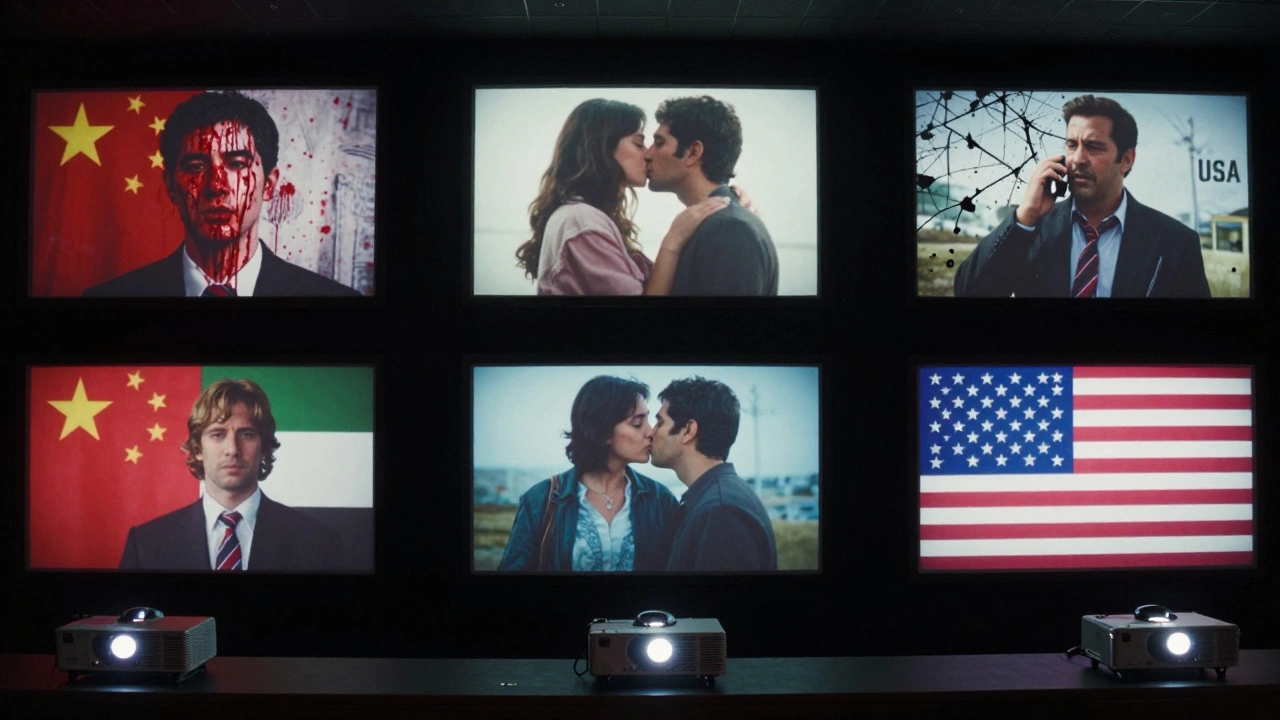
When a movie hits theaters in Los Angeles, it’s one version. In Tokyo, it’s different. In Riyadh, it’s another. And in Berlin? That version might not even exist. Why? Because every country has its own rules for what you can and can’t see on screen. These aren’t just suggestions-they’re legal requirements. Studios don’t choose to cut scenes out of love for local culture. They do it because they have to, or risk getting banned, fined, or blocked from the market entirely.
What Gets Cut-and Why
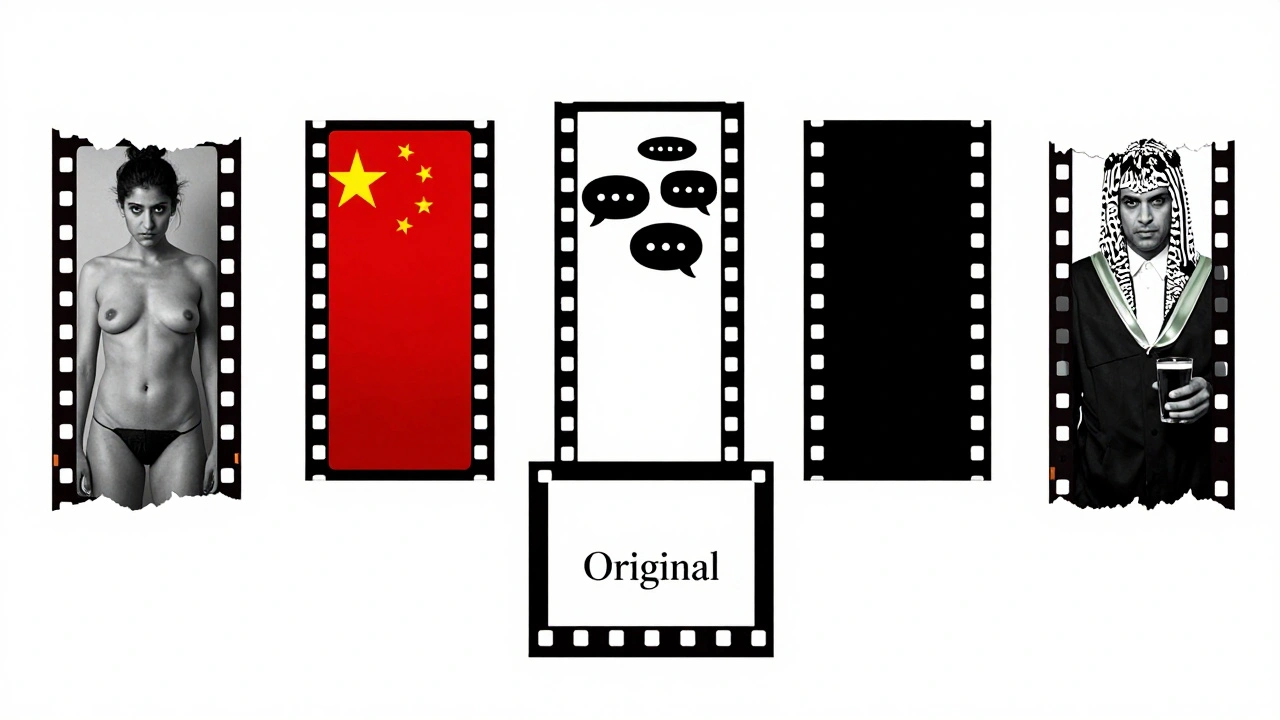
It’s not just nudity or violence. Some cuts are about politics. Others are about religion. A scene that’s perfectly fine in New York might get flagged in Delhi for showing a character disrespecting a religious symbol. In China, any hint of separatism or criticism of the government disappears. In Saudi Arabia, scenes with alcohol, dating, or mixed-gender interaction are often trimmed. In Germany, even mild violence can trigger mandatory edits if it’s deemed too realistic or glorified.
Take Mad Max: Fury Road. The film was released uncut in most Western countries. But in China, every frame of blood was digitally removed. Not because it was excessive-because Chinese censors require all violence to be "non-graphic." In India, the same movie had over 40 cuts, including scenes with nudity and language deemed "indecent."
Even animated films aren’t safe. Moana had its tattoo scene shortened in Indonesia because tattoos are associated with pagan rituals. In the UAE, Toy Story 4 had a joke about same-sex marriage removed. These aren’t random decisions. They’re based on national guidelines that studios must follow to get a release permit.
How Studios Handle the Chaos
Major studios don’t wait until a film is finished to think about cuts. They start planning regional versions during production. That’s right-sometimes they shoot multiple endings or alternate takes just for certain markets.
For example, Avengers: Endgame had a 30-second scene cut for China where a character says "China" during a global rescue mission. The line was replaced with "Earth" in the Chinese version. Studios hired local consultants to review scripts before filming even began. They knew what would trigger censorship.
Some studios create "clean" master files with placeholder scenes. These are swapped in later depending on the region. Others simply submit multiple cuts. The result? A single movie can have five or more official versions floating around the world.
Netflix and Amazon Prime don’t escape this either. Their global releases are often region-locked. If you’re in Turkey and try to watch Stranger Things, you’ll get a version with scenes of drug use edited out. In Egypt, romantic kisses are blurred. In South Korea, a scene with a politician being assassinated was removed from The Crown because it "undermines state dignity."
The Cost of Compliance
It’s not just about creativity. It’s about money. Each cut costs time, money, and legal overhead. Editing a feature film for one region can run $50,000-$200,000, depending on complexity. For a major studio releasing 10-15 films a year, that adds up to millions.
And it’s not just editing. There are licensing fees, local review boards, legal consultations, and sometimes bribes. In some countries, you pay a "censorship tax" just to get your film reviewed. In others, you need a local partner-someone with political connections-to even submit your film.
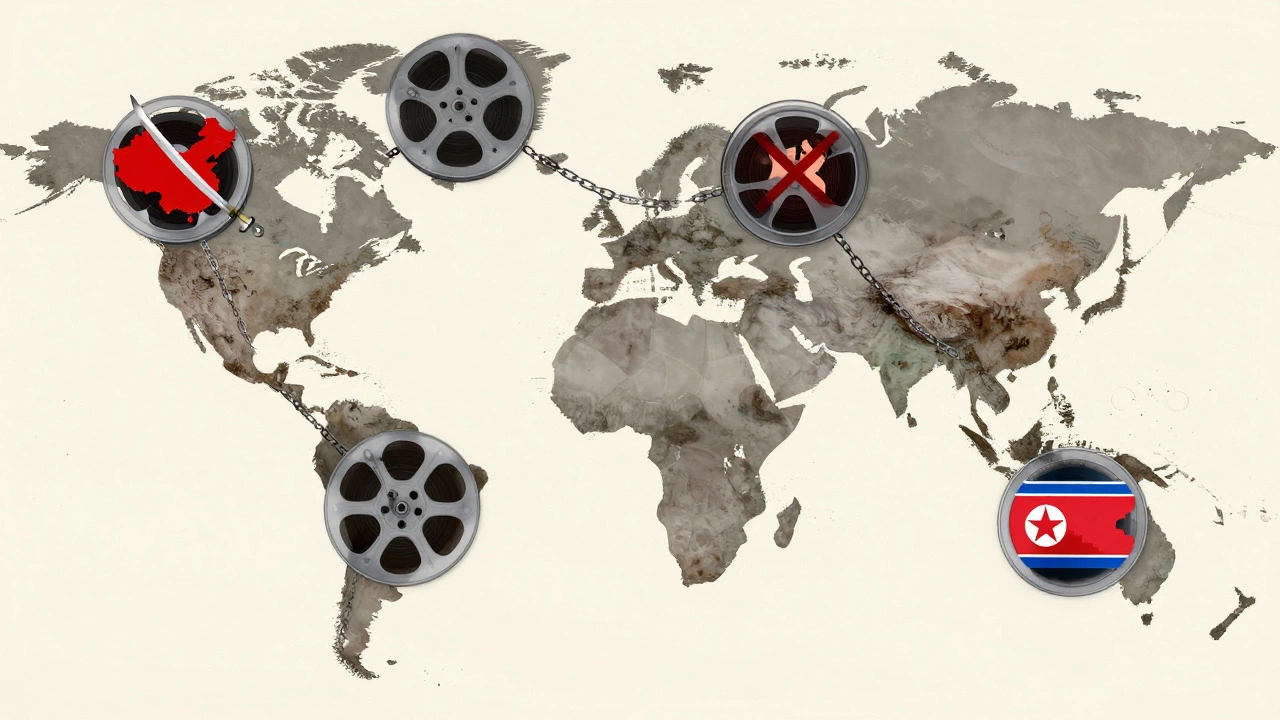
Smaller studios often can’t afford this. That’s why indie films rarely make it to markets like Russia, Iran, or North Korea. They don’t have the budget to navigate the bureaucracy. So, while Hollywood releases 100+ films a year globally, only about 30% of them make it to China, India, and the Middle East in anything close to their original form.
How Ratings Systems Differ
Think all countries use the same ratings? Think again.
Here’s how a few major markets handle film ratings:
| Country | Rating System | Typical Cut Requirements |
|---|---|---|
| United States | MPAA (G, PG, PG-13, R, NC-17) | Language, nudity, violence-cuts optional unless NC-17 |
| China | Class I-IV (government-controlled) | Remove politics, religion, LGBTQ+ content, blood, sexual themes |
| India | d>U, U/A, A, S (CBFC) | Remove "indecent" language, kissing, nudity, critiques of social norms |
| Saudi Arabia | Ministry of Culture (de facto censorship) | Remove alcohol, dating scenes, mixed-gender interaction, religious criticism |
| Germany | FSK (ages 0, 6, 12, 16, 18) | Violence must be non-glorified; realistic torture scenes cut |
| Russia | 18+ for "propaganda of non-traditional relationships" | Any LGBTQ+ relationship must be removed or heavily edited |
Notice how some systems are about age, and others are about ideology. The U.S. lets studios self-regulate. China and Russia regulate content based on political loyalty. Germany focuses on social impact. India balances tradition with modernity. And Saudi Arabia? It’s a mix of religious law and state control.
What Happens When You Don’t Comply
Ignoring regional rules doesn’t just mean bad reviews. It means no release. No revenue. No audience.
In 2019, a small indie film called My Name Is Salt was banned in India because it "portrayed rural poverty in a negative light." The filmmakers didn’t even know their film was being reviewed. They found out when the government blocked it.
In 2022, a Netflix documentary about Uyghur Muslims was pulled from all platforms in China. The studio didn’t cut it-they didn’t even submit it. Netflix still lost millions in potential viewership.
Some studios try to sneak films through. They release a "censored" version online while quietly distributing the uncut version through private screenings. But that’s risky. In countries like Iran or North Korea, getting caught can mean fines, imprisonment, or blacklisting.
The Future: AI, Streaming, and the Slow Collapse of Censorship
Streaming has changed the game. With global platforms, viewers can bypass local censorship by using VPNs. In 2025, over 68% of viewers in censored markets used a VPN to watch uncut films, according to a study by the International Media Council.
But studios aren’t giving up. They’re using AI to auto-generate regional cuts. Tools like DeepCensor can now detect and blur nudity, remove political symbols, or replace dialogue with neutral lines-all in under 20 minutes. It’s not perfect, but it’s cheaper than hiring 10 editors.
Still, AI can’t replace human judgment. A scene that’s politically neutral in English might carry a loaded meaning in Arabic or Mandarin. That’s why studios still rely on local consultants, even if they’re expensive.
Some countries are softening. South Korea removed its ban on LGBTQ+ content in 2024. Brazil now allows uncut versions of films that were previously banned. But others are tightening. Russia added new rules in 2025 requiring all foreign films to be reviewed by a state-appointed panel.
For now, the rules are messy. They’re unfair. They’re inconsistent. But they’re real. And until global standards emerge, studios will keep editing, cutting, and re-cutting-just to get a film seen.
Why do some countries ban entire films instead of just cutting scenes?
Countries that ban entire films usually have strict ideological or religious control over media. If a film’s core message contradicts state policy-like criticizing the government, promoting LGBTQ+ rights, or questioning religious doctrine-it’s easier to ban the whole thing than to edit it. It’s also less risky. A cut version might still spread underground. A ban stops it completely.
Can a film be released without any cuts in all countries?
Almost never. Even in countries with loose censorship, like Canada or Australia, minor edits are common for broadcast versions or streaming platforms. Only a handful of films-usually low-budget documentaries or festival-only releases-manage to bypass all edits. But those rarely reach mainstream audiences.
Do streaming services like Netflix have to follow local censorship rules?
Yes. If a streaming service wants to operate legally in a country, it must comply with local laws. That means offering region-specific versions. Netflix doesn’t just block content-it actively edits it. In some cases, they even delay releases for weeks while waiting for approval.
How do filmmakers feel about these cuts?
Many are frustrated. Directors like Christopher Nolan and Denis Villeneuve have publicly criticized censorship, calling it artistic sabotage. But most understand the business reality: if you want your film to make money globally, you play by the rules. Some even build scenes into their scripts knowing they’ll be cut-treating censorship as part of the creative process.
Are there any global standards for film censorship?
No. There’s no international body that sets film rules. The UN has no authority over movie content. Even UNESCO, which promotes cultural exchange, doesn’t regulate film. Every country sets its own rules, and studios have to adapt to each one individually.


Comments(7)