
When a beloved book becomes a movie or TV show, the first thing fans check isn’t the director or the special effects-it’s who plays the lead. Think of Harry Potter, Elizabeth Bennet, or Atticus Finch. These characters live in readers’ minds long before the camera rolls. And when the wrong actor gets cast, the backlash isn’t just loud-it’s personal.
Why Casting Literary Characters Feels Different
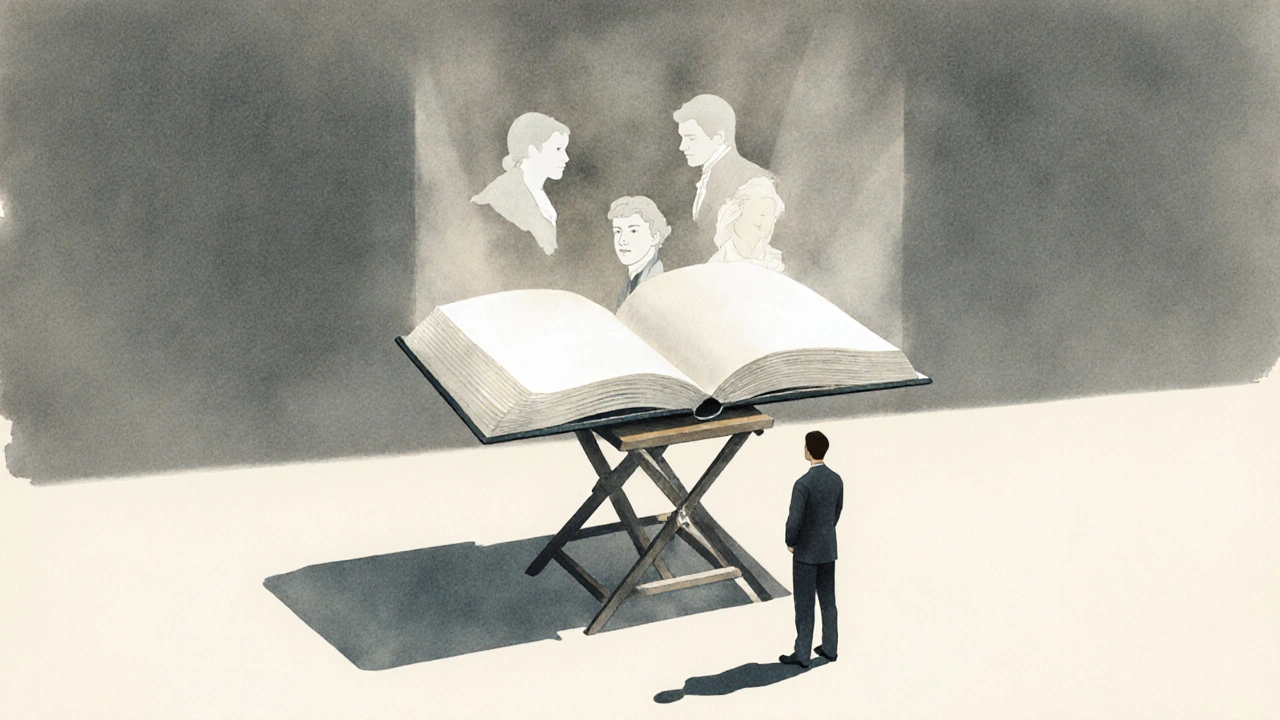
Most characters in movies are invented for the screen. But literary characters come with baggage. Readers have spent years imagining their voice, their walk, their face. They’ve lived inside their thoughts. So when a studio picks someone who doesn’t match that inner image, it doesn’t just feel off-it feels like a betrayal.
It’s not about physical resemblance alone. It’s about presence. Take Atticus Finch from To Kill a Mockingbird. Gregory Peck didn’t look exactly like Harper Lee’s description-he was taller, smoother, more polished. But he carried the quiet dignity, the moral weight, the unshakable calm. That’s what stuck. Audiences didn’t see an actor playing a lawyer. They saw the soul of the character.
On the flip side, casting someone who looks right but acts wrong breaks the spell. A recent adaptation of The Great Gatsby cast a handsome, charismatic actor who nailed the party scenes but missed the quiet desperation beneath Gatsby’s smile. Fans called it "a suit on a model," not a man haunted by the past.
The Five Biggest Pitfalls in Casting
Here’s what goes wrong more often than you think:
- Choosing fame over fit - Studios love stars because they sell tickets. But a big name doesn’t mean the right soul. Casting Tom Cruise as Jack Reacher worked because he matched the physicality. But casting him as Atticus Finch? That would’ve been a disaster. He’s too intense, too kinetic. Atticus doesn’t need to move fast-he needs to stand still and make you feel safe.
- Ignoring dialect and speech - A character’s voice is part of their identity. Little Women (2019) got it right with Saoirse Ronan’s Boston-tinged accent for Jo March. It wasn’t perfect, but it felt lived-in. Compare that to a 2020 adaptation of Pride and Prejudice where Elizabeth Bennet spoke with a flat, generic British accent. It stripped away her spark, her rebellion, her regional pride.
- Overlooking age and life experience - Many adaptations cast actors in their 20s as teenagers or early 20s. But characters like Matilda or Lyra Belacqua need to carry emotional weight beyond their years. A 14-year-old actor who’s been acting since age six can do that. A 25-year-old pretending to be 12? It reads as creepy, not convincing.
- Color-blind casting without context - Casting a Black actor as Elphaba in Wicked worked because the story didn’t tie her identity to race. But casting a white actor as Prince Zuko from Avatar: The Last Airbender ignored the Asian and Inuit-inspired world the book built. Representation isn’t about ticking boxes-it’s about honoring the world the author created.
- Trying to modernize too hard - Some adaptations try to "update" characters to feel more relatable. But making Jane Austen’s characters sarcastic TikTok users doesn’t make them more real-it makes them cartoonish. The charm of Elizabeth Bennet isn’t her jokes. It’s her intelligence, her refusal to be silenced, her quiet courage in a world that wants her quiet.

What Works: The Success Stories
When casting clicks, it feels inevitable. Like the character was always meant to be played by that person.
Patrick Stewart as Professor X didn’t come from a comic book. He came from Shakespearean theater. But his voice, his stillness, his quiet authority made him the perfect embodiment of Charles Xavier. Fans didn’t care he didn’t look like the original artist’s drawing. They believed him.
Idris Elba as Stringer Bell in The Wire wasn’t in the original book-because there wasn’t one. But the character was written from real-life street dynamics. Elba didn’t play a gangster. He played a man trying to build a business in a broken system. His performance was so layered, so human, that viewers forgot he was acting. That’s the goal.
And then there’s Freddie Highmore as Charlie Bucket in Charlie and the Chocolate Factory. He wasn’t the most famous kid actor. He wasn’t the loudest. But he had that quiet wonder, that gentle curiosity. He didn’t try to be cute. He just was. And that’s why millions still remember him as the boy who won the golden ticket.
How to Cast Right: A Practical Guide
If you’re developing an adaptation, here’s how to avoid the traps:
- Start with the character’s core - Not their appearance. Not their job. What do they *want*? What are they afraid of? What’s their deepest wound? Write this down. If you can’t answer it, you can’t cast it.
- Hold open auditions, not just casting calls - Don’t just invite known actors. Let unknowns read. Many of the best performances come from people no one’s heard of. The actress who played Lyra Belacqua in the 2007 film was a 12-year-old with no prior credits. She nailed it because she didn’t know she was supposed to be "acting." She just believed.
- Test against the book, not the script - Have actors read the original text, not the screenplay. The book holds the character’s heartbeat. The script is just a map.
- Listen to the fans-but don’t let them decide - Fans have strong opinions. But they’re not casting directors. Use their feedback to spot blind spots. If 90% of readers say, "This actor doesn’t sound like her," dig deeper. Why? Is it the accent? The tone? The rhythm? Fix the issue, not the casting.
- Give the actor room to breathe - Don’t micromanage their performance. If you’ve chosen someone who understands the character, trust them. The best moments often come from improvisation. Watch how Daniel Day-Lewis whispered "I am not a gentleman" in There Will Be Blood. That wasn’t in the script. It came from him living the role.
What to Do When You Get It Wrong
Even the best studios mess up. When they do, they usually double down. That’s the mistake.
Take the 2018 Annihilation adaptation of Jeff VanderMeer’s novel. The book’s protagonist is a biologist with a quiet, grieving intensity. The movie cast Natalie Portman, who’s brilliant-but she’s also a movie star. Her performance was intense, emotional, powerful. But it didn’t match the book’s restrained, almost detached tone. Fans were divided. The studio didn’t respond. They just moved on.
Here’s what they should’ve done: admitted the disconnect. Released a director’s cut with more voiceover from the book. Let fans see the original intent. Sometimes, honesty rebuilds trust faster than perfection.
The Real Goal: Honor the Spirit, Not the Letter
You can’t cast a character exactly as every reader imagines them. That’s impossible. But you can cast someone who carries the same spirit.
That’s the difference between copying and capturing. Copying means matching hair color and height. Capturing means matching the soul.
When you cast right, the audience doesn’t say, "That’s not how I pictured it." They say, "I didn’t know it could be this way-and now I can’t imagine it any other way."
That’s the magic. And it’s not luck. It’s intention.
How do you know if an actor is right for a literary character?
The actor doesn’t need to look like the book’s description. They need to embody the character’s emotional truth. Watch how they handle silence, how they react to pain, how they speak when no one’s listening. If their performance feels inevitable-like the character has always existed in that body-you’ve found them.
Can a character be successfully cast outside their race or gender?
Yes-if the story doesn’t tie their identity to those traits. Characters like Sherlock Holmes or Jane Eyre have been reimagined across genders and races with success. But if the character’s background is central to the plot-like a Black character in a story about systemic racism-changing that without context erases the story’s meaning. Representation isn’t decoration. It’s part of the narrative.
Why do fans get so angry about bad casting?
Because books are personal. Readers spend months or years inside a character’s mind. They know their fears, their jokes, their quiet habits. When a film casts someone who doesn’t feel like that person, it’s like someone took your private journal and turned it into a bad cartoon. The anger isn’t about the actor-it’s about the loss of something sacred.
Do casting directors ever consult fans before choosing actors?
Rarely. Studios rely on internal casting teams, agents, and test screenings. But smart producers listen to fan reactions after early screenings. If a majority of test audiences say, "This doesn’t feel right," they’ll reevaluate-even if it means recasting. Fan feedback is a diagnostic tool, not a voting system.
Is it better to cast a lesser-known actor or a star for a literary adaptation?
Always choose the actor who best fits the character, not the one with the biggest name. Stars bring money, but they also bring expectations. A lesser-known actor can disappear into the role. Look at the original Lord of the Rings cast-most were unknown. Now, they’re iconic. Fame doesn’t make a character real. Truth does.







Comments(6)