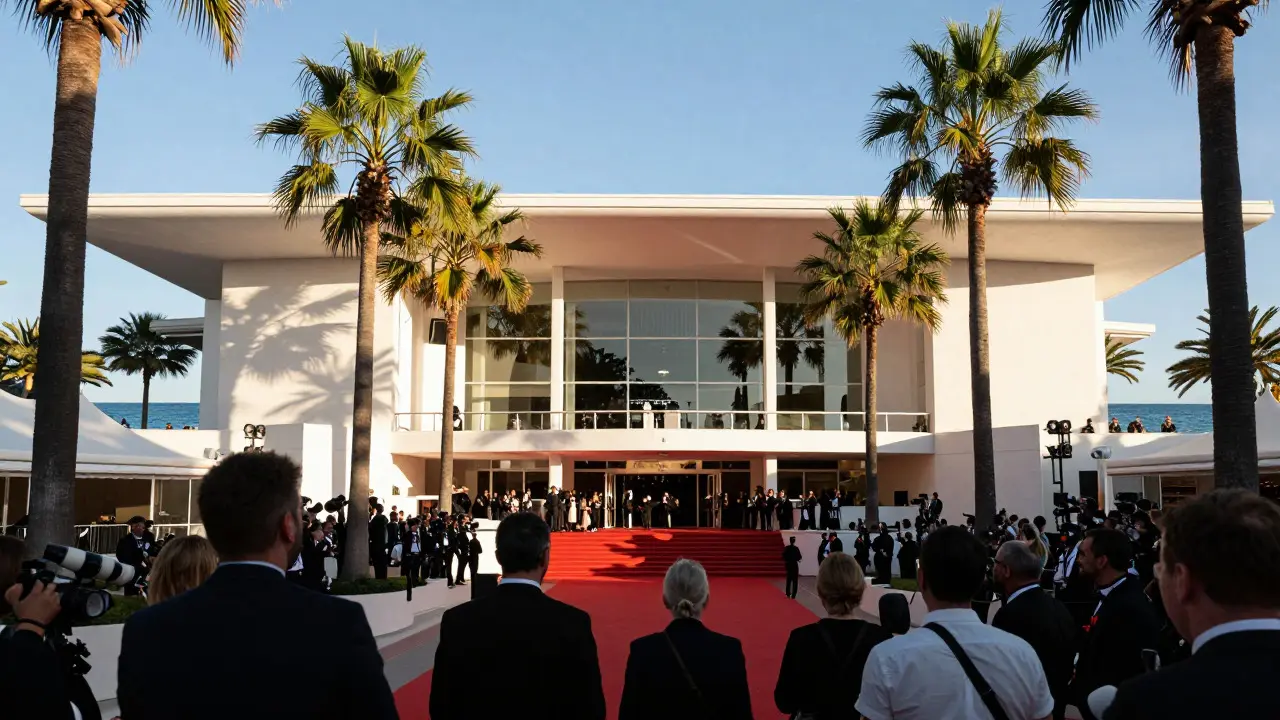
Cannes Film Festival Official Selection: The Complete Breakdown of What Made the Cut

Joel Chanca - 17 Aug, 2026

Walking through the Palais des Festivals in May is less about watching movies and more about decoding who the industry thinks will matter next year. The Cannes Film Festival is the premier international event for cinema that determines global box office trajectories and critical consensus before films even hit local theaters. When the jury announces the Official Selection, they aren't just listing titles; they are signaling a shift in taste, budget allocation, and cultural relevance. For anyone tracking the pulse of modern cinema, understanding why specific films made the cut reveals the hidden mechanics of how art becomes commerce.

The Architecture of the Competition

The heart of the festival is the In Competition section. This isn't a random assortment of good movies; it is a curated battle for the Palme d'Or. Historically, this section features 20 to 24 films. The selection criteria here are strict. Directors often need a track record, or at least a very strong debut, to land here. Producers spend months pitching their projects to the selection committee, led by the festival's artistic director. If you look at recent years, you'll notice a pattern: the competition favors auteur-driven narratives over high-concept blockbusters. A quiet drama from South Korea or an experimental piece from France has a much higher chance of making this list than a standard Hollywood action sequel. This distinction matters because being in the competition guarantees press coverage, red carpet appearances, and immediate bidding wars from distributors.

Un Certain Regard: The Wildcard Section

If the main competition is the heavyweight division, Un Certain Regard is the middleweight contender with style. This section showcases films that are slightly off-center-perhaps too risky for the main competition but too polished for the out-of-competition slots. You might see a debut feature from a first-time director here, or a well-known filmmaker taking a creative leap. It’s where you find the future stars of independent cinema. For buyers and critics, this section is a goldmine. It’s less crowded than the main competition, meaning more attention per film. Many breakout hits of the past decade started their journey here before finding wider acclaim later in the year.

Out of Competition and Special Screenings

Not every major film wants to risk losing a prize. That’s where Out of Competition comes in. These are usually big-name productions with A-list casts or directors who have already won the Palme d'Or. They are there to generate buzz, secure awards season momentum, and attract global audiences without the pressure of judging. Think of it as a showcase rather than a contest. Then there are Special Screenings, which are reserved for one-off events. These can be anything from a restored classic to a documentary that doesn’t fit neatly into other categories. These screenings are often where you get the most exclusive access to industry insiders, as the audience is smaller and more targeted.

Empty seats in a dark movie theater facing a blank white screen with projector light

Directors’ Fortnight and Critics’ Week

Parallel to the main festival runs two crucial sidebars: Directors’ Fortnight (Quinzaine des Cinéastes) and Critics’ Week. These sections operate independently but share the same venue and timing. Directors’ Fortnight focuses on avant-garde and experimental works. It’s the place where filmmakers push boundaries without worrying about commercial viability. Critics’ Week, on the other hand, is dedicated to new talent. Both sections are vital for spotting trends before they hit the mainstream. A film shown here might not win a major award, but it could influence the aesthetic direction of independent filmmaking for the next five years. For students and emerging filmmakers, these sections offer a masterclass in what’s possible outside the studio system.

Why the Selection Matters Beyond the Red Carpet

The real impact of the Official Selection happens after the cameras stop rolling. Distributors use the lineup to gauge market potential. A film selected for Cannes signals quality to investors, which can unlock funding for post-production or marketing campaigns. Furthermore, the geographic diversity of the selection reflects global shifts in storytelling. In recent years, we’ve seen a surge in films from Asia, Africa, and Latin America making the cut, challenging the traditional dominance of European and North American cinema. This diversification isn’t just a trend; it’s a structural change in how stories are valued globally. Understanding this helps viewers appreciate why certain films receive such intense scrutiny while others go unnoticed elsewhere.

Comparison of Major Cannes Sections
Section Primary Focus Award Eligibility Typical Audience
In Competition High-profile narrative features Palme d'Or and Jury Prizes Industry elites, major press
Un Certain Regard Risky or unconventional styles Jury Prize only Critics, niche buyers
Out of Competition Major releases seeking buzz No competitive awards General public, fans
Directors’ Fortnight Experimental and avant-garde Independent prizes Art-house enthusiasts
Abstract map showing glowing lines connecting continents to a central point

How to Follow the Selection Process

You don’t need to be in Paris to stay informed. The festival releases its official lineup about six weeks before the event starts. Keep an eye on trusted film publications and the festival’s official channels for announcements. Once the list is out, analyze the patterns. Which countries are represented? Are there any surprise debuts? Who are the returning favorites? This analysis helps you predict which films will dominate the conversation. Additionally, follow the social media accounts of key programmers and critics. They often share insights behind the scenes, explaining why certain films were chosen over others. This context transforms a simple list of titles into a narrative about the state of global cinema.

Frequently Asked Questions

What is the difference between In Competition and Un Certain Regard?

In Competition features films eligible for the top prize, the Palme d'Or, and typically includes established directors or high-budget productions. Un Certain Regard focuses on films with a distinct personal vision or experimental approach, often featuring newer voices or stylistic risks that might not fit the main competition's profile.

Does being in the Official Selection guarantee a wide release?

Not necessarily. While selection increases visibility and attracts distributor interest, many films remain limited releases or streaming exclusives. However, winning a major award significantly boosts the chances of a broader theatrical run due to increased demand from exhibitors.

Who decides which films make the cut?

The selection is made by the festival's artistic director and a team of programmers. They review hundreds of submissions each year, considering factors like artistic merit, directorial intent, and the overall balance of the lineup. There is no single formula, but a mix of prestige, novelty, and global representation guides their choices.

Can documentaries compete for the Palme d'Or?

Yes, documentaries are eligible if they are selected for the In Competition section. In fact, several documentaries have won the top prize in the past, highlighting the festival's openness to non-fiction forms that challenge traditional narrative structures.

Why do some big Hollywood films skip Cannes?

Some studios prefer to premiere their biggest releases directly in New York or Los Angeles to control the narrative and avoid the unpredictability of critical reception in Europe. Others may feel their film doesn't align with the festival's current artistic focus, choosing instead to target awards season directly without the initial festival filter.

Comments(8)

Hengki Samuel

Hengki Samuel

August 18, 2026 at 15:49

Let us be honest for a moment, shall we? The so-called 'global' cinema of this prestigious festival is still largely a European echo chamber with a few token Asian nods to keep the appearance of diversity intact. Where are the voices from Africa? Where is the raw, unfiltered power of the continent that built the foundation of human storytelling? It is not enough to simply list titles; one must ask why the narrative arc of global cinema remains so stubbornly Eurocentric despite the obvious talent flourishing in Lagos, Nairobi, and Johannesburg. This selection process is less about art and more about maintaining a specific cultural hierarchy that has persisted since the colonial era. We see the surge in Asian films mentioned here, yes, but that is merely the latest acceptable deviation from the norm. True structural change would require dismantling the very criteria that favor 'auteur-driven narratives' which are often just thinly veiled middle-class European anxieties dressed up as universal truth. The distributors who buy these films know exactly what they are doing: they are curating a safe, palatable version of the world for their wealthy audiences back home. It is a spectacle of inclusion that ultimately excludes the majority of the planet's storytellers. One must look beyond the red carpet glamour to see the machinery of exclusion grinding away beneath the surface.

Peter Sehn

Peter Sehn

August 19, 2026 at 14:20

Absolutely! The United States dominates the box office because our stories resonate with the true spirit of freedom and innovation that other regions struggle to replicate. While Europe clings to its arthouse pretensions, American cinema delivers the blockbuster spectacles that actually move the needle globally. It is no surprise that Hollywood blockbusters often skip Cannes; they know their worth far exceeds the fickle opinions of a jury in France. Our industry understands that commerce and art can coexist when backed by the superior infrastructure of US studios. Let them have their quiet dramas; we will take the global market share and the cultural influence that comes with it. The real winners are those who understand that film is a business first, and the US is the undisputed leader in that arena. 🇺🇸

Clifton Makate

Clifton Makate

August 21, 2026 at 02:13

It is truly inspiring to see how the festival acts as a bridge between diverse cinematic traditions, fostering a global community of filmmakers who push the boundaries of what is possible. The emphasis on geographic diversity is not just a trend but a vital step toward a more inclusive understanding of human experience through film. When we support these emerging voices from Asia, Africa, and Latin America, we are investing in the future of storytelling itself. This collaborative spirit reminds us that while languages may differ, the emotional core of cinema remains universally accessible. Let us continue to champion these new narratives, for they enrich our collective cultural heritage and inspire the next generation of artists worldwide. The energy in the industry is palpable, and it is a testament to the enduring power of cinema to connect us across borders. We should all be proud of this evolving landscape that values artistic merit over commercial viability alone. Here’s to the bold directors who dare to tell untold stories!

Benjamin Spurlock

Benjamin Spurlock

August 22, 2026 at 02:41

Just watching the documentaries section last year was enough to make me appreciate the craft involved. 🎥

Pat Grant

Pat Grant

August 22, 2026 at 15:53

One might argue that the entire premise of 'decoding' the selection is a futile exercise in overthinking a fundamentally subjective process. The idea that a jury's choice signals a shift in taste is a convenient myth sold to journalists who need content to fill their columns. In reality, most of these films will vanish into obscurity within weeks, leaving only a handful of names that the public barely remembers. The distinction between 'In Competition' and 'Un Certain Regard' is largely academic to the average viewer, who cares little for the nuances of award eligibility. Furthermore, the claim that this diversification represents a structural change is optimistic at best; it is merely a rotation of favored demographics. The real story is not about the rise of non-European cinema, but about the persistent inability of the festival to attract genuine mass interest outside of niche circles. It is a self-congratulatory bubble that mistakes visibility for relevance. The 'hidden mechanics' mentioned in the post are likely just standard industry nepotism and budget constraints disguised as artistic curation. One should be skeptical of any narrative that suggests such a small group of people holds the key to the future of global cinema. It is, after all, just movies.

Priya Shepherd

Priya Shepherd

August 22, 2026 at 18:45

The notion that the festival determines global box office trajectories is, frankly, an exaggeration bordering on absurdity. While prestige matters in certain quarters, the actual financial success of a film is dictated by marketing budgets, release strategies, and audience preferences that have little to do with a Palme d'Or win. Many acclaimed Cannes entries flop commercially, proving that critical acclaim does not equal bankability. The 'bidding wars' described are often overstated; many distributors wait to see how a film performs in test screenings before committing significant resources. The idea that a quiet drama from South Korea has a higher chance of making the cut than a Hollywood sequel ignores the sheer volume of submissions and the personal biases of programmers. It is a complex ecosystem, not a simple equation of quality versus commerce. To suggest that the selection reveals the 'pulse of modern cinema' is to ignore the vast amount of cinema produced outside the festival circuit. The festival is a highlight reel, not a comprehensive survey. Understanding this helps viewers appreciate the limitations of using Cannes as a barometer for the entire industry. It is a snapshot, not a panorama. And like all snapshots, it captures only a fraction of the whole picture.

Greg Basile

Greg Basile

August 23, 2026 at 04:16

In the grand tapestry of human expression, the Cannes Film Festival serves as a crucial thread weaving together disparate cultural narratives into a cohesive global dialogue. It is not merely a competition, but a sanctuary for the human spirit to explore its deepest fears and highest aspirations through the medium of moving images. By supporting the avant-garde and the experimental, we allow ourselves to confront the unknown, challenging our preconceived notions of what cinema can be. This process of discovery is essential for personal growth and societal evolution, reminding us that art is not static but a living, breathing entity that evolves with each new voice. Let us embrace this journey with open minds and hearts, recognizing that every frame tells a story of resilience, creativity, and hope. The true value of the festival lies not in the awards bestowed, but in the connections forged between creators and audiences across the globe. Together, we can shape a future where cinema continues to serve as a powerful force for empathy and understanding. May we always find inspiration in the courage of those who dare to dream in celluloid.

Lynette Brooks

Lynette Brooks

August 24, 2026 at 05:08

You know, I remember sitting in that dark theater in Paris, feeling the weight of the air conditioning hitting my face while the projector hummed its low, monotonous song, and I couldn't help but think about how much blood, sweat, and tears went into getting that single image onto the screen, and then suddenly the lights came up and everyone was clapping, but did they really feel it, or were they just clapping because it was expected, because the social contract of the film festival demands that you perform enthusiasm even if your soul felt empty, and that emptiness is what haunts me now, years later, wondering if we ever truly connected with the art or if we were just consuming a product designed to make us feel sophisticated, and maybe that doesn't matter, maybe it never did, but the feeling of being watched by the camera, of being part of the audience that judges the director's life work, is a burden that lingers long after the credits roll, echoing in the quiet moments of your day when you are alone with your thoughts and the memory of that specific shade of blue used in the opening scene, which was perhaps too cold, perhaps too warm, but undeniably memorable in its indifference to your personal emotional state, forcing you to confront the gap between the artist's intent and the viewer's reception, a gap that seems to widen with every passing year, leaving us stranded in a limbo of aesthetic appreciation without genuine emotional resonance, and isn't that the tragedy of modern cinema, that we have become so adept at analyzing the craft that we have forgotten how to simply feel the story, letting it wash over us like a wave, unanalyzed, unjudged, pure and raw, but we cannot stop, we must analyze, we must decode, we must break down the architecture of the competition, as if understanding the structure will somehow unlock the mystery of the heart, but the heart remains locked, silent, and distant, watching us from the shadows of the projection booth, waiting for someone to finally turn off the lights and let the darkness do its work.

Write a comment