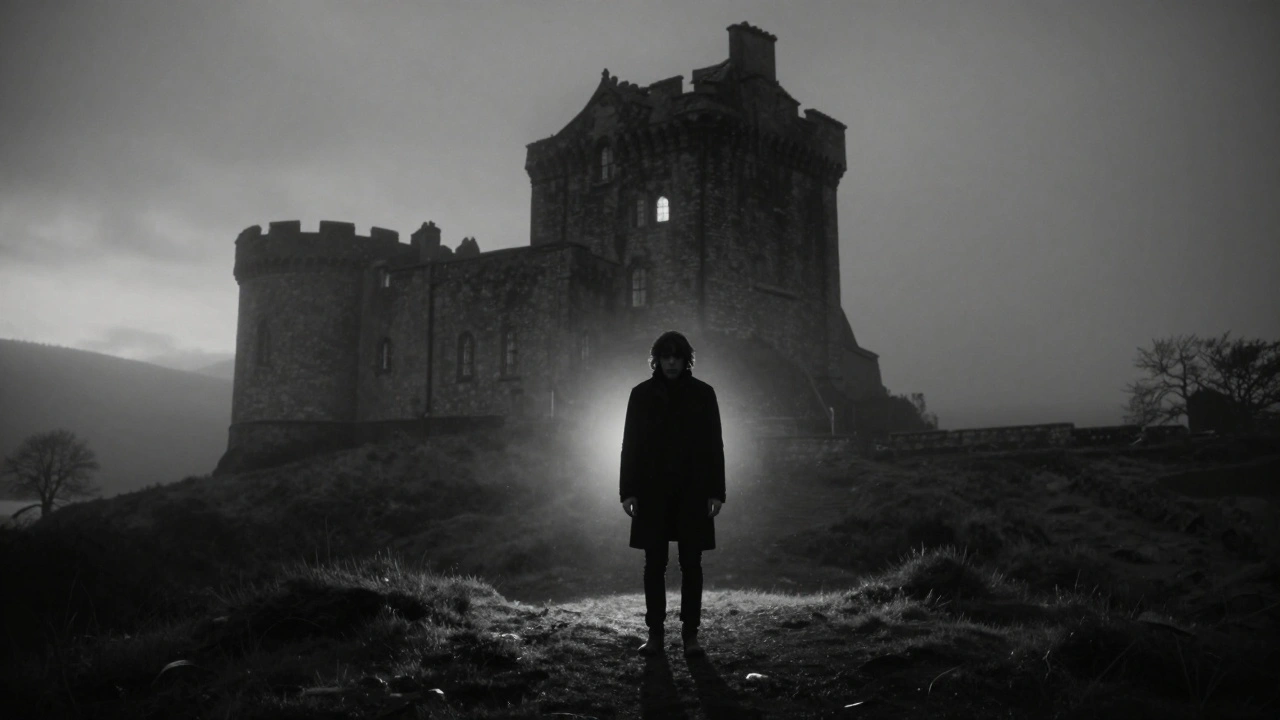
Why do some filmmakers still choose black-and-white in 2026, when color is the default for every camera, streaming platform, and smartphone? It’s not nostalgia. It’s not a budget cut. It’s a deliberate choice - one that cuts deeper than color ever could.
Black-and-White Isn’t Dead, It’s Reimagined
When black-and-white cinematography shows up in a modern film, it’s rarely an accident. Look at The Lighthouse (2019), Marriage Story (2019), or The Tragedy of Macbeth (2021). These aren’t period pieces trying to mimic the 1940s. They’re contemporary stories using grayscale to sharpen emotion, isolate characters, and amplify tension.
Color pulls your eye everywhere. Black-and-white pulls it to one thing: contrast. The shadow under an eye. The crack in a porcelain cup. The way a single beam of light hits a face mid-scream. That’s the power filmmakers are chasing today - not because they can’t afford color, but because color would distract from what they want you to feel.
Why Choose Monochrome Over Color?
Here’s the truth: color isn’t neutral. It carries meaning. Red means danger. Blue means sadness. Green means envy. Black-and-white strips that away. It forces you to read emotion through shape, texture, and light - not hue.
Take The Artist (2011). It won the Oscar for Best Picture, and it had no dialogue. No color. Just faces, gestures, and shadows. Audiences connected because the absence of color made every gesture louder. A raised eyebrow wasn’t just an expression - it was a thunderclap.
Modern directors use this to their advantage. In The Tragedy of Macbeth, Joel Coen used black-and-white to make the Scottish moors feel endless and hostile. The fog wasn’t just mist - it was a character. The castle wasn’t stone - it was a prison carved from shadows. Color would’ve softened that. Grayscale made it inescapable.
The Technology Behind Modern Black-and-White
People assume black-and-white films are shot on old film stock. They’re not. Most are shot digitally in color, then desaturated in post. But that’s not the point. The magic happens before the camera even rolls.
Modern cinematographers like Roger Deakins and Rachel Morrison plan every frame for grayscale. They don’t just avoid red dresses or blue skies. They build scenes around contrast ratios. A white shirt against a charcoal wall. A single candle in a dark hallway. A face half in shadow, half in light.
They use LED panels with adjustable color temperature - not to add color, but to sculpt light. A 5600K light on one side, a 3200K on the other. Even though the final image is black-and-white, those subtle differences in warmth affect how shadows fall, how skin tones render, how texture pops.
And it’s not just lighting. Lenses matter. Older anamorphic lenses have softer edges and more flare - perfect for dreamlike sequences. Modern digital sensors capture more dynamic range, letting filmmakers hold detail in both the deepest blacks and brightest whites. That’s why The Lighthouse could show a storm-lashed lighthouse beam without blowing out the highlights - something film couldn’t do in 1958.
When Black-and-White Fails
Not every black-and-white film works. Some feel like costumes. Like the director checked a box: “We did a B&W movie.”
That happens when the story doesn’t need it. A rom-com shot in grayscale just because it’s “artsy” feels hollow. Color isn’t the enemy - lazy storytelling is.
Look at Manhattan (1979). Woody Allen’s film used black-and-white because he wanted to capture New York as a character - elegant, moody, timeless. It worked because the tone matched the medium.
But in 2023’s Black and White, a low-budget thriller that tried to mimic The Lighthouse, the result felt forced. The shadows were flat. The lighting looked like a PowerPoint slide. There was no reason for the lack of color - it didn’t serve the story. It just looked like a mistake.
That’s the line modern filmmakers walk: black-and-white must earn its place. It can’t be decoration. It has to be a tool.
Psychology of Grayscale: How It Changes How We See
Studies from the University of California, Berkeley show that viewers process black-and-white images slower than color ones - and that’s intentional. Slower processing means deeper engagement. Your brain doesn’t just see the scene. It reconstructs it.
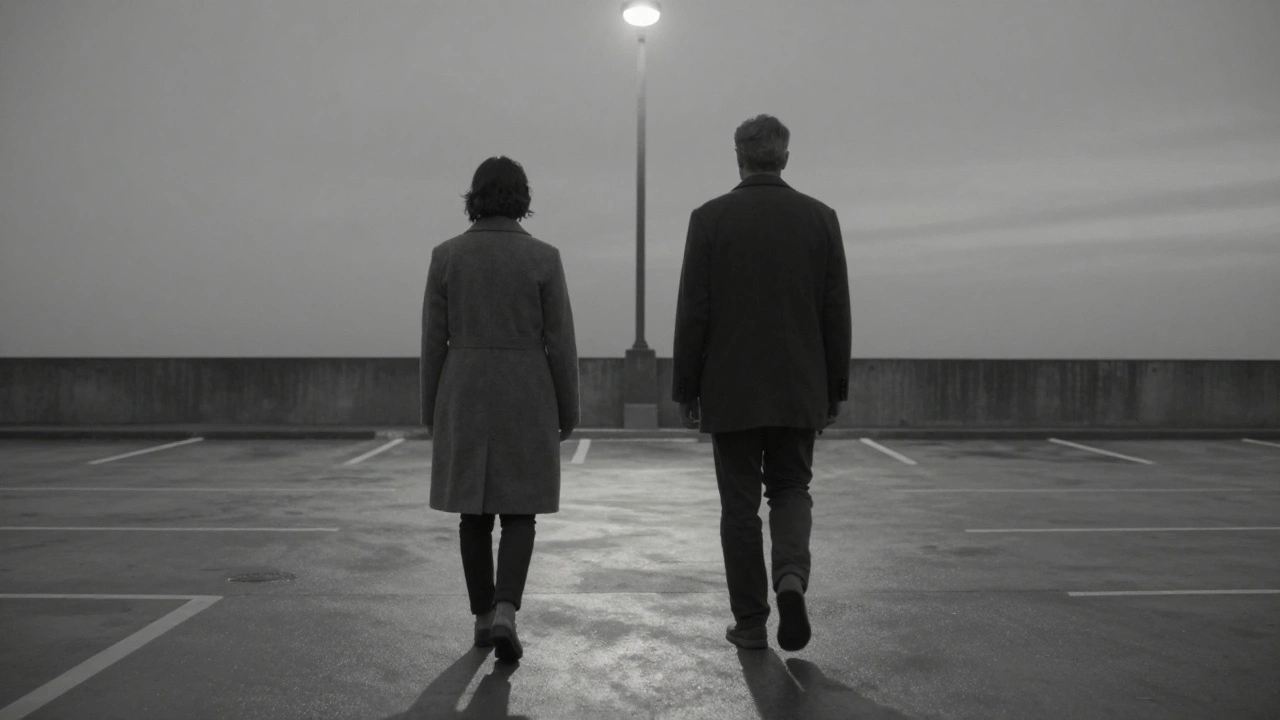
That’s why black-and-white scenes in Marriage Story feel so raw. When Nicole Kidman’s character walks away from Adam Driver in a gray parking lot, there’s no red coat to distract. No green car to pull your eye. Just two people, a wall, and a silence that screams louder than any dialogue could.
Grayscale also reduces emotional noise. In color, we might judge a character by their outfit - “She’s wearing too much pink, she’s naive.” In black-and-white, we see their posture. Their hands. The way they breathe. That’s why it’s so common in psychological thrillers and character-driven dramas. It removes the surface. It leaves only the soul.
Black-and-White in the Age of Streaming
Streaming platforms don’t push black-and-white. They optimize for color. Bright, saturated, high-contrast visuals perform better on mobile screens. So why do Netflix and Apple TV still greenlight these films?
Because awards matter. Because critics notice. Because audiences crave authenticity.
The Power of the Dog (2021) wasn’t black-and-white, but its muted palette was close. It won seven Oscars. The Tragedy of Macbeth was nominated for Best Cinematography. Even Everything Everywhere All At Once - a wildly colorful film - had a black-and-white sequence that became one of its most talked-about moments.
It’s not about being retro. It’s about standing out. In a world where every video on TikTok is oversaturated, a single frame of grayscale can stop a scroll. It’s visual silence in a noisy world.
What’s Next for Black-and-White Cinematography?
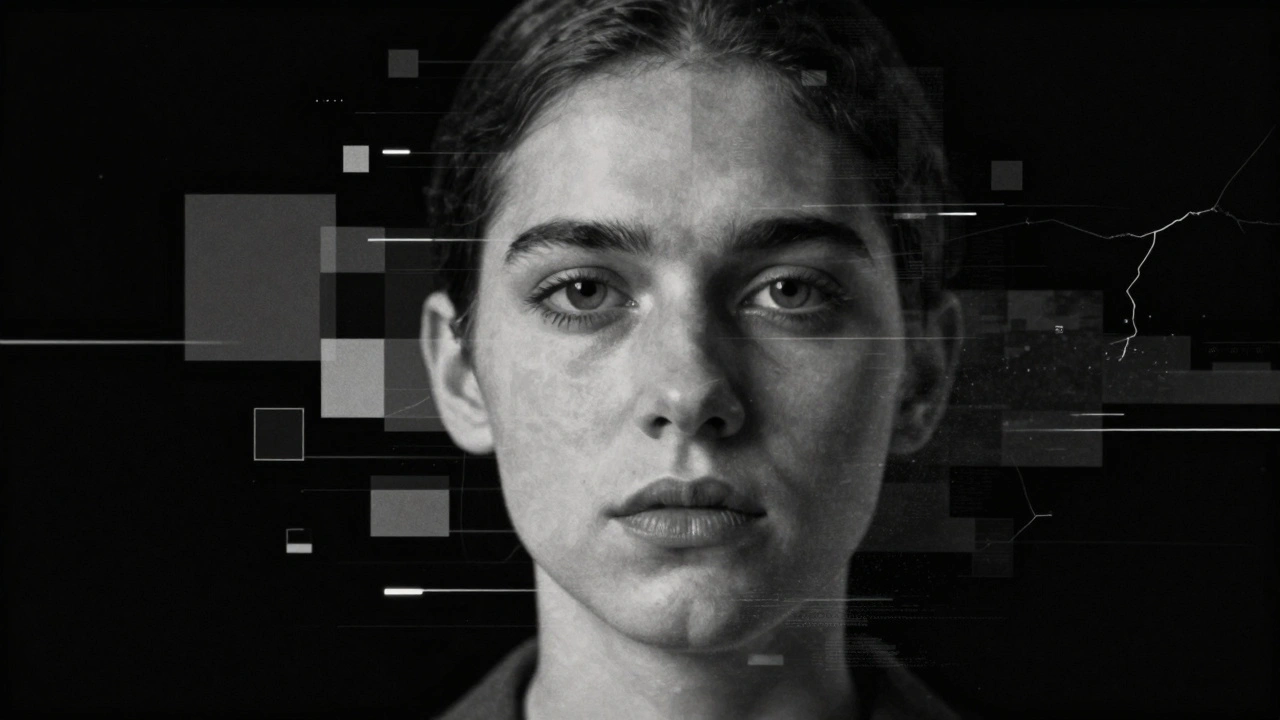
Look at emerging filmmakers in Berlin, Seoul, and Austin. They’re not just copying old masters. They’re blending black-and-white with digital glitches, AI-generated textures, and experimental aspect ratios.
One indie film from 2025, Static Echo, used AI to simulate 1920s film grain - but only on the edges of the frame. The center stayed sharp and modern. The effect? A character trapped between two eras. No dialogue needed.
Black-and-white isn’t a throwback. It’s evolving. It’s becoming a language - one that speaks in light, shadow, and absence. And in a world drowning in visual noise, that silence is louder than ever.
Why do modern films use black-and-white instead of color?
Modern films use black-and-white to strip away distraction and focus on emotion, texture, and contrast. Color carries cultural and psychological associations - red for danger, blue for sadness - but grayscale removes those cues, forcing viewers to interpret mood through light, shadow, and composition. It’s not about cost or nostalgia; it’s about control. Directors like Joel Coen and Robert Eggers use it to make settings feel oppressive, characters feel isolated, and silence feel deafening.
Is black-and-white cinematography cheaper to make?
No, it’s often more expensive. Shooting in black-and-white requires precise lighting, careful set design, and specialized lenses to ensure contrast and detail. Many filmmakers shoot in color and desaturate later, but that still demands expert color grading to avoid flat or muddy images. The real cost isn’t in the camera - it’s in the planning. Every prop, costume, and light source must be chosen for how it reads in grayscale, not color.
What cameras are used to shoot modern black-and-white films?
Most modern black-and-white films are shot digitally with high-end cameras like the ARRI Alexa 35, RED Komodo 6K, or Sony Venice 2. These cameras capture color data, which is then converted to grayscale in post-production. This gives filmmakers full control over contrast and tonal range. Some, like Robert Eggers, use older anamorphic lenses for their soft flares and organic grain, even when shooting digitally, to mimic the look of 1950s film.
Do audiences still respond to black-and-white films?
Yes - especially when the story demands it. Films like The Lighthouse and The Tragedy of Macbeth found strong audiences on streaming and in theaters. Viewers don’t reject black-and-white; they reject laziness. When the choice serves the narrative - when shadows become characters and silence becomes tension - audiences feel it. It’s not about age or tradition. It’s about intention.
Can black-and-white cinematography work in action or sci-fi films?
It’s rare, but possible. The 2024 short film Neon Ghost used black-and-white for a cyberpunk chase scene, contrasting glowing neon signs against grayscale streets. The effect made the colors feel like hallucinations - a visual metaphor for the protagonist’s fractured mind. Black-and-white isn’t limited to drama or horror. It works when it enhances the theme: isolation, memory, perception. In sci-fi, it can make the future feel alien - not because it’s old, but because it’s stripped bare.
Black-and-white cinematography in 2026 isn’t a relic. It’s a precision tool. A way to say more with less. And in a world where everything is loud, sometimes the quietest thing is the most powerful.


Comments(9)