
Most independent filmmakers don’t have a big studio backing them. They don’t have a line of credit at a bank. And they certainly don’t have millions sitting in a vault waiting to be spent. So how do they make movies at all? The answer isn’t crowdfunding. It’s not grants. It’s not begging friends. It’s pre-sales financing.
Pre-sales financing isn’t magic. It’s not even new. But for indie producers, it’s the only reliable way to lock in cash before a single frame is shot. It’s how low-budget films like Little Miss Sunshine and Whiplash got off the ground. It’s how filmmakers in Canada, Mexico, and Eastern Europe fund projects that never show up on Netflix’s homepage-but still win Oscars.
What Exactly Is Pre-Sales Financing?
Pre-sales financing means selling the rights to distribute your movie in certain territories before you even start shooting. You don’t need a finished film. You don’t need a cast. You don’t even need a script that’s 100% locked. You just need a compelling package: a strong script, a known director or actor attached, and a clear plan for who will buy the rights where.
Here’s how it works in practice: A producer in Los Angeles pitches a thriller to a sales agent. The agent takes it to the Berlin Film Festival and lands a deal with a distributor in Germany for $200,000. Another deal comes in from France for $150,000. A third from Australia for $80,000. That’s $430,000 in guaranteed cash-before cameras roll. That money becomes the production budget.
That’s the core of pre-sales: you’re not asking for donations. You’re selling future revenue. Buyers pay upfront because they believe the film will make money in their market. The producer uses that cash to shoot, then pays back the buyers from the actual box office or streaming revenue.
Why Do Buyers Take the Risk?
Why would a distributor in Spain pay for a movie they’ve never seen? Because they’re not betting on the whole film. They’re betting on the package.
Top buyers look for three things:
- Genre fit - Does this fit what their audience already watches? A horror film from a new director might not sell in Japan, but a gritty crime drama with a well-known actor? That’s a yes.
- Talent attached - Even a supporting actor with a cult following can make a difference. If you have someone like Michael Shannon or Karla Sofía Gascón attached, you’re halfway there.
- Production credibility - Has the director made something before? Is the producer known in the industry? Buyers don’t just buy scripts. They buy track records.
It’s not about hoping the film wins at Sundance. It’s about knowing that a certain type of movie sells consistently in certain countries. A romantic comedy with a female lead? That sells in Latin America. A slow-burn psychological drama? That’s a hit in Scandinavia. A martial arts action flick? That’s a guaranteed sell in Southeast Asia.
How Do You Start the Process?
You don’t just call a distributor and say, “Hey, want to buy my movie?” That doesn’t work. You need a sales agent.
Sales agents are the middlemen between indie producers and international distributors. They have relationships. They know who’s buying what. They know which festivals are hot for which genres. And they know how to package a project so it looks like a safe bet.
Here’s the step-by-step:
- Write a strong script - It doesn’t need to be Oscar bait, but it needs a clear hook, a defined audience, and a budget that matches its scope. A $5M script with no stars won’t sell. A $1.2M script with a known lead actor? That’s fundable.
- Attach key talent - Even if you can’t afford A-listers, get someone with name recognition. A TV actor who’s been in a hit series. A respected indie director. A producer with credits on past films.
- Find a reputable sales agent - Not every agent is equal. Look for ones who specialize in your genre and have sold films in your target territories. Check their past deals on IMDbPro or film market reports.
- Create a sales package - This includes the script, director’s statement, cast list, budget breakdown, and a rough shot list. Some agents also want a teaser trailer or mood reel.
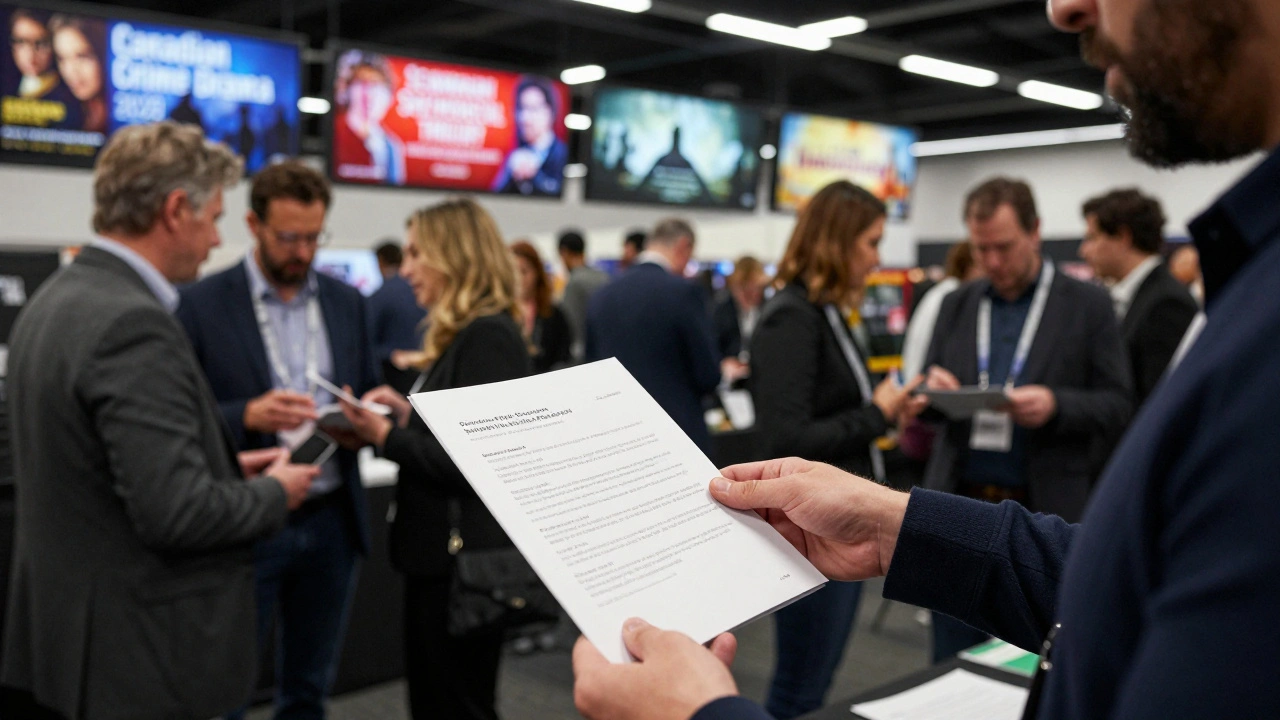
- Pitch at markets - The key events are the European Film Market (Berlin), the American Film Market (Los Angeles), and the Marché du Film (Cannes). These aren’t festivals-they’re trade shows where deals get made.
Some producers skip the agent and pitch directly. But unless you’ve done this before, you’ll get ignored. Sales agents know the rhythm of the market. They know when a buyer is hungry for thrillers. They know which countries are increasing their film subsidies this year. They know how to make your project look like the next big thing-even if it’s just a script on a laptop.
What Happens After You Land Deals?
Once you have three or four pre-sale agreements signed, you can go to a bank or a private lender and ask for a production loan. The lender doesn’t care about your credit score. They care about the contracts.
They’ll look at your pre-sale agreements and say: “You’ve got $430,000 guaranteed. We’ll lend you $600,000. You’ll repay us from the revenue you earn once the film is released.” That’s called a completion bond structure.
Some producers also combine pre-sales with tax credits. For example, if you shoot in Canada, you might get 30% back in tax rebates. That $600,000 loan becomes $800,000 in available cash. Suddenly, you’re not just making a micro-budget film-you’re making a real one.
It’s not easy. It takes months. Sometimes over a year. But once you close your first pre-sale deal, you’ve proven you can do it. And that makes the next one easier.
What Goes Wrong?
Pre-sales aren’t foolproof. Here are the three biggest mistakes indie producers make:
- Overestimating the value - You think your film is worth $1M internationally. But no one’s offering $200K. Be realistic. Look at comparable films. If your movie is similar to The Killing of a Sacred Deer, you shouldn’t expect Parasite money.
- Not having a sales agent - Trying to sell your own film at a market without connections is like walking into a car dealership and trying to negotiate with the owner without knowing the model numbers. You’ll get lost.
- Ignoring the budget - If your budget is $1.5M and your pre-sales only cover $800K, you need to find the rest. That means you need a gap financier, a co-producer, or a tax credit. Don’t assume the pre-sales will cover everything.
One producer I worked with spent six months trying to sell a drama with no stars and a $2M budget. He got zero offers. Then he cut the budget to $750K, attached a TV actor from a popular Netflix series, and re-pitched. He got three deals in two weeks.
Who Can Do This?
You don’t need to be rich. You don’t need to live in LA. You don’t need a film degree. You just need three things:
- A script that works
- A plan to get talent attached
- The patience to wait for the right moment
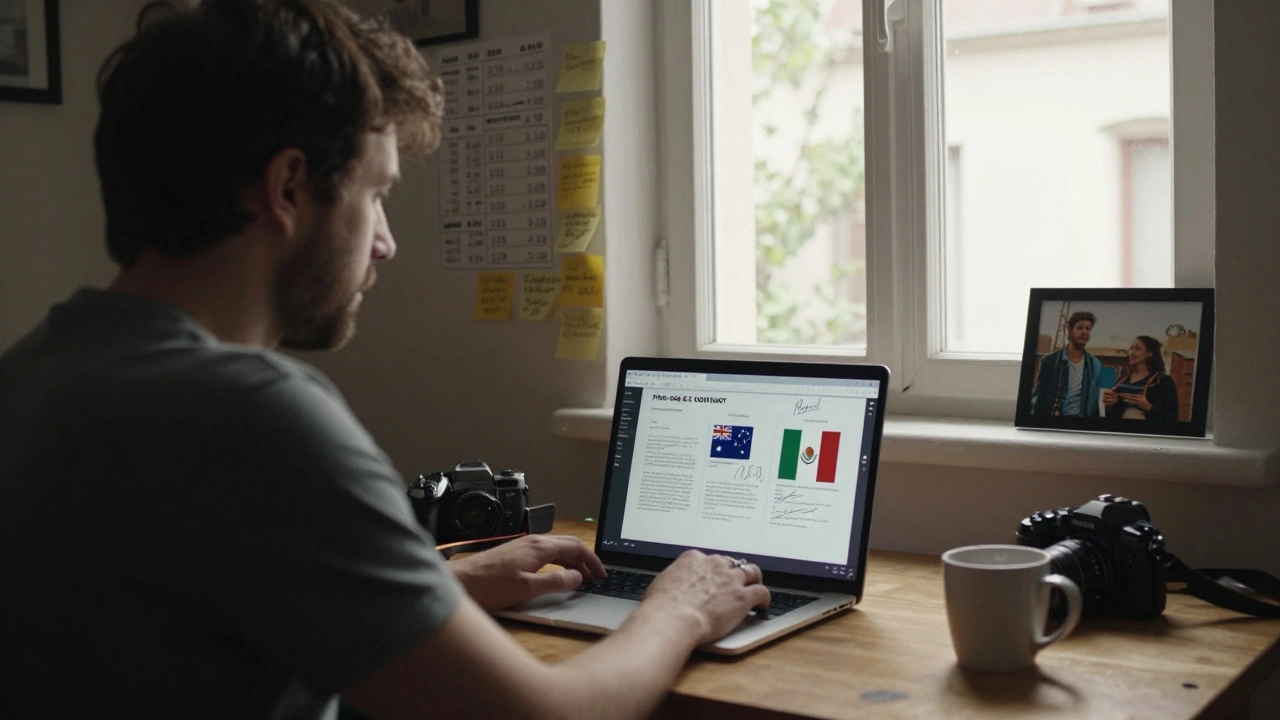
There are indie producers in Romania, Nigeria, and the Philippines who’ve funded films this way. They don’t have Hollywood connections. But they know their local markets. They know which distributors buy films from their region. They know how to package their stories so they appeal to international buyers.
Pre-sales financing isn’t about being in the right place. It’s about being prepared.
What Comes Next?
Once you’ve financed your film with pre-sales, you’re not done. You still need to deliver. You need to shoot on time. You need to edit on schedule. You need to deliver the final cut to your buyers. Miss a deadline, and you risk losing your financing.
But if you deliver? You’ve just built something most indie filmmakers never do: a self-sustaining model. You’ve proven you can raise money without begging. You’ve built relationships with distributors. And now, for your next film, you’ll have a track record.
That’s the real power of pre-sales financing. It doesn’t just fund one movie. It builds a career.
Can you get pre-sales financing without a director attached?
It’s possible, but extremely rare. Buyers want to know who’s calling the shots. A director with a previous film-even a short-adds credibility. Without one, you need a strong producer with a proven track record or a lead actor with a strong fan base. Most sales agents won’t even pitch a project without a director.
How long does pre-sales financing take?
It usually takes 6 to 18 months. Finding the right sales agent, preparing the package, pitching at markets, and closing deals doesn’t happen overnight. Some producers spend a year just getting the first offer. But once you have one deal, others often follow quickly.
Do you need to be based in the U.S. to use pre-sales financing?
No. Many of the most successful indie films funded this way come from outside the U.S.-Canada, the UK, Australia, and Eastern Europe. What matters is having a sales agent who understands international markets and can pitch your film to the right buyers. Location doesn’t matter as much as the strength of your package.
What’s the difference between pre-sales and crowdfunding?
Crowdfunding raises small amounts from many people who believe in your project. Pre-sales raise large amounts from a few companies who believe your film will make money. Crowdfunding is about passion. Pre-sales are about business. One gives you $10,000 from 1,000 fans. The other gives you $200,000 from one distributor who knows their market.
Can you use pre-sales for documentaries?
Yes, but it’s harder. Documentaries rarely have genre appeal across multiple territories unless they’re about a global topic like climate change, war, or a famous person. You’ll need a strong subject, a known narrator or director, and a clear distribution plan. Some sales agents specialize in docs, but the deals are usually smaller.



Comments(7)