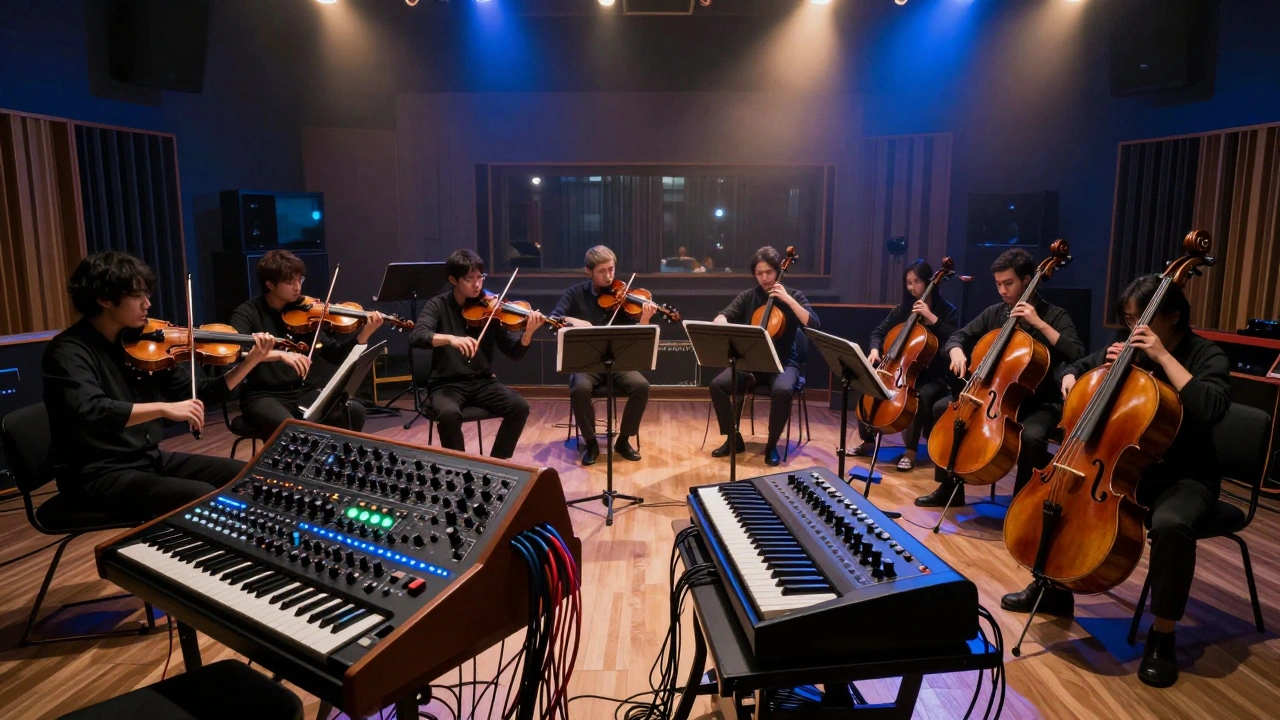
Whether it's the haunting blends of folk instruments or the crushing weight of a full orchestra, the current era of cinema is hitting a creative peak in sound. If you're looking to build a playlist that captures the mood of the modern big screen, you need to look at the composers who are breaking the rules and redefining the best film scores of the 2020s.
Quick Takeaways for Your Playlist
- Hybrid scores combining electronic synths with classical orchestras are dominating the charts.
- The 'Quiet' trend is growing, where silence and minimalism create more tension than loud music.
- World instruments are being used more authentically to ground stories in specific cultures.
- Thematic consistency-returning to a single melody-is making up for a loss of traditional leitmotifs.
The Return of the Bold Theme
For a while, cinema suffered from 'temp-track syndrome,' where directors just used existing music during editing and told composers to 'make it sound like this.' This led to a lot of generic, atmospheric drones. But lately, we're seeing a return to the bold, identifiable theme. Think of a score that you can hum the second the credits roll. This is where Hans Zimmer is a prolific German composer known for his heavy use of synthesizers and massive orchestral layers continues to lead. His work on recent epics doesn't just provide background noise; it creates an architectural foundation for the movie. When you hear those deep, vibrating bass notes, you aren't just watching a scene-you're feeling the physical weight of the world on screen.
But it's not all about loudness. Composers are now focusing on 'thematic economy.' Instead of writing twenty different melodies, they take one simple four-note idea and twist it. They slow it down for a sad scene, speed it up for a fight, and strip it back to a single piano for a moment of reflection. This makes the movie feel like one cohesive piece of art rather than a collection of random songs.
The Rise of the Hybrid Sound
The line between a 'song' and a 'score' is blurring. We're seeing more Electronic Music is a broad genre of music that uses electronic instruments and technology to produce sound blending into traditional orchestral arrangements. This hybrid approach allows a film to feel both timeless and futuristic. For instance, using a cello to play a melody but running it through a distortion pedal gives you a sound that feels human yet broken, which is perfect for modern psychological thrillers.
Take a look at the trend in sci-fi cinema. We've moved past the 80s synth-wave obsession. Now, composers are using granular synthesis-taking a tiny slice of a sound, like a door slamming, and stretching it into a haunting atmospheric pad. It creates a sense of unease that a standard violin simply can't achieve. It's the difference between hearing a scary sound and feeling a vibration in your chest that tells you something is wrong.
| Style | Primary Tools | Emotional Goal | Example Feel |
|---|---|---|---|
| Traditional Orchestral | Strings, Brass, Woodwinds | Grandeur, Scale, Tradition | Sweeping vistas, royal courts |
| Purely Electronic | Modular Synths, DAW | Alienation, Tension, Tech | Cyberpunk cities, void of space |
| Hybrid/Experimental | Orchestra + Digital Processing | Complexity, Modernity | Psychological breakdowns, neon-noir |
| Minimalist | Solo Piano, Silence, Ambient | Intimacy, Grief, Clarity | Quiet apartments, lonely walks |
Using Silence as an Instrument
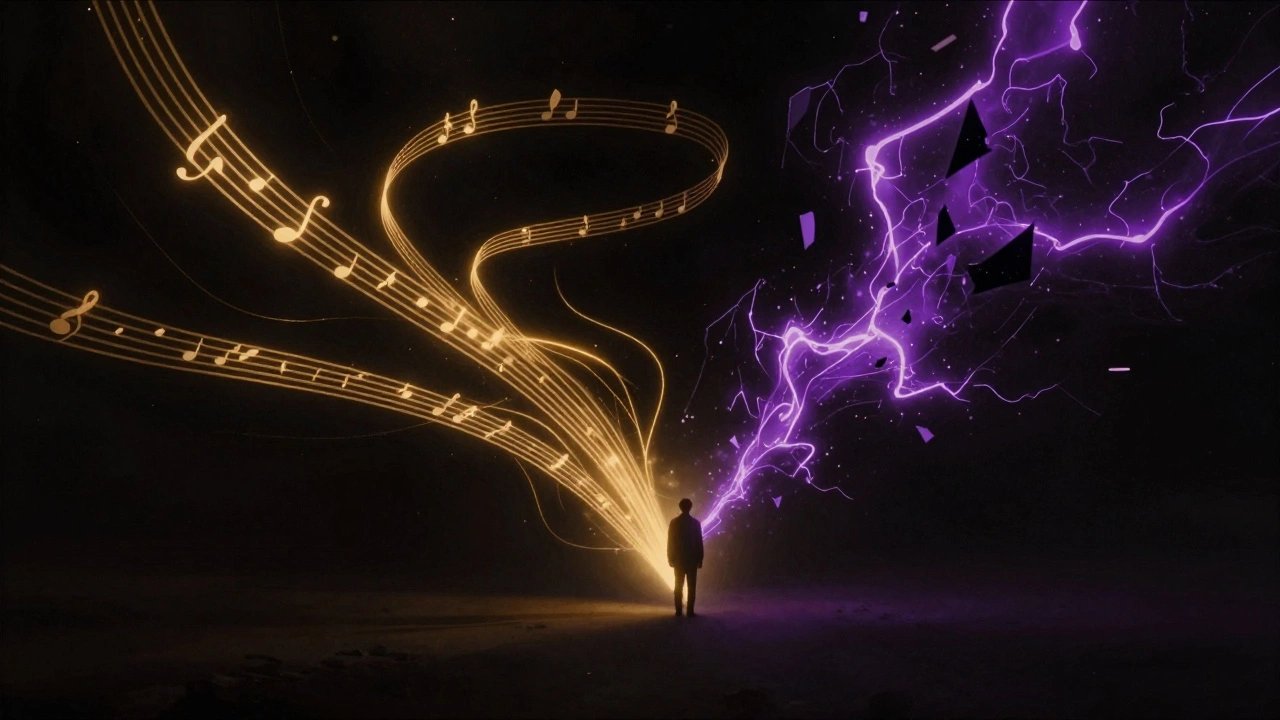
One of the most daring moves in recent cinema is the decision to play nothing at all. The most effective scores aren't the ones that play constantly, but the ones that know when to stop. This is a technique often associated with Ludwig Göransson is a Swedish composer and songwriter known for blending hip-hop production with orchestral scoring . By cutting the music entirely during a moment of peak tension, the sudden silence acts like a physical blow to the audience. It forces you to lean in and listen to the raw sound design-the breathing, the footsteps, the wind.
When the music finally returns after a period of silence, it has ten times the impact. A single soft note on a flute after five minutes of dead air can feel more emotional than a hundred violins playing at once. This 'subtractive scoring' is becoming a hallmark of award-winning films because it respects the viewer's intelligence, allowing them to fill in the emotional gaps themselves.
Cultural Authenticity and World Instruments
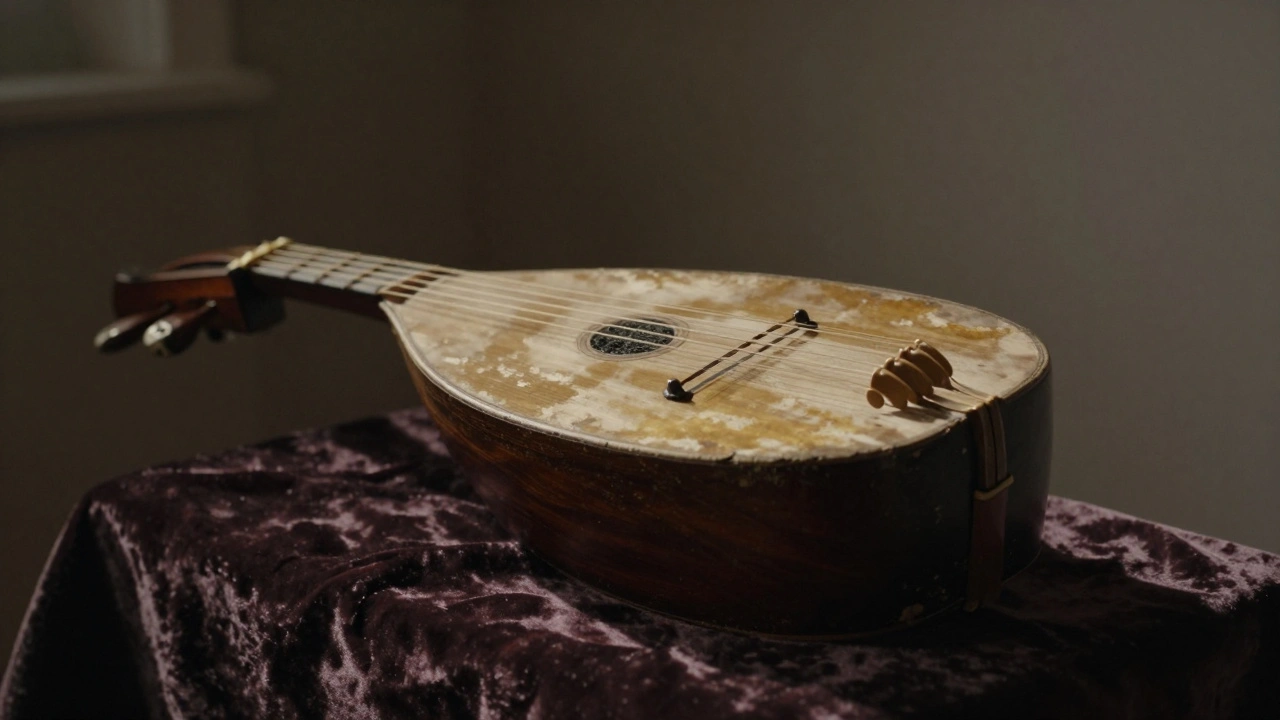
Gone are the days when a movie set in another country just used a 'generic ethnic' sound. Modern composers are diving deep into Ethnomusicology is the study of music in its cultural context to ensure the score feels rooted in reality. We're seeing the use of the Erhu in East Asian settings or the Kora in West African narratives, not as a gimmick, but as a primary storytelling tool. This adds a layer of texture that makes the movie world feel lived-in and authentic.
This shift is happening because audiences are more globally connected. We can tell when a score is 'faking it.' When a composer collaborates with local musicians to record actual folk songs or uses traditional scales that don't fit the Western 12-tone system, it creates a visceral reaction. It moves the film from being a 'story about a place' to a 'story from a place.'
The Psychology of the Modern Soundtrack
Why do some scores work while others fail? It usually comes down to the relationship between the music and the image. There are two main ways this happens: synchronization and counterpoint. Synchronization is when the music mimics the action-a fast beat for a fast chase. It's effective but can be predictable. Counterpoint is when the music does the opposite of what's happening on screen. Imagine a brutal fight scene played over a beautiful, slow waltz. This creates a cognitive dissonance that makes the scene feel more disturbing or poetic.
Recent masterpieces have mastered this balance. By using Dissonance is a lack of harmony between musical notes that creates tension or a sense of instability , composers can trigger a physical stress response in the listener. When a chord doesn't resolve-meaning it doesn't land on a 'safe' note-your brain stays on high alert. This is why modern horror scores are moving away from the loud 'jump scare' bangs and instead using long, creeping tones that never quite resolve, leaving you feeling anxious long after the movie ends.
Building Your Own Cinematic Experience
If you want to appreciate these scores more, try listening to them without the visuals first. You'll notice how the music tells the story through dynamics (the change in volume) and timbre (the quality of the sound). A score that can stand on its own as a piece of music is usually a sign of a composer who understands melody, not just one who knows how to follow a director's instructions.
Start by looking for 'Original Soundtrack' (OST) releases rather than 'Featured Songs' albums. The OST contains the actual score-the music written specifically for the film's timing-whereas the songs album is just a collection of tracks played during the movie. The score is where the real magic happens, as it is intricately tied to the movie's emotional arc.
What makes a film score 'modern' compared to the classics?
Modern scores rely much more heavily on hybridity-mixing organic instruments with digital synthesis. While classics like John Williams' work focused on sweeping melodic themes and full orchestras, modern scores often prioritize texture, atmosphere, and psychological tension over a catchy tune.
Why are so many recent movies using synthesizers?
Synthesizers allow composers to create sounds that don't exist in nature, which is perfect for evoking feelings of alienation, dread, or futuristic wonder. They also provide a level of bass and sub-frequency that a traditional orchestra cannot reach, making the cinema experience more physically immersive.
How can I tell if a score is using counterpoint?
Look for scenes where the emotion of the music contradicts the action on screen. If a character is experiencing a tragedy but the music is upbeat or eerily calm, that's counterpoint. It's designed to make you feel a secondary emotion, like irony or a deeper sense of loss.
Does the use of silence count as part of the score?
Absolutely. In professional composing, silence is treated as a 'negative space' instrument. The decision of when to stop the music is just as important as when to start it, as it controls the pacing and intensity of the audience's emotional response.
What is a leitmotif, and is it still used today?
A leitmotif is a short, recurring musical phrase associated with a specific person, place, or idea. While less common in the 'ambient' era of the 2010s, it is returning in modern cinema through 'thematic evolution,' where a simple motif is gradually transformed as the character changes.