Think about the last blockbuster you watched. Maybe it was a superhero flying through New York or a dragon breathing fire over a medieval castle. You probably didn’t think twice about how those images got onto your screen. That’s exactly the point. Good Visual Effects are digital imagery created or manipulated outside the context of a live-action shot, designed to blend so seamlessly with reality that you forget they aren't real. But for the artists and technicians behind the scenes, this magic is less about wizardry and more about rigorous engineering, artistic intuition, and a highly structured workflow known as the VFX pipeline.
Understanding how these effects are made isn't just trivia; it reveals the massive scale of modern filmmaking. From the moment a script is read to the final frame exported for theaters, every step is calculated. This breakdown explores the entire journey of visual effects, showing you how digital worlds are built from scratch.
The Pre-Production Phase: Planning Before Pixels
Most people assume visual effects start when someone sits down at a computer. In reality, the most critical work happens months before any code is written. This stage is called pre-production, and its primary goal is problem-solving. If you wait until filming to figure out how a character will interact with a digital environment, you’re already behind schedule and over budget.
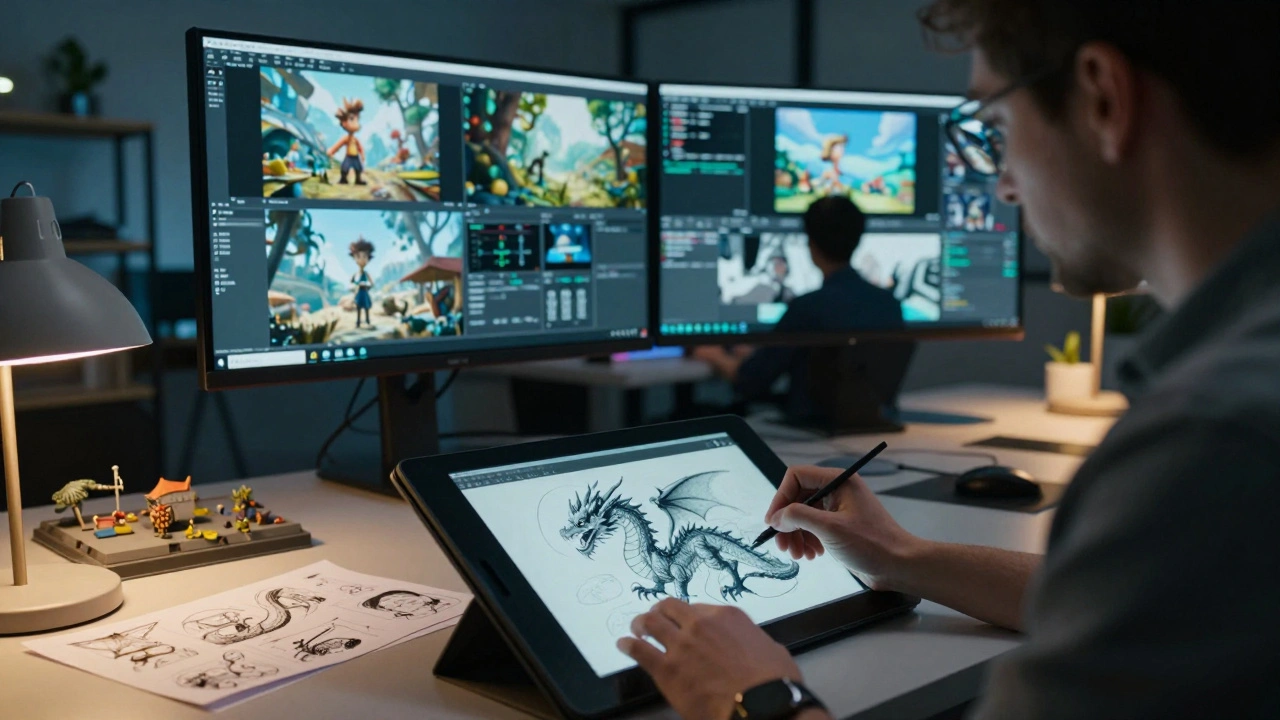
During this phase, Concept Artists create illustrations that define the look and feel of characters, creatures, and environments. These drawings serve as the blueprint for everything that follows. They answer questions like: What does this alien species look like? How big is the spaceship? What time of day is it?
Simultaneously, technical directors (TDs) begin building Previs, which stands for previsualization, a rough animated version of the scene used to plan camera angles and timing. Think of previs as an animated storyboard. It allows directors to test complex action sequences without expensive equipment or actors on set. If a stunt looks impossible in previs, it gets changed then, not during the actual shoot. This saves millions of dollars and prevents logistical nightmares later on.
On Set: Capturing Data for Digital Integration
When cameras roll, the VFX team isn't just watching the footage; they are collecting data. Modern cinematography relies heavily on metadata to help computers understand the physical world. Without this information, integrating digital elements into live-action footage would be like trying to fit a square peg into a round hole.
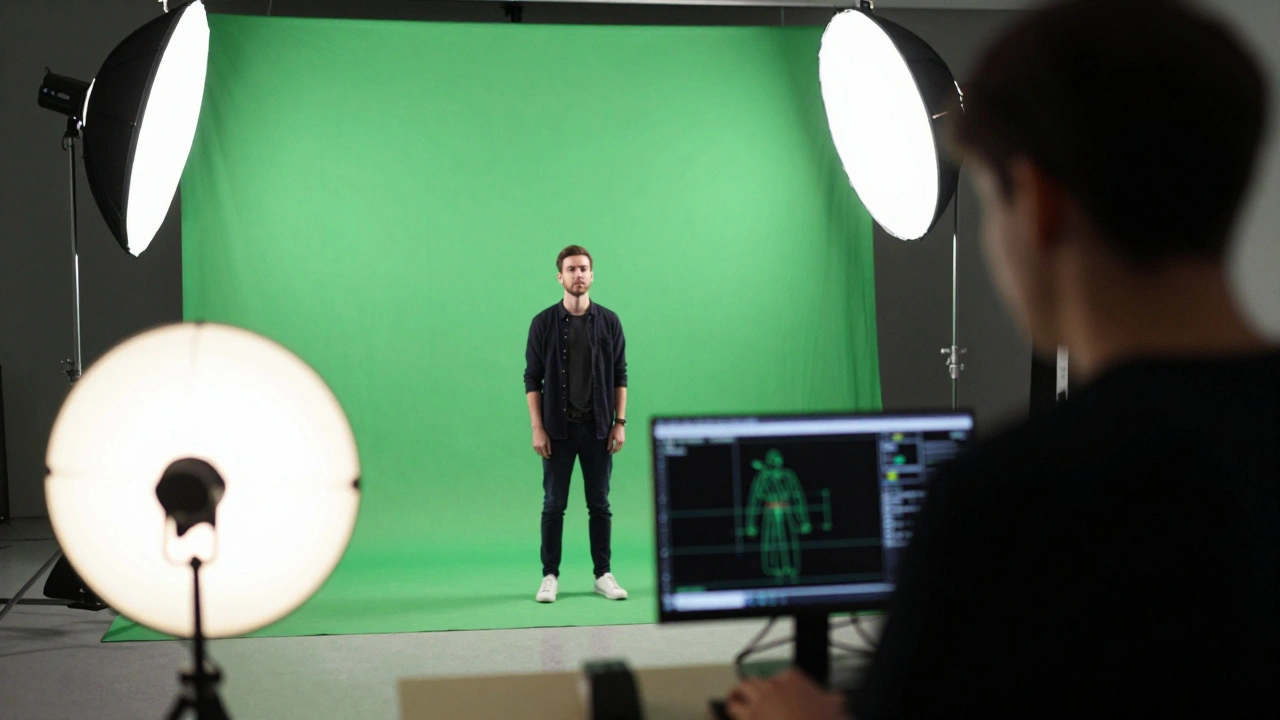
One crucial tool is the Green Screen or chroma key background, a solid color backdrop that can be digitally removed and replaced with other imagery. While green screens are iconic, they are only one part of the puzzle. Equally important is Camera Tracking, the process of recording the exact position, rotation, and lens characteristics of the camera during filming. By placing markers on set or using natural features in the environment, software can reconstruct the camera's movement in 3D space. This ensures that when a digital car drives past an actor, it moves at the same speed and perspective as the real camera.
Lighting is another major factor. VFX supervisors often use HDRI (High Dynamic Range Imaging) captures to record the lighting conditions of the set. This data tells the computer how light bounces off surfaces, ensuring that a digital character doesn't look like a sticker pasted onto the scene but rather interacts naturally with the existing light sources.
Modeling and Texturing: Building the Digital Assets
Once the data is collected, the creative construction begins. This stage involves creating the 3D models that will populate the final scene. Whether it’s a simple prop or a complex creature, every object starts as a wireframe mesh-a collection of vertices, edges, and faces.
3D Modeling is the art of sculpting digital objects using specialized software like Maya, Blender, or ZBrush. Artists spend countless hours refining these shapes, ensuring proportions are accurate and details are sharp. For organic subjects like humans or animals, sculptors add microscopic details such as pores, wrinkles, and muscle definition.
However, a gray model isn't enough. It needs surface properties. This is where texturing comes in. Texture artists paint colors, patterns, and material qualities onto the 3D model. They define whether a surface is rough concrete, shiny metal, or soft skin. Advanced techniques involve using photogrammetry-scanning real-world objects with hundreds of photographs-to create hyper-realistic textures. The result is a digital asset that reacts to light and shadow just like its real-world counterpart.
Rigging and Animation: Bringing Stillness to Life
A static 3D model is useless if it can't move. To enable movement, riggers build a digital skeleton inside the model. This process is called Rigging, which involves creating a control structure that allows animators to manipulate a 3D model's pose and expression. Imagine putting marionette strings on a doll. The rigger places joints at the knees, elbows, and spine, and creates controls that let the animator bend those joints smoothly.
For human-like characters, facial rigging is particularly complex. It requires dozens of sliders to control eyebrow raises, lip curls, and eye blinks. Animators then take over, posing the rig frame by frame to create performance. They study reference videos of actors to mimic subtle nuances in body language and emotion.
In many cases, animation is driven by Motion Capture, or mocap, a technology that records the movement of actors wearing special suits and translates it directly into digital animation. This provides a realistic foundation, which animators then clean up and enhance. Mocap bridges the gap between live acting and digital creation, preserving the actor's intent while allowing for fantastical transformations.
Simulation and Lighting: Adding Physics and Atmosphere
Not all movement comes from animation. Some effects follow the laws of physics. Fire, water, smoke, hair, and cloth require simulation engines. These tools calculate how particles behave based on forces like gravity, wind, and collision. A digital explosion isn't manually drawn; it’s simulated using fluid dynamics algorithms that predict how gas expands and burns.
Once the geometry and simulations are ready, lighting artists step in. This is arguably the most transformative stage. Proper lighting sells the illusion. Artists place virtual lights in the 3D scene to match the on-set lighting captured earlier. They adjust shadows, reflections, and ambient occlusion to ensure the digital element feels grounded in the environment. Bad lighting is the quickest way to break immersion, making even the best model look fake.
Compositing: The Final Assembly
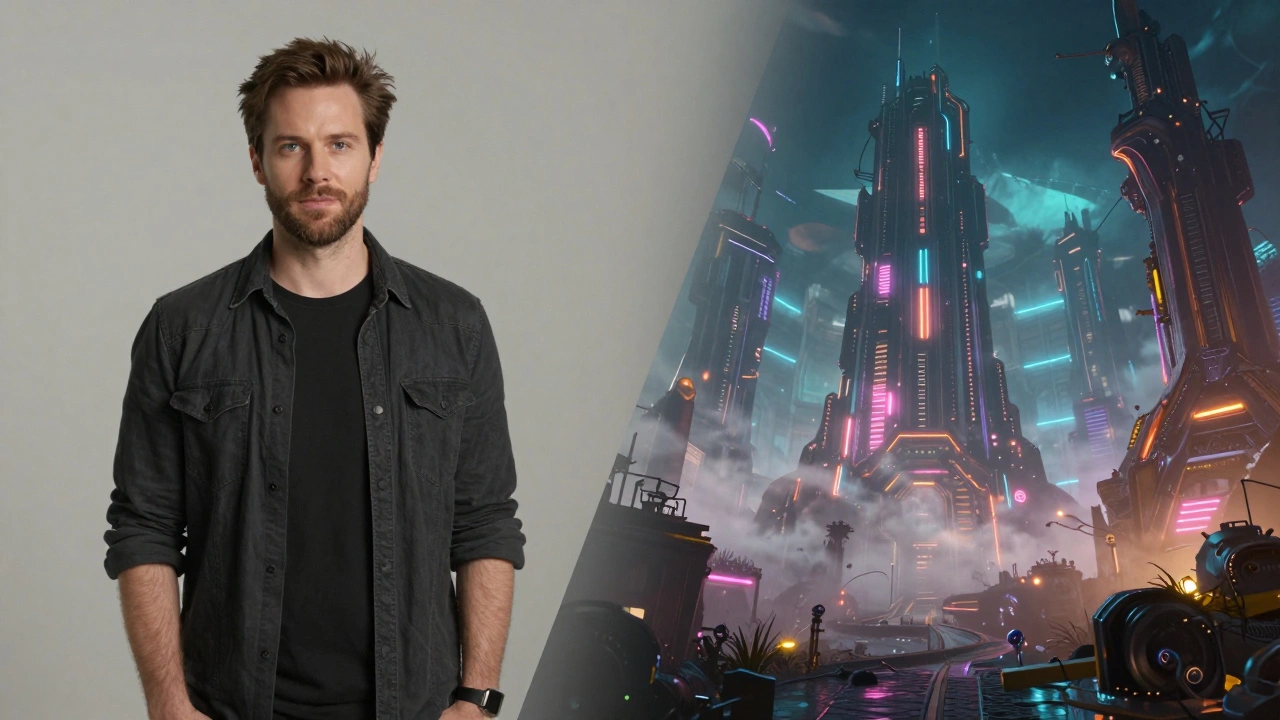
All the individual elements-live-action plates, 3D models, simulations, and lighting passes-are now separate layers. Compositing is the process of stacking these layers together into a single image. It’s like digital photo editing on steroids.
Compositors use software like Nuke to blend the layers. They adjust color grading, add depth of field, and integrate atmospheric effects like fog or dust. They also fix imperfections, removing wires, erasing boom mics, or replacing backgrounds. The goal is seamless integration. When done correctly, the viewer cannot distinguish where the real footage ends and the digital effect begins. This final polish ties the entire pipeline together, delivering the finished frame to the director.
| Stage | Primary Goal | Key Tools/Techniques |
|---|---|---|
| Pre-Production | Planning and visualization | Concept Art, Previs, Storyboards |
| On Set | Data collection for integration | Green Screen, Camera Tracking, HDRIs |
| Modeling | Creating 3D geometry | Maya, Blender, ZBrush |
| Rigging/Animation | Enabling movement and performance | Motion Capture, Facial Rigging |
| Simulation/Lighting | Physics and atmosphere | Houdini, Arnold, RenderMan |
| Compositing | Final assembly and blending | Nuke, After Effects |
Common Pitfalls and Challenges
Despite advanced technology, the VFX process is fraught with challenges. One common issue is "scope creep," where additional effects are added late in production, causing delays and budget overruns. Another is the disconnect between on-set decisions and post-production capabilities. If a director changes the lighting setup mid-shoot without informing the VFX team, the integration becomes exponentially harder.
Render times are also a significant bottleneck. High-quality images can take hours to render per frame. A two-hour movie contains approximately 175,000 frames. Managing this computational load requires powerful server farms and efficient resource allocation. Any error in the pipeline can cascade, requiring rework across multiple stages.
How long does the VFX process take for a typical film?
The timeline varies greatly depending on complexity. Simple effects might take weeks, while complex shots can take six months or more. For a full feature film, the VFX post-production phase typically lasts 12 to 18 months after principal photography wraps.
What software do VFX artists use?
Industry standards include Autodesk Maya for modeling and animation, Houdini for simulations, Nuke for compositing, and ZBrush for digital sculpting. Unreal Engine is increasingly used for real-time rendering and virtual production.
Is motion capture better than hand animation?
Neither is strictly better; they serve different purposes. Motion capture excels at capturing realistic human movement quickly. Hand animation offers greater artistic control and is essential for non-human characters or stylized movements. Most productions use a combination of both.
Why do some VFX look bad?
Poor VFX usually result from insufficient time, budget constraints, or lack of proper on-set data. If camera tracking data is missing or lighting doesn't match, the digital elements will look disconnected. Rushed schedules force compromises in detail and quality.
Can AI replace VFX artists?
AI is becoming a powerful tool for automating repetitive tasks like rotoscoping or upscaling resolution. However, it cannot yet replicate the creative decision-making, artistic direction, and complex problem-solving required for high-end visual effects. It augments artists rather than replacing them.