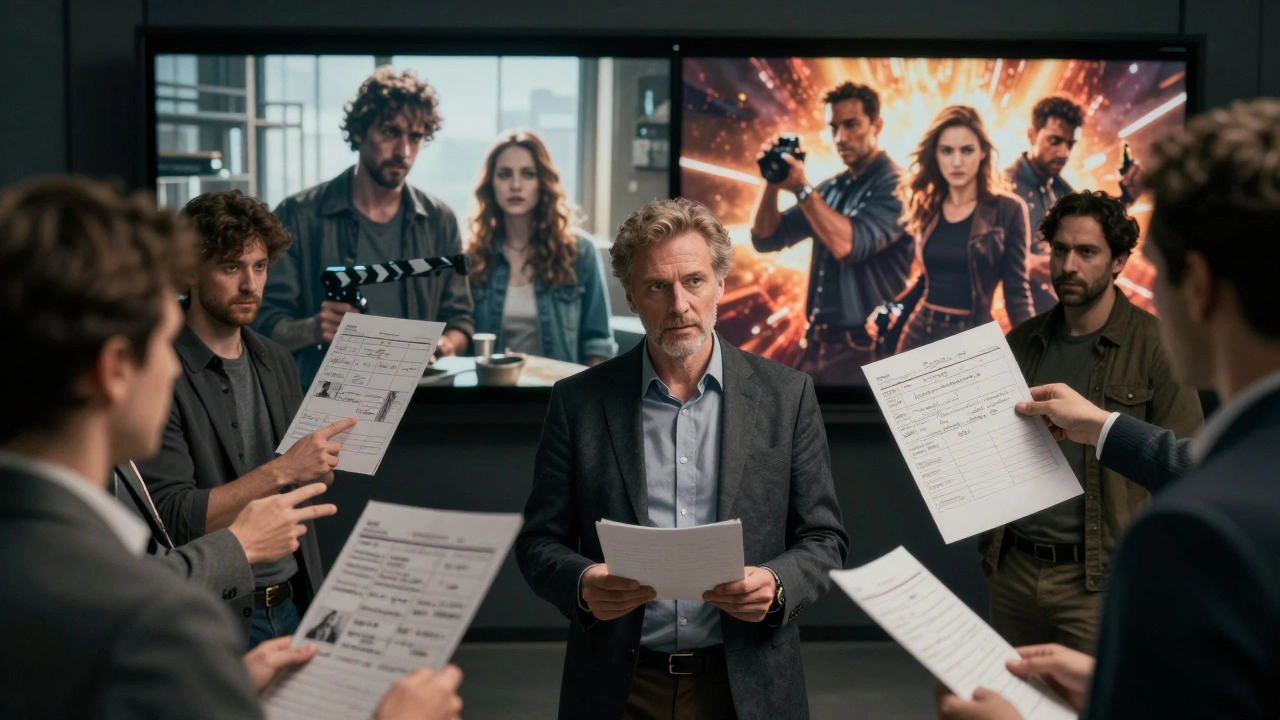
When a director signs on to a tentpole film - a billion-dollar franchise movie with pre-built characters, global marketing campaigns, and sequels already planned - they’re not just signing a contract. They’re walking into a battlefield where their vision is one of many competing priorities. The studio wants brand consistency. The fans want familiar tropes. The executives want box office guarantees. And the director? They want to make something that matters.
What Really Happens Behind the Scenes
Most people think directors on big franchises are just hired hands, executing scripts written by committees. That’s not entirely true. Some of the most iconic moments in modern cinema came from directors pushing back - sometimes hard - against studio pressure. Think of Christopher Nolan’s insistence on practical effects in The Dark Knight, or Denis Villeneuve’s refusal to add a post-credits scene to Dune. These weren’t accidents. They were negotiations.Studio heads don’t hand over creative control lightly. A tentpole film isn’t just a movie; it’s a franchise engine. Every decision ripples across toys, video games, theme park rides, and streaming spin-offs. That’s why studios hire directors who already understand the brand - not rebels who want to reinvent it.
But here’s the twist: studios also know that the best tentpole films come from directors with a strong voice. Audiences can smell generic. They’ll tolerate a familiar hero, but they’ll walk out if the story feels like a corporate checklist. So studios walk a tightrope: they want control, but they need artistry.
The Tools Directors Use to Win Space
Directors don’t negotiate by arguing. They negotiate by offering value.One common tactic? Offer to deliver the studio’s goals through your vision. Taika Waititi didn’t ask to turn Thor: Ragnarok into a comedy. He pitched it as a way to save the franchise from fatigue. The studio agreed - and the film grossed over $850 million. His humor wasn’t a deviation; it was the solution.
Another tool: pre-production leverage. If a director has a proven track record - say, they just won an Oscar - they can demand more. Guillermo del Toro walked into Hellboy with a detailed visual bible, a cast he handpicked, and a clear tone. The studio didn’t love it, but they knew his previous work had cult credibility. He got his way. And when the sequel was canceled? That was the cost.
Some directors use script control as currency. They’ll agree to rewrite a scene if they get final cut on another. Others bring in trusted collaborators - cinematographers, composers, production designers - as part of their package. Studios hate this, because it builds a director’s personal brand instead of the studio’s. But if the director is popular enough, the studio tolerates it.
Where the Lines Are Drawn
Not every battle can be won. There are non-negotiables.Character design? Usually locked. If you’re making a Spider-Man movie, the suit isn’t up for debate. The studio owns the trademark. Same with major plot points. Tony Stark dies in Avengers: Endgame? That decision came from Marvel’s long-term plan, not from the directors.
Runtime? Often controlled. Studios want 120 minutes or less for maximum daily showings. Directors pushing for 140+ minutes need serious clout. Denis Villeneuve fought for Dune: Part Two to be 166 minutes. He won - because he had box office proof from the first film and a global fanbase demanding it.
Marketing is another minefield. Studios love trailers that show every big moment. Directors hate that. They want mystery. The Blade Runner 2049 trailer barely showed Ryan Gosling’s face. The studio panicked. The director held firm. The film underperformed at the box office - but became a cult classic. Sometimes, creative control doesn’t pay off immediately. But it builds legacy.
Real Examples: Who Won, Who Lost
Let’s look at three real cases from the last five years.James Gunn and Guardians of the Galaxy Vol. 3: After being fired from Marvel in 2018 over old tweets, Gunn was rehired in 2019. He demanded full creative control as part of his return. He got it. The film was darker, more personal, and deeply emotional. It grossed $845 million. Marvel didn’t interfere. Why? Because Gunn had already proven he could deliver both art and profit.
Jon Watts and Spider-Man: No Way Home: Watts was handed a script that included three Spider-Men from different universes. He didn’t create the idea, but he shaped how it was filmed. He insisted on using practical stunts, not just green screen. He pushed for the emotional weight of Peter Parker’s goodbye. The studio let him. The film made $1.9 billion. The lesson? You don’t need to invent the concept - you just need to elevate it.
Ben Affleck and Aquaman: Affleck was originally set to direct Aquaman before stepping away. Reports say he wanted a gritty, grounded take. Warner Bros. wanted a mythic, colorful epic. He left. James Wan took over and made the film exactly as the studio wanted - and it made $1.1 billion. Affleck’s vision? Lost. The studio’s? Executed.
The Unspoken Rule: Trust Is Earned, Not Given
There’s no magic formula. No checklist. No contract clause that guarantees creative freedom.What works? Proven results. A director who has made a film that critics loved and audiences showed up for? That’s leverage. A director who can say, “I made a $30 million indie that made $200 million worldwide”? That’s power.
But even then, it’s fragile. Studios are fickle. One flop, and your trust evaporates. That’s why many directors on franchises avoid taking final cut - they know it’s a gamble. Instead, they focus on building relationships. They show up early. They listen. They deliver on time and under budget. They make the studio look good. Then, slowly, they earn space.
The best directors on tentpole films aren’t the loudest. They’re the ones who understand the system. They know when to fight, when to compromise, and when to walk away. They don’t see the studio as the enemy. They see it as a partner - with different goals.

What Directors Should Ask Before Signing On
If you’re a director considering a franchise gig, here’s what you need to nail down before you sign:- What parts of the story are locked? Character arcs? Ending? Major twists? Know the boundaries.
- Who owns final cut? If you don’t have it, what’s your recourse? Can you appeal to the CEO?
- Can you bring your core team? Cinematographer? Editor? Composer? These people shape tone more than you think.
- What’s the marketing plan? Will they spoil your big moments? Will they cut your ending for trailers?
- What’s the timeline? Are you given enough time to develop the vision? Or are you on a 6-month sprint?
These aren’t just questions. They’re dealbreakers.
The Bigger Picture: Why This Matters
This isn’t just about directors and studios. It’s about the future of storytelling.Franchises dominate cinema. In 2025, over 60% of the top-grossing films were part of a franchise. If we lose the voices of directors - if every tentpole film becomes a formulaic product - we lose the risk-takers who push the medium forward.
But if we only get auteurs who refuse to compromise, we get movies that no one sees. The art dies.
The sweet spot? Directors who understand the machine, but refuse to let it crush their soul. They don’t fight the system. They work within it - and change it from the inside.
That’s the real power move.
Can a director really change a franchise’s direction?
Yes - but only if they have proven success, strong relationships, or a unique vision that aligns with the studio’s goals. James Gunn reshaped the Guardians franchise with humor and heart. Denis Villeneuve turned Dune into a cinematic epic. It’s not about rebellion - it’s about delivering something the studio didn’t know they needed.
Do studios ever fire directors over creative differences?
Constantly. Ben Affleck stepped away from Aquaman after clashes over tone. Colin Trevorrow was fired from Star Wars: Episode IX after creative disagreements. Studios don’t want to lose time or money. If a director’s vision doesn’t fit the brand or schedule, they’re replaced - no matter their reputation.
Is final cut ever guaranteed on a tentpole film?
Almost never. Final cut is a luxury reserved for directors with massive box office power or industry clout - like Christopher Nolan or Denis Villeneuve. Most directors get “consultation rights” or “final input,” but the studio has the last word. It’s a negotiation, not a right.
Why do some directors take franchise jobs if they lose creative control?
Money, exposure, and opportunity. A tentpole film can fund their next passion project. It gives them access to resources they’d never get otherwise - big crews, top-tier VFX, global distribution. Many use the paycheck to make smaller, personal films later. It’s a trade-off.
What’s the difference between a director and a producer on a franchise film?
The director shapes the vision: how scenes are shot, how actors perform, the pacing and tone. The producer manages logistics: budget, schedule, studio demands. On franchises, producers often have more power because they’re the studio’s eyes on set. Directors can be fired. Producers usually aren’t.





Comments(10)