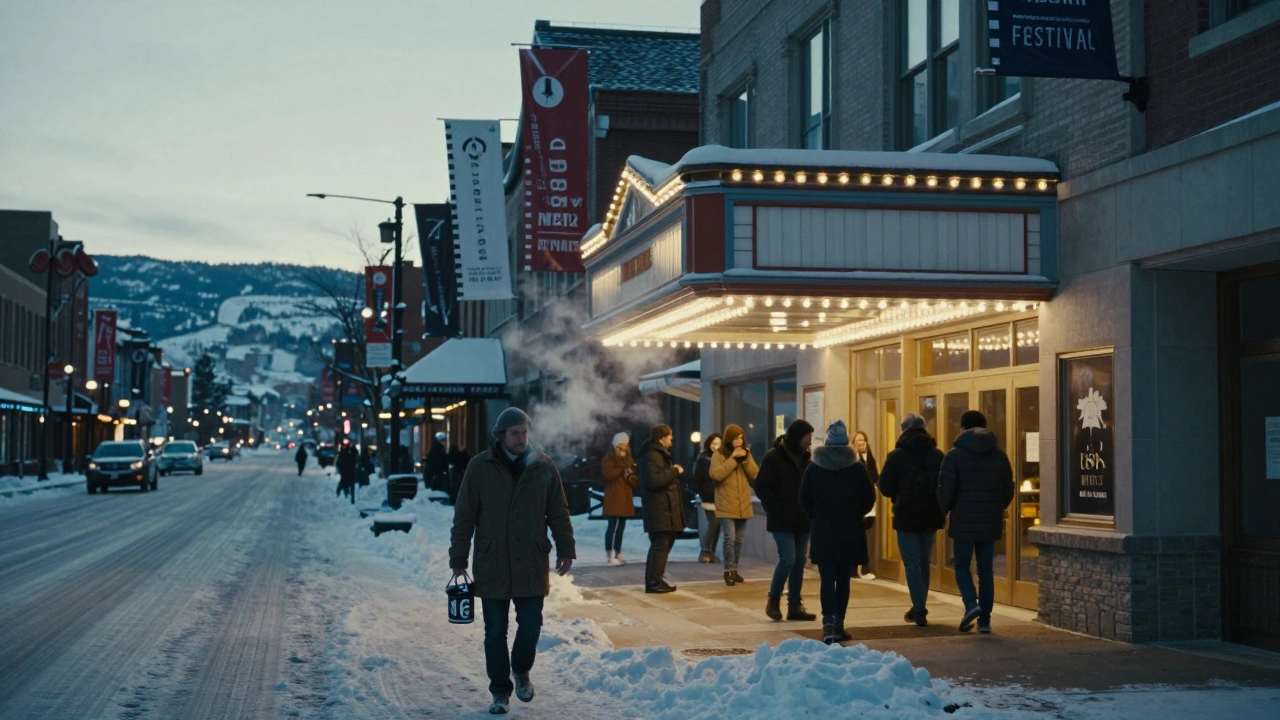
Every January, the snow-covered streets of Park City, Utah, turn into the epicenter of American cinema. Not because of blockbusters or streaming giants, but because of raw, unfiltered stories told by first-time directors, unknown actors, and crews working with budgets smaller than a luxury car payment. This is Sundance. And in 2025, A24 didn’t just show up-they bought the whole block.
A24’s Sundance Dominance Isn’t New, But It’s Getting Stronger
A24 has been quietly building its empire since 2013, when it bought the rights to Spring Breakers and The Spectacular Now. But it wasn’t until Boyhood in 2014 and Ex Machina in 2015 that the world realized: this wasn’t just a distributor. This was a curator of cultural moments. By 2025, A24 had acquired more than 70 films from Sundance alone. That’s more than any other studio in the past decade.
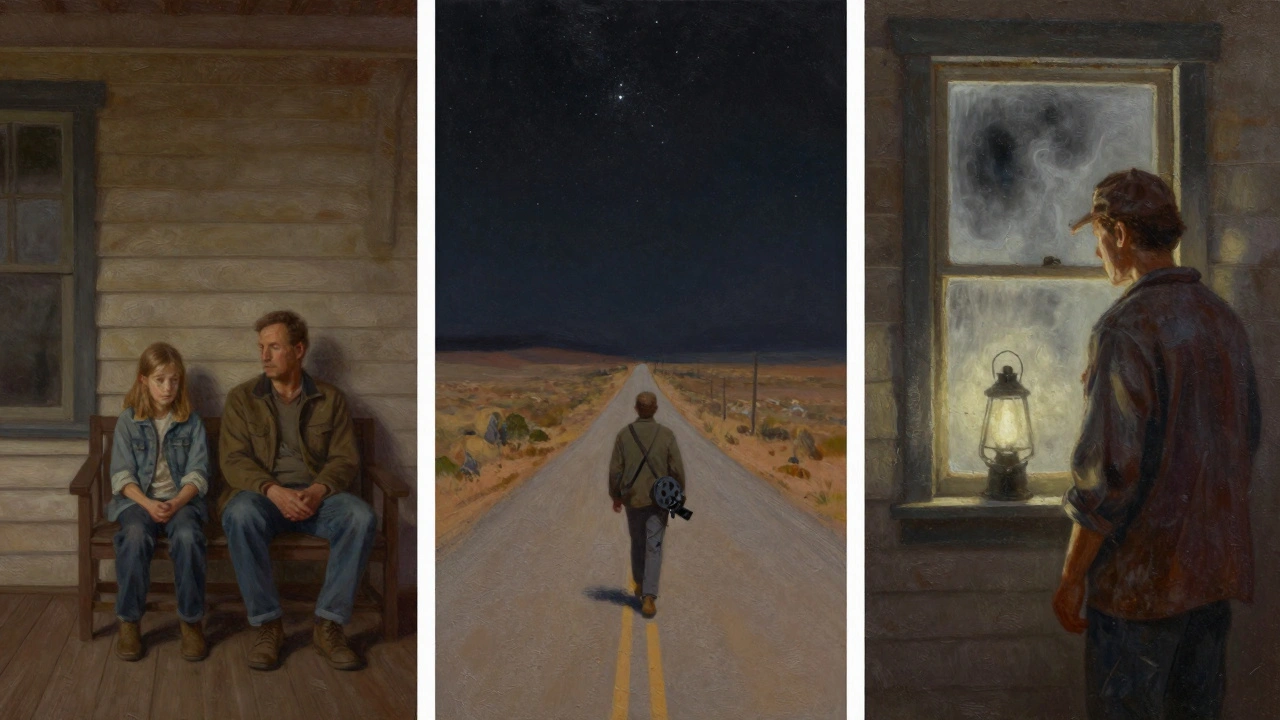
This year, they locked down three of the most talked-about titles: Whisper Creek, a quiet Appalachian drama about a father and daughter rebuilding their lives after a mine collapse; Goodbye, Marfa, a surreal road movie shot entirely on 16mm film with no script; and The Last Lightkeeper, a haunting ghost story set on a remote Maine lighthouse, starring a non-professional actor who works as a park ranger.
These aren’t films made to trend on TikTok. They’re made to linger. To make you sit in silence after the credits roll. And A24 knows that’s what audiences are hungry for now-not another superhero origin story, but something that feels real, messy, and human.
Why Sundance Still Matters in 2025
People ask: Isn’t Sundance dead? With Netflix buying everything and Amazon flooding the market with indie content, why does this tiny festival still matter?
The answer is simple: Sundance is still the only place where filmmakers can premiere work without studio interference. No focus groups. No test screenings. No mandate to add a third-act twist. Directors bring their films as they are-and if they’re good enough, they get seen.
In 2025, over 12,000 submissions came in. Only 118 made the cut. Of those, 27 were acquired by distributors. A24 walked away with five. That’s nearly 20% of all acquisitions. No other buyer came close. Even Apple and Neon, who spent big on breakout hits like Everything Everywhere All At Once, didn’t match A24’s volume or consistency.
What’s more, Sundance doesn’t just launch films-it launches careers. Of the 15 directors A24 picked up between 2020 and 2025, 11 had never made a feature before. Two of them are now directing HBO series. One won an Oscar nomination for Best Original Screenplay.
How A24 Picks What to Buy
A24 doesn’t bid on buzz. They don’t chase viral moments. They don’t care if a film gets a standing ovation at midnight. What they care about is: Does this film have a soul?
Here’s how it works: A team of five acquisition executives-each with backgrounds in film criticism, indie production, or festival programming-watch every screening. They take notes. They talk to directors after the Q&A. They ask: Who are you making this for? Why now? What happens if no one sees this?
They look for films that feel like they were made in a basement, a garage, or a rented RV. Films that cost less than $500,000 to make but feel like they cost five times that. Films where the lighting is natural, the sound is imperfect, and the actors cry for real.
They avoid films with A-list stars unless the performance is extraordinary. They avoid films with clear commercial hooks-like ‘a horror movie about TikTok ghosts’-unless the execution is radically different. They want originality, not rehashes.
In 2025, they passed on a thriller about a crypto scammer that had already been pitched to five other studios. Why? Because it felt like every other indie thriller they’d seen in the last three years. Instead, they bought a 90-minute silent film shot in a single take inside a nursing home. It had no dialogue. Only the sound of breathing, footsteps, and a radio playing old jazz.
The Business Behind the Beauty
Let’s be clear: A24 isn’t a nonprofit. They’re a for-profit company. But they’ve figured out how to make money by doing the opposite of what Hollywood does.
While studios spend $80 million on marketing a Marvel movie, A24 spends $2 million on a film like Everything Everywhere All At Once-and still makes over $140 million globally. How? They target the right audiences. They use social media not to shout, but to whisper. They let critics and fans do the talking. They release films in small cities first-Asheville, Santa Fe, Portland-before expanding. They know that if people in those towns love it, the rest will follow.
They also hold onto rights longer. Most studios sell international rights quickly to recoup costs. A24 keeps them. That’s why they’re now distributing Moonlight in Japan, Brazil, and South Korea-seven years after its Sundance premiere. That film earned $65 million overseas, mostly through word-of-mouth.
They’ve also built their own marketing team. Not ad agencies. Real filmmakers who understand tone, texture, and emotion. One of their most successful campaigns for The Lighthouse was just a single black-and-white poster with the tagline: ‘You’re not ready.’ No trailer. No cast names. Just silence. It went viral. The film made $38 million.
What This Means for Independent Filmmakers
If you’re a filmmaker with a story that doesn’t fit the mold, A24’s presence at Sundance is the best news you’ll hear this year. They’re not just buying films-they’re creating a path.
They pay fair prices. For mid-budget films, they offer $1 million to $3 million. For ultra-low-budget films under $100,000, they’ve been known to pay $250,000 upfront with no recoupment clauses. That means the director keeps profits if the film makes more than the advance.
They don’t demand reshoots. They don’t force edits. They don’t ask for a happier ending. They’ll suggest changes-but only if they believe it strengthens the story. And they’ll give you time. One director told me they spent six months working with A24 on the sound design of their film. No deadlines. No pressure. Just collaboration.
That’s rare. In fact, it’s almost unheard of in today’s industry. Most distributors want a film in theaters within 60 days of acquisition. A24 gives filmmakers a year. Sometimes two.
The Future of Indie Film After A24
Some say A24 is becoming too big. That they’re turning into the very thing they fought against. But that’s not true. They’re not becoming a studio. They’re becoming a movement.
They’ve inspired a new wave of distributors-Neon, IFC Films, Magnolia-who are now copying their model. More filmmakers are choosing to bypass Netflix and Amazon because they know A24 will treat their work like art, not inventory.
And audiences? They’re catching on. In 2025, box office numbers for A24 films surpassed those of Warner Bros. and Universal in the arthouse market. People are lining up-not for explosions, but for silence. For honesty. For films that don’t talk down to them.
The truth is, A24 didn’t acquire Sundance films because they saw a business opportunity. They did it because they believed in the stories. And that’s why, for the first time in decades, independent film isn’t just surviving-it’s thriving.
What makes A24 different from other film distributors?
A24 doesn’t push for commercial formulas. They prioritize original storytelling, give filmmakers creative control, and avoid heavy marketing pushes. Instead of spending millions on ads, they rely on word-of-mouth, critical praise, and targeted releases in smaller cities. They also retain international rights longer, allowing films to grow slowly over time.
How much does A24 typically pay for Sundance films?
A24 pays between $250,000 and $3 million depending on the film’s budget and potential. For ultra-low-budget films under $100,000, they often offer $250,000 with no recoupment clauses, meaning the filmmaker keeps all profits after the advance is paid. For higher-budget indie films, offers range from $1 million to $3 million, usually with no creative interference.
Do A24 films always make money?
No, but they often make more than expected. A24 films rarely open wide. Most start in 10-50 theaters and grow slowly. Everything Everywhere All At Once cost $25 million to make and earned over $140 million. The Lighthouse made $38 million on a $5 million budget. Even films that don’t break even often gain cult status and generate revenue through streaming, physical media, and international sales years later.
Can indie filmmakers approach A24 directly?
Not usually. A24 primarily acquires films through film festivals like Sundance, TIFF, and Cannes. They have a small acquisition team that scouts screenings and talks to directors after Q&As. If you’re not in a festival, your best bet is to get your film into one first. Submitting directly rarely works unless you have a strong industry connection.
Why doesn’t A24 buy more mainstream indie films?
A24 avoids films that feel too safe or formulaic-even if they’re labeled ‘indie.’ They’ve passed on stories with familiar tropes: the quirky dead parent, the rebellious teen, the redemption arc. They look for films that break structure, challenge norms, or tell stories rarely seen on screen. They’d rather risk a film that’s too strange than one that’s too familiar.


Comments(9)