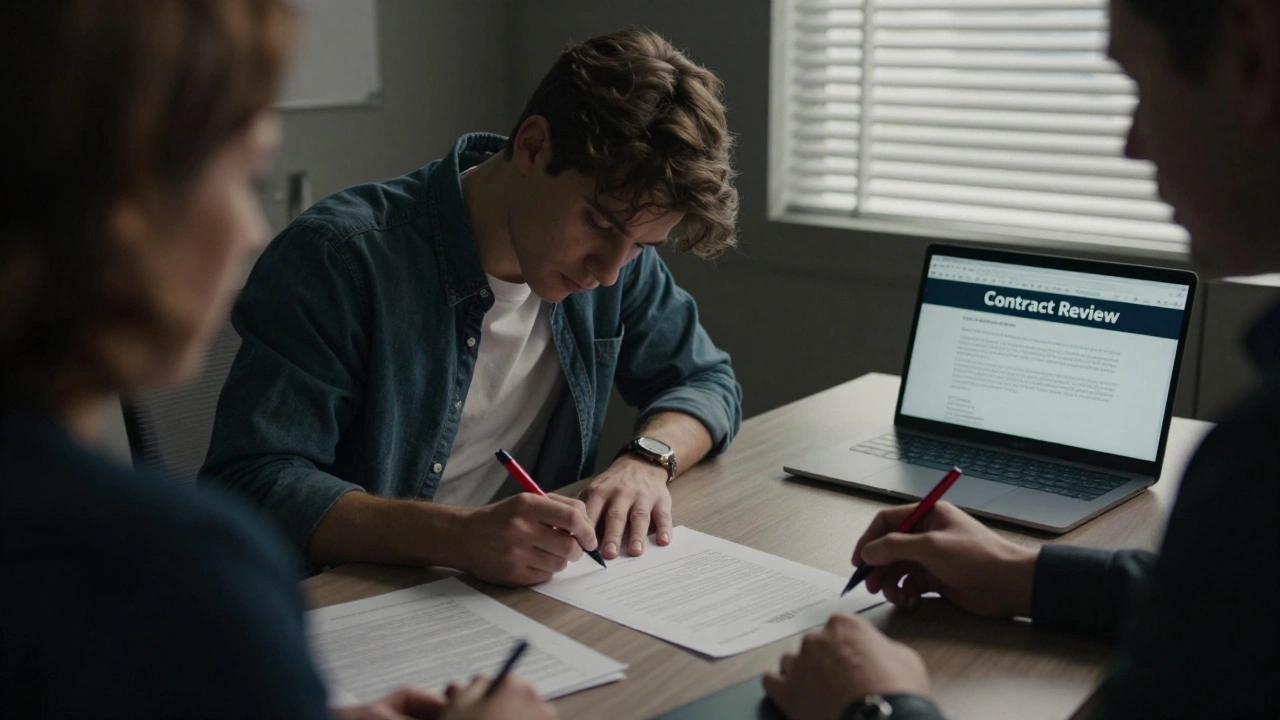
When you see a movie, you’re watching a story. But behind every scene, there’s a stack of legal papers that made it possible. Talent contracts in film aren’t just boilerplate forms-they’re the backbone of how actors, directors, stunt performers, and crew get paid, protected, and held accountable. These agreements define who owns what, when they get paid, how they’re treated on set, and what happens if things go wrong. If you’re working in film, whether you’re a first-time extra or a lead actor, understanding these contracts isn’t optional-it’s essential.
What’s Actually in a Talent Contract?
A talent contract isn’t one-size-fits-all. It varies by role, budget, union status, and production scale. But every valid contract includes five core elements:
- Compensation: Base pay, bonuses, residuals, and per diems. For union actors, this follows SAG-AFTRA scale rates. Non-union gigs might offer flat fees or deferred payments.
- Duration: How long the agreement lasts. This includes shooting days, promotional appearances, and sometimes even future use rights (like streaming or syndication).
- Exclusivity: Can the talent work on other projects during filming? Some contracts lock actors out of other gigs for weeks or months.
- Usage Rights: Where and how the performance can be used. A short film might only need rights for festival screenings. A studio feature might demand global distribution across TV, streaming, and home video.
- Termination Clauses: What happens if the production shuts down? If the actor gets injured? If they refuse a scene? These clauses protect both sides.
For example, a lead actor on a $20 million indie film might sign a contract that includes 5% of net profits after recoupment, 10 days of reshoots without extra pay, and approval rights over their character’s arc. A background extra on the same film? Their contract says they’ll be paid $150/day for 8 hours, with no residuals and no usage rights beyond the final cut.
Union vs. Non-Union: The Big Divide
Union contracts-mostly under SAG-AFTRA in the U.S.-aren’t just about higher pay. They’re about standards. Union agreements guarantee minimum rest periods, safe working conditions, health insurance contributions, and residuals for reruns and streaming. Non-union contracts? They’re often negotiated one-on-one, with little to no leverage for the talent.
Here’s the reality: if you’re working on a studio film, you’re almost always union. But on micro-budget indie films, student projects, or web series, non-union is common. That doesn’t mean non-union is bad-but it means you have to read the fine print.
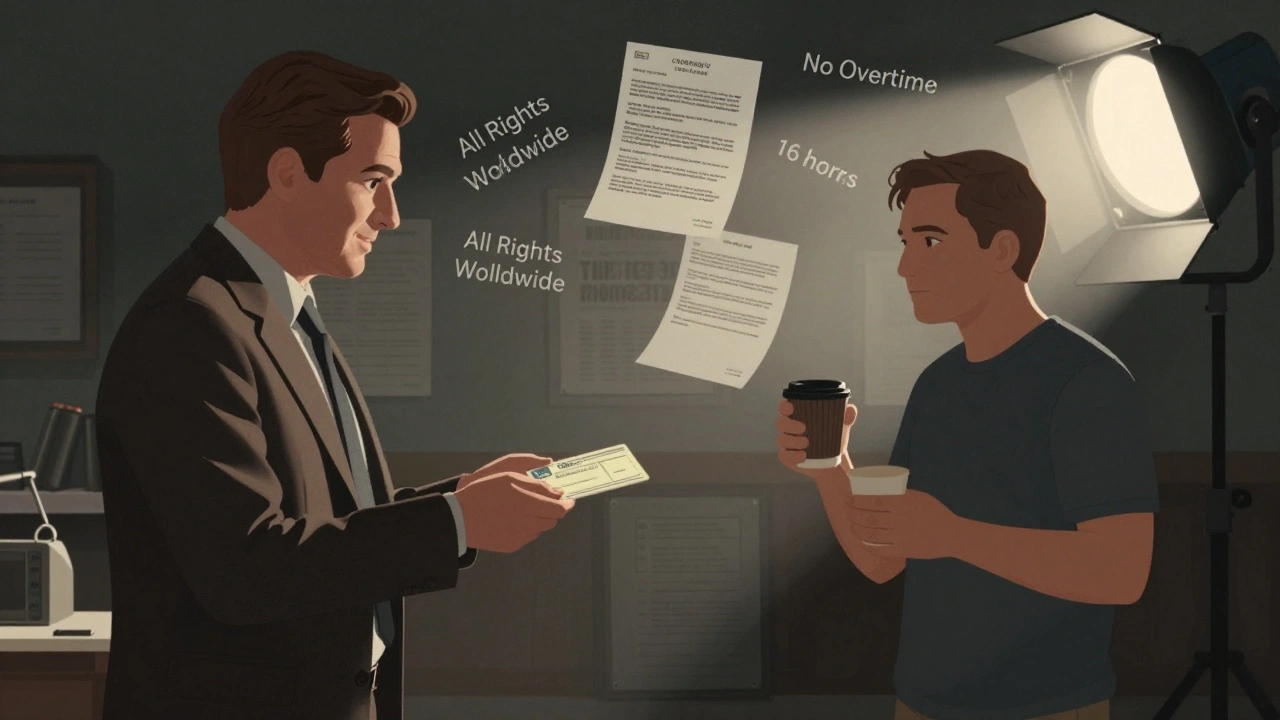
Non-union contracts sometimes include hidden traps: "All rights worldwide in perpetuity," "No overtime even if you work 16 hours," or "No right to review your performance." Always ask: "Can I get a lawyer to review this?" If the producer says no, walk away.
What Crew Members Need to Watch For
Most people think talent contracts only cover actors. They don’t. Crew members-grip, gaffer, costume designer, script supervisor-also sign agreements. These are often called "crew service agreements" or "work-for-hire" contracts.
Key things crew should check:
- Work hours: Are you being paid for prep time, travel, or setup? Some contracts ignore 3-4 hours of daily prep work.
- Equipment liability: If your camera breaks on set, are you responsible? Many crew contracts try to shift equipment risk to the individual.
- Ownership of creative input: A cinematographer who designs a unique lighting scheme might think they own the look. But unless it’s written into the contract, the production owns it.
- Non-compete clauses: Some contracts prevent you from working for competitors for 6-12 months after the project ends. That’s common in commercial work, rare in indie film.
One grip in Asheville told me he signed a contract for a regional ad shoot that said he couldn’t work on any other film in North Carolina for 90 days. He lost three jobs because of it. He never signed another contract without legal review.
Residuals: The Long-Term Payoff
Residuals are what keep actors and crew paid long after the cameras stop rolling. For union actors, residuals kick in when the film airs on TV, streams on Netflix, or sells on DVD. The system is complex, but here’s the gist:
- Streaming platforms pay residuals based on viewership tiers. Netflix pays more for top 10 shows than for obscure titles.
- TV reruns pay every time an episode airs-yes, even on cable 10 years later.
- Crew residuals are rare. Only a few roles qualify: editors, composers, and sometimes stunt coordinators under specific union rules.
Non-union talent rarely gets residuals. That means if your short film goes viral on YouTube, you won’t see a dime beyond your original fee. That’s why some filmmakers now offer "profit participation" instead-a percentage of net revenue after costs are covered. It’s risky, but it’s the only way non-union talent can benefit from long-term success.
Common Red Flags in Talent Contracts
You don’t need a law degree to spot trouble. Here are five contract red flags that should make you pause:
- "All rights worldwide in perpetuity" - This means they own your performance forever, everywhere. Even if the film flops.
- No payment schedule - If it just says "payment upon completion," that’s a trap. Demand dates: 25% upfront, 50% during shoot, 25% after delivery.
- Waiver of liability - If the contract says you can’t sue if you get hurt on set, it’s likely unenforceable in court-but you’ll still be scared to push back.
- Overly broad non-disparagement clauses - "You agree not to speak negatively about the production." That’s vague. What if you say the food was bad? A lawyer can narrow it.
- Automatic renewal - Some contracts say if you don’t object within 30 days, you’re locked in for another year. Never sign one of these.
One actress in Atlanta signed a contract that gave the producer the right to edit her face in post-production. She didn’t realize it meant they could digitally age her 20 years or make her look like a cartoon. She only found out when the trailer dropped.
How to Protect Yourself
Here’s what works in real life:
- Always get a copy - Never sign a contract you haven’t read. If they say "It’s standard," ask for the last 3 versions they’ve used.
- Use free legal help - SAG-AFTRA offers free contract review for members. Film commissions in states like Georgia, North Carolina, and Louisiana have free legal clinics for indie filmmakers.
- Know your rights - You can negotiate. Even on low-budget films. A simple addition: "One meal per 8 hours" or "No reshoots without additional pay" can change your experience.
- Document everything - If they promise something verbally, get it in writing. Texts and emails count.
There’s a myth that you’re powerless if you’re not famous. That’s false. The industry runs on trust, but it’s built on contracts. The more people who read their contracts, the better the whole system gets.
What Happens If You Break a Contract?
Breaking a talent contract isn’t like quitting a job. It’s a legal breach. Consequences vary:
- If you walk off set without notice? The production can sue for costs to replace you-sometimes tens of thousands.
- If you publicly trash the film? They might sue for defamation or breach of non-disparagement clauses.
- If they don’t pay you? You can file a claim with the state labor board. In North Carolina, unpaid wages for film work are treated the same as any other job.
But here’s the twist: most contracts are never enforced. Why? Because lawsuits are expensive, slow, and bad for PR. Most producers just blacklist you from future projects. That’s why reputation matters more than legal threats.
Future Trends in Talent Contracts
AI is changing everything. Some studios are now adding "digital likeness" clauses-giving them rights to use your face in AI-generated content. A 2025 survey by the International Alliance of Theatrical Stage Employees found that 38% of new contracts include some form of AI usage rights.
Also, streaming platforms are pushing for "all-rights" deals with no residuals. That’s why actors’ unions are fighting back. In 2024, SAG-AFTRA negotiated new rules requiring AI usage to be separately negotiated and paid for.
For crew, blockchain-based royalty tracking is starting to appear. Companies like FilmChain are testing smart contracts that automatically pay residuals when a film streams. No middlemen. No delays. Just code.
These aren’t sci-fi ideas. They’re real. And if you’re working in film today, you need to understand them.
Can I negotiate my talent contract even if I’m not a star?
Yes, absolutely. Even on low-budget films, you can negotiate terms like payment timing, meal breaks, travel reimbursement, or limits on reshoots. Producers know talent is hard to replace. If you’re professional, respectful, and specific about what you want, most will agree to small changes. The worst they can say is no-and you’re no worse off than if you signed blindly.
Do I need a lawyer to review my contract?
Not always, but it’s highly recommended. If you’re making over $5,000 or signing away rights to your image or performance, get it reviewed. SAG-AFTRA members get free legal reviews. Non-union talent can use free clinics through state film offices or nonprofit groups like Film Independent. Spending $100 on a lawyer could save you $10,000 in lost pay or rights.
What’s the difference between a talent contract and a work-for-hire agreement?
A talent contract covers performance rights-for actors, directors, or voice artists. A work-for-hire agreement is for crew: editors, cinematographers, writers. The key difference? In a work-for-hire, you give up all ownership of your creative contribution. The production owns it as if they created it. In a talent contract, you keep your rights to your performance unless explicitly sold.
Can a production change my contract after I sign it?
No. Once signed, the contract is legally binding. Any changes require a written amendment signed by both parties. If they tell you "we’ll update it later," that’s a red flag. Never agree to oral changes. Always insist on a new version with your initials and date on every page.
What happens if I get injured on set?
If you’re union, workers’ compensation and health insurance kick in immediately. If you’re non-union, you’re likely on your own unless the contract includes injury coverage-which it rarely does. Always ask: "Is there liability insurance?" If they hesitate, walk away. Your health is worth more than a paycheck.







Comments(5)