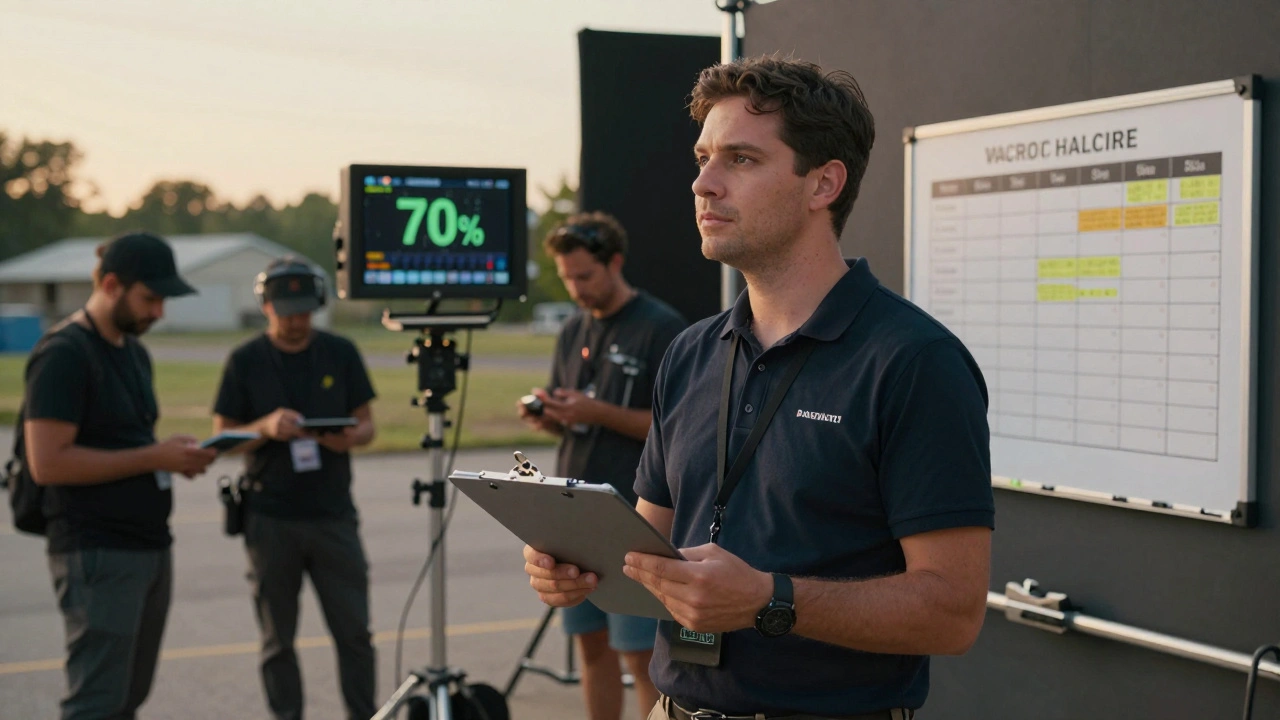
On a film set, time isn’t just money-it’s the entire budget. A single delayed shot can ripple through the day, pushing crew hours, lighting setups, and actor availability off track. That’s where the assistant director (AD) comes in. Not the flashy role you see on screen, but the quiet engine that keeps everything moving. The best ADs don’t just manage schedules-they prevent chaos before it starts.
How an Assistant Director Keeps a Shoot on Schedule
The AD’s day starts hours before the crew arrives. By 5:30 a.m., they’ve already reviewed the call sheet, checked weather reports, confirmed location permits, and verified that every prop, vehicle, and extra is accounted for. They don’t wait for problems-they anticipate them. If the rain forecast says 70% chance at 11 a.m., they rearrange outdoor scenes. If the stunt team needs an extra 20 minutes for safety checks, they shift the next scene to a soundstage.
This isn’t guesswork. It’s built on a system: the daily shooting schedule. Every scene is broken into shots, each with a time estimate. The AD uses a tool like Movie Magic Scheduler or even a custom spreadsheet to map out how long each setup will take. A wide shot might take 15 minutes. A complex dialogue scene with multiple takes? That could eat up 45 minutes. They build buffer time-usually 10-15%-for delays. No shoot ever goes perfectly, but the best ADs make sure those delays don’t snowball.
The AD’s Three Core Workflow Rules
There are three non-negotiable rules every assistant director lives by:
- Call time is absolute. If the crew is called at 6 a.m., they’re expected to be ready by 5:55. Late arrivals aren’t tolerated unless there’s a medical emergency. This sets the tone: punctuality is part of the job.
- One shot at a time. The AD doesn’t let the director or cinematographer jump ahead. They enforce the order of the shot list. Why? Because changing the sequence mid-day can break lighting rigs, reset makeup, or scramble continuity. Even a small switch can cost 30 minutes.
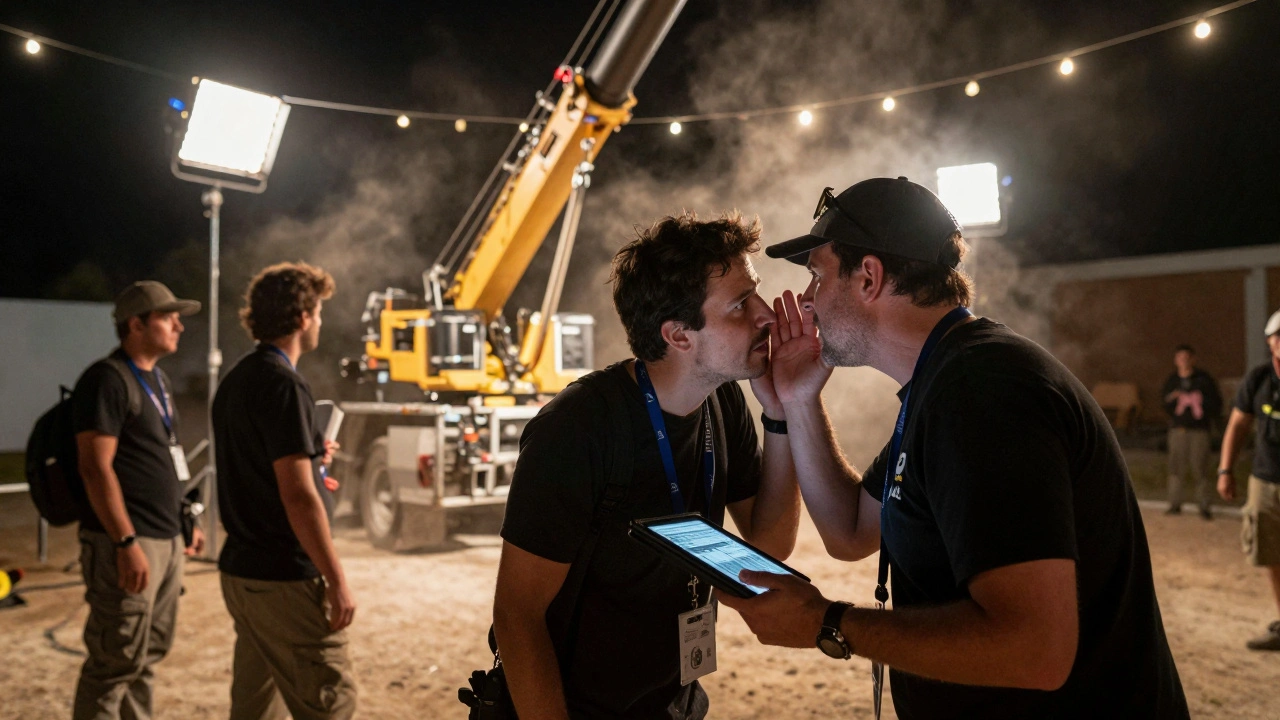
- Communicate early, communicate often. If the lead actor is running late, the AD doesn’t wait. They tell the gaffer, the script supervisor, and the location manager within five minutes. That way, everyone adjusts-not just the director.
These rules sound simple. But when you’re managing 80 people on a 12-hour day, they’re the only things holding the structure together.
What Happens When the Schedule Breaks
Even the best-laid plans fail. A crane breaks. A child actor gets sick. A permit gets revoked. When that happens, the AD becomes a crisis manager.
Take a real example: a scene in a downtown alley was scheduled for 2 p.m. But at 1:15, the city shut down the street for an unscheduled parade. The AD had 45 minutes to fix it. They didn’t panic. They checked the shot list: there was a two-person interior scene scheduled for 3 p.m. That scene only needed two actors and a single set. They moved it up. They cleared the set, adjusted lighting, and shot the scene early. Then they used the extra time to prep the next outdoor scene on a backup location they’d already scouted.
That’s not luck. That’s preparation. The best ADs always have a B-plan-and sometimes a C-plan. They know which scenes can be shot indoors, which extras can be swapped, and which equipment can be moved without breaking the budget.
Tools That Make the AD’s Job Possible
Modern ADs don’t rely on clipboards and printed schedules anymore. They use digital tools that sync across phones, tablets, and laptops:
- Movie Magic Scheduler - The industry standard. It auto-calculates shooting days based on scene complexity, actor availability, and location travel time.
- StudioBinder - Lets ADs share real-time updates with the whole crew. If a scene gets cut, everyone sees it instantly.
- Google Sheets + Time Clock apps - Used on low-budget shoots. Simple, but effective. Crew members clock in and out, and the AD tracks overtime before it becomes a payroll nightmare.
These tools don’t replace the AD-they amplify their control. A digital schedule can flag conflicts before they happen. If two scenes need the same location at the same time, the software highlights it. No more last-minute surprises.
Why the AD Is the Most Underrated Role on Set
Most people think the director runs the show. But the director’s job is creative. The AD’s job is logistical-and that’s what makes the creativity possible.
Think of it this way: if the director is the captain of a ship, the AD is the first mate who checks the charts, monitors the fuel, and reroutes the course when storms hit. Without the AD, the director can’t focus on performance, lighting, or blocking. They’re stuck fixing delays instead of making art.
On a $2 million indie film, a single day of overtime can cost $50,000. That’s a week’s salary for the whole crew. The AD who keeps the shoot on time doesn’t just save money-they save morale. Crew members go home on time. Actors get rest. The whole team trusts the process.
What New ADs Get Wrong
Many first-time assistant directors make the same mistakes:
- Trying to be friends with everyone. You can’t be the AD who laughs with the gaffer at lunch and then yells at them for being late. Authority isn’t about being liked-it’s about being respected.
- Overloading the schedule. Packing in too many scenes? That’s how you burn out the crew. Better to finish 80% of the day’s plan on time than rush through 100% and end up with unusable footage.
- Ignoring the script supervisor. They’re the AD’s secret weapon. If continuity is off, the AD won’t know until it’s too late. Work with them daily. Share notes. Trust their records.
The best ADs don’t just follow the schedule-they improve it. After every shoot, they sit down with the production manager and ask: What went well? What broke? How can we do better next time?
Real Numbers: How Much Time Do Good ADs Save?
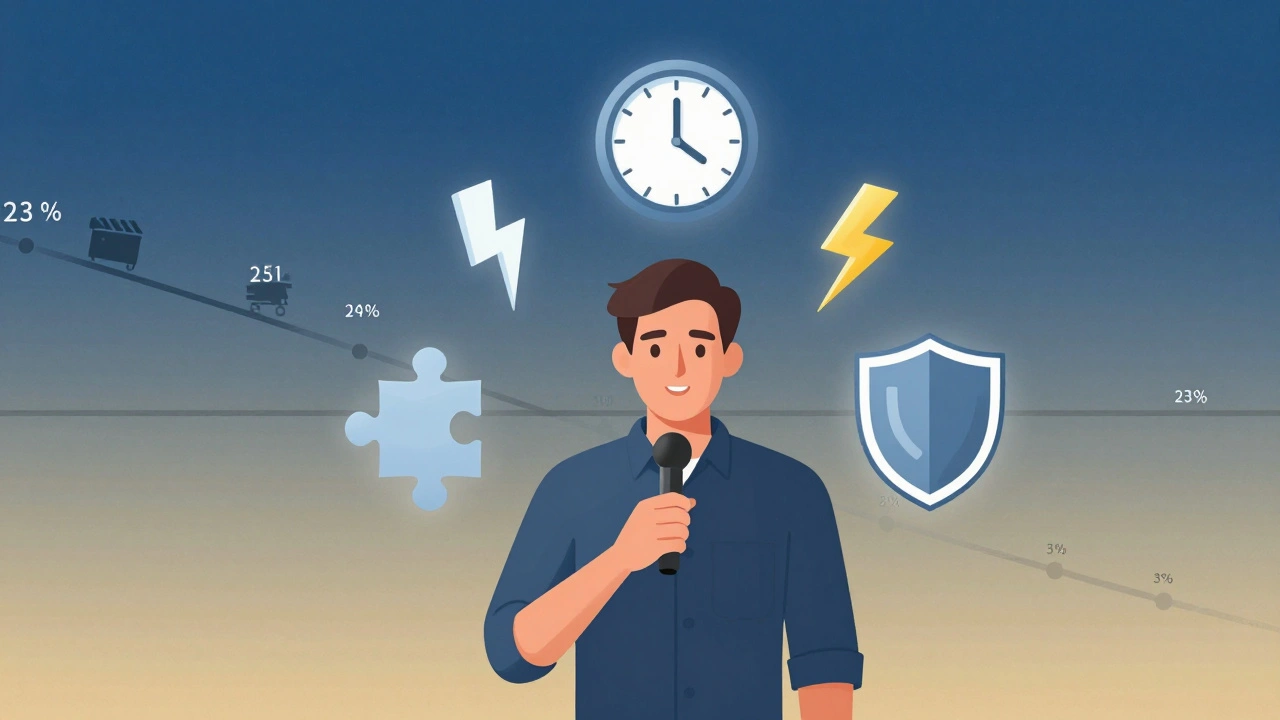
According to a 2024 survey of 120 independent film productions, teams with experienced ADs finished 23% faster than those without. On a 30-day shoot, that’s nearly a week saved. That’s $150,000+ in avoided costs.
On a studio film, the difference is even starker. A 60-day shoot with a top-tier AD ran 11 days under schedule. That’s $1.2 million saved in overhead alone.
It’s not magic. It’s discipline. It’s knowing that every minute counts-and that the AD is the one who makes sure no minute is wasted.
How to Build Your Own AD Workflow
If you’re stepping into the role-or just want to understand how it works-here’s how to start:
- Learn the script inside out. Know every location, prop, actor, and special effect. Highlight scenes that need extra time.
- Use a template schedule. Download a free Movie Magic Scheduler template. Fill it in with your scenes. Add 10% buffer time.
- Meet with key department heads. Talk to the gaffer, key grip, and costume designer before shooting. Ask: What could go wrong?
- Practice call time discipline. Set your own alarm 20 minutes early. Be the first one there.
- Review the day after every shoot. Write down three things that went well and two that didn’t. Do this for every job.
There’s no shortcut. The best ADs aren’t born-they’re built, day by day, shot by shot.
What’s the difference between a first assistant director and a second assistant director?
The first assistant director (1st AD) runs the set. They manage the schedule, call action and cut, and coordinate between departments. The second assistant director (2nd AD) handles the logistics: call sheets, crew check-ins, extras, and location coordination. The 1st AD is the conductor; the 2nd AD is the stage manager.
How many hours does an assistant director work on a typical shoot?
On a standard 12-hour shoot day, the AD is usually on set by 5 a.m. and doesn’t leave until after wrap-often 10 p.m. or later. That’s 16-18 hours a day, six or seven days a week. It’s one of the most demanding jobs in film, but it’s also one of the most respected.
Can an assistant director make changes to the shooting schedule?
Yes-but only with approval from the producer and director. The AD doesn’t rewrite the schedule on their own. They propose changes based on real-time conditions: weather, delays, equipment issues. Their job is to present options, not make unilateral decisions. The final call always rests with the director and producer.
Do assistant directors need formal training?
No formal degree is required, but most professional ADs start as production assistants and work their way up. Many take courses through the DGA (Directors Guild of America) or film schools. Experience matters more than credentials. The best ADs have worked on at least 10-15 shoots before taking the lead role.
What’s the biggest mistake an assistant director can make?
Waiting to communicate. If something goes wrong, silence is the enemy. The biggest disasters happen when the AD thinks they can fix it alone. The moment something breaks, they need to tell the crew. Speed and clarity beat perfection every time.
Final Thought: It’s Not About Being Perfect-It’s About Being Reliable
On a film set, perfection is impossible. Lights flicker. actors forget lines. Weather changes. But reliability? That’s something you can build. The AD who shows up early, plans ahead, communicates clearly, and stays calm under pressure becomes the person everyone trusts. And on a movie set, trust is the only thing that keeps the camera rolling when everything else is falling apart.