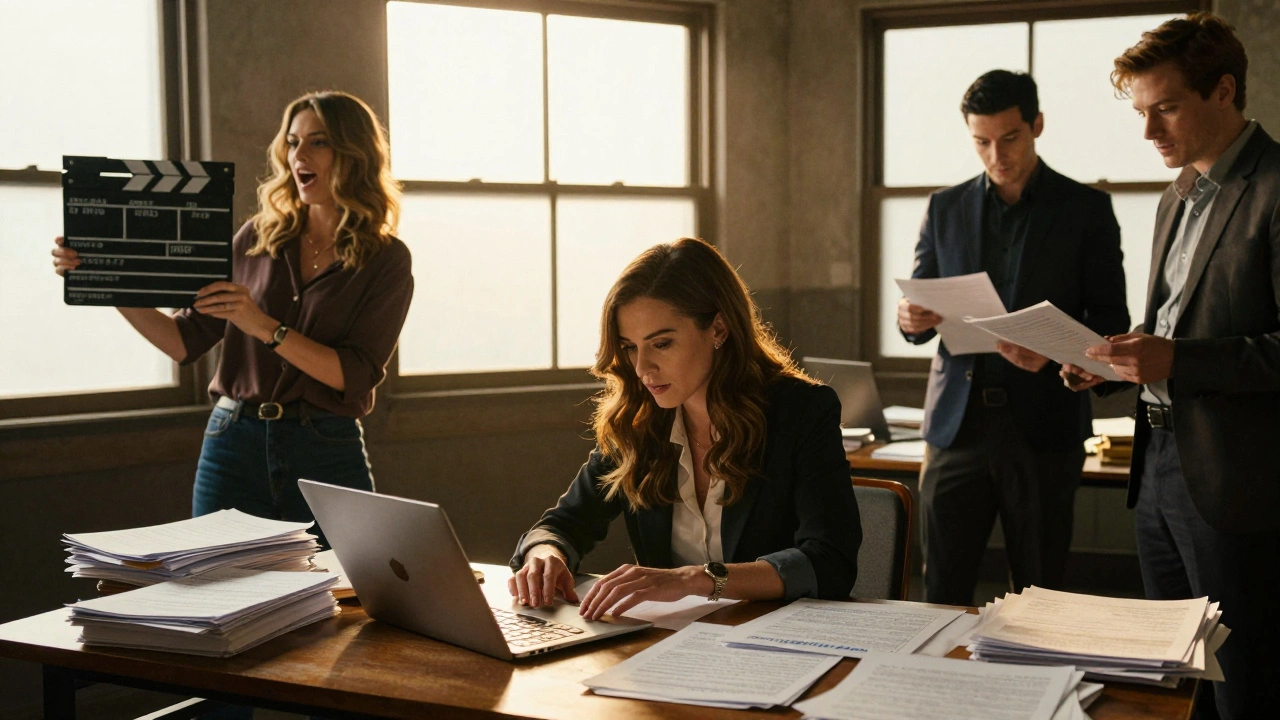
For years, Hollywood told us that stories led by women didn’t sell. But the numbers don’t lie. In 2024, female-fronted productions accounted for 47% of the top 100 domestic box office hits - up from just 18% in 2015. These aren’t just niche indie projects. They’re blockbusters like Madame Web, The Marvels, and Emilia Pérez - films built from the ground up by women in key creative roles.
What Does ‘Female-Fronted’ Really Mean?
It’s not enough to have a woman in the lead role. A female-fronted production means women hold at least two of the three major creative positions: director, writer, or producer. This is the standard used by organizations like the Center for the Study of Women in Television and Film. It’s a structural shift - not just casting.
Take Barbie (2023). Greta Gerwig directed, co-wrote, and produced it. Margot Robbie produced and starred. The script came from a female writer. The result? Over $1.4 billion globally. That’s not a fluke. That’s proof that when women control the narrative, audiences show up.
The Rise of Female Directors
In 2013, only 4% of the top 100 films were directed by women. By 2024, that number hit 21%. It’s still not parity, but the climb is real. Directors like Emerald Fennell (Casualty), Isabel Sandoval (Lingua Franca), and Nia DaCosta (Candyman) aren’t just making films - they’re changing what kinds of stories get told.
DaCosta’s Candyman didn’t just scare audiences. It reimagined a horror classic through the lens of racial trauma and gentrification. The film made $60 million on a $25 million budget. Studios took notice: women aren’t just capable of directing horror - they’re redefining it.
Women Behind the Scenes: Producers Who Change the Game
Producers are the invisible engine of film. They secure funding, hire crews, and protect the vision. When women run production companies, they prioritize stories others ignore.
Reese Witherspoon’s Hello Sunshine has backed projects like Big Little Lies, Little Fires Everywhere, and The Morning Show. These aren’t romantic comedies. They’re layered dramas about women’s inner lives - complex, flawed, and deeply human. The company now has over $1 billion in development deals.
Same goes for Ava DuVernay’s Array. She doesn’t just produce films - she builds distribution networks for underrepresented voices. Her team released 13th, which became a cultural touchstone on mass incarceration. That film never would’ve found an audience without her.
Screenwriters Who Rewrite the Rules
Screenwriters shape the soul of a film. And female writers are breaking patterns that lasted decades.
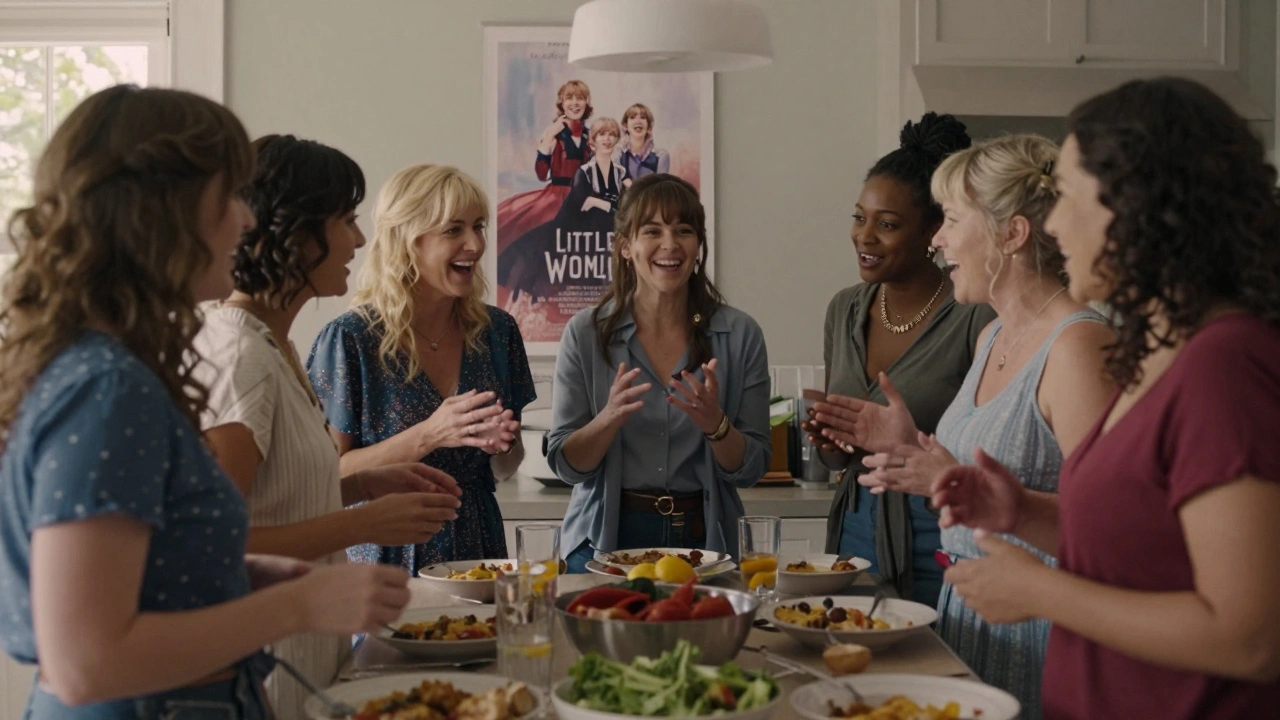
Before Little Women (2019), studios kept pushing for a “romantic” ending. Greta Gerwig refused. She kept Jo’s independence. The result? A $218 million hit and an Oscar nomination for Best Adapted Screenplay. Gerwig didn’t just adapt a classic - she updated it for modern audiences without losing its heart.
Similarly, Phoebe Waller-Bridge’s Fleabag - originally a one-woman stage show - became a global phenomenon. She wrote, produced, and starred. No studio forced her to soften the character. No network demanded a happy ending. That creative freedom is rare - and it’s what made the show unforgettable.
Why This Matters Beyond Box Office Numbers
When women lead films, the stories change. They show women as scientists, rebels, mothers with agency, survivors with rage, and friends who don’t need men to complete them.
A 2023 UCLA study found that female-led films were 3x more likely to include diverse casting - not just in race, but in body type, sexual orientation, and disability. These films don’t just represent women - they represent the full spectrum of humanity.
And audiences are responding. A 2024 Nielsen report showed that 72% of viewers said they felt more connected to stories when women were behind the camera. That’s not just empathy. That’s emotional truth.
The Challenges Still Left
Progress isn’t linear. Women of color still face the steepest barriers. In 2024, only 3% of top-grossing films had a Black female director. Latina directors made up 1%. Indigenous women? Barely visible.
Funding remains a hurdle. A 2025 report from the Sundance Institute found that female-led projects still receive 30% less financing than male-led ones - even when they have the same track record.
And then there’s the “one-woman rule.” Studios still think one woman director is enough. They’ll greenlight one film by a woman, then go back to hiring the same five white men for the next dozen projects.
Where the Momentum Is Going
Platforms are stepping up. Netflix, Apple TV+, and Amazon have all launched initiatives to fund female-led projects. Disney’s “Women in Film” fund has backed 47 films since 2021. HBO’s “She Made It” program supports writers and directors of color.
Independent film festivals are shifting too. Tribeca, SXSW, and Toronto have all increased their female director selection rates. In 2025, 48% of Tribeca’s narrative features were directed by women - a record.
And audiences? They’re voting with their wallets. When a female-led film opens, it often outperforms projections. The Idea of You (2024) opened to $18 million on a $15 million budget - a rom-com with a 40-year-old lead. No one thought it would work. It did.
What Comes Next?
The goal isn’t just to have more women directing. It’s to make it normal. To stop calling them “female filmmakers” and just call them filmmakers.
Every time a studio says yes to a woman-led project, they’re not just funding a movie. They’re funding a new pipeline. A new generation of writers, editors, cinematographers, and sound designers who will one day lead their own films.
The data is clear: female-fronted productions work. They connect. They earn. They change culture. The question isn’t whether they should exist. It’s why anyone ever thought they shouldn’t.
What defines a female-fronted film?
A female-fronted film is one where women hold at least two of the three key creative roles: director, writer, or producer. It’s not enough to have a female lead actor - the story must be shaped by women behind the scenes.
Are female-led films more successful than male-led ones?
Yes, in multiple ways. Female-led films often outperform projections at the box office. A 2024 study by the University of Southern California found they had a 12% higher return on investment on average. They also attract more diverse audiences and generate stronger word-of-mouth.
Why do female-led films struggle to get funding?
Despite evidence of success, female-led projects still receive 30% less financing than male-led ones, according to the Sundance Institute’s 2025 report. This gap exists because of unconscious bias, outdated assumptions about audience preferences, and lack of representation in executive decision-making roles.
Do female-fronted films only appeal to women?
No. A 2024 Nielsen report showed that 63% of viewers who watched female-led films were male. The stories resonate because they’re human - not because of gender. Audiences crave authenticity, depth, and emotional truth - all of which female-led films often deliver.
How can I support female-fronted productions?
Watch them in theaters, stream them on platforms, leave reviews, and share them on social media. Support film festivals that highlight women directors. Donate to organizations like Film Fatales or the Geena Davis Institute. Your attention fuels the next generation.



Comments(7)