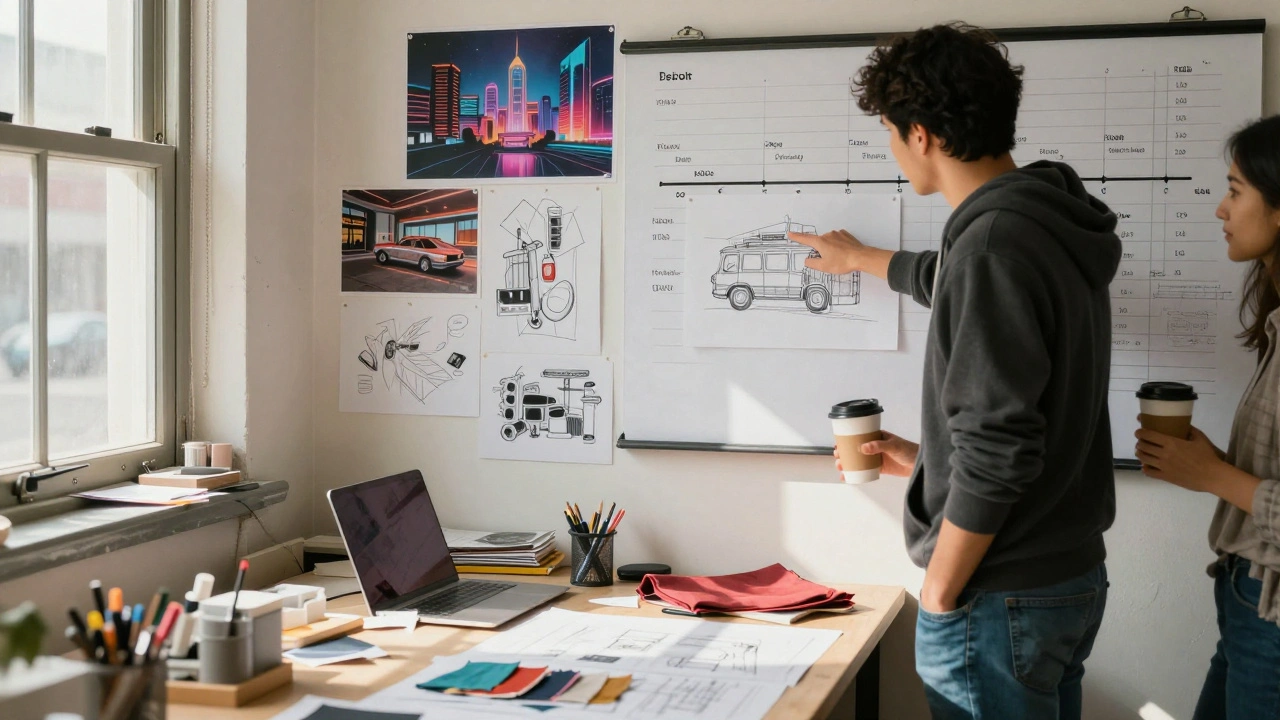
Every great film starts with a vision - but that vision doesn’t just appear on screen. It’s built, piece by piece, by the art department. This team doesn’t just paint backdrops or pick chairs. They construct entire worlds. And if their workflow isn’t tight, the whole production stumbles. You can have the best director, the most talented actors, but if the art department is out of sync, the movie feels off. Not because the acting is bad - because the world doesn’t feel real.
How the Art Department Fits Into the Film Timeline
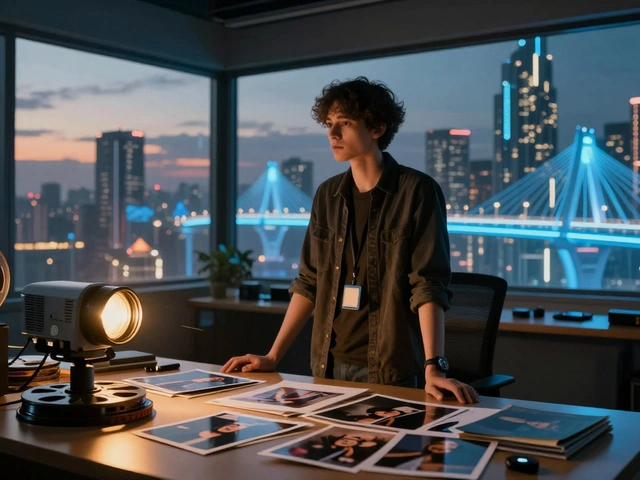
The art department doesn’t wait for the script to be locked before they start. They jump in during pre-production, often before the director even has a final cut. Their first job? Understand the story’s world. What time period is it? Is it a gritty 1980s Detroit or a floating city in 2150? The art director reads the script line by line, marking every location, every prop, every visual clue that tells the audience something about the characters or the mood.
By week three of pre-production, the art department is already sketching. Not just rough ideas - detailed concept art for key sets. Think of the diner in Stranger Things or the throne room in House of the Dragon. Those didn’t come from a random Pinterest board. They were drawn, revised, approved, and then handed off to the set decorator and construction crew. The timeline is brutal: you have maybe 12 to 16 weeks from script lock to shooting day. That’s not a lot of time to design, build, source, and dress a dozen major sets.
By week six, the department splits into three core teams: construction, set decoration, and graphics. Construction builds the physical structures. Set decoration fills them with furniture, art, books, rugs - everything that makes a space feel lived-in. Graphics handles signs, posters, menus, even the fake newspaper headlines on the wall. Each team has its own deadline. Miss one, and the whole schedule unravels.
Collaboration: It’s Not Just About Art
People think the art department works alone. They don’t. Their biggest challenge is syncing with every other department. The camera team needs to know where the lights will go. The costume team needs to match the color palette of the set. The special effects crew needs to know where the walls will blow out. If the art department doesn’t talk to them early, you end up with a beautiful set that blocks the camera or clashes with the actors’ outfits.
Here’s how it actually works on set: Every Monday, the art director meets with the director of photography, the costume designer, and the production manager. This is the art department’s most important meeting. They review the week’s shooting schedule. Which sets are being used? What changes were made last minute? Are there new props? A missing window? A wall that got moved? These meetings aren’t optional. They’re daily lifelines.
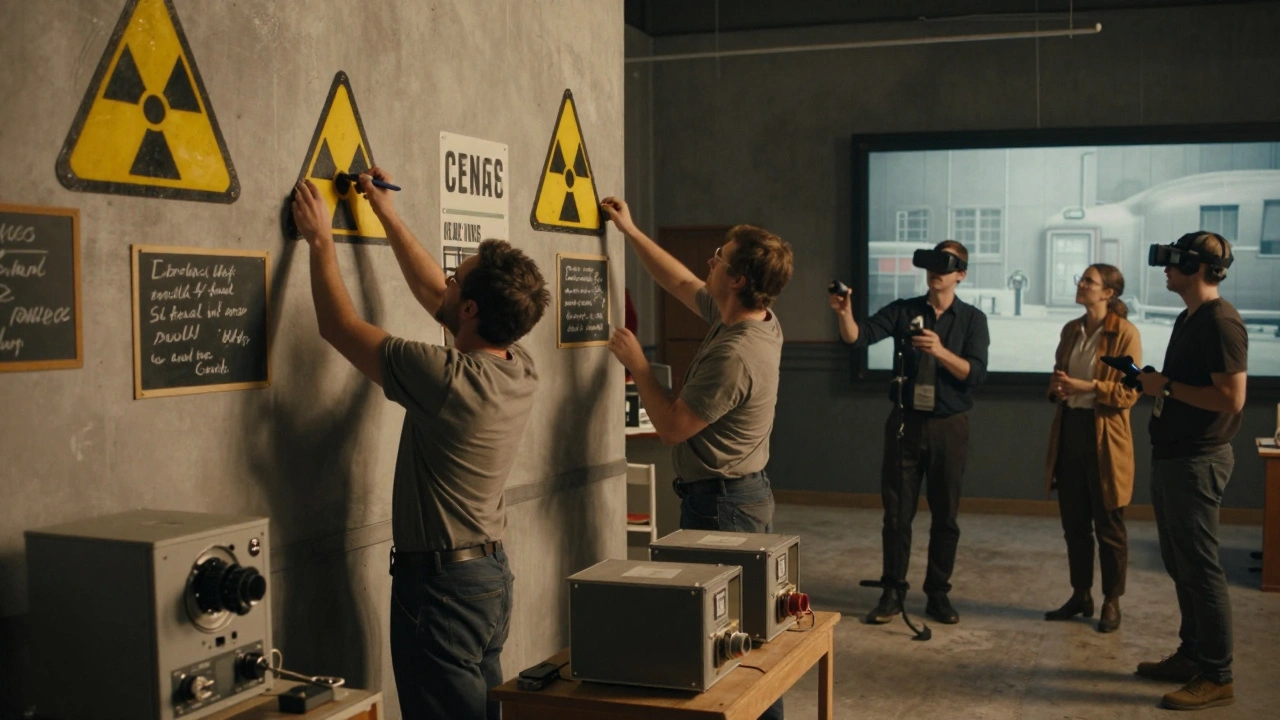
On Oppenheimer, the art department had to recreate 1940s Los Alamos. But the script changed three times during filming. One day, the director wanted to shoot a scene in a lab that didn’t exist yet. The art team had 48 hours to design, build, and dress a fully functional nuclear research lab - complete with period-correct equipment, handwritten notes on chalkboards, and even fake radiation warning signs. They did it. Not because they had a big budget. Because they had daily check-ins with the script supervisor and the props master.
The Hidden Rules of Film Set Design
There are unwritten rules every art department follows - rules you’d never notice unless something went wrong.
- Nothing looks new. Even if a set was built yesterday, it has to look worn. Dust, scuff marks, faded paint - these aren’t accidents. They’re added by hand. A brand-new kitchen in a 1970s film? It’ll have a coffee stain on the counter and a cracked tile near the sink.
- Color tells the story. The color of a character’s room isn’t chosen for aesthetics. In The Social Network, Mark Zuckerberg’s dorm room is cold blue and gray. His later apartment is warmer - brown leather, wood tones. The art department used color to show his emotional shift, without a single line of dialogue.
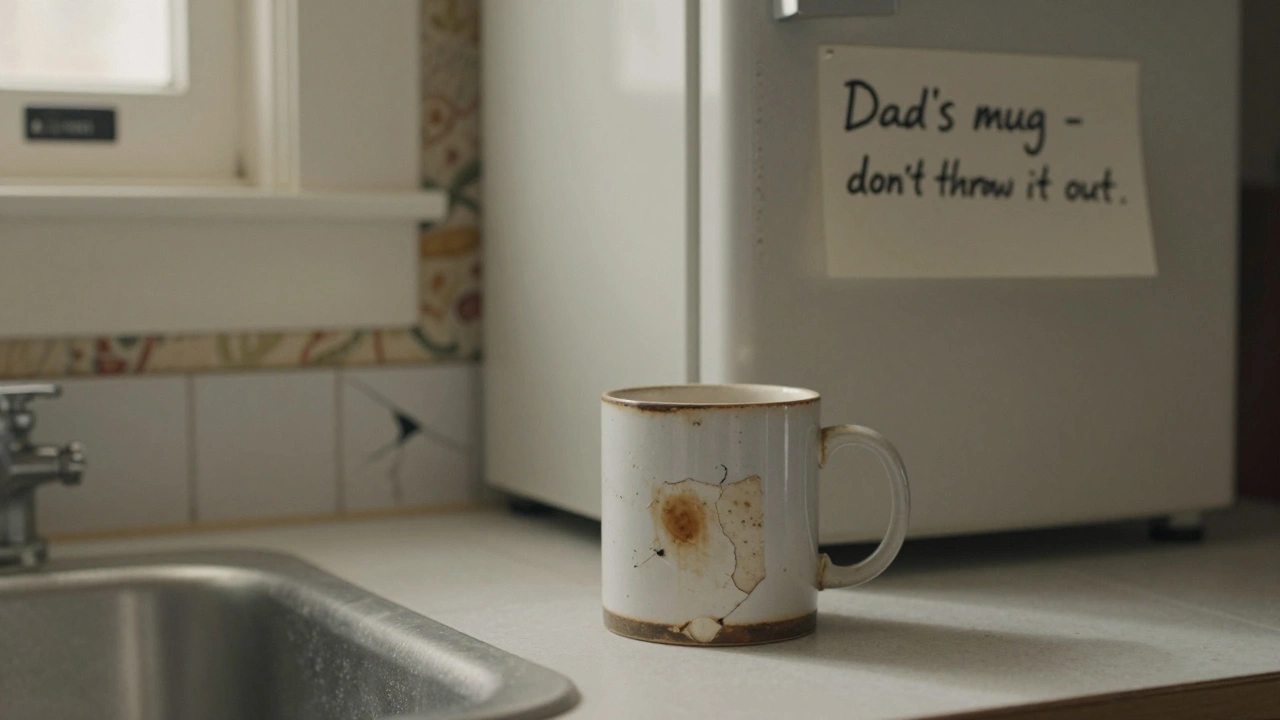
- Props have history. A coffee mug on a desk isn’t just a mug. It’s been used. It has fingerprints, a chip on the handle, maybe a label peeling off. The set decorator might give it a backstory: “This mug belonged to the character’s dad. He drank coffee from it every morning before he died.” That tiny detail makes the actor’s performance richer.
These aren’t tricks. They’re survival tactics. In film, every visual element must serve the story. If it doesn’t, it gets cut - or worse, it distracts.
Tools That Keep the Workflow Moving
Back in the 90s, art departments worked with paper blueprints and clipboards. Today? They use digital tools that sync across teams.
- Shotgun - Project management software that tracks every set, prop, and design change. If the script says a window disappears in scene 47, Shotgun alerts the construction team and the gaffer. No more last-minute surprises.
- SketchUp - 3D modeling software used to design sets before a single nail is hammered. Directors can walk through a virtual version of the set. It saves weeks of reshoots.
- Art Department Binder - Still used on most sets. A physical notebook with color swatches, fabric samples, and photos of every prop. It’s the one thing that survives the digital shift. Because sometimes, you need to hold a piece of wallpaper in your hand to know if it’s right.
These tools don’t replace collaboration. They make it faster. But the best art departments still rely on face-to-face talks, coffee runs, and handwritten notes stuck to monitors.
What Happens When the Workflow Breaks
It’s not rare. Budgets get cut. Schedules get compressed. Someone forgets to tell the art department that a scene moved from a library to a garage. That’s when you see the cracks.
On one indie film in 2024, the production designer left mid-shoot. The new designer hadn’t seen the original concept art. The sets started looking inconsistent. The director noticed on day 12: the living room in scene 3 had a red couch. In scene 11, it was blue. No one had updated the art department’s master list. The crew had to reshoot three days of footage. Cost: $120,000. Time lost: two weeks.
That’s why every art department needs a lead designer who’s been there from day one. Someone who remembers why the wallpaper has that specific texture. Someone who knows which prop was hand-painted by a local artist in Ohio. That person is the glue.
Why This Matters Beyond the Screen
Art department work isn’t just about making movies look pretty. It’s about creating emotional truth. When you watch a scene and feel like you’re inside that world - that’s the art department. Not the director. Not the actors. The people who found the right rug, painted the right wall, placed the right coffee cup.
That’s why film schools now teach art department workflow as a core subject. It’s not a side job. It’s storytelling. And if you want to make films that stick with people - that make them feel like they’ve lived in that world - you need to understand how the art department moves.
It’s messy. It’s fast. It’s full of last-minute changes. But when it works? You forget it was built at all. And that’s the highest compliment.
What does an art director do on a film?
The art director leads the entire visual design of a film. They interpret the script, create concept art for sets, manage budgets and timelines, and coordinate with the director, cinematographer, and costume team. They ensure every visual element - from walls to wallpaper - supports the story. They’re the bridge between the director’s vision and the physical world on screen.
How early does the art department start working?
The art department usually starts 12 to 16 weeks before shooting begins. That’s when they get the first script draft and begin researching time periods, locations, and visual styles. Concept art, mood boards, and location scouting happen in the first three weeks. By week six, construction and decoration teams are fully engaged.
Do art departments use real props or just fake ones?
They use both. Real props are used when authenticity matters - like period-accurate typewriters or vintage radios. Fake props are made when real ones are too rare, expensive, or fragile. A fake newspaper might look real on camera but be printed on lightweight foam. The key is that everything looks real to the audience, whether it’s real or not.
Why do sets look worn even if they’re brand new?
New sets look sterile. Audiences expect places to show use. A kitchen in a 1970s film should have grease on the stove, scuffs on the floor, and peeling paint near the door. These details aren’t accidents - they’re added by hand. A set decorator might spend hours distressing a wall to make it feel lived-in. It’s called "aging," and it’s a critical part of the job.
What’s the biggest mistake art departments make?
The biggest mistake is isolation. If the art department doesn’t talk to the camera, costume, or lighting teams, everything falls apart. A beautiful set that blocks the shot or clashes with the actor’s outfit ruins the scene. Communication isn’t optional - it’s the backbone of the whole workflow.
Art department workflow is the silent engine behind every believable film world. It’s not glamorous. But without it, movies feel hollow.



Comments(8)