
The Core of the Hybrid Identity
When we talk about hybridity in film, we aren't just talking about mixing languages. It's about the friction that happens when two or more cultural perspectives collide in one script. Think about a character who is a first-generation immigrant returning to a homeland they barely remember. Their identity is a patchwork. The film itself becomes a reflection of that internal struggle. In a traditional national cinema, the goal is often to represent the "spirit" of a country. But transnational films do the opposite. They highlight the cracks. They explore the "third space"-a term coined by theorists to describe the area where different cultures meet and create something entirely new. This means the narrative doesn't follow a linear, nationalistic path. Instead, it jumps between perspectives, blending the aesthetic of a French New Wave film with the pacing of a Hong Kong action thriller.The Mechanics of Global Co-Production
Let's get real about the money. Most transnational films exist because of Co-production is a legal and financial agreement between two or more production companies from different countries to share the costs and risks of filmmaking. It's not always about art; sometimes it's about tax breaks. If a producer in Germany teams up with one in Spain, they can access subsidies from both the European Union and their respective national film boards. But these financial deals change the story. To satisfy multiple investors, scripts often undergo a process of "cultural translation." A scene might be added to make the film more appealing to a North American audience, or a specific plot point might be shifted to fit the sensibilities of an East Asian market. This creates a unique tension: is the film a genuine artistic hybrid, or is it just "Euro-pudding"-a term used by critics to describe bland, sanitized co-productions that try so hard to please everyone that they lose their edge?| Feature | National Cinema | Transnational Cinema |
|---|---|---|
| Funding Source | Single country/Domestic grants | Multi-national treaties/Private equity |
| Cultural Focus | National identity & heritage | Hybridity, migration, & globalism |
| Target Audience | Primary domestic market | Global festival circuit & streaming |
| Narrative Style | Linear, culturally specific | Fragmented, multilingual, eclectic |
Narrative Analysis: Reading Between the Borders
If you want to analyze these films, you can't use the old tools. You have to look at how the film handles space and time. Transnational films often use "deterritorialized" settings. This is when a city like London or New York is treated not as a specific place with a history, but as a generic hub where different cultures intersect. Watch how the camera moves. In many co-productions, there is a shift in visual language. You might see the slow, contemplative long takes associated with Art House Cinema mixed with the high-contrast, fast-paced editing of commercial cinema. This isn't accidental. It's a visual representation of the hybrid identity. The narrative analysis here focuses on the "intertextuality"-how the film references other films from different cultures to build its world. Consider a film where the dialogue switches seamlessly between English, Spanish, and Arabic without subtitles. The director is telling you that in this world, the characters' identities are fluid. They aren't "Spanish" or "Arabic"; they are the sum of their experiences across borders.
The Role of the Global Diaspora
We can't talk about hybridity without talking about the Diaspora is the dispersion of people from their original homeland, often leading to the creation of cultural communities in new territories. Diaspora filmmakers are the architects of transnational cinema. They often live between two worlds, which gives them a natural perspective on hybrid identity. These directors don't just make movies about "the immigrant experience." They make movies that challenge the idea of a "home" entirely. Their stories often feature characters who feel like foreigners in both their country of birth and their country of residence. By using a transnational production model, these filmmakers can cast actors from across the globe and shoot in multiple locations, mirroring the fragmented reality of the diasporic life.Pitfalls of the "Globalized" Aesthetic
There is a danger here. When films are designed for a global market, there is a risk of "cultural flattening." This happens when specific, gritty local details are replaced by generic symbols that everyone recognizes. Instead of showing a real neighborhood in Mexico City, a production might create a sanitized version that looks like any other "Latin American city" to a viewer in Ohio. This is where the tension between commercial co-production and artistic integrity peaks. The most successful transnational films avoid this by embracing the specific. They don't try to be universal by being vague; they become universal by being so deeply specific about a particular hybrid experience that it resonates with anyone who has ever felt caught between two worlds.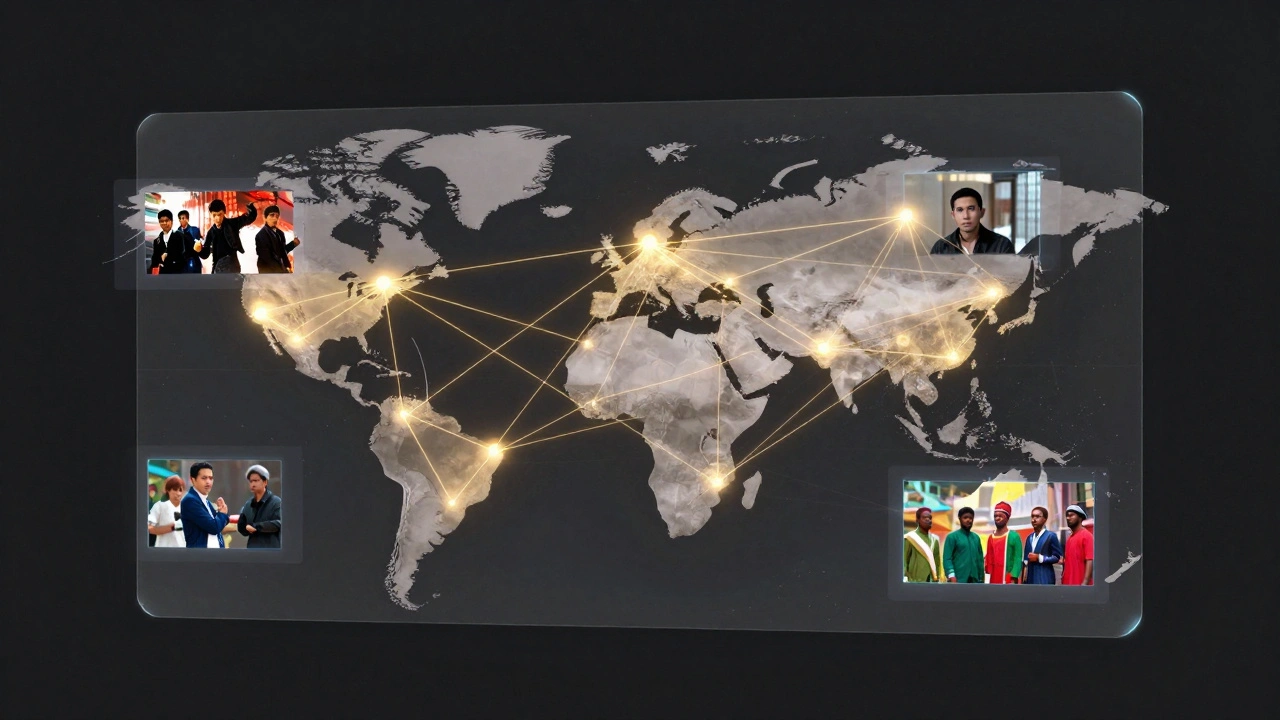
Future Trends: Digital Borders and Streaming
With the rise of platforms like Netflix and MUBI, the definition of a "co-production" is changing again. We are seeing the rise of the "global original." These aren't necessarily treaties between governments, but content strategies designed for a borderless digital audience. This is leading to a new kind of hybridity. We now have "K-Drama" aesthetics influencing Spanish thrillers, or Nigerian storytelling styles appearing in British series. The physical act of co-producing (sharing a set, a crew, and a budget) is being supplemented by a digital exchange of tropes and styles. The identity of the film is no longer just about where the money came from, but which algorithms are pushing it to which audiences.What is the main difference between World Cinema and Transnational Cinema?
World Cinema typically views films as products of a specific nation (e.g., "French Cinema"), often from an outsider's perspective. Transnational Cinema views the film as a hybrid product that ignores or crosses national borders in its funding, casting, and storytelling, focusing on global flows rather than national boundaries.
Why do filmmakers use co-productions?
The primary reasons are financial and strategic. Co-productions allow filmmakers to access government subsidies and tax incentives from multiple countries. Additionally, it opens up distribution channels in several markets simultaneously, reducing the financial risk of a project.
What does "hybrid identity" mean in the context of a movie?
Hybrid identity refers to a character or a narrative style that blends elements from different cultures, ethnicities, or nationalities. It reflects a state of being "in-between," where the identity is not purely one thing or another, but a new combination resulting from migration, globalization, or colonization.
Can a film be transnational if it is shot in only one country?
Yes. Transnationality isn't just about filming locations. If the funding comes from three different countries, the director is from a fourth, and the story deals with global migration or cultural blending, the film is transnational regardless of where the cameras were placed.
What is "Euro-pudding" in film criticism?
"Euro-pudding" is a derogatory term for European co-productions that feel artificial. These films often mix a random assortment of European actors and locations just to satisfy grant requirements, resulting in a movie that lacks a clear cultural identity or a coherent artistic vision.







Comments(5)