Quick Takeaways
- Art criticism focuses on the conceptual "why" and formal aesthetics of a piece.
- Film criticism prioritizes narrative, character arcs, and cinematic storytelling.
- Artist films challenge both by removing plot in favor of sensory experience.
- The intersection of these fields creates a hybrid language called video art.
The Wall vs The Screen
Traditional film criticism usually starts with the story. You ask yourself: Does the plot hold up? Is the protagonist believable? Did the third act feel rushed? This approach works because most cinema is built on the Narrative Arc, a structure designed to lead an audience toward a resolution. But if you take that same mindset into a museum, you'll likely get frustrated. Artist films don't care about your need for a resolution.
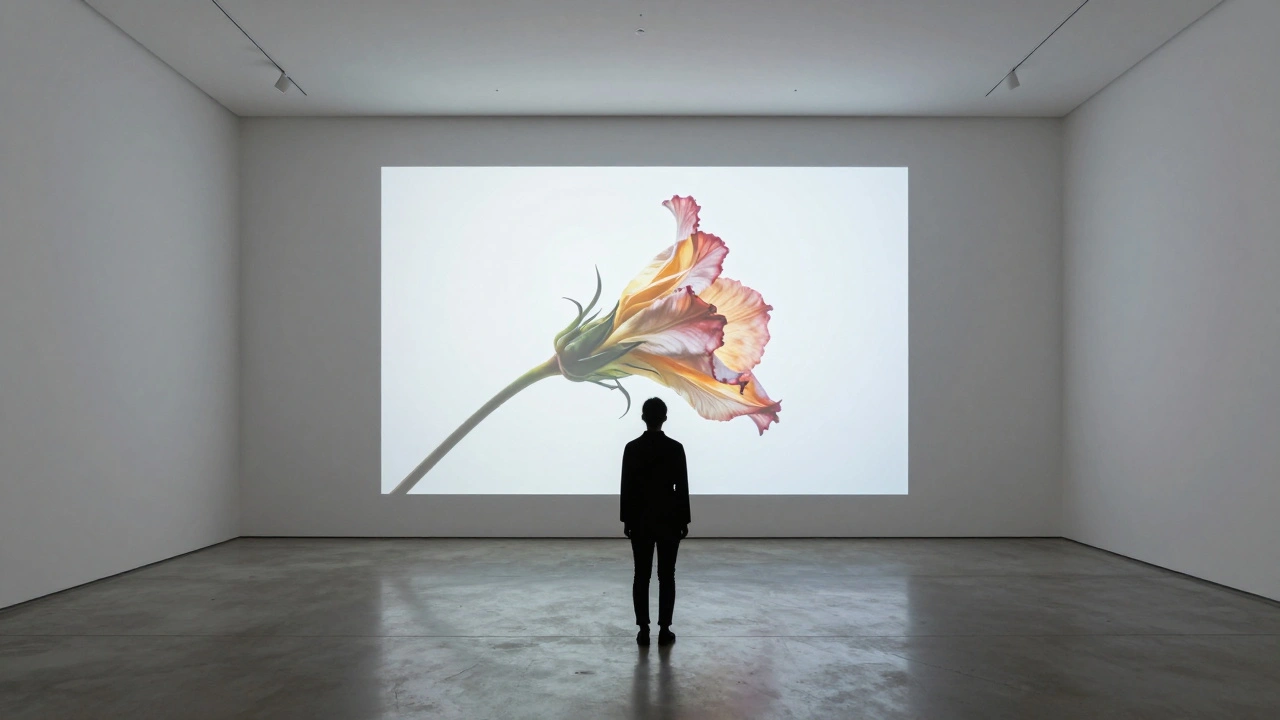
Art criticism operates differently. It doesn't look for a story; it looks for a Conceptual Framework. Instead of asking "What happens next?", an art critic asks "What does this image represent?" or "How does the scale of this projection affect the viewer's body in the room?" While a movie critic cares about the script, the art critic cares about the medium. For them, the camera is just another brush, and the screen is just another canvas.
When Movies Stop Telling Stories
To understand where these disciplines meet, we have to look at the Avant-garde movement. Long before digital projectors, filmmakers like Maya Deren were making "trance films" that felt more like poetry than prose. These films abandoned the linear timeline. If you apply standard film criticism to Deren's work, you'd call it "confusing" or "lacking structure." But if you apply art criticism, you see a study on memory, desire, and the subconscious.
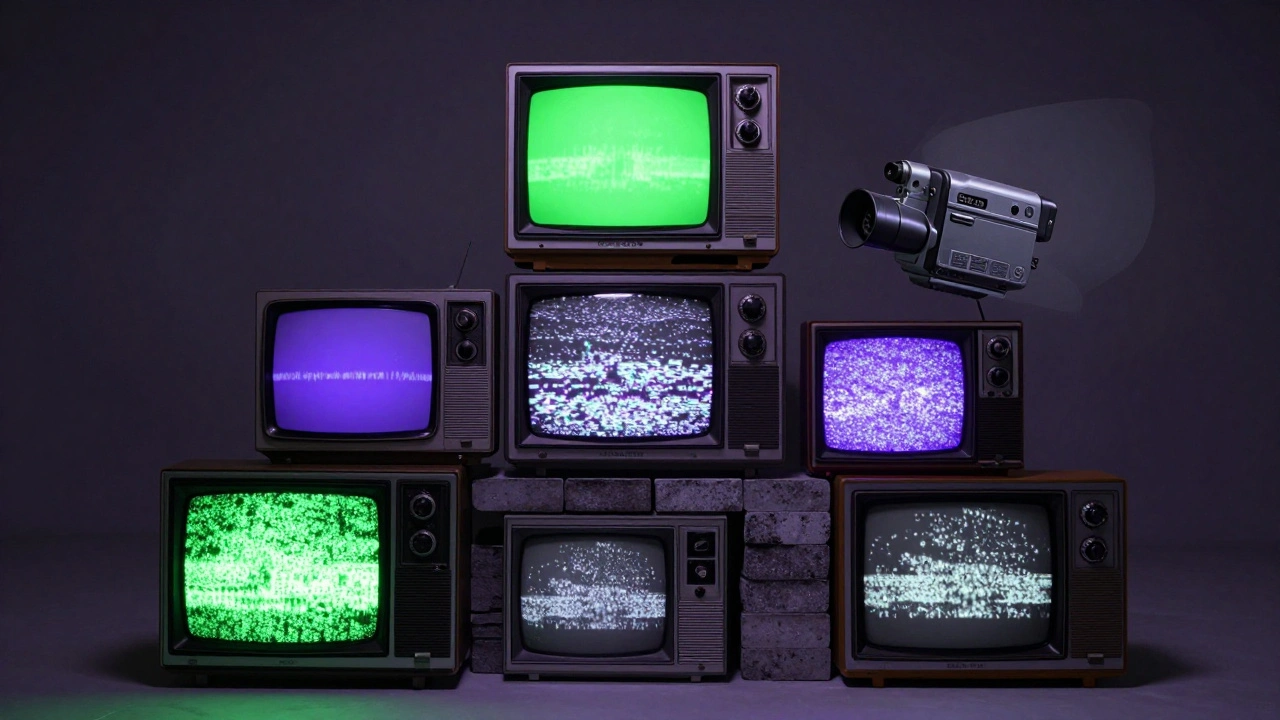
This shift moves us into the realm of Video Art, a medium that officially broke away from cinema in the 1960s with the introduction of the Sony Portapak. Suddenly, artists could record and play back images instantly. This wasn't about making "movies" for a theater; it was about using moving images to challenge the viewer's perception of time. Nam June Paik, often called the father of video art, didn't make films with plots; he made installations where televisions were stacked like bricks. Here, the "film" is no longer just the footage-it's the physical object and the space it occupies.
| Feature | Film Criticism Approach | Art Criticism Approach |
|---|---|---|
| Primary Focus | Narrative, Pacing, Character | Concept, Medium, Materiality |
| Key Question | "Does the story work?" | "What is the intent/meaning?" |
| Viewing Context | Dark theater, focused attention | Gallery, immersive space, ambient |
| Success Metric | Emotional or intellectual payoff | Conceptual rigor or aesthetic impact |
The Hybrid Language of the Artist Film
So, how do we actually critique an artist film? We have to use a hybrid approach. Imagine you're watching a piece by Steve McQueen, who transitioned from a fine artist to an Oscar-winning director. In his early gallery works, he used long, static shots of people just standing still. A film critic might call this "boring" or "stagnant." However, an art critic sees the Durational Aesthetics-the idea that by forcing you to watch a still image for a long time, the artist is making you notice tiny, human details you'd usually ignore in a fast-paced movie.
This is where Cinematic Language-the use of lighting, framing, and editing-intersects with formalist art theory. The "cut" in a movie is usually a tool to move the story forward. In an artist film, a cut can be a political statement, a disruption of time, or a way to create a rhythmic pattern. The discipline of film criticism provides the tools to describe *how* the image is made, while art criticism provides the language to explain *why* it exists in that specific form.
The Role of the Gallery and the Cinema
The environment changes the critique. In a cinema, you are a passive observer in the dark. Your relationship with the work is linear. In a gallery, the work is often an Installation. You can walk away, walk around it, or enter and exit at any time. This introduces the concept of "spatiality." A film critic rarely discusses the architecture of the room, but for an art critic, the room is part of the art.
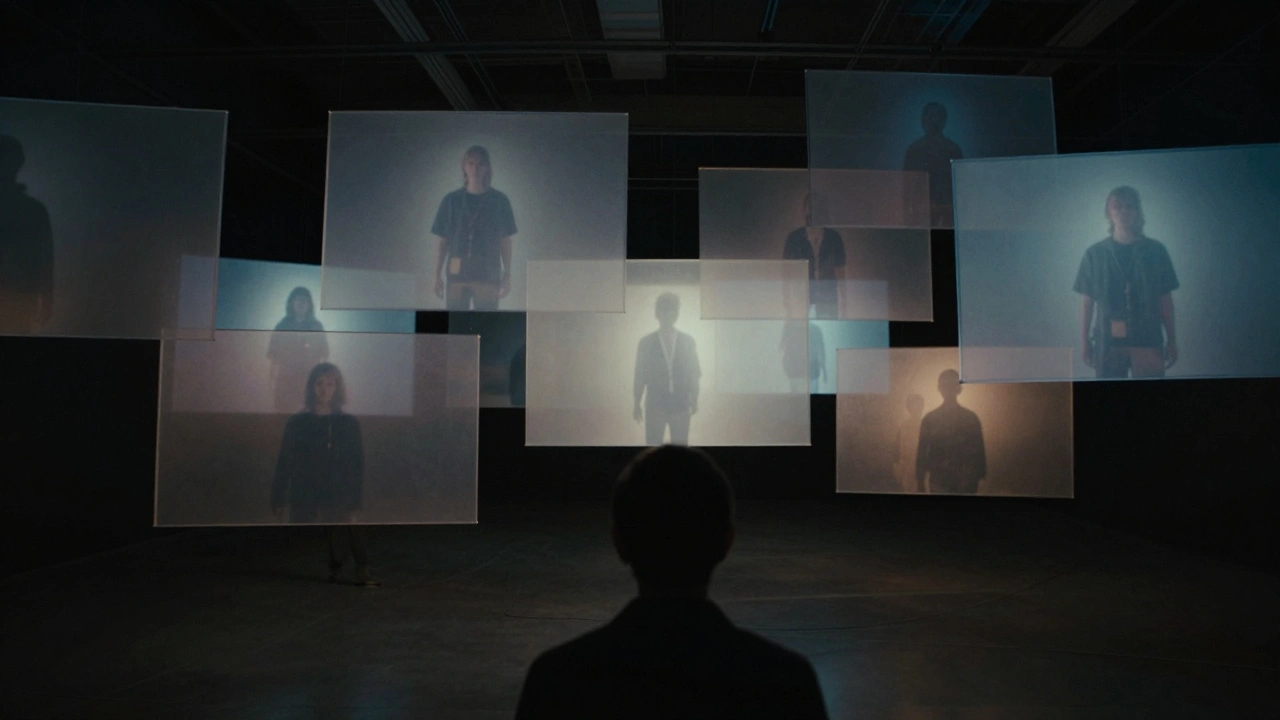
If an artist film is projected onto a curved wall or split across ten different monitors, the "editing" is happening in the physical space, not just in the software. The viewer becomes a co-editor, choosing which screen to look at and when. This transforms the experience from a controlled narrative into a curated exploration. When we analyze this, we aren't just talking about cinematography; we're talking about Phenomenology, or the study of conscious experience from the first-person point of view.
Common Pitfalls in Cross-Disciplinary Analysis
One of the biggest mistakes people make is trying to force an artist film into a narrative box. When a viewer says, "I didn't get it because there was no plot," they are applying a film-criticism lens to an art-criticism object. It's like complaining that a painting doesn't have a dialogue scene. The "meaning" in artist films is often found in the texture of the grain, the repetition of a sound, or the sheer length of a shot.
Conversely, art critics sometimes ignore the technical mastery of the image. A film might be conceptually brilliant but technically sloppy in a way that distracts from the message. By ignoring the Technical Specifications-like frame rate, color grading, or focal length-the critic misses how those choices actually shape the viewer's emotional response. The best critiques happen when the analyst accepts that the work is both a visual object and a temporal experience.
What is the main difference between an artist film and an experimental movie?
The difference is primarily about intent and context. An experimental movie usually exists within the tradition of cinema, pushing the boundaries of storytelling or technique, and is typically shown in a theater. An artist film is created by a visual artist and is often designed for a gallery or museum setting, where the physical space and the conceptual idea are as important as the footage itself.
Can a movie be analyzed using both art and film criticism?
Absolutely. In fact, the most thorough analyses do. Using film criticism helps you understand the technical execution and narrative flow, while art criticism allows you to connect the work to broader historical movements, philosophical concepts, and the physical medium of the image.
Why do artist films often lack a clear plot?
Artist films often prioritize "affect" over "narrative." Instead of telling a story, they aim to evoke a specific feeling, explore a concept, or challenge the viewer's perception of time. Removing the plot forces the viewer to engage with the image, sound, and space more directly, rather than just waiting to see how the story ends.
What is 'durational art' in the context of film?
Durational art refers to works that use time as a primary medium. In artist films, this often manifests as extremely long takes or repetitive loops. The goal is to move the viewer past initial boredom into a state of heightened awareness, where small changes in the image become significant events.
How did the Sony Portapak change art criticism?
The Portapak made video recording portable and instant. This shifted the focus from the highly controlled environment of a film studio to the raw, immediate capture of reality. Art critics began to analyze "performance art" and "real-time documentation," blurring the line between a recorded movie and a live artistic event.
Moving Forward: How to Watch Artist Films
If you're heading to a gallery for the first time, try this: stop looking for the "point." Instead, notice how the image makes you feel physically. Does the sound vibrate in your chest? Does the slow pace make you anxious or calm? By shifting your focus from the narrative to the sensory, you're practicing art criticism in real-time.
For those who prefer the cinema, try looking at a movie as a series of compositions. Pause the frame. Look at the balance of colors and the geometry of the shot. When you stop treating the movie as a delivery system for a story and start treating it as a sequence of visual artworks, you're bringing the discipline of art criticism into the movie theater. Both perspectives are valid, and the magic happens when you use them at the same time.




Comments(4)