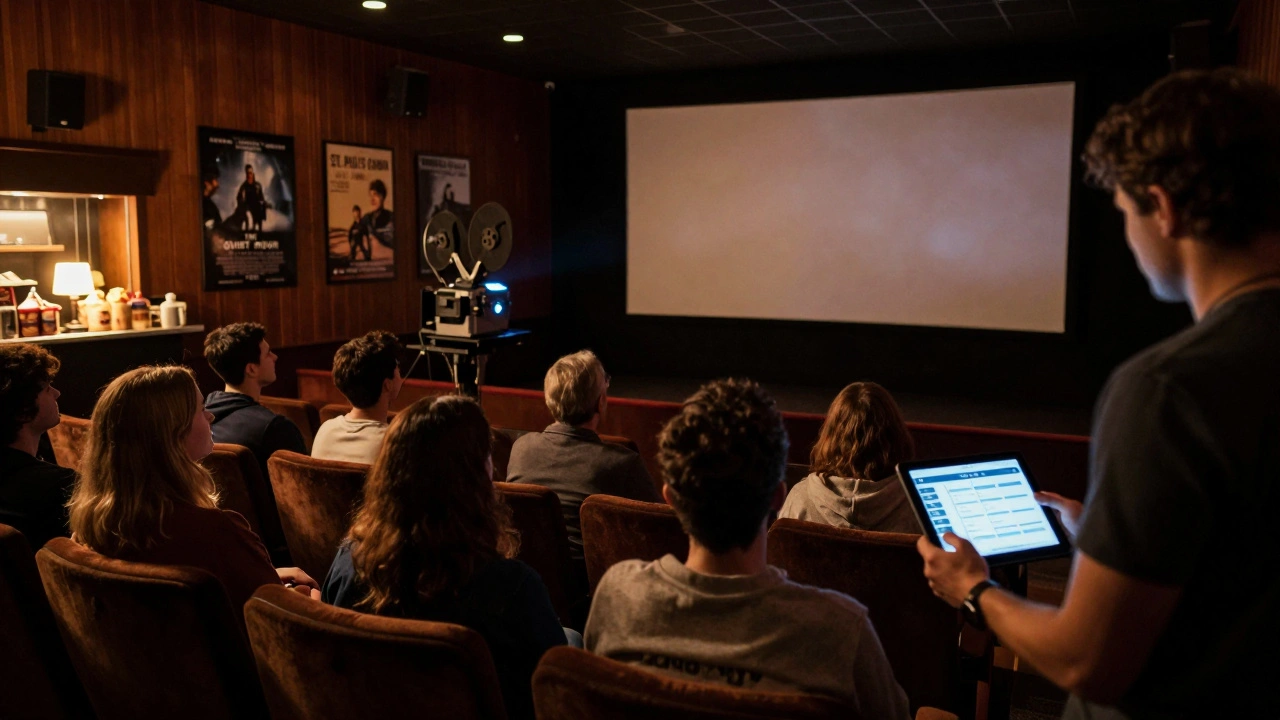
When Bleecker Street announced Crosswalk, it didn’t just roll out a new tool-it reset the rules for how independent films reach audiences. For years, indie distributors have been stuck between two bad options: throw a film into wide release and hope it sticks, or bury it in a handful of arthouse theaters and pray for word-of-mouth. Crosswalk changes that. It’s not another streaming platform. It’s not a digital rental service. It’s a bespoke film distribution system built for theaters, by filmmakers who’ve lived the chaos of release day.
Think of it like this: most films get a release plan written by committee. Marketing teams pick cities based on past data. Booking agents try to squeeze in 200 screens across 12 states. The result? A film that’s too big for its audience and too small to survive the box office noise. Crosswalk flips that. It starts with the film, not the spreadsheet.
How Crosswalk Works: The Theater-First Model
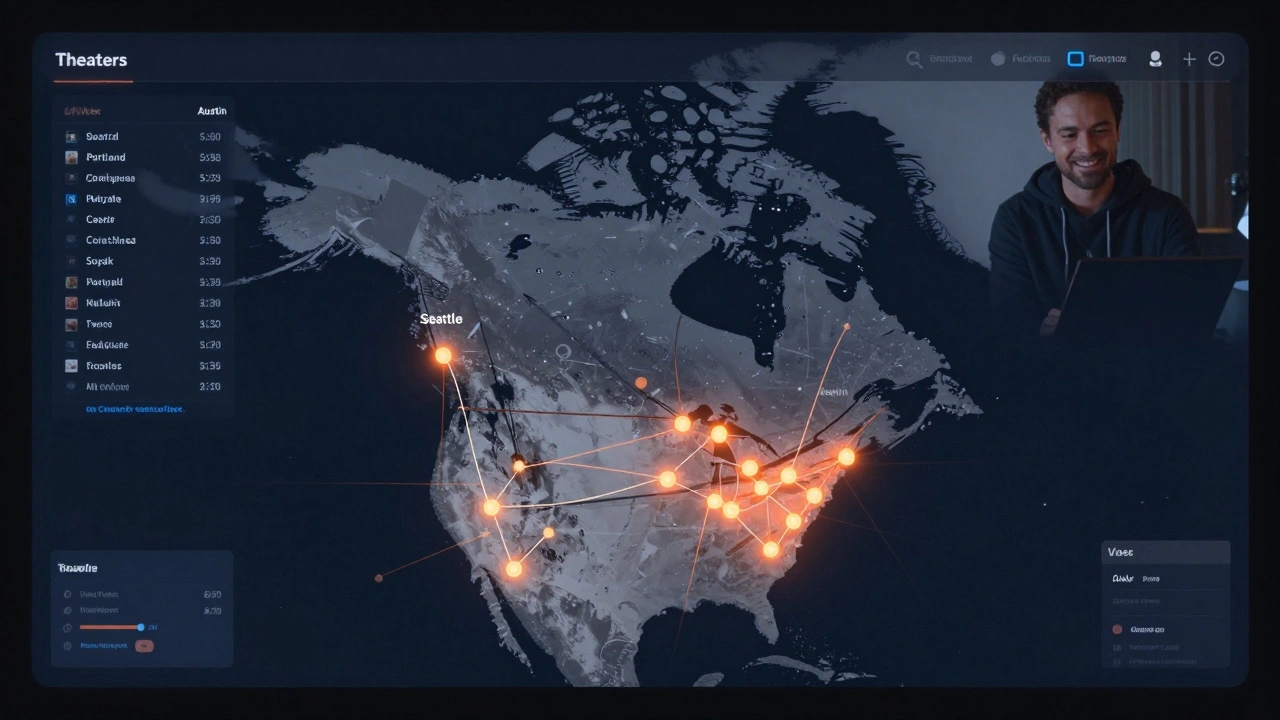
Instead of forcing a film into a national rollout, Crosswalk lets distributors build a custom release path, one theater at a time. Each screening is tracked, analyzed, and adjusted in real time. If a film pulls a 78% audience score in Portland, Crosswalk’s algorithm suggests adding three more screens in Seattle-cities with similar demographics, past viewing habits, and cultural overlap. No guesswork. No blanket bookings.
The system uses data from over 1,200 independent theaters across the U.S. and Canada. That’s not just box office numbers. It’s snack sales, ticket return rates, post-screening surveys, and even how long people linger in the lobby. One film, The Quiet Hour, had a 42% repeat viewing rate in Austin. Crosswalk flagged it, and within 72 hours, the distributor added midnight showings in four more cities with similar music and arts scenes. That film made $1.7 million in 17 days-without ever hitting 500 screens.
This isn’t just about numbers. It’s about rhythm. Crosswalk lets a film breathe. A documentary about Appalachian coal miners might open in four towns in West Virginia, then slowly expand to college towns with strong sociology departments. A foreign-language drama might start in Chicago’s Polish neighborhood, then move to Toronto’s immigrant communities. The release becomes a conversation, not a broadcast.
Why Bespoke Distribution Is a Game-Changer
Traditional distribution treats every film like a product on a conveyor belt. Crosswalk treats each one like a unique voice. That’s the heart of bespoke distribution: no two films get the same path. It’s not about maximizing reach. It’s about maximizing resonance.
Here’s the math: in 2025, 68% of indie films that opened on more than 1,000 screens lost money. Meanwhile, films released on fewer than 150 screens but with tailored outreach had a 63% profitability rate. That’s not luck. That’s strategy. Crosswalk gives distributors the tools to build that strategy without hiring a team of data scientists.
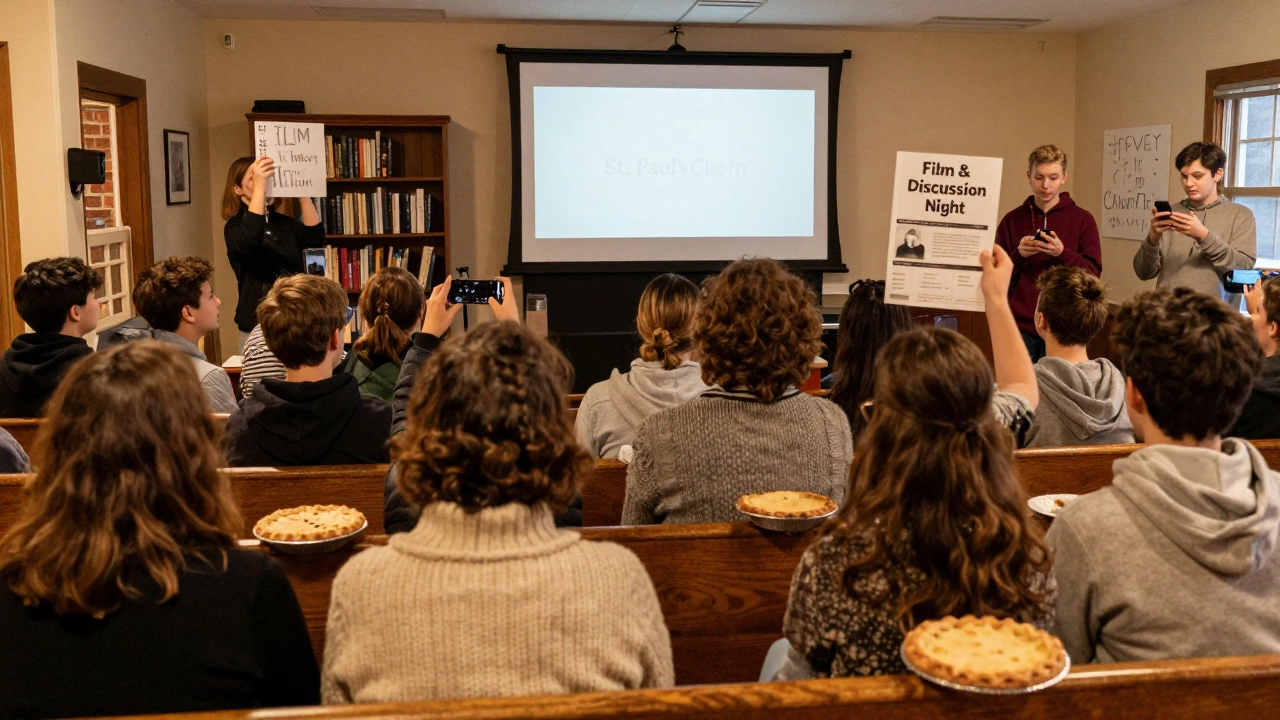
Take St. Paul’s Choir, a low-budget musical drama about a church choir in Minnesota. The distributor didn’t try to push it into New York or LA. Instead, Crosswalk identified 87 churches with active choirs that also had community theaters. They partnered with those churches to host screenings, with proceeds split between the theater and the choir fund. The film earned $410,000 in 11 weeks. It never played in a multiplex. It didn’t need to.
Bespoke distribution works because it respects the audience. People don’t just want to watch a film-they want to feel like they’re part of its story. Crosswalk turns viewers into collaborators. When a theater owner gets real-time feedback on what’s working, they start advocating for the film. They host Q&As. They create local hashtags. They invite critics from regional papers. That organic momentum is worth more than a $2 million ad buy.
The Technology Behind the Scenes
Behind Crosswalk is a custom platform built on open-source theater management software, upgraded with machine learning trained on 12 years of indie release data. It doesn’t rely on Hollywood’s box office models. It learns from what actually works in small towns, college towns, and neighborhoods that don’t make the trade magazines.
Here’s what it tracks:
- Real-time attendance patterns (not just daily totals, but time-of-day trends)
- Demographic clustering (age, language, education level of ticket buyers)
- Local cultural touchpoints (music festivals, book clubs, community events)
- Post-screening engagement (survey completion rates, social media tags, theater staff feedback)
The system then recommends next steps: “Add 2 screens in Milwaukee. Host a Q&A with the director via Zoom next Friday. Partner with the local library for a film-and-discussion night.”
It’s not magic. It’s pattern recognition. And it’s far more accurate than any human analyst trying to guess what a film “should” do.
What This Means for Filmmakers
For indie filmmakers, Crosswalk removes the biggest fear: obscurity. You don’t need a $500,000 marketing budget. You don’t need a celebrity cast. You just need a film that connects with a specific group of people-and Crosswalk helps you find them.
One director, Lena Ruiz, made a 72-minute film about trans teens in rural Texas. She had no agents, no studio backing. She uploaded the film to Crosswalk, set a target audience (high school drama clubs, LGBTQ+ youth centers, small-town libraries), and let the system do the rest. Within six weeks, the film played in 37 theaters across seven states. It got coverage in Teen Vogue and a regional PBS affiliate. The film’s budget? $89,000. Gross? $1.1 million.
That’s the new reality: a film can be a cultural event without being a blockbuster. Crosswalk proves that. It doesn’t ask you to compete with Marvel. It asks you to speak to your people.
The Ripple Effect on Theaters
Theater owners are the real winners here. For years, they’ve been squeezed by chains, streaming, and rising rent. Crosswalk turns them into active partners-not just ticket sellers, but curators.
Independent theaters using Crosswalk have seen a 34% increase in foot traffic on non-weekend nights. Why? Because they’re showing films people actually care about, not just what the distributor forced on them. One theater in Missoula, Montana, started hosting “Local Stories Night” every Thursday, featuring films from nearby filmmakers. Ticket sales jumped 58%. They added a snack bar featuring local food vendors. Now they’re profitable year-round.
And it’s not just about money. It’s about identity. A theater that shows St. Paul’s Choir or The Quiet Hour isn’t just a place to watch movies. It’s a cultural hub. That’s what keeps people coming back.
Is This the Future of Theatrical Release?
It’s already happening. In 2025, 18% of all indie films released in North America used a bespoke distribution model. That’s up from 4% in 2022. Bleecker Street isn’t the first to try this-but they’re the first to build it at scale, with real-time data, and without locking distributors into long-term contracts.
Other distributors are watching. A24 is testing a similar system. Neon is exploring partnerships with local arts councils. Even some streaming platforms are starting to fund theatrical runs that mirror Crosswalk’s model.
The message is clear: the future of theatrical distribution isn’t bigger screens or louder ads. It’s deeper connections. It’s films that find their people, not the other way around.
What This Means for You
If you’re a filmmaker: don’t wait for a studio to pick you up. Use tools like Crosswalk to build your own audience. Start small. Be specific. Let the data guide you.
If you’re a theater owner: stop booking what’s popular. Start booking what’s meaningful. Crosswalk gives you the power to choose films that fit your community-not just what’s on the distributor’s list.
If you’re a film lover: seek out theaters that use bespoke distribution. You’ll see films you won’t find anywhere else. And you’ll be part of something bigger than just watching a movie-you’ll be part of its journey.
What makes Crosswalk different from other indie film distributors?
Crosswalk doesn’t force films into a one-size-fits-all release plan. Instead, it uses real-time data from theaters to build a custom rollout for each film-targeting specific communities, adjusting screen counts based on audience response, and even suggesting local partnerships. Other distributors rely on broad market forecasts. Crosswalk listens to what’s actually happening in real theaters.
Can small filmmakers afford to use Crosswalk?
Yes. Crosswalk operates on a pay-per-screen model with no upfront fees. Filmmakers only pay when their film actually plays in a theater, and the cost is lower than traditional marketing campaigns. Many users report spending less than $10,000 on distribution and still earning over $500,000 in box office revenue.
Does Crosswalk work for documentaries?
Absolutely. In fact, documentaries have been some of the most successful films on Crosswalk. The platform’s ability to connect films with niche communities-like universities, nonprofits, or local advocacy groups-makes it ideal for nonfiction storytelling. One documentary on water rights in the Southwest played in 62 schools and community centers, leading to policy discussions in three state legislatures.
How does Crosswalk handle international releases?
Currently, Crosswalk is focused on theaters in the U.S. and Canada. But the system’s framework is designed to scale. Bleecker Street is already in talks with independent theater networks in the UK, Australia, and Mexico to launch regional versions. The core model-community-driven, data-informed releases-works anywhere.
Is Crosswalk replacing streaming?
No. It’s complementing it. Many films on Crosswalk go to streaming platforms after their theatrical run. But Crosswalk proves that audiences still want to see films in theaters-especially when the experience feels personal. The goal isn’t to beat streaming. It’s to give films a chance to earn their place in the world before they go digital.
What Bleecker Street did with Crosswalk isn’t just a new product. It’s a new philosophy. Theatrical release doesn’t have to be a gamble. It can be a conversation. And for the first time in a long time, filmmakers, theaters, and audiences are all speaking the same language.


Comments(9)