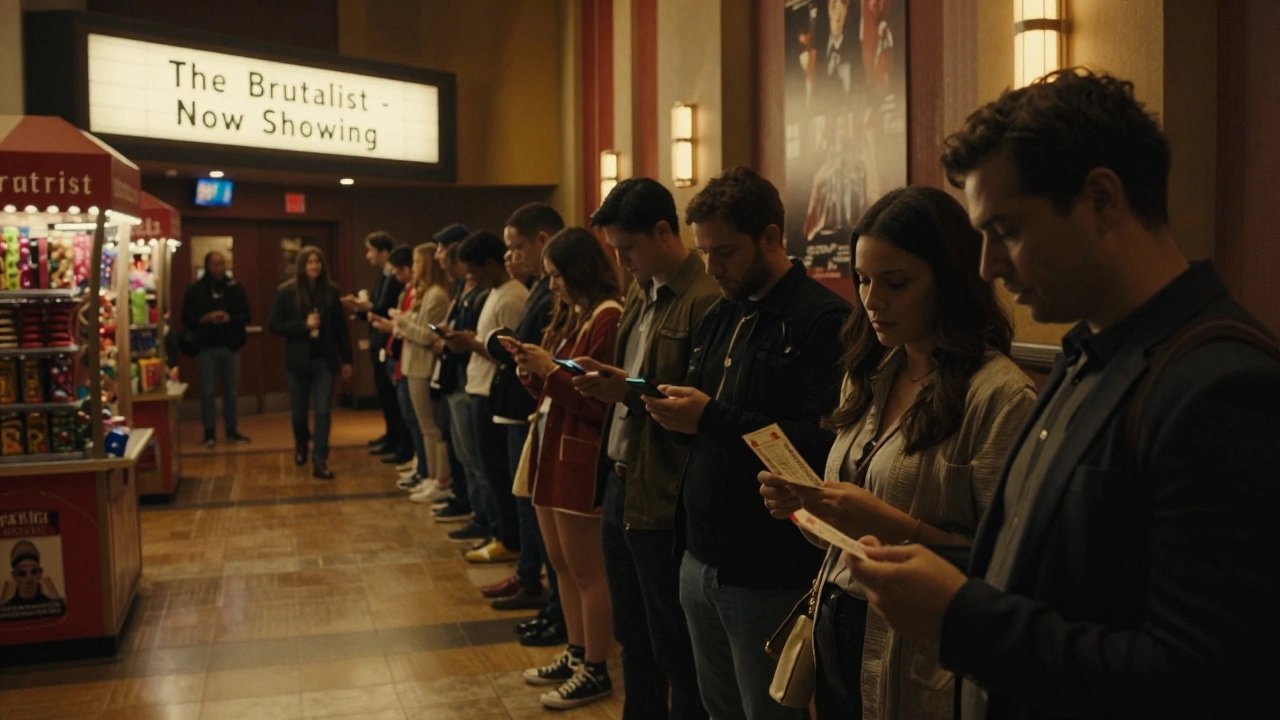
Every year, right after the Oscars ceremony ends, something strange happens at movie theaters. Films that barely made a dent at the box office just weeks earlier suddenly start selling out. Tickets for awards season contenders - movies that flopped in December - suddenly cost $20, and people are lining up. Why? Because awards don’t just honor great films. They turn them into must-see events.
When a Movie Gets Nominated, Sales Jump Overnight
In 2025, The Brutalist made $4.2 million in its opening weekend. By the time it landed five Oscar nominations - including Best Picture and Best Actor - its domestic gross jumped 187% in the following 10 days. That’s not a fluke. According to data from Box Office Mojo, films nominated for Best Picture see an average 72% increase in ticket sales within two weeks of nomination announcements. For films already in theaters, that’s like getting a second life.
It’s not just the big categories. A Best Supporting Actress nod can lift a movie’s weekend revenue by 30-40%. Conclave made $1.1 million in its first weekend. After its lead actor got a Best Actor nomination, it grossed $1.9 million the next weekend - a 73% spike. The same thing happened with Wicked in late 2024. It opened to $12 million, then climbed to $21 million after its costume design and makeup nominations.
Why does this happen? Because nominations act like a massive, free ad campaign. When a film gets nominated, every news outlet, social media feed, and late-night show talks about it. People who skipped the movie because it looked "too serious" or "too slow" suddenly feel like they missed something important. It’s FOMO, but with Oscars.
Streaming vs. Theaters: The Awards Effect on Both
You might think streaming kills this effect. But no. In fact, the opposite is true. When Netflix’s The Brutalist got nominated, its theatrical release - which had been limited to 120 screens - expanded to over 1,800. Studios are now deliberately releasing award hopefuls in small theaters first, then expanding after nominations. It’s called the "platform release," and it’s become standard.
Netflix, Apple TV+, and Amazon all use this strategy. Emilia Pérez opened in 15 theaters in November. After its 13 Oscar nominations, it went wide in 1,400+ theaters. It made $4.7 million in its second weekend - more than its entire opening. That’s not just momentum. That’s a calculated move.
Even for films that never hit theaters, nominations drive streaming numbers. The Last Thing He Told Me had no theatrical run, but after its Emmy nominations, its viewership on Apple TV+ jumped 300%. The same pattern shows up on Hulu, Max, and Prime Video. Awards don’t just boost box office - they boost everything.
Why Some Movies Don’t Benefit - And Why
Not every nominated film sees a sales boost. In 2025, Challenger Deep got nominated for Best Animated Feature but made $200,000 more after nominations - less than 10% growth. Why? Because it was already playing in 1,200 theaters. It had no room to expand. And it was competing with three other animated films that had bigger marketing budgets.
Another problem? Timing. If a film opens too early - say, in September - it’s forgotten by January. Stillwater (2024) opened in September, got a Best Actor nod in January, and only saw a 5% bump. People had moved on. The sweet spot? Release between October 1 and December 15. That’s when voters are still watching, and audiences are still paying attention.
Also, some genres just don’t translate. Documentaries and foreign-language films rarely see big spikes. The Last Repair Shop won Best Documentary in 2025, but its box office only rose 12%. It didn’t have the mass appeal. Nominations help, but they don’t fix a film’s lack of mainstream hooks.

Marketing Teams Know This. They Plan for It.
Studio marketing departments don’t wait for nominations. They build their entire campaign around them. For Conclave, the studio spent $1.2 million on a late December ad blitz - not to sell tickets, but to get critics talking. They sent advance screenings to Academy voters, gave out free popcorn with the film’s logo, and ran Instagram polls asking, "Is this the best performance of the year?"
They know nominations trigger a 3-4 week sales window. So they hold back on big advertising until January. That’s when the real money is made. In 2024, Oppenheimer made 68% of its total domestic gross after its Oscar nominations. It didn’t need to be a summer blockbuster. It just needed to be talked about.
Some studios even delay releases. Emilia Pérez was originally scheduled for November. The studio moved it to December - not because of quality, but because they wanted voters to see it while they were still deciding. That’s how strategic this has become.
What Happens After the Awards?
The real surprise? The boost doesn’t stop at the ceremony. In fact, it often grows.
After Emilia Pérez won Best Picture in 2025, its box office didn’t plateau - it kept climbing. It made $3.1 million the weekend after the Oscars. That’s 30% more than the weekend before. Why? Because the win made it feel like a cultural event. Schools started showing it. Film clubs rented theaters. People who didn’t like it before suddenly wanted to say they’d seen it.
Winning Best Picture means a movie gets re-released. In 2024, Everything Everywhere All at Once was re-released in 800 theaters two weeks after its win. It made $5.4 million in that run - more than its original opening. Studios now budget for these re-releases. They know: once a film wins, it becomes a classic.
And don’t forget international markets. A Best International Feature win can double a film’s overseas gross. The Zone of Interest made $1.2 million in the U.S. But after its Oscar win, it earned $18 million in Europe and Latin America. The award gave it legitimacy.

How to Spot a Movie That Will Surge
If you’re trying to decide what to watch - or even what to invest in - here’s what to look for:
- It was released between October and mid-December
- It’s playing in fewer than 500 theaters
- It’s got buzz from critics, not just social media
- It’s not a sequel or franchise film - original stories win more
- It has a lead performance that feels "Oscar-worthy" - not flashy, but deep
These are the films that will spike. The ones that look quiet now? They might be the next $50 million hit.
What This Means for Moviegoers
Here’s the bottom line: if you wait, you might pay less. Many award films are cheaper to see after nominations. Ticket prices don’t jump - but demand does. So if you’re patient, you can catch a film in a packed theater without paying premium prices. Or better yet - wait for the re-release. Studios often lower prices after the Oscars to attract new audiences.
And if you’re a film lover? Awards season is your secret weapon. It’s the one time the industry rewards art over marketing. The quiet dramas. The slow burns. The foreign films. The ones no one expected to last. They get their moment. And you get to be part of it.
Do Oscar nominations always increase box office earnings?
No. Nominations help most films that are still in theaters and have room to expand. Movies that opened too early, are already playing everywhere, or lack mainstream appeal often see little to no boost. The effect is strongest for films released between October and mid-December with limited initial releases.
Why do some nominated films make more money after winning?
Winning an Oscar turns a film into a cultural event. Studios re-release the movie in more theaters, schools and film clubs screen it, and audiences who skipped it earlier feel like they missed something historic. For example, Everything Everywhere All at Once made $5.4 million in its post-Oscar re-release - more than its original opening.
Do streaming films benefit from awards too?
Yes. Even films without theatrical releases see massive spikes in streaming numbers after nominations. The Last Thing He Told Me saw a 300% viewership jump on Apple TV+ after its Emmy nods. Studios now use awards to drive subscriptions and platform engagement.
Is there a best time to release a movie for awards season?
The ideal window is between October 1 and December 15. Films released before October are often forgotten by voters. Those released after mid-December don’t have enough time to build buzz before nominations are announced. The sweet spot gives studios time to get the film in front of Academy members without fading from memory.
Can a movie’s box office rise even if it doesn’t win?
Absolutely. Nominations alone can boost sales by 70% or more. Conclave saw a 73% revenue jump after its Best Actor nomination - even though it didn’t win. The buzz from being nominated is often enough to drive new audiences to theaters.







Comments(8)