
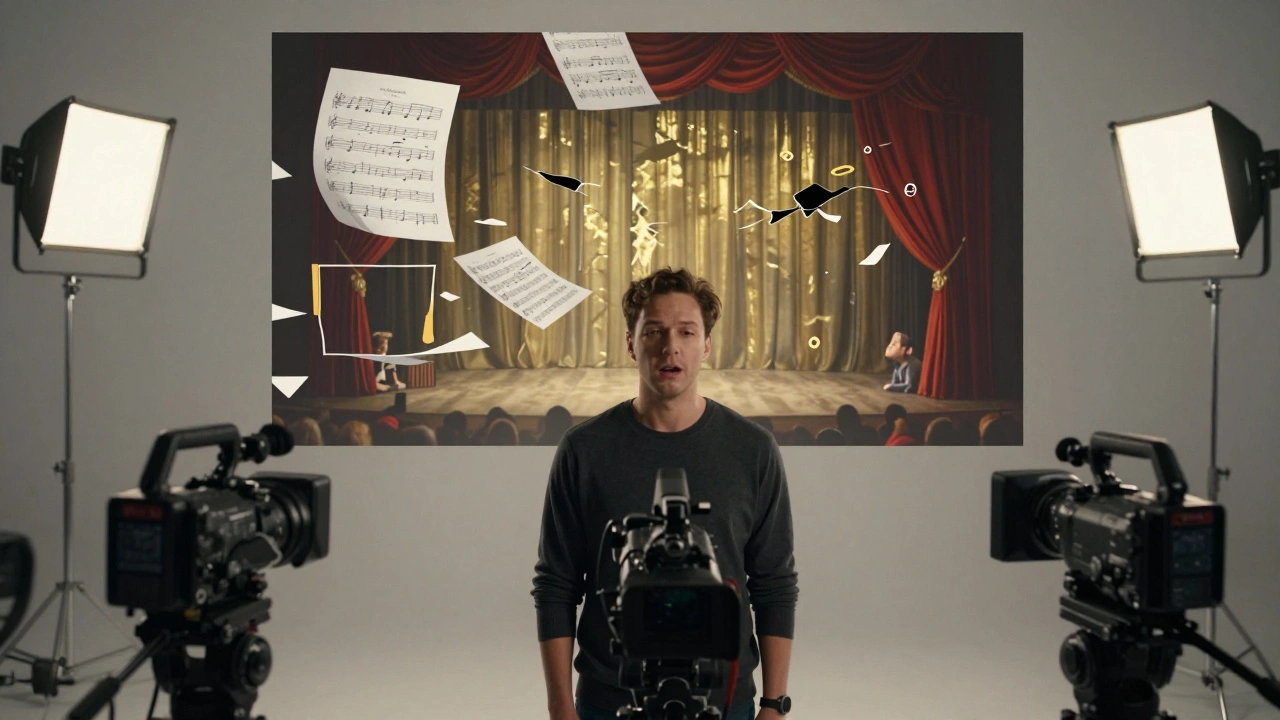
When a play becomes a movie, it doesn’t just get filmed-it gets rebuilt. The lights, the set, the live energy of an audience-all of it changes when the camera rolls. Some adaptations work like magic. Others feel like a stage play forced into a movie frame. Why do some plays translate to film so well, while others fall flat?
Why Do Plays Become Movies?
Plays have been turned into films since the silent era. Theater plays offer tight storytelling, strong dialogue, and characters audiences already connect with. Studios love them because they come with built-in recognition. A hit Broadway show like Chicago or Les Misérables already has fans, marketing hooks, and proven emotional power. Adapting a play is often cheaper than developing an original screenplay-especially if the script is already award-winning.
But it’s not just about money. Plays are designed for the stage, where time stretches and silence speaks. Movies need pace, visual movement, and cutting between scenes. So when a director takes a play and turns it into a film, they’re not just recording it-they’re rewriting it in a new language.
The Biggest Challenges in Adapting Plays to Film
One of the toughest parts? Breaking the fourth wall. On stage, actors look out at the audience. In film, they look at each other. That simple shift changes everything. If a director keeps the play’s blocking-actors facing front, delivering monologues straight to the camera-it feels stiff. Like watching a recorded theater ticket.
Then there’s the setting. Plays often use minimal sets. A single chair, a few props, and the audience imagines the rest. Films need real places. You can’t just show a blank stage and call it Paris. So filmmakers have to invent locations: a real Parisian street, a full-sized apartment, a bustling train station. That costs money. And time.
And what about the actors? Stage performers train to project their voices and use broad gestures. Film actors whisper, blink, and let silence carry emotion. When a stage actor moves to film without adjusting, it looks exaggerated. Think of the 2012 film version of Les Misérables. Some critics said the actors’ performances felt too theatrical. Others argued it was the right choice for the story’s emotional weight.
Successful Adaptations: What Worked
Not all adaptations fail. Some became classics. My Fair Lady (1964) took a 1956 Broadway hit and turned it into a sweeping musical with real London streets, outdoor balls, and rain-soaked taxis. The filmmakers didn’t just film the stage version-they expanded it. They added new scenes, changed pacing, and let the camera explore spaces the stage couldn’t.
A Streetcar Named Desire (1951) did something even bolder. It kept most of Tennessee Williams’ dialogue but moved the action from a cramped New Orleans apartment to real alleyways, streetcars, and backyards. The claustrophobia of the play became the tension of the film. Vivien Leigh’s performance stayed raw, but the camera caught her trembling lips, the sweat on her brow-details no audience member in the theater could see.
More recently, August: Osage County (2013) proved that even dense, dialogue-heavy plays can work on screen. The film kept the play’s family drama intact but used tight close-ups and shifting rooms to create unease. The camera became another character-watching, waiting, never letting the audience breathe.

When Adaptations Fail
Some plays shouldn’t be turned into movies. Take The Glass Menagerie. It’s a memory play. The narrator speaks directly to the audience. The set is symbolic. Lighting shifts with emotion. Try to film that literally, and you lose the poetry. The 2013 film version tried to make it realistic-real furniture, real windows, real streets. It felt hollow. The soul of the play was in its unreality. Film couldn’t hold it.
Another problem? Overloading. Some directors think if a little stage is good, a lot of sets is better. The 2009 film of Hamlet with Kenneth Branagh tried to film every line, every scene, every sword fight. It ran over four hours. The result? Exhausting. The play’s rhythm died under the weight of literalness.
Then there’s the music. Musicals are especially tricky. Spider-Man: Turn Off the Dark was a Broadway flop. When they tried to film it, the project died. Why? The songs didn’t work on screen. They were too loud, too theatrical. Film needs songs to feel earned-not forced.
What Makes a Great Stage-to-Screen Adaptation?
Great adaptations don’t copy. They reinterpret. They ask: What does this story need to live in film?
Here’s what works:
- Change the setting-move from one room to multiple locations to give the story space.
- Trim the dialogue-cut lines that only work with live applause.
- Use the camera-let close-ups replace monologues, let silence speak louder than speech.
- Reimagine the pacing-plays breathe. Films sprint.
- Keep the heart-if the emotional core is strong, the rest can change.
Take The Fabelmans (2022). It’s not a direct adaptation of a play, but it’s inspired by stage storytelling. Spielberg uses long takes, minimal cuts, and quiet moments that feel like theater. The film doesn’t shout. It whispers. And that’s why it works.
Top 5 Stage-to-Screen Adaptations That Got It Right
These five didn’t just film a play-they transformed it:
- 12 Angry Men (1957) - Turned a single room into a tense, evolving courtroom drama. Used lighting and camera angles to show shifting power.
- Who’s Afraid of Virginia Woolf? (1966) - Kept the raw dialogue but let the actors’ faces tell the real story. No music. No escape.
- Death of a Salesman (1951) - Used dream sequences to show Willy Loman’s fractured mind. The camera became his memory.
- Glengarry Glen Ross (1992) - Kept the play’s dialogue almost intact, but moved it from a diner to real real estate offices. The tension felt real.
- Amadeus (1984) - Took a stage epic and turned it into a visual symphony. Used color, music, and movement to show genius.
What’s Changing Now?
Today, streaming platforms are changing the game. Netflix’s The Crown isn’t a play, but it’s structured like one-long scenes, heavy dialogue, intimate performances. Shows like Hamilton (2020) proved you can film a stage musical and keep its energy. They used multiple cameras, close-ups, and editing to make the stage feel alive on screen.
Also, younger audiences are more open to theatrical styles. TikTok and YouTube have revived interest in monologues, soliloquies, and one-character storytelling. That means filmmakers are more willing to take risks. The next great adaptation might not be a Broadway hit-it might be an Off-Broadway experiment.
Final Thought: It’s Not About the Stage. It’s About the Story.
Plays are alive because people are in the room. Movies are alive because the camera sees what no one else can. The best adaptations don’t try to be plays. They don’t try to be movies. They become something new.
When done right, a stage-to-screen adaptation isn’t a copy. It’s a translation. Like poetry. Like music. Like love.
Why do some stage plays fail as movies?
They fail when filmmakers treat them like recordings instead of reinterpretations. Plays rely on live energy, symbolic sets, and direct audience connection. Movies need visual movement, realistic environments, and subtle performances. If you just film the stage version without changing the pacing, blocking, or setting, it feels flat and unnatural.
Can any play be turned into a movie?
Technically, yes-but not all should be. Plays that rely heavily on theatrical devices-like breaking the fourth wall, abstract sets, or non-linear memory structures-often lose their power when made literal. The Glass Menagerie and Waiting for Godot are great on stage but hard to translate without losing their soul. The key is asking: Does the story need to be seen, or just heard?
What’s the biggest mistake directors make when adapting plays?
The biggest mistake is over-filming. Adding too many locations, too many cuts, or too much music can drown the story. The original play’s power often comes from restraint. When directors try to make everything bigger, louder, or more visual, they strip away the quiet moments that made the play special in the first place.
Do actors from stage perform better in film adaptations?
Not necessarily. Stage actors are trained to project and use broad gestures. Film acting is about subtlety-a glance, a breath, a pause. Many successful adaptations cast film actors, even if the play was originally staged by theater legends. The best adaptations blend both: actors who understand the script’s depth but can deliver it with cinematic restraint.
Are musicals harder to adapt than non-musical plays?
Yes. Musical numbers are designed for live audiences. The energy of a crowd singing along doesn’t translate to headphones or a living room. Successful musical films-like Les Misérables or Hamilton-solve this by making the singing feel organic. Characters sing because they can’t speak anymore. The camera becomes part of the emotion, not just a recorder.
Adapting a play for film isn’t about copying. It’s about listening-to the story, to the actors, to the silence between words. The best films don’t just show you the play. They make you feel why it mattered in the first place.


Comments(6)