When you watch a movie like Blade Runner 2049 or Mad Max: Fury Road, the way the image feels wide, smooth, and slightly dreamy isn’t just luck. It’s anamorphic cinematography at work. This isn’t just a technical choice-it’s a storytelling tool. And three things define its signature look: bokeh, lens flares, and aspect ratio. If you’ve ever wondered why some films look cinematic while others feel flat, the answer lies in how these elements interact.
What Anamorphic Cinematography Really Means
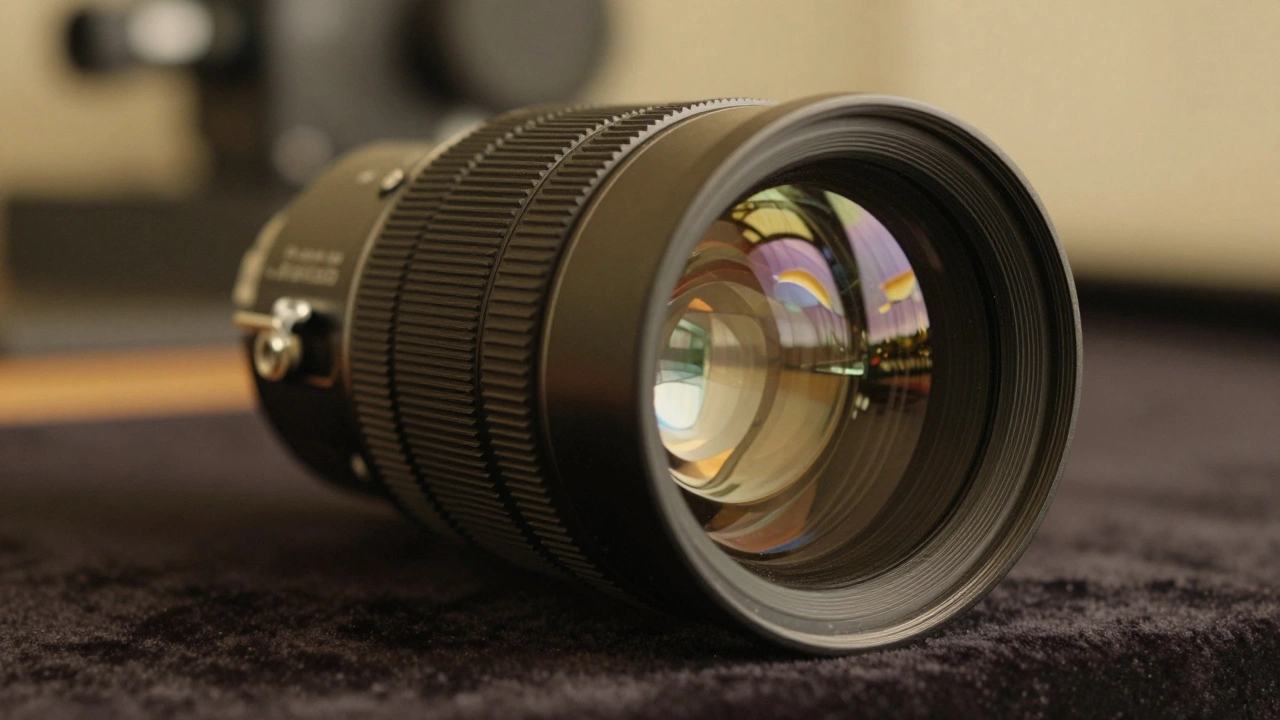
Anamorphic cinematography uses special lenses that squeeze a wide image onto standard 35mm film or digital sensors. Later, during projection or editing, that image is stretched back out. The result? A widescreen format that’s wider than standard 16:9 or 4:3. Most modern anamorphic films shoot in 2.39:1, the same aspect ratio used in theaters since the 1950s. That’s not arbitrary-it’s a visual language. A 2.39:1 frame feels epic. It invites the viewer into a world that’s bigger than life.
But here’s the catch: anamorphic lenses aren’t just about width. They change how light behaves. Unlike spherical lenses, which capture light evenly, anamorphic lenses have a horizontal compression. That distortion affects every pixel. And that’s where bokeh, flares, and the shape of the frame become part of the story.
Bokeh: The Soft Glow That Tells You It’s Anamorphic
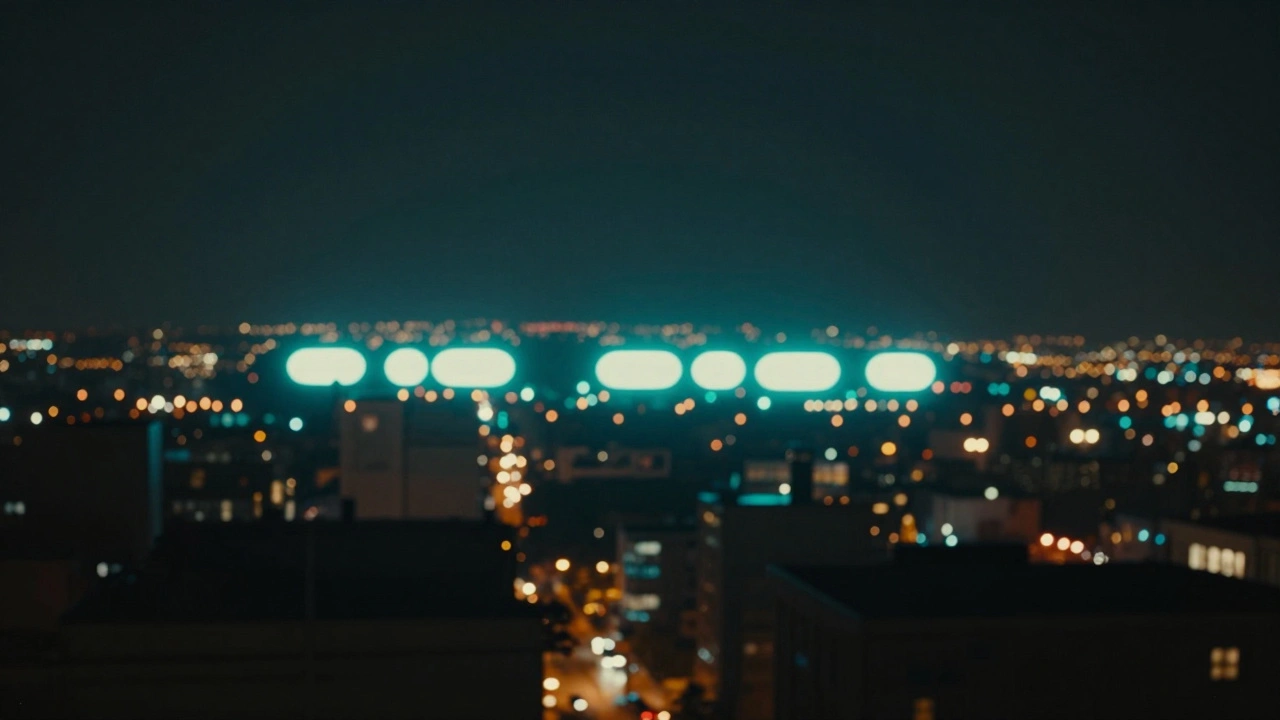
Bokeh is the quality of out-of-focus areas in an image. Most lenses make blurry lights into soft circles. Anamorphic lenses? They make them into ovals. That’s because of the lens’s internal elements-specifically, the cylindrical components that squeeze the image horizontally. When a light source is out of focus, it stretches into a horizontal ellipse. It’s subtle, but once you see it, you can’t unsee it.
Think of the glowing streetlights in Blade Runner 2049. They don’t just blur-they elongate. That’s not a VFX trick. That’s the lens. It gives the image a dreamy, almost liquid quality. Directors use this to separate foreground action from background noise. A character talking in a dim room? The lights behind them don’t distract. They melt into smooth, horizontal streaks. That’s bokeh doing the heavy lifting.
Modern digital sensors can simulate this effect, but real anamorphic bokeh has texture. It’s not clean. It’s slightly uneven. It breathes. That’s why cinematographers still shoot with physical lenses, even in a world of CGI. You can’t code the imperfection.
Lens Flares: The Signature Glare That Defines a Look
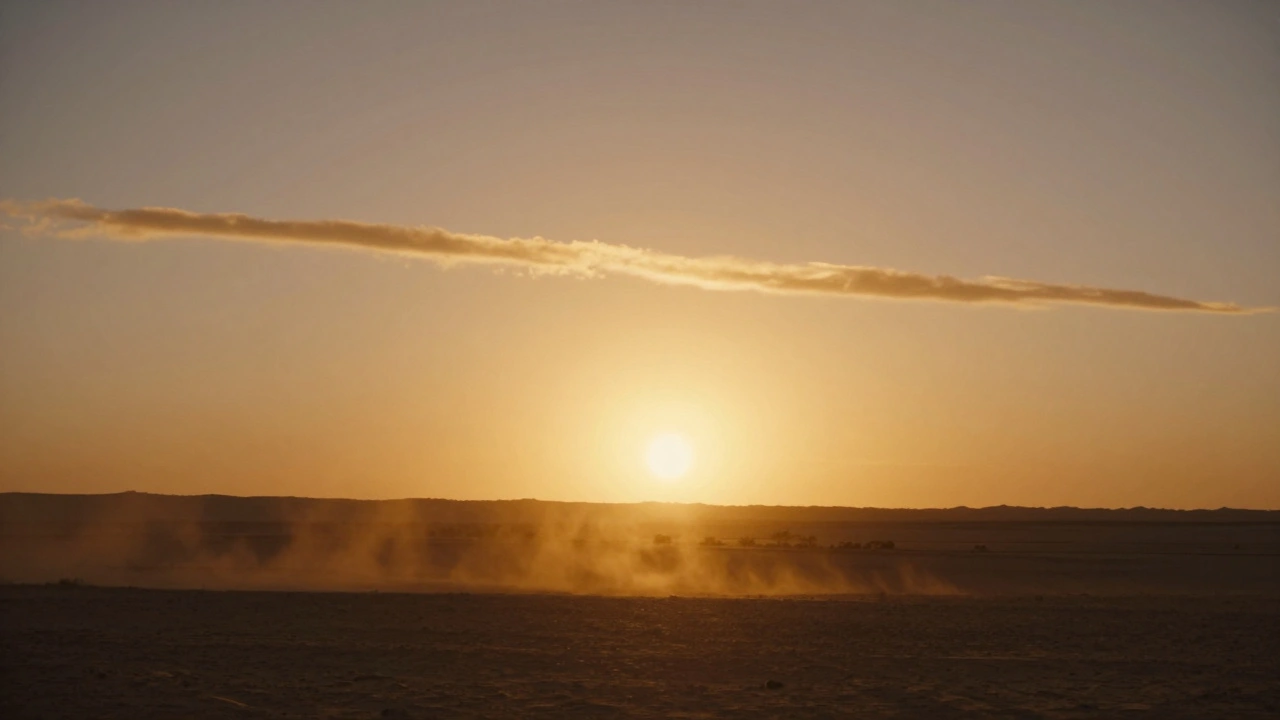
Lens flares happen when bright light hits the lens and scatters inside. Most lenses try to reduce them with coatings. Anamorphic lenses? They embrace them. Because of their complex optical design-multiple glass elements, tight spacing, and curved surfaces-they produce flares that stretch horizontally across the frame. These aren’t random streaks. They’re controlled, almost musical.
In Star Wars: A New Hope, George Lucas’s team used a lens flare deliberately during the Tatooine sunset scene. It wasn’t a mistake. It added warmth, realism, and a sense of scale. Today, directors like Denis Villeneuve and Christopher Nolan use anamorphic flares as emotional punctuation. A character turns toward the sun? A long, glowing ribbon of light cuts across the screen. It doesn’t just illuminate-it emphasizes.
What makes these flares different from spherical ones? Shape and length. Spherical flares are circular or starburst-like. Anamorphic flares stretch like a ribbon. They can span nearly the full width of the frame. And they often have a soft edge, not a harsh line. That’s because the lens elements are coated differently. The coating reduces internal reflections unevenly, creating a gradient effect. It’s physics. And it’s beautiful.
Aspect Ratio: More Than Just Screen Width
Aspect ratio isn’t just a number. It’s a frame. And anamorphic 2.39:1 creates a frame that feels cinematic because it’s not just wide-it’s immersive. The extra width pulls your eyes left and right, making you feel like you’re standing inside the scene. That’s why action sequences feel more dynamic. Dialogue scenes feel more intimate. The frame doesn’t just show space-it uses it.
Compare a scene shot in 16:9 (standard TV) with the same scene in 2.39:1. In 16:9, the background is crowded. In 2.39:1, the sides are open. You notice the empty hallway. The distant horizon. The lone tree on the hill. That negative space isn’t wasted. It’s emotional. It tells you something is coming. Or something is lost.
Modern streaming platforms often crop anamorphic films to fit 16:9 screens. That’s a loss. You’re cutting off the left and right edges-the parts that hold mood, context, and visual rhythm. The best directors fight for the full frame. That’s why you’ll see black bars on your TV when you watch Oppenheimer or Top Gun: Maverick. Those bars aren’t a flaw. They’re a promise: this film was made to be seen wide.
Why Filmmakers Still Choose Anamorphic in the Digital Age
With digital cameras, you can simulate any look in post. So why bother with heavy, expensive anamorphic lenses that cost tens of thousands and require custom rigs? Because the image has character. Digital filters can mimic bokeh and flares, but they can’t replicate the way light physically bends through glass. Real anamorphic lenses introduce slight chromatic aberration, vignetting, and focus fall-off. These aren’t defects-they’re fingerprints.
Each lens brand has its own signature. Panavision’s Primo lenses give you smooth, buttery flares. Cooke S7/i lenses offer a warmer color cast. Red’s anamorphic lenses are sharper but less forgiving. Directors choose based on tone. A gritty crime drama? Maybe a vintage lens with visible imperfections. A sci-fi epic? A modern one with clean lines and controlled flares.
And the cost? It’s not just money. Anamorphic lenses require more light. They’re slower. You need bigger crews, more generators, and more time. But the result? A look that’s instantly recognizable. One that says, “This isn’t a TV show. This is a movie.”
How to Spot Anamorphic Cinematography in Everyday Viewing
You don’t need a film degree to notice the difference. Next time you watch a movie, look for three things:
- Bokeh shape: Are out-of-focus lights stretched horizontally? That’s anamorphic.
- Lens flares: Do they stretch like ribbons across the frame, not explode in stars? That’s anamorphic.
- Black bars: Are there thick black bars on the top and bottom of your screen? That’s 2.39:1-anamorphic.
Try it on The Revenant, Arrival, or 1917. You’ll see it. Once you do, you’ll start noticing it everywhere. Even in commercials. Even in music videos.
The Hidden Cost: What You Lose With Anamorphic
It’s not all magic. Anamorphic lenses are heavy. They’re hard to handheld. They need precise focus pullers. They’re unforgiving in low light. You can’t just grab one and shoot in a dim kitchen. You need planning. You need lighting. You need time.
And there’s a trade-off: resolution. Because the image is squeezed horizontally, you’re using fewer pixels on the sensor to capture the full width. That means, technically, you’re losing some detail. But most filmmakers say the trade-off is worth it. The emotional impact of the look outweighs the pixel count.
That’s why indie filmmakers often avoid it. It’s expensive. It’s slow. But for studios and auteurs who care about legacy? It’s non-negotiable.
Final Thought: It’s Not About the Gear. It’s About the Feeling.
Anamorphic cinematography isn’t about having the fanciest gear. It’s about intention. It’s about choosing to make a film that feels like a painting, not a photograph. The oval bokeh, the horizontal flare, the wide frame-they’re not random. They’re tools. Tools that guide your eye. Tools that create mood. Tools that whisper, “This is cinema.”
And that’s why, even in 2026, with AI upscaling and virtual cameras, filmmakers still reach for those old, heavy, expensive lenses. Because no algorithm can replicate the way light bends through glass-and how that bend makes you feel.
What makes anamorphic lenses different from regular lenses?
Anamorphic lenses squeeze a wide image horizontally onto a standard sensor, then stretch it back during projection. Regular (spherical) lenses capture images proportionally. Anamorphic lenses create unique visual traits like horizontal bokeh, stretched lens flares, and a 2.39:1 aspect ratio. They’re physically more complex, heavier, and require more light.
Can you fake anamorphic look in post-production?
You can simulate some effects-like elongated bokeh or flares-using software. But real anamorphic lenses introduce organic imperfections: uneven light falloff, chromatic aberration, and physical flare patterns that change with angle and intensity. These can’t be perfectly replicated digitally. The texture, depth, and unpredictability of real glass can’t be coded.
Why do anamorphic films have black bars on TV?
Anamorphic films are shot in 2.39:1, which is wider than standard TV screens (16:9). To preserve the original framing, black bars appear on the top and bottom. This is called letterboxing. It’s not a mistake-it’s how filmmakers intended the image to be seen. Cropping it to fit the screen cuts off important visual information.
Do all widescreen movies use anamorphic lenses?
No. Many modern films use spherical lenses and crop the frame digitally to achieve 2.39:1. These are called “scope” films, but they lack the signature anamorphic bokeh and flares. True anamorphic means using anamorphic lenses during shooting. The difference is visible to trained eyes and affects the film’s texture and mood.
Is anamorphic cinematography only for big-budget films?
Not anymore. While anamorphic lenses are expensive, rental houses now offer affordable options for indie filmmakers. Some digital cameras even have anamorphic modes that simulate the look. But the full effect still requires physical lenses. Many low-budget films now use anamorphic lenses for key scenes to elevate their visual tone.


Comments(8)