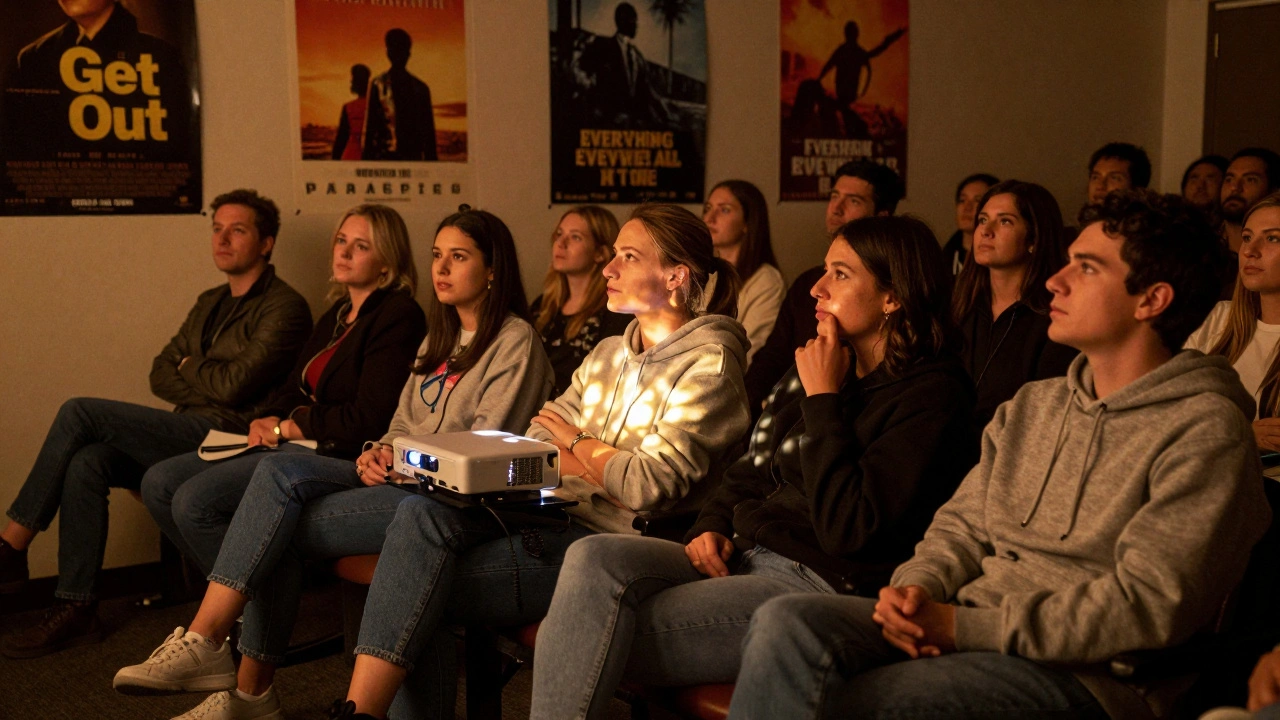
When people think of box office hits, they usually picture big studios with million-dollar marketing campaigns, A-list stars, and CGI explosions. But over the last decade, something surprising has been happening: independent films - the kind made with tight budgets, small crews, and passion instead of corporate backing - are crossing the $10 million mark more often than ever. And it’s not just a fluke. These aren’t rare outliers. They’re proof that audiences are hungry for stories that feel real, not just flashy.
What Does $10 Million Really Mean for an Indie Film?
For a Hollywood blockbuster, $10 million is what you make in a single weekend. For an indie film? That’s life-changing. It means the filmmakers actually broke even - maybe even turned a profit. Most independent films are made for under $1 million. Some under $200,000. So when one of these films hits $10 million, it’s not just a win. It’s a revolution.
Take Get Out a 2017 horror-thriller written and directed by Jordan Peele, made on a $4.5 million budget. It grossed over $255 million worldwide. That’s not just success - it’s a cultural moment. The film didn’t have a studio backing it from day one. It was developed through Blumhouse, a company known for low-budget horror, and distributed by Universal. But the story, the social commentary, the tension - it all clicked. Audiences showed up. And they kept coming.
Another example: Parasite a 2019 South Korean dark comedy-thriller directed by Bong Joon-ho, made for about $11 million. It didn’t just cross $10 million - it became the first non-English language film to win Best Picture at the Oscars. It made over $250 million globally. And it started as a passion project from a director who had never worked with a major studio before.
How Do These Films Get Seen?
There’s no secret playbook. But there are patterns. Most indie films that break $10 million follow a few key steps.
- They start at festivals. Sundance, TIFF, Cannes - these aren’t just glamorous events. They’re launchpads. The Blair Witch Project was picked up after its debut at Sundance in 1999 and went on to make $248 million on a $60,000 budget. That’s still one of the highest ROI stories in film history.
- They rely on word-of-mouth. No TV ads. No billboards. Just people talking. A friend says, “You have to see this.” A Reddit thread blows up. A TikTok clip goes viral. That’s how A Quiet Place a 2018 horror film made for $17 million, built its audience without heavy marketing. It earned $340 million.
- They find the right distributor. Companies like A24, Neon, and Searchlight don’t just release films - they build movements around them. They know how to target niche audiences, run smart social campaigns, and create buzz that feels authentic. Moonlight was distributed by A24 and made $65 million on a $4 million budget.
Why Now? The Changing Landscape
Streaming changed everything. But not in the way people thought.
Yes, Netflix and Amazon bought indie films for years. But they often buried them. If a film didn’t trend in the first week, it disappeared. Audiences got frustrated. They started seeking out films they could see in theaters - films with heart, with risk, with something to say.
Post-pandemic, theater attendance bounced back - not to 2019 levels, but enough. And indie films filled a gap. Big studios kept churning out sequels and superhero movies. Independent filmmakers kept telling original stories. And audiences chose them.
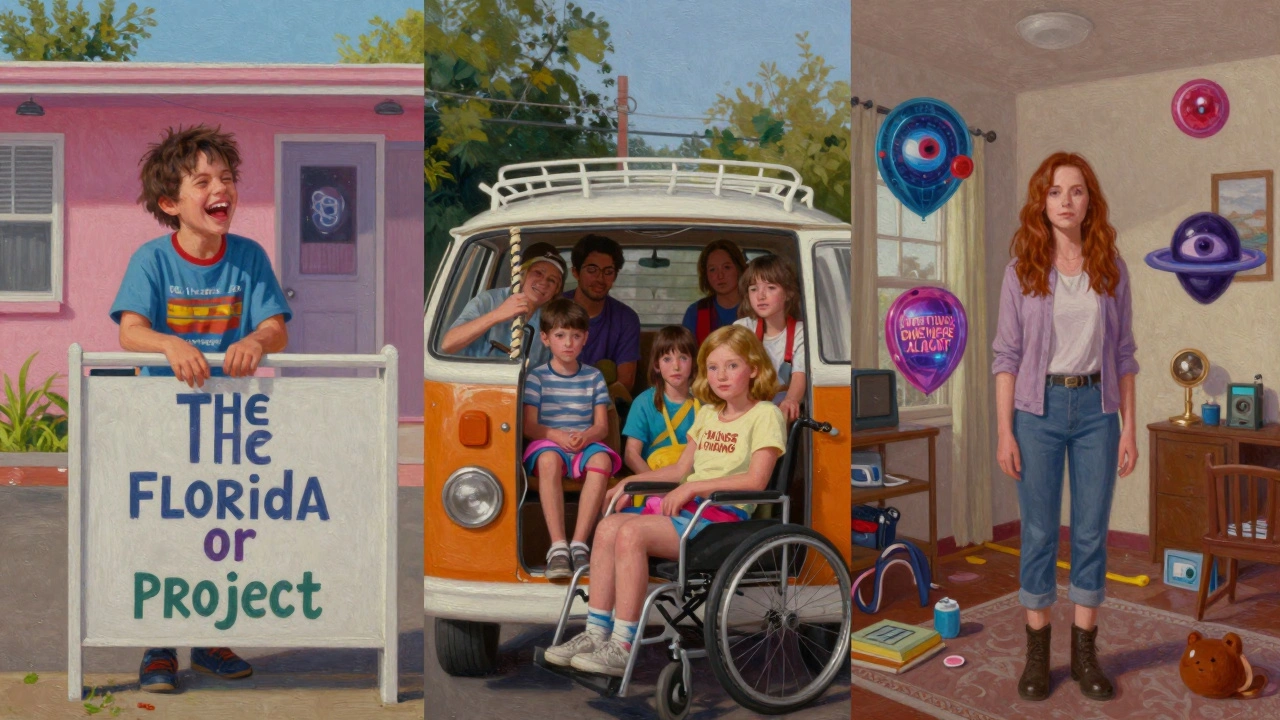
Look at Everything Everywhere All At Once a 2022 sci-fi comedy made for $24 million, directed by Daniel Kwan and Daniel Scheinert. It had no franchise, no superhero, no familiar characters. Just a messy, emotional, hilarious story about a laundromat owner who discovers multiverses. It grossed over $140 million. And it became the highest-grossing indie film of all time - beating out The Passion of the Christ a 2004 film that held the record for years with $370 million - because it didn’t need to be big to be powerful.
What Makes These Films Different?
It’s not just the budget. It’s the freedom.
Big studios have to answer to shareholders. They need broad appeal. Independent filmmakers answer to their own vision. That means:
- Characters who aren’t perfect
- Stories that don’t tie up neatly
- Dialogue that feels real, not scripted
- Themes that challenge, not comfort
Take Little Miss Sunshine a 2006 dramedy made for $8 million, about a dysfunctional family road trip. It didn’t have a star. No explosions. Just a wheelchair, a VW bus, and a kid who wants to win a beauty pageant. It made $100 million. Why? Because it felt like your family.
Or The Florida Project a 2017 film made for $2 million, about children living in a motel near Disney World. It didn’t make $100 million. But it made $12 million - and it stayed in theaters for over a year. People kept going back. Not because it was flashy. Because it was honest.
The New Rules of Indie Success
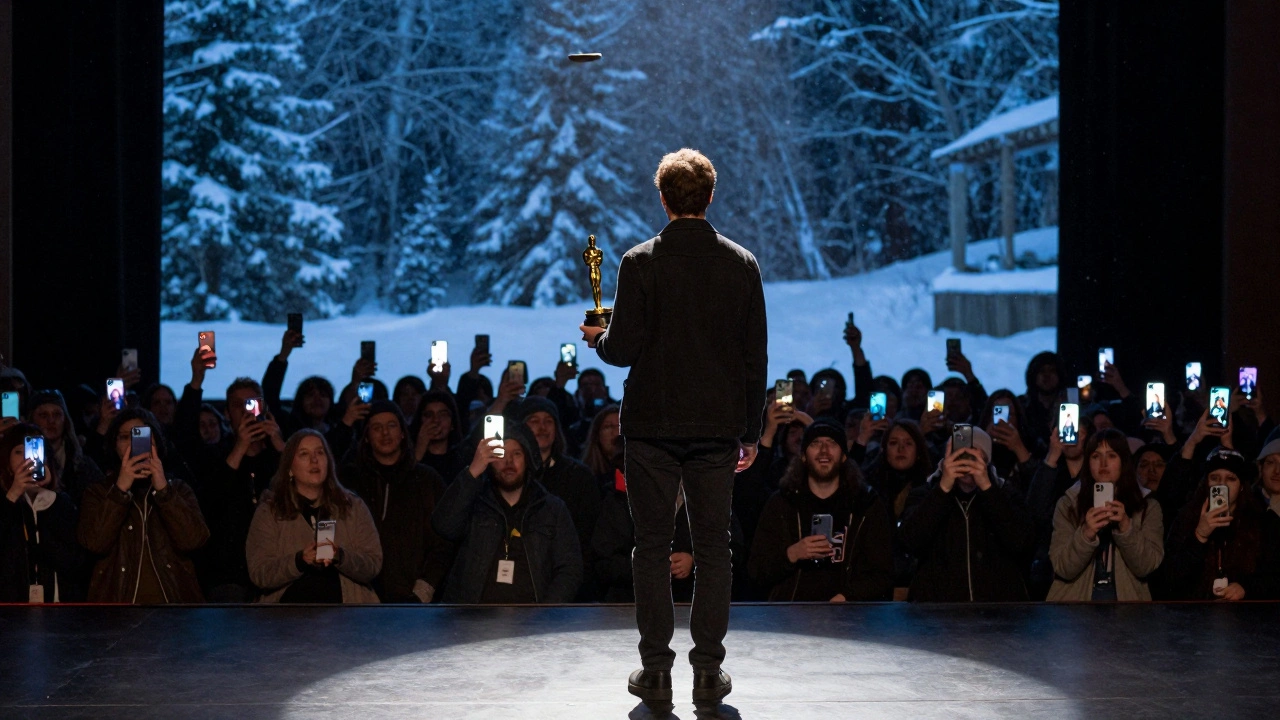
If you’re wondering how these films keep breaking records, here’s what’s working now:
- Authenticity beats polish. Grainy footage? Handheld cameras? Imperfect acting? Audiences don’t care. They care about truth.
- Community matters. Indie films thrive when they’re shared - not advertised. A TikTok clip of a powerful scene can do more than a Super Bowl ad.
- Release strategy is everything. Rolling out slowly, starting in a few cities, then expanding based on demand - that’s smarter than going wide on opening weekend.
- Don’t chase trends. Trying to make the next Get Out won’t work. But telling your own story? That will.
What’s Next?
The bar keeps rising. In 2025, The Wild Robot a stop-motion animated film from DreamWorks, made independently with a $60 million budget crossed $300 million. It wasn’t a studio film. It was a creative team that refused to compromise.
More filmmakers are self-distributing. More are using crowdfunding platforms like Seed&Spark or Kickstarter to fund their projects. More are partnering with local theaters instead of waiting for corporate approval.
The message is clear: you don’t need a billion-dollar budget to make a billion-dollar impact. You just need a story worth telling - and the courage to tell it your way.
Can an indie film really make $10 million without studio backing?
Yes. Many have. Films like The Blair Witch Project, Get Out, Parasite, and Moonlight were all made with budgets under $10 million and earned far more. The key isn’t money - it’s storytelling, timing, and audience connection. Distributors like A24 and Neon specialize in helping indie films reach the right people without traditional studio marketing.
How do indie films get distributed without a major studio?
Many indie films are picked up by specialized distributors like A24, Neon, Searchlight, or Magnolia. These companies focus on niche audiences and build buzz through film festivals, social media, and targeted theater releases. Some filmmakers even self-distribute by partnering with local theaters or using platforms like Vimeo On Demand. The rise of digital marketing has made it easier than ever to reach viewers without a Hollywood machine.
What’s the average budget for an indie film that hits $10 million?
Most indie films that cross $10 million were made for between $1 million and $10 million. Films under $5 million have the highest return on investment. For example, Get Out cost $4.5 million and earned $255 million. Moonlight cost $4 million and made $65 million. Even The Blair Witch Project at $60,000 turned into $248 million. The lower the budget, the higher the potential profit margin.
Do indie films need to win awards to succeed at the box office?
Not always, but awards help. Winning at Sundance or getting an Oscar nomination can give a film a huge boost in visibility. However, many films like A Quiet Place and The Florida Project succeeded without major awards. What matters more is audience reaction - strong word-of-mouth, social media buzz, and repeat viewings. Awards can open doors, but the story has to keep people coming.
Are indie films more profitable than big studio movies?
In terms of profit margin, yes. A studio film might make $500 million but cost $200 million to make and market. That’s a 150% return. An indie film like Get Out made $255 million on a $4.5 million budget - that’s over a 5,500% return. Even films that make $15 million on a $2 million budget are wildly profitable. Studios focus on volume; indie films focus on efficiency.



Comments(7)