
The Shift From Individual Studios to Collective Power
The film industry has changed significantly over the last decade. If you walked through the main street of Hollywood ten years ago, the story was mostly about individual studio heads and legacy corporations. Today, the conversation centers on who owns the narrative. In March 2026, looking back at the last five years, we see a distinct rise in Women-Led Film Collectives. These aren't just networking groups; they are fully operational production entities.
Why does this matter? Traditional production companies often operate under a "hero director" model where one person gets all the credit and risk. Collectives flip this script. They pool money, share resources, and distribute risk among a group of creatives. For many filmmakers, especially women who were historically shut out of financing, this structure offers a viable path to greenlighting projects without waiting for permission from a gatekeeper.
Defining the Structure: Collective Versus Company
There is often confusion between a legal LLC named "Smith Productions" and a true artistic collective. Legally, most collectives still register as limited liability partnerships to handle contracts and taxes. However, their internal governance is what sets them apart.
A standard production company usually has a hierarchy. An executive producer signs off on budget and creative decisions. In a Collaborative Filmmaking Model, decision-making is circular. A project gets approved by consensus or a rotating leadership council. This protects members from burnout because the administrative burden shifts around.
Consider the difference in risk management. In a traditional setup, if a lead producer runs out of cash, the whole picture halts. In a collective model, members contribute seed capital. This ensures a baseline funding level that prevents production collapses. It creates a financial cushion that independent films rarely have access to unless they land a major pre-sale deal.
The Impact of Recent Industry Changes
We cannot talk about these groups without acknowledging the Post-MeToo Era. While the movement started earlier, its structural impact has rippled through the last fifteen years of production history. Many women left traditional studios due to hostile environments or lack of transparency.
In 2026, we see mature versions of collectives formed specifically to mitigate harassment risks. These organizations mandate third-party HR oversight and transparent pay scales before a single frame is shot. Safety isn't an afterthought anymore; it is baked into the operating agreement. This allows cast and crew to feel secure knowing that if an issue arises, there is a neutral party outside the power structure to handle it.
Funding patterns have also shifted. Streaming Platforms, which dominated the early 2020s, have become more selective. They now rely on smaller, agile production partners to deliver specific content volumes. Women-led collectives fill this gap perfectly. They are often cheaper to run than big corporate overheads but deliver high-quality storytelling that matches algorithmic demands for diverse content.
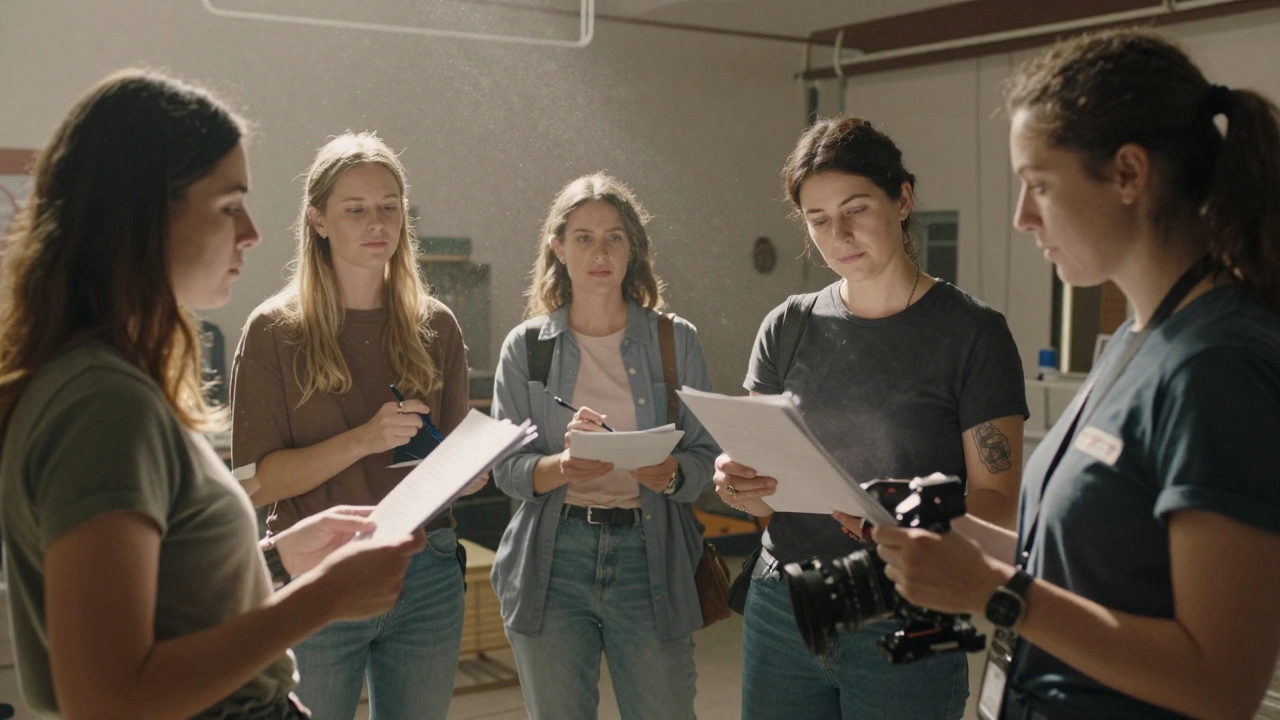
Real-World Operational Models
How do these businesses actually survive? There are three primary ways I've seen successful collectives generate revenue and sustain operations.
- Service-Based Production: They take on commercials, documentaries, and music videos to fund feature films. One member leads the commercial job while another works on a narrative feature, splitting profits.
- Equity Ownership Pools: Instead of getting paid upfront, members invest sweat equity. When a film sells, the profit split favors the creators rather than the distributor.
- Tax Credit Arbitrage: Experienced collectives know how to leverage regional tax incentives. By filming in locations like Georgia or New York, they capture rebates that traditional studios sometimes miss due to bureaucratic bloat.
This mix of revenue streams is vital. Relying solely on box office returns or festival prizes is unsustainable for most indie projects. Service work keeps the lights on and equipment leased.
| Feature | Traditional Studio | Women-Led Collective |
|---|---|---|
| Decision Making | Top-down hierarchy | Consensus or rotation |
| Risk Profile | Investor driven | Shared internal equity |
| Paying Equity | Fixed percentage splits | Negotiated value-based splits |
| Primary Goal | Maximum profit margins | Sustainability + Art |
Case Studies: Who Is Leading the Charge?
You might wonder if any of these groups actually make movies that win awards. They do. Organizations like Kudzu Pictures have built reputations for high-end drama. While Kudzu is a full-service agency, its roots mirror the collective ethos: female leadership driving development.
On the indie side, look at Tribeca Enterprises. While larger, Tribeca funds dozens of initiatives that support women filmmakers through grants. These grants act as seed money for collectives to start their first slate of productions.
We also see digital-first collectives rising. Groups formed initially to advocate for online content rights have pivoted to producing original series for YouTube Originals or TikTok Series. This bypasses the gatekeepers of broadcast television entirely. These platforms offer revenue sharing models that are more favorable to small teams than traditional licensing deals.

The Challenges of Scaling Together
No system is perfect. Running a democratic organization in a high-pressure industry has pitfalls. Conflicts of interest arise frequently. If two members have opposing creative visions on a project, negotiations can stall.
Bureaucracy within a collective can be higher than a one-person shop. More sign-offs mean slower turnaround times for scripts and budgets. Investors accustomed to quick yes/no answers from a CEO may get frustrated with committees.
Legal frameworks haven't fully caught up either. Standard production agreements (PGA contracts, WGA deals) expect specific roles like Producer, Associate Producer, etc. Collectives struggle to define these roles internally without breaking union rules or creating loopholes. Finding a lawyer who understands both intellectual property law and cooperative business structures is essential. You cannot use a template contract from the internet; custom governance agreements are required.
Future Outlook: What Happens Next?
As we move through 2026, AI tools are reshaping pre-production. Collectives are adopting generative AI for storyboarding and budget estimation faster than big studios. Their agility allows them to implement new tech without needing approval from a risk-averse board.
We are likely to see consolidation. Smaller collectives might merge to form larger guild-like entities to negotiate better rates with post-production vendors. This trend mirrors the labor unions of the early 20th century.
For emerging talent, the advice is simple: Look beyond just writing scripts. Find your peers. Form a partnership early. A strong alliance provides the stability needed to weather the ups and downs of a career in cinema. Ownership is the ultimate goal, and collectives provide the vehicle.
Next Steps for Filmmakers
If you are thinking about joining or starting a collective, start with a pilot project. A short film is a low-risk way to test your working relationship. Define clearly who owns the copyright and how revenue is split. Put everything in writing.
Connect with local hubs. Places like Women In Film chapters in cities across the US offer resources to help draft these foundational documents. Don't try to reinvent the wheel alone.
Are women-led film collectives legally different from LLCs?
Legally, most collectives register as LLCs or LLPs for liability protection. The difference lies in the internal operating agreement, which dictates democratic decision-making rather than hierarchical control.
Can a woman own a solo production company and call it a collective?
Not technically. A collective implies multiple active contributors sharing ownership and decision power. A solo-owned firm with hired staff is a traditional business entity.
How do collectives handle tax season differently?
They must track income distribution carefully among partners. Each partner receives a Schedule K-1 instead of a W-2, meaning they report their share of income and expenses personally.
Do unions recognize collective producers?
Yes, provided they meet jurisdiction requirements. Union contracts require specific production credentials, which a collective leader can hold while hiring union crew according to local agreements.
Is funding harder to get for collectives?
Traditional banks often prefer single-point accountability. However, grants from foundations and film institutes actively seek collective, community-driven applications over solo submissions.







Comments(6)