You walk into a theater today, grab your popcorn, and watch a movie that stretches from wall to wall. It feels normal. But for the first fifty years of cinema, movies were square-ish, cramped little windows into another world. The shift to widescreen was not just an aesthetic choice; it was a desperate survival tactic. Hollywood was bleeding customers to television, and they needed something TV couldn’t offer: spectacle.
The story of widescreen is really a story of corporate panic, optical tricks, and a few stubborn inventors who refused to let the frame be a box. If you’ve ever wondered why some old movies look stretched, or why Christopher Nolan insists on shooting in IMAX, you’re looking at the legacy of the format wars of the 1950s. Let’s unpack how we got here, because the tech behind it is wilder than most sci-fi plots.
The Square Screen Problem
Before 1953, almost every feature film was shot and projected in the Academy Ratio: 1.37:1. This meant the image was only slightly wider than it was tall. It worked fine for close-ups and dialogue-heavy dramas, but it had zero impact when you tried to show a desert, a crowd, or a spaceship. Television sets of the era matched this ratio perfectly. You could sit in your living room and see exactly what the director saw, minus the color and sound quality. Why pay for a ticket?
Hollywood executives realized they had to break the mold. They didn’t just want better pictures; they wanted images that physically overwhelmed your peripheral vision. They needed a format that made watching TV feel claustrophobic by comparison. This pressure cooker environment birthed two titans of widescreen technology: CinemaScope and VistaVision.
CinemaScope: The Anamorphic Revolution
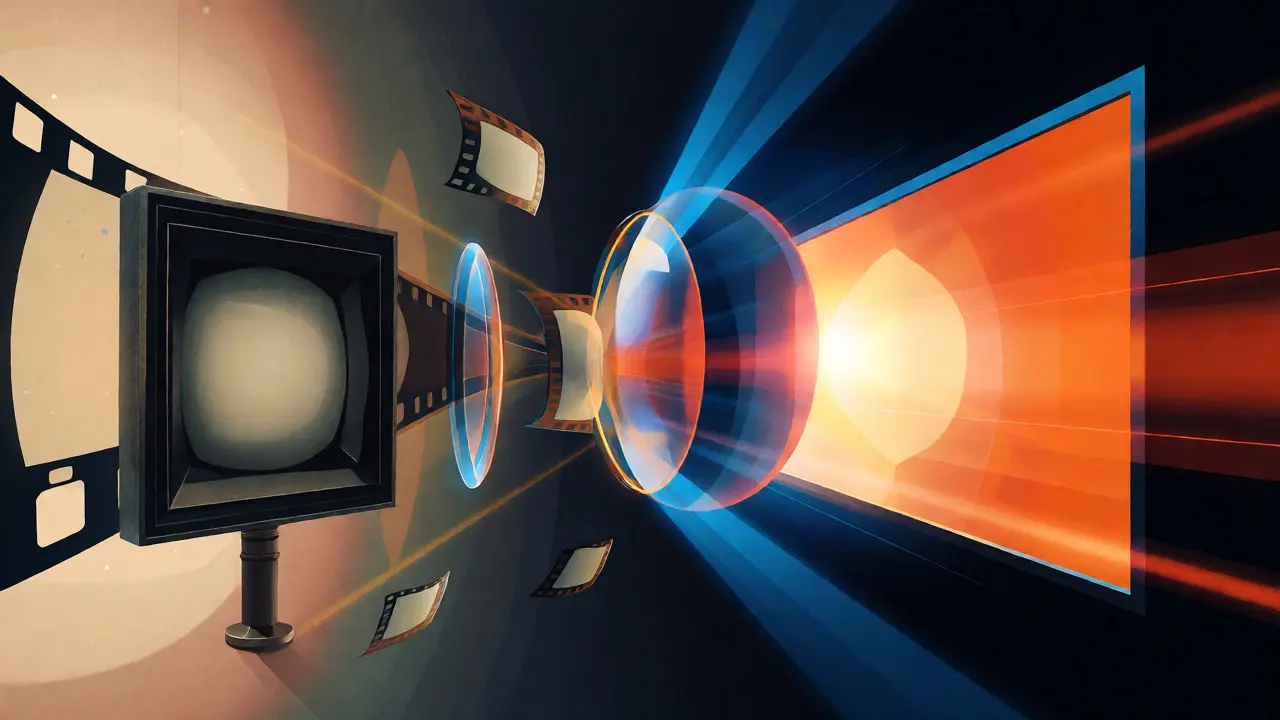
CinemaScope wasn’t invented in Hollywood. It was stolen, essentially. In 1953, 20th Century Fox executive Spyros Skouras heard about a French invention called Hypergonar, created by Henri Chrétien back in 1926. Chrétien’s lens squeezed a wide image onto standard film stock using anamorphic optics. When projected with a matching lens, the image unsqueezed into a massive 2.55:1 aspect ratio.
Fox bought the rights immediately. The first film released in CinemaScope was *The Robe* (1953). The audience reaction was electric. Suddenly, biblical epics and musicals looked larger than life. But there was a catch. Early CinemaScope required three separate magnetic sound tracks, which meant theaters had to install expensive new audio systems. Also, the lenses weren’t perfect. Directors like Henry Koster complained about "keystone" distortion-vertical lines bending if the camera wasn’t perfectly level-and focus issues because the depth of field was razor-thin.
Despite the headaches, CinemaScope became the gold standard for big-budget spectacles. It forced other studios to react fast. Paramount Pictures, unwilling to license Fox’s tech, developed their own rival system.
VistaVision: Shooting Vertical for Horizontal Glory
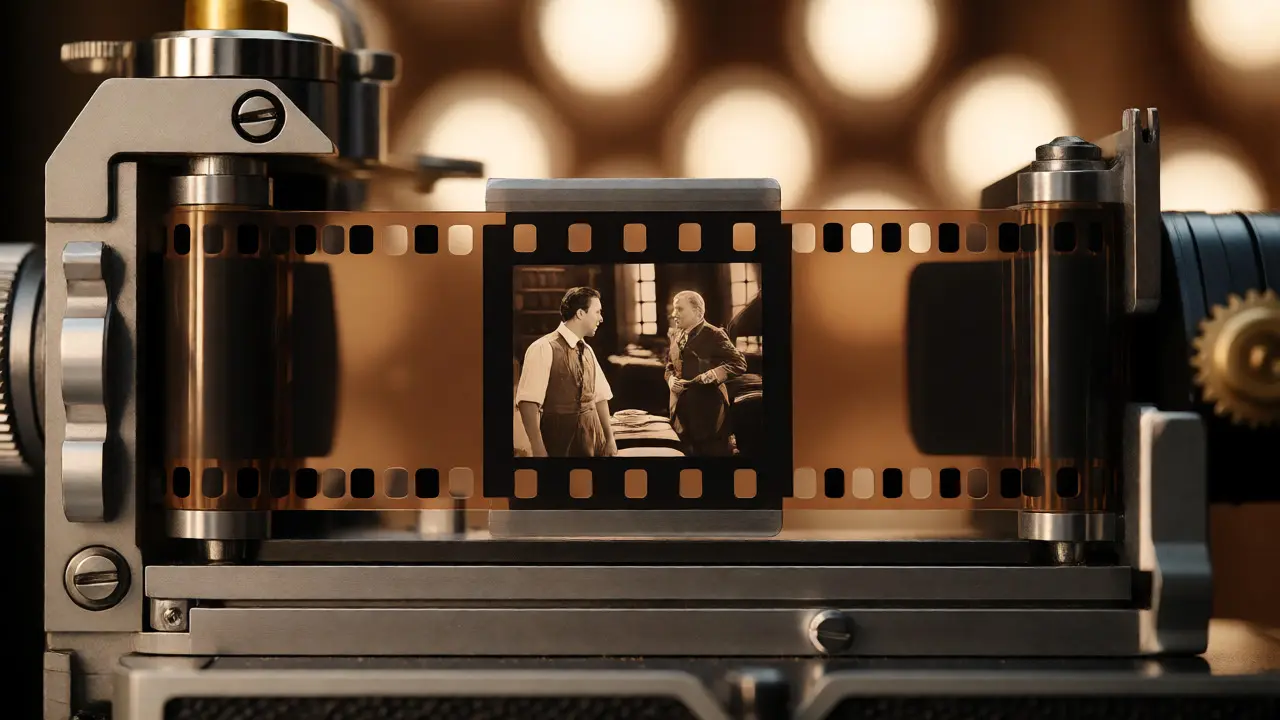
While Fox played with lenses, Paramount went nuclear with film stock. Their solution, VistaVision, launched in 1954, ran the film horizontally through the camera instead of vertically. Standard 35mm film runs vertically, exposing four perforations per frame. VistaVision used eight perforations, doubling the negative area.
This gave Paramount a massive advantage: resolution. Because the original negative was twice as large, they could crop it down to a widescreen aspect ratio (usually 1.85:1) while retaining incredible sharpness. Alfred Hitchcock loved VistaVision. He used it for *Vertigo* and *North by Northwest* because he wanted crisp details for his complex zoom shots and rear-projection sequences. Unlike CinemaScope, VistaVision didn’t distort faces. It felt more natural, yet still huge.
But VistaVision had a fatal flaw: cost. Using double the film stock meant double the lab processing fees. For a studio already struggling with budgets, this was hard to justify for every picture. Eventually, Paramount dropped VistaVision for regular cameras, but the concept lived on. Today, directors like Quentin Tarantino and Paul Thomas Anderson shoot on VistaVision specifically for that grainy, high-resolution texture that digital sensors still struggle to replicate authentically.
| Format | Aspect Ratio | Technology | Key Advantage | Major Drawback |
|---|---|---|---|---|
| CinemaScope | 2.55:1 (later 2.35:1) | Anamorphic Lens | Immersive width, cheap production | Distortion, thin depth of field |
| VistaVision | 1.85:1 (cropped) | Horizontal Film Run | Superior resolution, no distortion | High film stock cost |
| Todd-AO | 2.20:1 | 70mm Film Stock | Massive detail, stable image | Extremely heavy equipment |
| IMAX | 1.43:1 / 1.90:1 | Large Format Film | Unmatched clarity and scale | Limited screen availability |
The Arms Race: Todd-AO and Ultra Panavision
If CinemaScope was the iPhone of its day, Todd-AO was the enterprise server rack. Developed by Mike Todd Jr., this system used 70mm film-twice the width of standard 35mm. The result? A staggering 2.20:1 aspect ratio with six-track stereo sound. Films like *South Pacific* (1958) and *Lawrence of Arabia* (1962) defined the epic genre. *Lawrence of Arabia*, shot in Super Panavision 70, remains one of the most beautiful films ever made because the sheer amount of data captured on the negative allowed for details invisible to the naked eye in real life.
Then came Ultra Panavision 70. This combined anamorphic lenses with 70mm stock to achieve a mind-bending 2.76:1 aspect ratio. Ben-Hur (1959) used this format. Imagine a screen so wide you have to turn your head to see both sides of a conversation. It was glorious, impractical, and mostly abandoned after the early 1960s because projecting it required custom-built screens and projectors that most theaters couldn’t afford.
Why Aspect Ratios Matter Today
You might think these are dead technologies, relics of a pre-digital age. Wrong. Modern cinematography is obsessed with aspect ratios again. Digital sensors are rectangular, often 16:9 or 17:9, which doesn’t match the cinematic 2.39:1 standard. So, filmmakers either crop the image (losing vertical resolution) or use anamorphic adapters to squeeze the image onto the sensor.
J.J. Abrams famously switched to IMAX cameras for *Star Wars: The Force Awakens* because he wanted that vertical expansion during space battles. When you watch those scenes, the screen expands top-to-bottom. That’s not a glitch; it’s a callback to the VistaVision idea of using more film area for more information. Similarly, *Oppenheimer* used IMAX black-and-white film for key sequences. The contrast between the intimate 1.43:1 IMAX frames and the wider 2.20:1 standard frames creates a subconscious emotional rhythm for the viewer.
Streaming services have complicated things too. Netflix and Amazon Prime usually deliver content in 16:9 or 2:1. If you watch a 2.39:1 movie on a laptop, you get black bars. On a phone, you might get cropped. The "best" way to watch a film depends entirely on how the director intended it to be seen. Knowing whether a film was shot in VistaVision, anamorphic 35mm, or digital can change how you appreciate the lighting and composition.
Practical Tips for the Modern Cinephile
How do you spot these formats without reading the credits? Here are a few heuristics:
- Check the Black Bars: If the bars are thick on top and bottom, it’s likely a widescreen format like CinemaScope or modern anamorphic. If the image fills the whole screen on a standard TV, it’s probably 16:9, common in TV shows and older films.
- Look for Distortion: In early CinemaScope films, straight vertical lines (like doorframes) might curve slightly outward. This is the "smear" effect of early anamorphic lenses.
- Notice the Grain: VistaVision and 70mm films have a finer, smoother grain structure compared to standard 35mm. If a black-and-white film looks unusually crisp and detailed, suspect VistaVision.
- Research the Camera Package: Websites like IMDb list the specific cameras and lenses used. Searching for "Panavision C-Series" tells you it’s anamorphic widescreen. "Arriflex 765" indicates 65mm film.
Understanding these formats transforms passive viewing into active analysis. You start seeing the choices directors make. Why did Kubrick choose 70mm for *2001: A Space Odyssey*? Because he wanted the stars to look like actual points of light, not blurry pixels. Why did Wes Anderson use 1.37:1 for *The Grand Budapest Hotel*? To evoke the pre-widescreen era of the 1930s. The frame shape is part of the storytelling.
What is the difference between CinemaScope and VistaVision?
CinemaScope uses anamorphic lenses to squeeze a wide image onto standard 35mm film, which is then unsqueezed during projection. VistaVision runs standard 35mm film horizontally through the camera, capturing a much larger image area that is later cropped to widescreen. CinemaScope prioritizes width and immersion; VistaVision prioritizes resolution and sharpness.
Why did Hollywood switch to widescreen in the 1950s?
Hollywood introduced widescreen formats primarily to compete with television. As TV sets became common household items, they offered similar image proportions (1.37:1) to movies. Studios needed to provide a visual experience that TV couldn't match-specifically, a panoramic view that filled the viewer's peripheral vision.
Is VistaVision still used today?
Yes, though rarely. Directors like Quentin Tarantino (*The Hateful Eight*) and Paul Thomas Anderson (*The Master*) have revived VistaVision for its unique aesthetic qualities, including high resolution and distinct grain patterns that differ from standard 35mm or digital capture.
What is the most common widescreen aspect ratio now?
The current industry standard for theatrical releases is 2.39:1 (often referred to as 2.40:1 or Scope). This evolved from the earlier CinemaScope 2.55:1 ratio, which was narrowed slightly to accommodate single-strip magnetic sound tracks and later optical sound tracks.
Did widescreen formats affect acting styles?
Absolutely. In square formats, actors relied heavily on facial expressions and close-ups. Widescreen required actors to use their bodies and positioning within the frame more effectively. Directors began staging scenes with characters spread across the screen, changing blocking and movement patterns significantly.