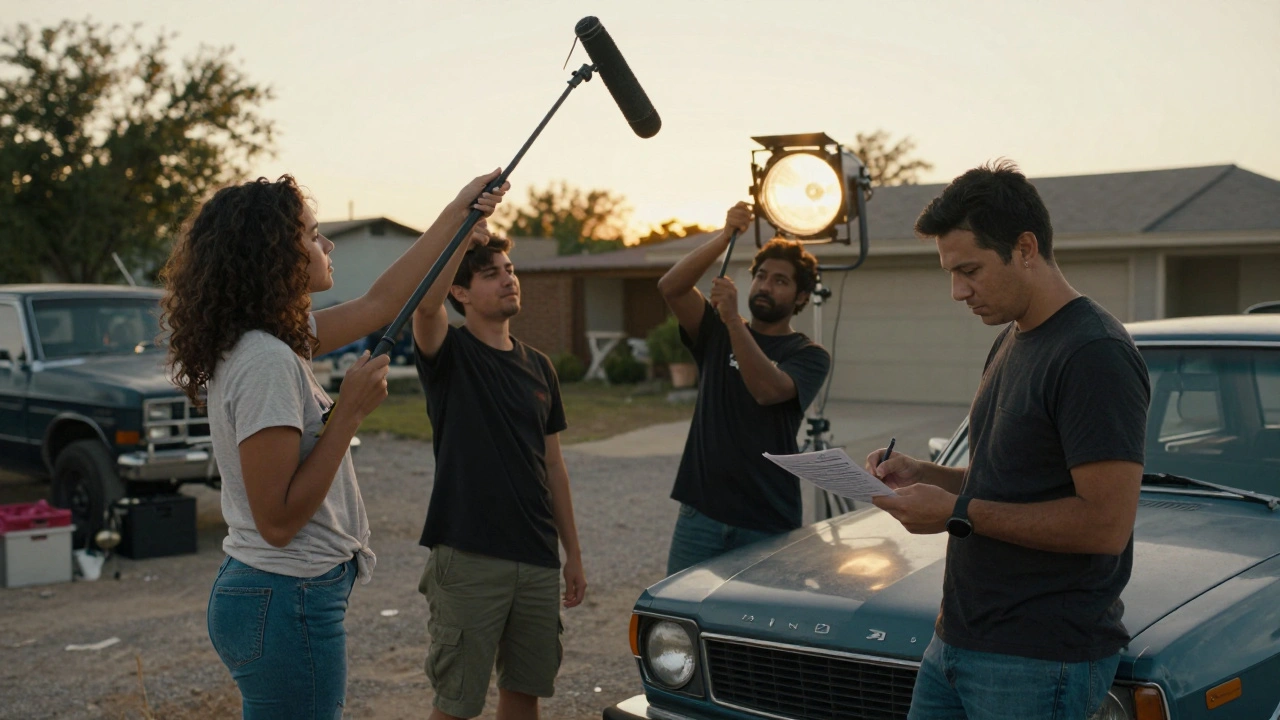
For years, the film industry talked about diversity-mostly in front of the camera. But the real imbalance? It’s behind the scenes. The grip, the gaffer, the script supervisor, the location manager, the costume assistant-these are the people who make movies happen. Yet, they’re still overwhelmingly white, male, and from the same narrow networks. If you want real change in Hollywood, you start by hiring differently below the line.
What Are Below-the-Line Roles, Really?
Below-the-line (BTL) roles are the crew positions that aren’t actors, directors, or producers. They’re the electricians who string lights, the set designers who build entire worlds from scratch, the transportation coordinators who move gear across three counties in a day. These jobs pay hourly, require hands-on skills, and rarely get spotlight time. But they make up over 80% of every film’s workforce.
Here’s the problem: studios and production companies still hire from the same old circles. A gaffer gets hired because his uncle hired him ten years ago. A location manager gets picked because she went to the same film school as the producer. It’s not about talent-it’s about who you know. And who you know? Usually looks like the same person who’s been doing this for decades.
Why Diversity in Crew Matters More Than You Think
It’s not just fairness. It’s better filmmaking. A diverse crew brings different ways of seeing the world. A camera operator who grew up in a rural town notices details a city-raised crew member might miss. A sound recordist who speaks multiple languages catches cultural nuances in dialogue you can’t script. A costume designer who understands traditional textiles from their community adds authenticity no research paper can replicate.
Look at the data: A 2024 study by the USC Annenberg Inclusion Initiative found that films with diverse below-the-line crews were 37% more likely to be profitable internationally. Why? Because audiences everywhere respond to truth. When the people making the movie reflect the world it’s about, the story lands harder.
Where the System Breaks Down
Most production companies say they want diversity. But their hiring process is broken from the start.
- Job boards still list roles with vague requirements like “industry experience”-which means you need to have worked on a previous studio film. But if you’ve never been hired, how do you get that experience?
- Union pathways are slow. The IATSE union, which represents most below-the-line workers, has over 150 local chapters. But mentoring programs are uneven. In some cities, you can get a mentor in weeks. In others, you wait years-or never get one.
- Networking events are expensive. Film festivals, mixer dinners, tech expos-they cost money. People working two jobs just to pay rent can’t afford to show up.
- References are the gatekeepers. If you don’t have a producer or DP who’ll vouch for you, your resume goes in the trash-even if you’ve trained at a film school or worked on indie shorts.
It’s not that people aren’t qualified. It’s that the system doesn’t let them in.
How to Fix It: Real Steps, Not Buzzwords
Change doesn’t come from a tweet or a press release. It comes from action. Here’s what actually works.
1. Replace “Industry Experience” With “Relevant Skills”
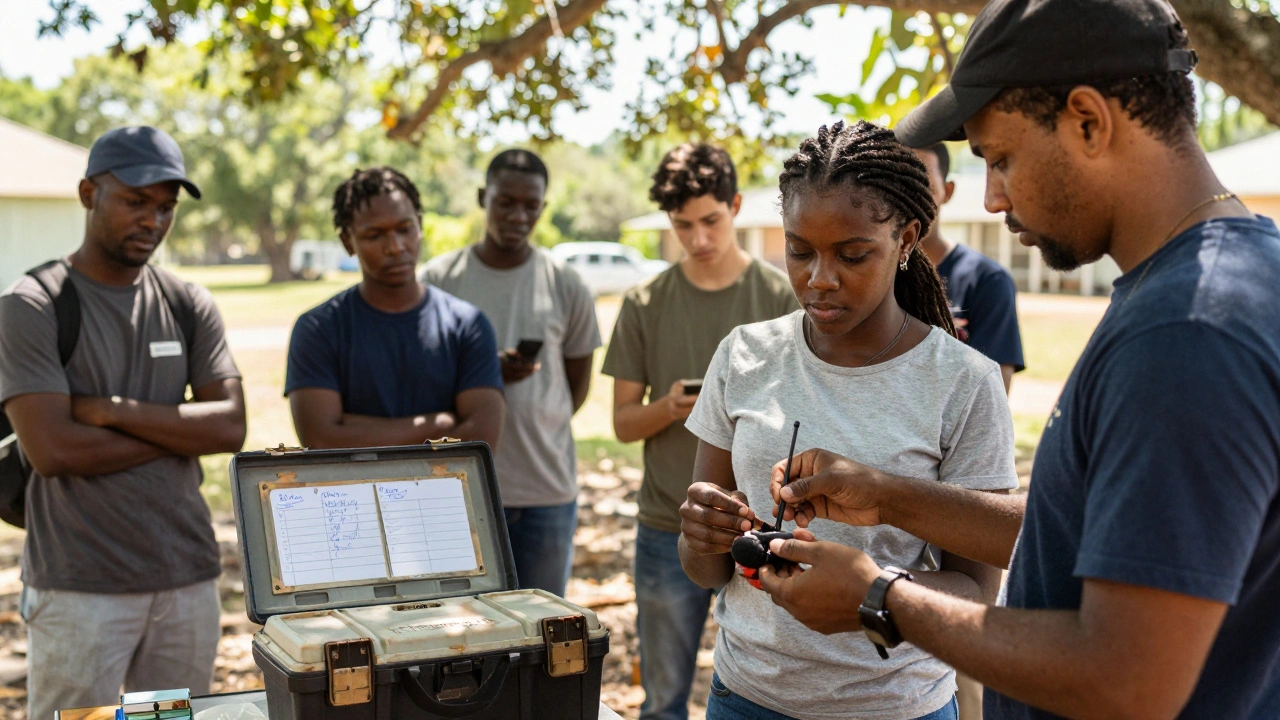
Stop asking for “five years on studio sets.” Ask: “Can you rig a 10K light? Have you managed a location permit in a residential zone? Can you troubleshoot a wireless mic drop?”
One indie producer in Atlanta started posting job listings with skill-based checklists instead of resume requirements. Within six months, 40% of their new hires were women, people of color, or non-binary individuals-people who’d never been on a studio set before. They learned on the job. And they stayed.
2. Partner With Local Training Programs
Look beyond film schools. Community colleges, vocational programs, and nonprofits like Women in Film a nonprofit organization that supports women in all areas of the film industry, Black Filmmakers Collective a network of Black creatives and crew members across the U.S., and Latinx Producers Alliance a coalition focused on Latinx representation in production roles train people with zero industry access. They’re full of talent. You just have to go find them.
Some production companies now send their line producers to local workshops. They don’t just hand out business cards-they offer paid internships, shadowing spots, and referrals. That’s how pipelines start.
3. Pay for Access
If you want diverse crew, pay for their access. Fund transportation. Cover the cost of union dues for first-time hires. Offer stipends for training certifications. Don’t expect someone working a night shift at a grocery store to drop $300 on a lighting course.
Netflix’s “Production Diversity Initiative” in 2023 paid for 200+ crew members from underrepresented groups to get certified in digital cinematography. Those people are now working on major productions. No one asked for a degree. They just needed a chance.
4. Track and Publish Your Numbers
What gets measured gets changed. If you’re a production company, start tracking the gender, race, and background of every crew hire-below the line. Don’t hide it. Publish it quarterly.
One small studio in New Mexico started sharing their crew demographics on their website. Within a year, they saw a 200% increase in applications from women and people of color. Why? Because people saw they weren’t just talking.
What Doesn’t Work
Don’t fall for these myths:
- “We tried hiring diverse crew, but they didn’t work out.” That’s not true. You hired someone who didn’t have the same support system. They didn’t fail. The system failed them.
- “We don’t have time to train people.” You don’t have time not to. The average production loses $12,000 a day to delays. A well-trained, diverse crew works faster because they bring fresh perspectives that solve problems you didn’t even know you had.
- “It’s too hard to find qualified people.” You’re not looking in the right places. Look at film programs at HBCUs. Look at community theaters. Look at people who’ve worked on student films or documentaries. They’re qualified. They’re just invisible.
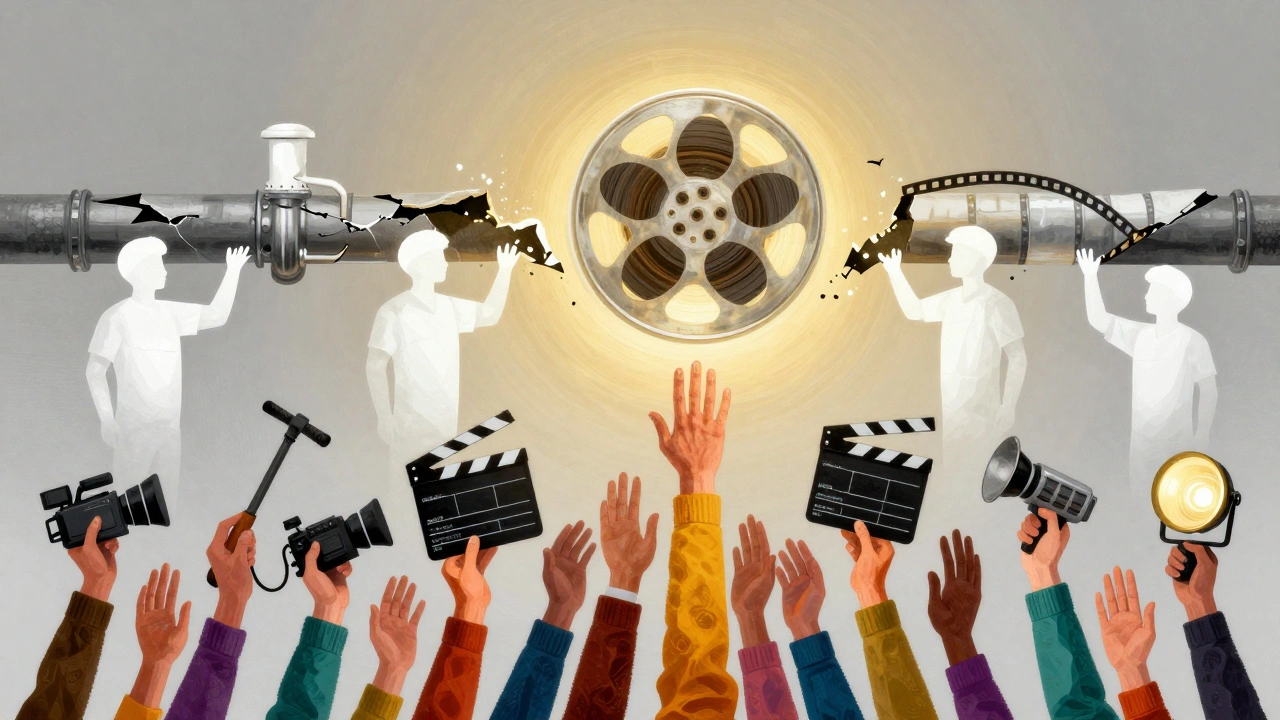
Real Stories From Real Sets
On a low-budget horror film in Louisiana, the director hired a sound assistant who’d never touched a boom mic before. She’d been working as a teacher. But she’d recorded church sermons for her community radio station. She knew how to capture voice with emotion. She ended up winning a regional sound award.
In Toronto, a location manager who was a former refugee from Syria noticed a building’s architecture matched the script’s setting perfectly. No one else saw it. She got the shot. The film got into Sundance.
These aren’t outliers. They’re what happens when you stop assuming talent comes from the same places.
Where to Start Today
You don’t need a big budget. You don’t need a studio deal. You just need to change one habit.
- Next time you post a job, remove “industry experience” from the description.
- Reach out to one local training program this week. Ask if they have students looking for work.
- Offer a two-day paid shadowing spot to someone who’s never been on set.
- Ask your crew: “Who’s someone you know who’s been overlooked?” Then call them.
Diversity isn’t a checkbox. It’s a culture. And culture starts with who you let through the door.
Why are below-the-line roles often overlooked in diversity discussions?
Below-the-line roles don’t get screen time, so they’re easy to ignore. But they’re the backbone of every production. If the camera operator, gaffer, or script supervisor isn’t diverse, the film’s perspective is limited-even if the lead actor is. Real inclusion means every job on set reflects the world.
Do unions like IATSE help or hurt diversity efforts?
Unions can help, but they’re not automatic solutions. IATSE has made progress with apprenticeship programs, but access varies wildly by region. In some areas, unions are gatekeepers who protect old networks. In others, they actively recruit from underserved communities. The key is pushing local chapters to be transparent and proactive.
Can indie filmmakers make a difference in crew diversity?
Absolutely. Indie films are where the rules are still being written. Many studios won’t take risks, but indie directors can. They can hire a first-time gaffer from a community college, pay them fairly, and give them credit. Those people go on to bigger projects. Indie films are the training ground for the next generation of crew talent.
What’s the biggest mistake companies make when trying to hire diverse crew?
They assume diversity means lowering standards. It doesn’t. It means expanding the pool of people who’ve had a fair shot. The mistake is looking for people who fit the mold instead of looking for people who can break it. Talent isn’t rare. Access is.
How can I find diverse crew if I’m not in LA or NYC?
You don’t need to be in a major city. Film schools in Ohio, Texas, and North Carolina have strong programs. Look at local theater groups, film festivals, and nonprofit arts orgs. Many towns have filmmakers of color running their own projects. Reach out. Offer to collaborate. Diversity isn’t tied to geography-it’s tied to opportunity.
Next Steps for Crew and Productions
If you’re a crew member: Document your skills. Build a portfolio-even if it’s just phone videos of you setting up lights or managing locations. Reach out to local filmmakers. Offer to work for free once to get your name on a credit.
If you’re a producer: Start tracking your crew demographics. Make one change this month-remove a barrier, reach out to one new training group, hire one person who doesn’t fit the usual mold. Don’t wait for a policy. Just act.
Change doesn’t come from the top down. It comes from the set up. One hire. One conversation. One chance.





Comments(6)