Have you ever watched a movie and felt like you were standing on another planet, or maybe fighting alongside a dragon? You probably didn't question how that image got onto the screen. That’s because modern Visual Effects are the invisible art of creating imagery that does not exist in the real world during live-action shooting. When done right, you don’t notice the work at all. You just feel the story.
But when we strip away the magic and look at the technical breakdown, a fascinating process emerges. It involves everything from physics simulations to digital painting. Let’s pull back the curtain on how these illusions are built, why they matter, and what goes into making them believable.
The Invisible Art of Compositing
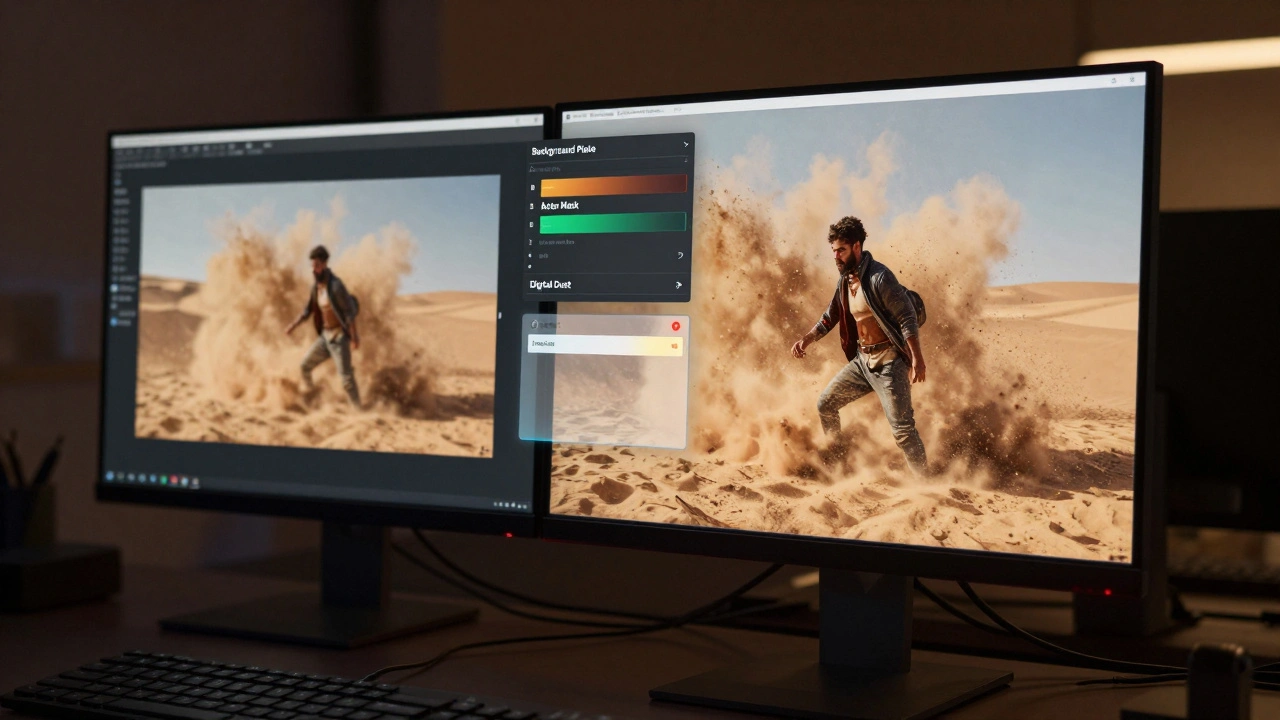
Most people think visual effects mean adding a spaceship to a sky. While that is part of it, the real heavy lifting often happens in Compositing, which is the process of combining multiple visual elements from different sources into a single, seamless image. Think of it like layering ingredients in a recipe. You have the background plate, the actor, the lighting effects, and the smoke. Each one is a separate file. The compositor’s job is to blend them so your eye doesn’t jump between layers.
In films like Dune, the sandstorms aren't just green screens. They are complex layers of practical dust kicked up by fans, mixed with digital particles generated by software like Houdini. If the lighting on the digital dust doesn't match the sun hitting the actor's face, the illusion breaks. This requires precise color grading and depth-of-field matching. The goal is consistency. Your brain expects light to behave a certain way. If the shadow falls wrong, you instantly know something is fake.
- Matchmoving: Tracking the camera movement in live footage so digital objects move in sync.
- Rotoscoping: Manually cutting out actors frame-by-frame to separate them from backgrounds.
- Color Correction: Ensuring all elements share the same temperature and contrast levels.
This stage is where raw assets become a coherent scene. Without solid compositing, even the most expensive 3D model looks like a sticker pasted onto a video.
Motion Capture: Bridging Performance and Pixels
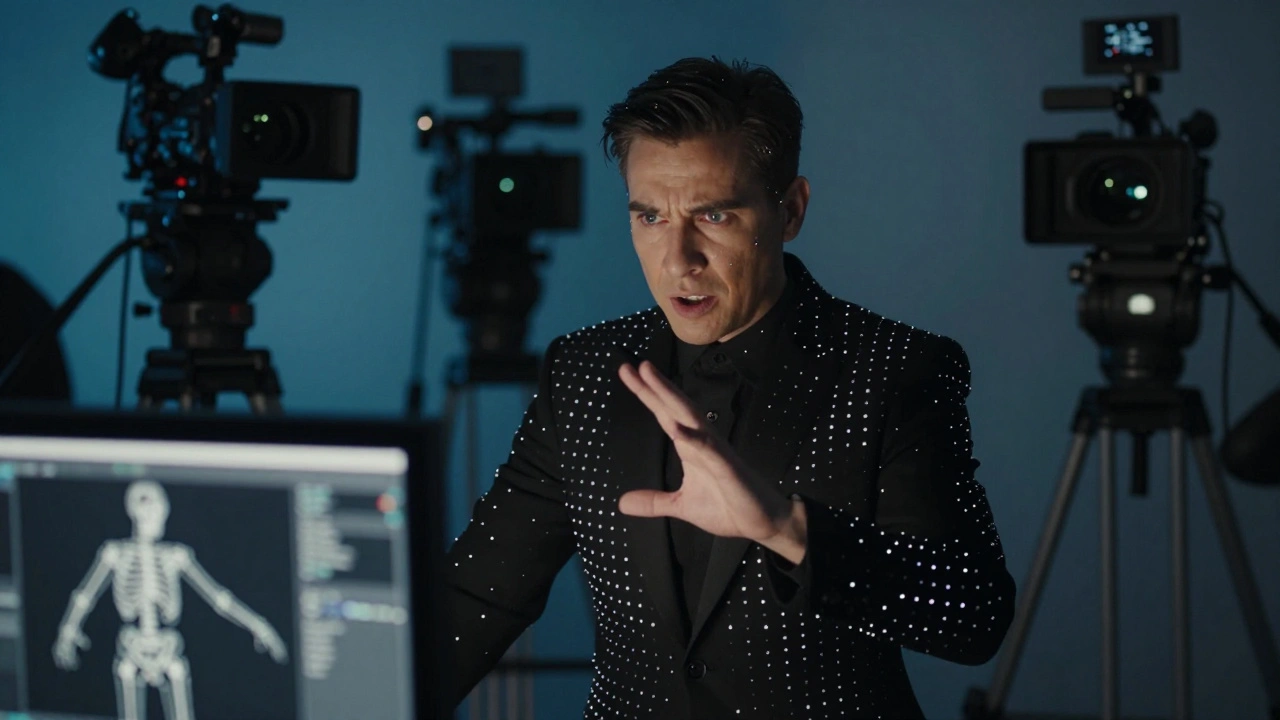
When we talk about character animation, Motion Capture, or MoCap, is a technology that records an actor's movements and translates them into digital character animations. It’s not just about walking or running. It’s about capturing the micro-expressions that make a character human-or alien-in a way that feels authentic.
Consider Gollum in The Lord of the Rings or Caesar in Planet of the Apes. These characters weren't animated by hand. Actors like Andy Serkis wore suits covered in reflective markers. Cameras tracked those markers in 3D space. Then, animators cleaned up the data and mapped it onto a digital skeleton. But here’s the catch: the facial rig must be incredibly detailed. A slight twitch of an eyebrow can change the entire meaning of a line.
Modern systems use markerless tracking too. High-resolution cameras capture the actor’s face directly, using AI to map skin deformation. This allows for faster production times and more nuanced performances. However, it still requires a strong foundation in anatomy. If the underlying muscle structure of the digital character doesn’t react correctly to gravity or emotion, the audience feels uncanny valley syndrome-that creepy feeling when something looks almost real but isn't quite there.
Physics Simulations: Making Destruction Real
Explosions, water crashes, and crumbling buildings are nightmares for traditional sets. They’re dangerous, expensive, and hard to control. Enter Physics Simulation, which uses computer algorithms to calculate the behavior of physical materials like fluid, fire, and debris based on real-world laws. Software tools like Houdini dominate this space because they allow artists to tweak variables like viscosity, density, and wind resistance.
Take a tsunami scene. You don’t model every drop of water. Instead, you create a simulation domain-a box where the computer calculates how water interacts with itself and obstacles. You might start with a broad stroke of motion, then refine it by adding turbulence. The key is interaction. Does the water splash realistically when it hits a car? Does it leave wet marks on the pavement? These details sell the reality.
Fire is even trickier. It’s not just orange blobs. It has volume, heat distortion, and varying opacity. Artists often combine volumetric rendering (simulating light passing through gas) with particle systems (individual sparks). The result is a dynamic element that changes shape every frame, requiring constant adjustment to ensure it matches the timing of the action.
| Technique | Primary Use Case | Key Software Tools |
|---|---|---|
| Compositing | Blending live action with CG elements | Nuke, After Effects |
| Motion Capture | Character performance translation | Vicon, Faceware |
| Physics Simulation | Fluids, fire, destruction | Houdini, Blender |
| CGI Modeling | Creating digital environments/assets | Maya, ZBrush |
Environmental Design: Building Worlds from Scratch
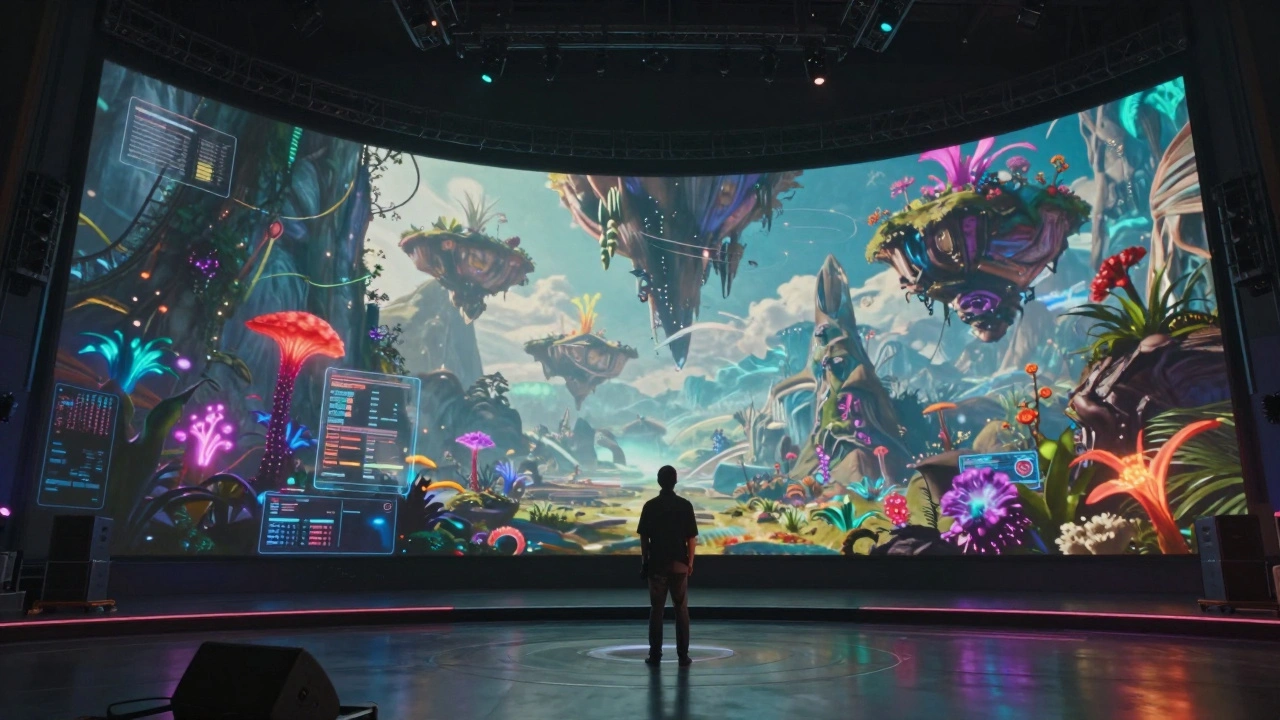
Sometimes, the location simply doesn’t exist. Directors want Mars, a futuristic city, or a fantasy forest. Digital Environment Creation involves designing and rendering vast virtual landscapes that serve as backdrops for live-action scenes. This isn’t just about pretty pictures. It’s about scale and perspective.
In Avatar: The Way of Water, the underwater environments were largely digital. The team had to simulate how light bends through water, how kelp sways in currents, and how creatures interact with the seabed. They used photogrammetry-scanning real locations-to get accurate textures. Then they stretched and modified those textures to fit the fictional world. The trick is maintaining internal logic. If the plants look like Earth plants, the audience pulls out of the fantasy. Every leaf, rock, and ripple must support the story’s unique aesthetic.
Lighting plays a huge role here too. Global illumination engines calculate how light bounces off surfaces. In a dark cave, the only light source might be a torch. The shadows must stretch and distort accordingly. Getting this wrong makes the environment feel flat and artificial. Good environmental design grounds the viewer in the scene, making them forget they’re looking at pixels.
The Human Element Behind the Code
It’s easy to think of VFX as purely technical. But at its core, it’s storytelling. Every pixel serves the narrative. A shaky camera effect might indicate danger. A slow-motion explosion emphasizes impact. The VFX supervisor works closely with the director to ensure these choices align with the emotional beat of the scene.
Collaboration is key. Concept artists sketch ideas. Modelers build geometry. Texture painters add dirt and wear. Animators bring it to life. Compositors glue it together. Editors cut it into rhythm. No single person does it all. Teams often number in the hundreds for major blockbusters. Communication pipelines are critical. If a modeler changes a character’s arm length, everyone downstream needs to know immediately, or the final shot will break.
Despite advances in AI and automation, human creativity remains irreplaceable. Algorithms can generate noise patterns, but they can’t decide whether a character should look tired, angry, or hopeful. That judgment call comes from experience and empathy. The best VFX feels effortless because it’s driven by clear intent, not just technical prowess.
Future Trends: What’s Next for Visual Effects?
As hardware improves, so do the possibilities. Real-time rendering engines like Unreal Engine are moving into film production. Directors can now see near-final quality visuals on set, allowing for better framing and acting decisions. Virtual production stages, like those used in The Mandalorian, replace green screens with massive LED walls displaying dynamic backgrounds. This gives actors realistic reflections in their eyes and reduces post-production time.
AI is also changing workflows. Machine learning models can automate tedious tasks like rotoscoping or cleanup. Instead of spending hours cutting out hair strands, an artist might train a neural network to do it in minutes. However, this raises questions about job roles and creative control. Will AI replace artists, or empower them? Likely both. The future belongs to those who can guide these tools effectively, focusing on high-level creative direction rather than manual labor.
Ultimately, visual effects will continue to evolve, but the goal remains the same: to tell stories that captivate us. Whether through subtle enhancements or spectacular spectacles, VFX enriches our cinematic experiences by expanding the boundaries of imagination.
What is the difference between VFX and CGI?
CGI (Computer-Generated Imagery) refers specifically to images created entirely by computers. VFX (Visual Effects) is a broader term that includes CGI but also encompasses practical effects, compositing, and other techniques used to integrate digital and live-action elements seamlessly.
How long does it take to create VFX for a movie?
The timeline varies widely depending on complexity. Simple shots might take a few weeks, while complex sequences involving thousands of assets can require months or even years. Major blockbusters often have VFX teams working for over two years before release.
Is motion capture considered acting?
Yes, many industry professionals consider motion capture a form of acting. Performers deliver emotional nuances and physical actions that drive the character’s presence, much like traditional on-camera roles. Awards bodies increasingly recognize MoCap performances as legitimate acting achievements.
Why do some VFX look bad?
Poor VFX often stem from budget constraints, tight deadlines, or lack of artistic oversight. When lighting, texture detail, or physics simulations don’t match live-action footage, the illusion breaks. Consistency and attention to realism are crucial for believable results.
Can AI replace VFX artists?
AI automates repetitive tasks but cannot replicate creative decision-making. While machine learning speeds up processes like rotoscoping, human artists remain essential for conceptualizing, directing, and refining visual narratives. AI enhances efficiency rather than replacing expertise.