Key Takeaways
- 3D cinema has gone through three major "waves": the Golden Age, the 80s experimentation, and the digital era.
- The primary struggle has always been the balance between visual immersion and physical discomfort.
- Technological shifts, from polarized lenses to digital projection, changed how we experience depth.
- Market saturation often leads to "3D fatigue," where audiences reject the format once it becomes a gimmick.
The Early Days and the Polarized Boom
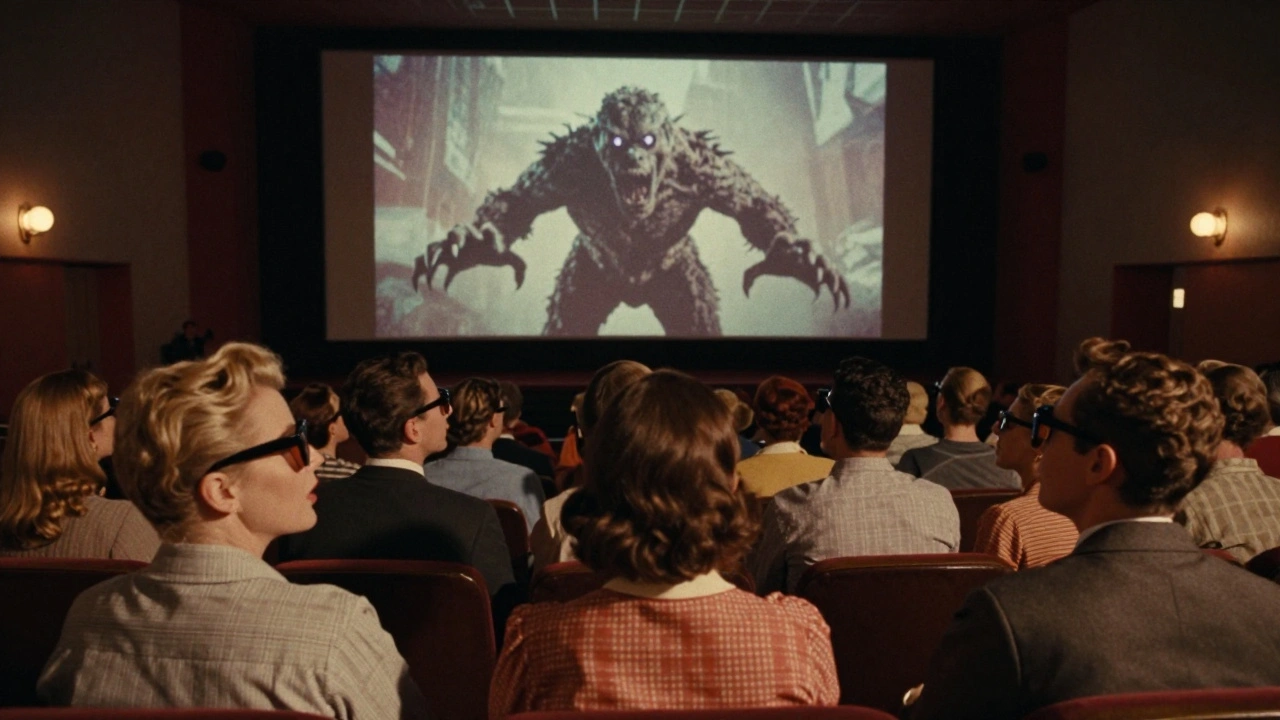
Long before computers, people were obsessed with making images look real. Stereoscopy is the technique of creating an illusion of depth by presenting two slightly different images to each eye. By the 1950s, Hollywood realized they could use this to lure people away from their new home television sets. This era, often called the Golden Age of 3D, relied on polarized glasses-basically, filters that told each eye which part of the image to look at.
Films like House of Wax (1953) were massive hits. People flocked to theaters not just for the story, but for the sensation. However, the tech was clunky. The projectors were hard to align, and if the image shifted by even a fraction of an inch, the audience got a pounding headache. By the end of the decade, the novelty wore off, and the cost of operating two projectors for a single screen became too expensive for most theaters. The 3D boom didn't just pop; it vanished almost overnight.
The Gimmick Era of the 80s
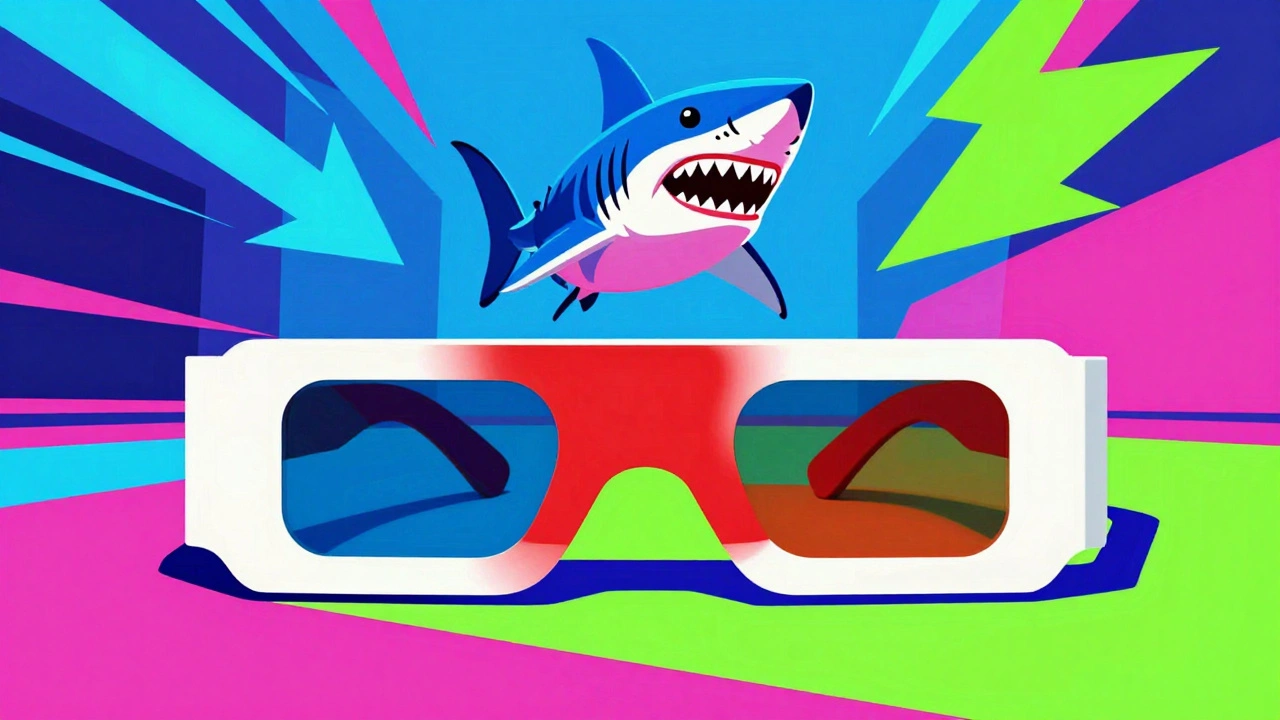
After a long slumber, 3D made a noisy return in the 1980s. This time, it wasn't about high art; it was about the "wow" factor. Instead of expensive polarization, many films used anaglyph 3D-those iconic red and blue glasses. Anaglyph 3D is a method where two images are offset in color, typically red and cyan, to simulate depth. It was cheap to produce and easy to distribute, which is why it became a staple of B-movies and horror flicks.
The problem was that red-blue glasses messed with the colors of the movie. A lush green forest looked like a muddy mess. This era focused heavily on "pop-outs"-objects like arrows or sharks that flew directly at the camera. While it was fun for five minutes, it didn't add anything to the storytelling. When the credits rolled, people realized that the 3D was just a layer of paint on top of a mediocre movie. The industry crashed again, leaving 3D to be a niche curiosity for a few more years.
| Technology | Era | Visual Quality | Main Drawback |
|---|---|---|---|
| Polarized (Analog) | 1950s | High Contrast | Projector Alignment Issues |
| Anaglyph (Red/Blue) | 1980s | Poor Color | Visual Fatigue / Gimmicky |
| Digital (RealD/IMAX) | 2009-Present | High Definition | High Ticket Cost / Glasses Weight |
The Avatar Effect and the Digital Revolution
Everything changed in 2009 when James Cameron released Avatar. This wasn't just another movie; it was a showcase for Digital 3D, which is the process of creating 3D effects during the post-production phase using computers rather than filming with dual cameras. Cameron didn't just want things to fly at the screen; he wanted the audience to feel like they were inside the world of Pandora.
The impact was seismic. Cinema chains rushed to install RealD 3D systems and IMAX screens. For a few years, 3D was the gold standard. If a movie wasn't in 3D, it felt like it was missing something. This was the biggest "boom" in history, turning 3D from a novelty into a requirement for blockbusters. The technology had finally caught up with the vision: the images were sharper, the glasses were more comfortable, and the depth felt natural.
The Crash: When Everything Became 3D
Greed is a powerful force in Hollywood. Once studios saw the massive ticket price premium for 3D movies, they started converting everything. We entered an era of "forced 3D," where movies that were filmed in 2D were digitally converted into 3D in post-production. The results were often terrible. Instead of a lush world, we got a flat image with a slight, distracting shimmer.
Audiences began to push back. The "3D fatigue" set in. People grew tired of paying extra for glasses that made the screen look dim and caused eye strain. When the market was flooded with low-quality 3D conversions, the prestige of the format vanished. The experience stopped being about art and started being about a surcharge on a ticket. By the mid-2010s, the bubble burst again. Studios realized that most people preferred a crisp 2D image over a blurry 3D one.
Where Do We Stand Now? The Niche Future
Today, 3D isn't dead, but it's no longer the king of the multiplex. It has shifted from being a general requirement to a "premium experience." We see it now in high-end formats like IMAX, where the screen size and sound quality make the 3D actually worth the effort. The industry has learned that 3D works best when it's an integral part of the storytelling, not a filter applied at the end.
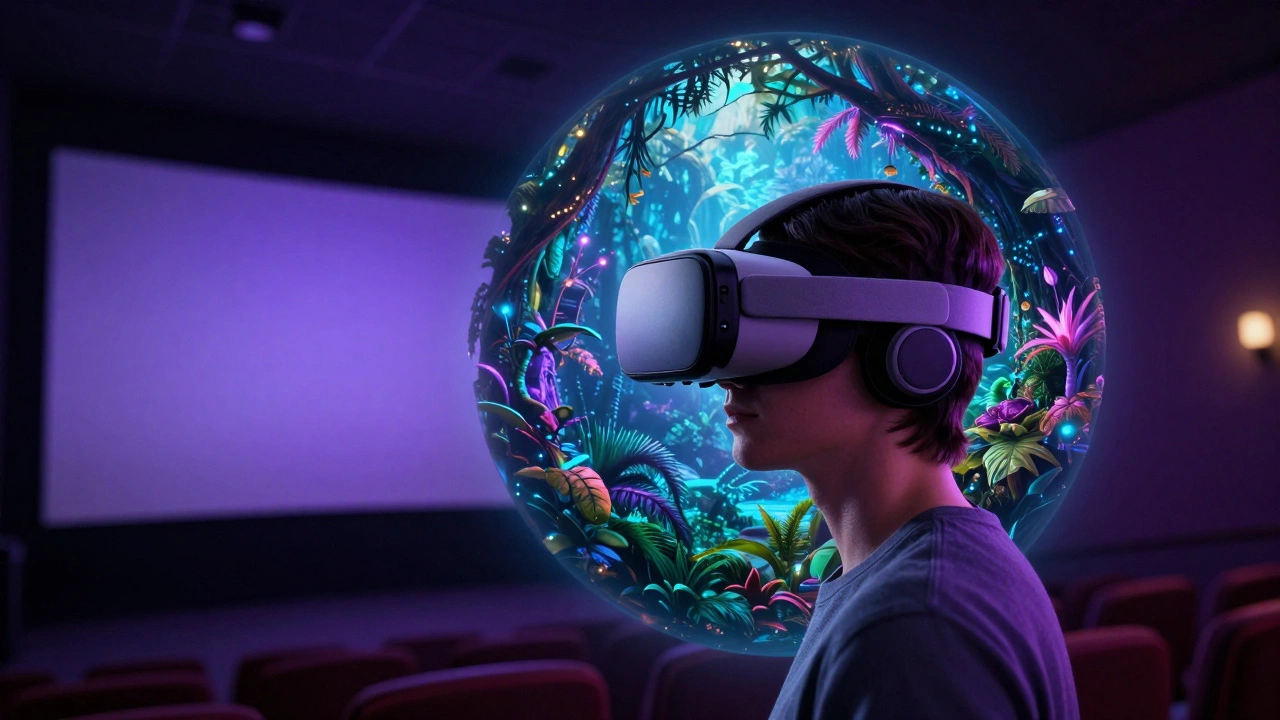
We are also seeing a shift toward Virtual Reality (VR) and Augmented Reality (AR). These technologies take the concept of stereoscopy and push it to the extreme, removing the theater screen entirely. While the traditional 3D cinema movie might have peaked, the desire for depth is stronger than ever. We've just moved from looking at a window into another world to stepping through the window entirely.
Why do some 3D movies cause headaches?
Headaches often occur due to "vergence-accommodation conflict." Your eyes focus on the screen surface, but your brain is told the image is far away or very close. This mismatch confuses the visual system and can lead to nausea or strain, especially in poor-quality digital conversions.
What is the difference between active and passive 3D?
Passive 3D (like RealD) uses polarized lenses to split a single image into two. Active 3D uses battery-powered shutter glasses that blink on and off rapidly to alternate images for each eye. Active 3D is generally sharper but the glasses are heavier and more expensive.
Is 3D cinema still profitable for theaters?
It is less profitable than it was during the Avatar era. Most theaters now use 3D as a "Premium Large Format" (PLF) upsell rather than a standard offering. The value is in the higher ticket price for a specialized experience rather than mass-market appeal.
Can you convert any 2D movie to 3D?
Technically, yes, using software to create "depth maps." However, these conversions often look unnatural because the software is guessing where objects are in space. True 3D filmed with two lenses (native 3D) always looks more realistic.
Will 3D movies ever come back in a big way?
It's likely that 3D will remain a niche for "event movies." As VR technology improves, we might see a hybrid where theaters offer more interactive, immersive depth that goes beyond a flat screen, making the experience feel less like a movie and more like a simulation.
Next Steps for Cinema Lovers
If you're curious about the future of depth, start by tracking "Native 3D" releases rather than "Converted 3D." Look for films shot with specialized 3D rigs, as these provide the most immersive experience without the eye strain. If you have a VR headset, explore 3D cinematic shorts; it's a great way to see where the "boom" is heading next. For those who prefer the classic experience, seeking out IMAX museums or specialized screenings of 50s 3D classics can give you a real sense of how this wild cycle began.



Comments(9)