You’ve probably seen those old black-and-white movies where the bad guys get caught in the last five minutes, or where a married couple sleeps in twin beds with a nightstand between them. It looks quaint now, maybe even a bit silly. But for thirty years, from 1934 to 1968, this wasn’t just a stylistic choice. It was law. Or at least, it felt like law.
The Hays Code is a set of industry moral guidelines that governed the content of most United States motion pictures released by major studios. Also known as the Motion Picture Production Code, it didn’t just ban nudity or swearing; it dictated how stories could be told. If you wanted your movie shown in theaters across America, you had to follow these rules. And if you broke them? Your film might not get released at all, or it would be cut up so badly it lost its soul.
Why Did Hollywood Need a Code?
To understand why the Production Code Administration (PCA) became so powerful, you have to look at what happened before it existed. In the early 1930s, Hollywood was wild. Pre-Code films featured gangsters who got away with murder, women who had affairs and didn’t apologize for it, and plenty of suggestive dancing. The public loved it, but religious groups hated it.
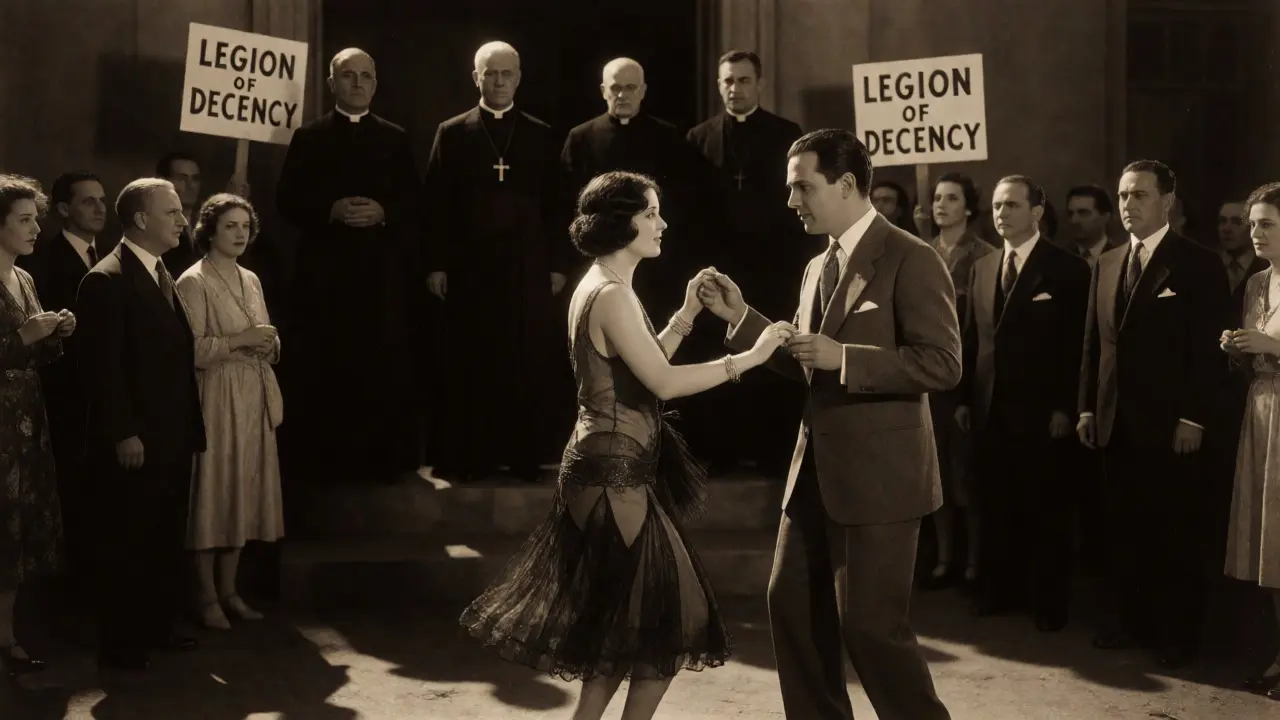
Catholic organizations were particularly vocal. They formed the Legion of Decency, which threatened to boycott any film deemed immoral. This wasn’t a minor threat. Movie tickets were big business during the Great Depression, and studios couldn’t afford to lose millions of Catholic viewers. So, they panicked. They hired Will H. Hays, a former Postmaster General and Republican politician, to clean up the image of Hollywood. His job? Make sure the movies stopped offending people so much that they stopped going to the theater.
The Three General Principles
The code itself wasn’t a long list of "don't do this" commands. It started with three broad principles that producers had to interpret. These principles were vague enough to scare everyone into playing it safe:
- No picture shall be produced that will lower the moral standards of those who see it. Hence the sympathy of the audience should never be thrown to the side of crime, wrongdoing, evil or sin.
- Correct standards of life, subject only to the requirements of drama and entertainment, shall be presented.
- Law, either natural or human, shall never be mocked.
That first bullet point is the killer. "Sympathy... should never be thrown to the side of crime." This meant that if your main character was a criminal, he had to suffer for it. He couldn’t just be cool and successful. He had to pay the price. This rule alone changed the entire trajectory of film noir and gangster movies.
The Specific Dos and Don’ts
Beyond the general principles, there were specific prohibitions. Some were obvious, like no nudity or obscene language. Others were bizarrely specific. You couldn’t show miscegenation-sexual relationships between white people and Black people. You couldn’t show detailed methods of crime. If a character committed suicide, you had to show why they did it, and usually, it had to be portrayed as a tragic mistake rather than a noble choice.
One of the most famous restrictions involved kissing. The rule stated that "the kiss should not be held too long, nor suggest passions." Technically, this meant a kiss on screen couldn’t last more than three seconds. Directors got creative around this. They’d cut away to a clock ticking, or a train pulling out of the station, implying that the passion continued off-screen. It forced filmmakers to use visual metaphor instead of explicit action, which ironically led to some of the most artistic scenes in cinema history.
| Restriction | Studio Workaround |
|---|---|
| No Profanity | Use invented slang or cut words mid-sentence (e.g., "Gosh darn it") |
| No Drug Use | Show drugs as clearly harmful and addictive; never recreational |
| No Miscegenation | Avoid romantic pairings across racial lines entirely |
| Crime Must Be Punished | Add a final scene where the villain is arrested or killed |
| Sexual Perversion | Imply homosexuality through mannerisms, never state it explicitly |
Joseph Breen’s Iron Fist
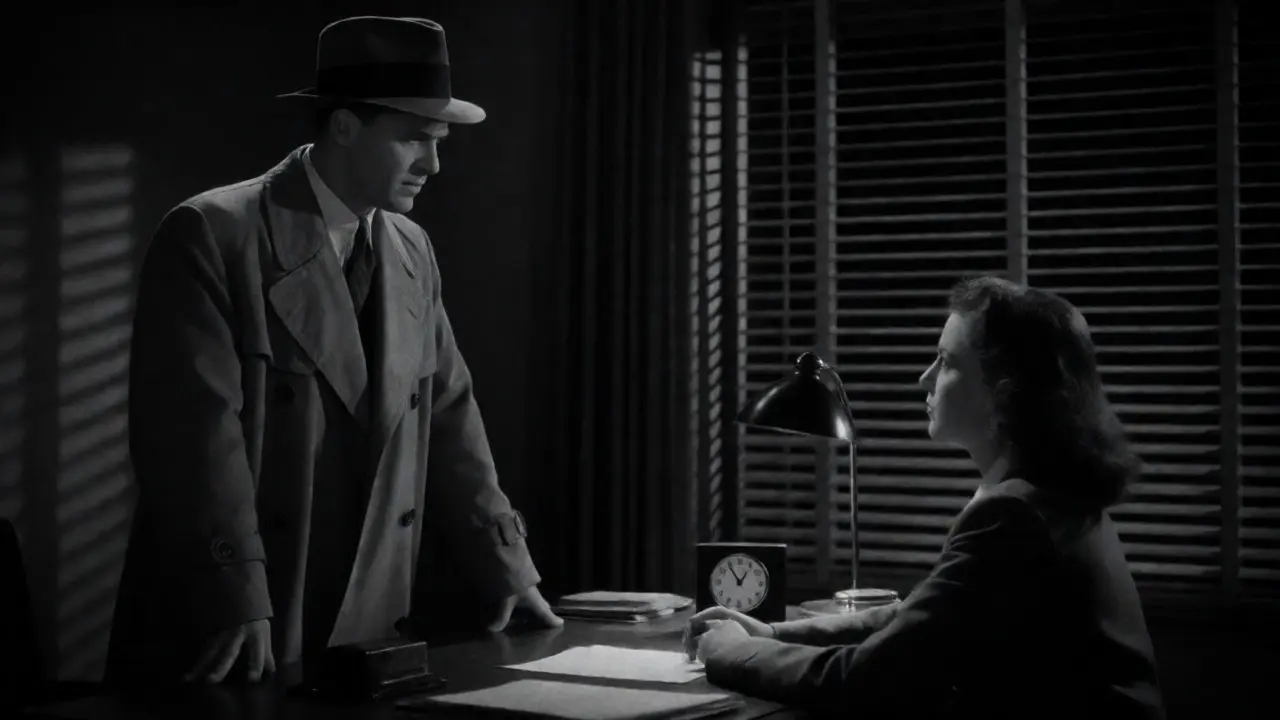
If Will Hays was the face of the code, Joseph Breen was the enforcer. Breen took over the PCA in 1934 and made sure the rules were actually followed. Before him, studios often ignored the code because enforcement was lax. Breen changed that. He read every script, watched every reel, and wrote memos back to the studios detailing exactly what needed to change.
Breen wasn’t interested in art. He was interested in morality as he defined it. He banned certain words outright. "Hell" and "damn" were forbidden unless absolutely necessary for historical context. He scrutinized costumes, making sure women’s necklines weren’t too low and men’s shirts weren’t too open. If a director tried to sneak in a risqué line, Breen would demand a reshoot. This level of control frustrated directors like Alfred Hitchcock and Billy Wilder, who had to constantly fight for their vision.
How Filmmakers Beat the System
Here’s the interesting part: constraints breed creativity. Because filmmakers couldn’t say things directly, they learned to hint. They used dialogue that sounded innocent to the censors but carried double meanings for the adult audience. Think about the films of Marilyn Monroe or Cary Grant. Their performances often relied on subtext. A glance, a pause, or a tone of voice conveyed more than an explicit scene could.
Directors also played games with editing. They’d show a man and woman entering a bedroom together, then cut to the next morning. The audience knew what happened, but the camera never showed it. This technique, known as the "fade-to-black," became a staple of the era. It allowed for sexual implication without visual proof. It also gave actors room to improvise gestures that suggested intimacy without breaking the rules.
The Cracks Begin to Show
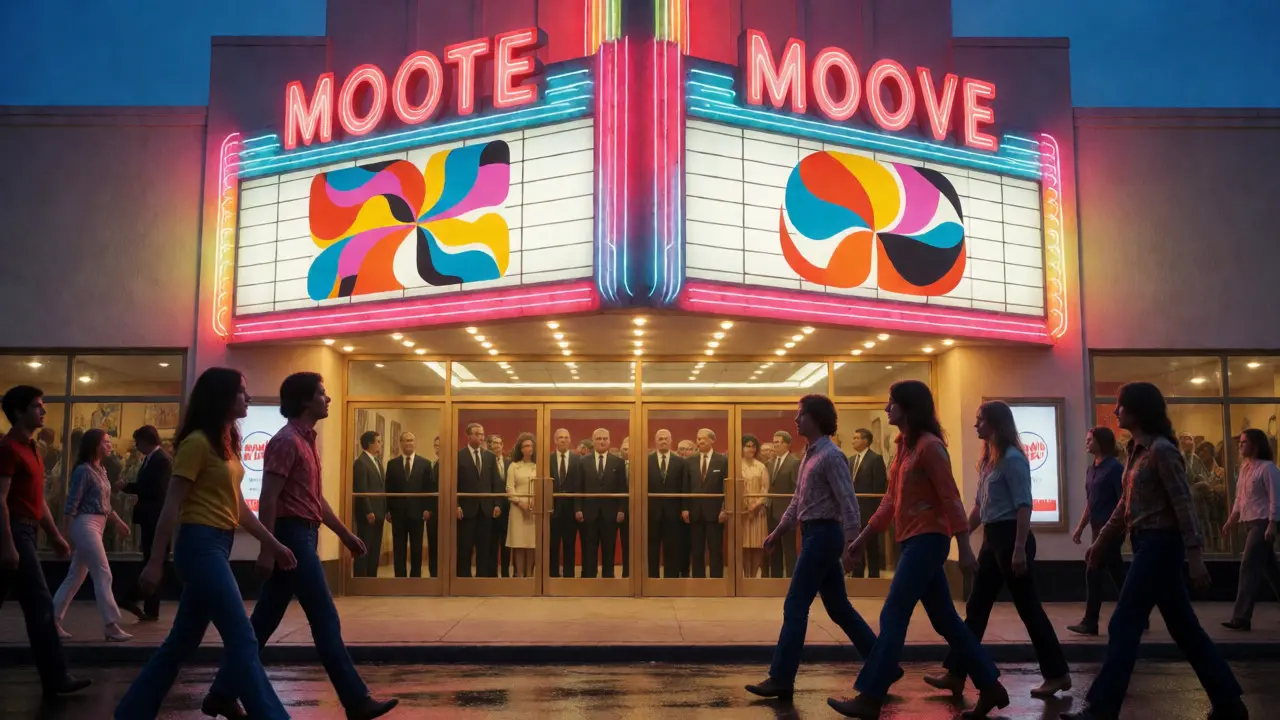
By the late 1950s, the world had changed. Television was stealing audiences, and Hollywood needed to offer something TV couldn’t. That something was often sex and violence. Foreign films, which weren’t bound by the American code, started showing up in US theaters with nudity and frank discussions of sexuality. Audiences began to prefer these edgier stories.
Then came The Man with the Golden Arm (1955), which dealt with drug addiction openly. The PCA refused to certify it. The studio, United Artists, released it anyway. It was a massive hit. This proved that a film could succeed commercially without the PCA seal of approval. The monopoly was broken.
Other films followed suit. Psycho (1960) showed a shower scene that implied nudity and included a toilet flush-a first for American cinema. Who’s Afraid of Virginia Woolf? (1966) used profanity that would have been unthinkable a decade earlier. Each violation chipped away at the code’s authority.
The End of an Era
In 1968, the MPAA replaced the Hays Code with the rating system we know today: G, M, R, X. This shift marked the end of censorship and the beginning of classification. Instead of telling filmmakers what they couldn’t do, the new system warned parents about what their kids might see.
The transition wasn’t instant. Some studios dragged their feet, afraid of losing conservative audiences. But the cultural tide had turned. The Vietnam War, the civil rights movement, and the sexual revolution had made the moral certainty of the 1930s feel outdated. By the 1970s, Hollywood was producing films like Easy Rider and Last Tango in Paris, which pushed boundaries further than anyone thought possible under the old regime.
Legacy of the Code
Did the Hays Code ruin movies? Not necessarily. It certainly limited them, but it also forced a discipline of storytelling. Writers had to be clever. Directors had to be visual. Actors had to be subtle. Many critics argue that the best films of the 1940s and 50s succeeded because of the restrictions, not despite them.
However, the legacy is complicated. The code reinforced traditional gender roles and marginalized minority characters. It often erased LGBTQ+ identities entirely, forcing them into stereotypes or silence. It also sanitized reality, presenting a version of America that was whiter, cleaner, and more morally simple than the real world.
Today, when we watch classic Hollywood, we’re seeing a curated reality. Understanding the Hays Code helps us decode those films. When a character says "I’m going to bed," and cuts to the next day, we know what that means. When a villain dies in the last shot, we know it’s because the code demanded justice. It’s a fascinating layer of history hidden in plain sight.
What exactly was the Hays Code?
The Hays Code, officially known as the Motion Picture Production Code, was a set of industry moral guidelines that governed the content of most United States motion pictures released by major studios from 1934 to 1968. It was enforced by the Production Code Administration (PCA) and prohibited depictions of nudity, obscenity, profanity, and illicit sex, while requiring that crime be punished and moral standards upheld.
Why was the Hays Code created?
It was created primarily due to pressure from religious groups, particularly the Catholic Legion of Decency, who threatened to boycott films they considered immoral. Studios feared losing significant revenue during the Great Depression and sought to avoid government intervention by self-regulating their content.
Who was Joseph Breen?
Joseph Breen was the head of the Production Code Administration from 1934 to 1948. He was known for his strict and literal interpretation of the code, often demanding extensive changes to scripts and films to ensure they met moral standards. His influence made the code a powerful force in Hollywood.
How did the Hays Code affect romance in movies?
The code restricted physical intimacy significantly. Kisses could not last longer than three seconds, unmarried couples could not sleep in the same bed (often depicted using twin beds), and premarital sex had to be implied rather than shown. This led to the use of metaphors, such as trains entering tunnels or fireworks exploding, to symbolize sexual climax.
When did the Hays Code end?
The Hays Code was effectively abandoned in 1968 when the Motion Picture Association of America (MPAA) introduced the age-based rating system (G, M, R, X). This shift moved the focus from censoring content to informing parents about suitability for different ages.